

Enifer Brings Pekilo Mycoprotein to Dog Treats with Rovio Pet Foods

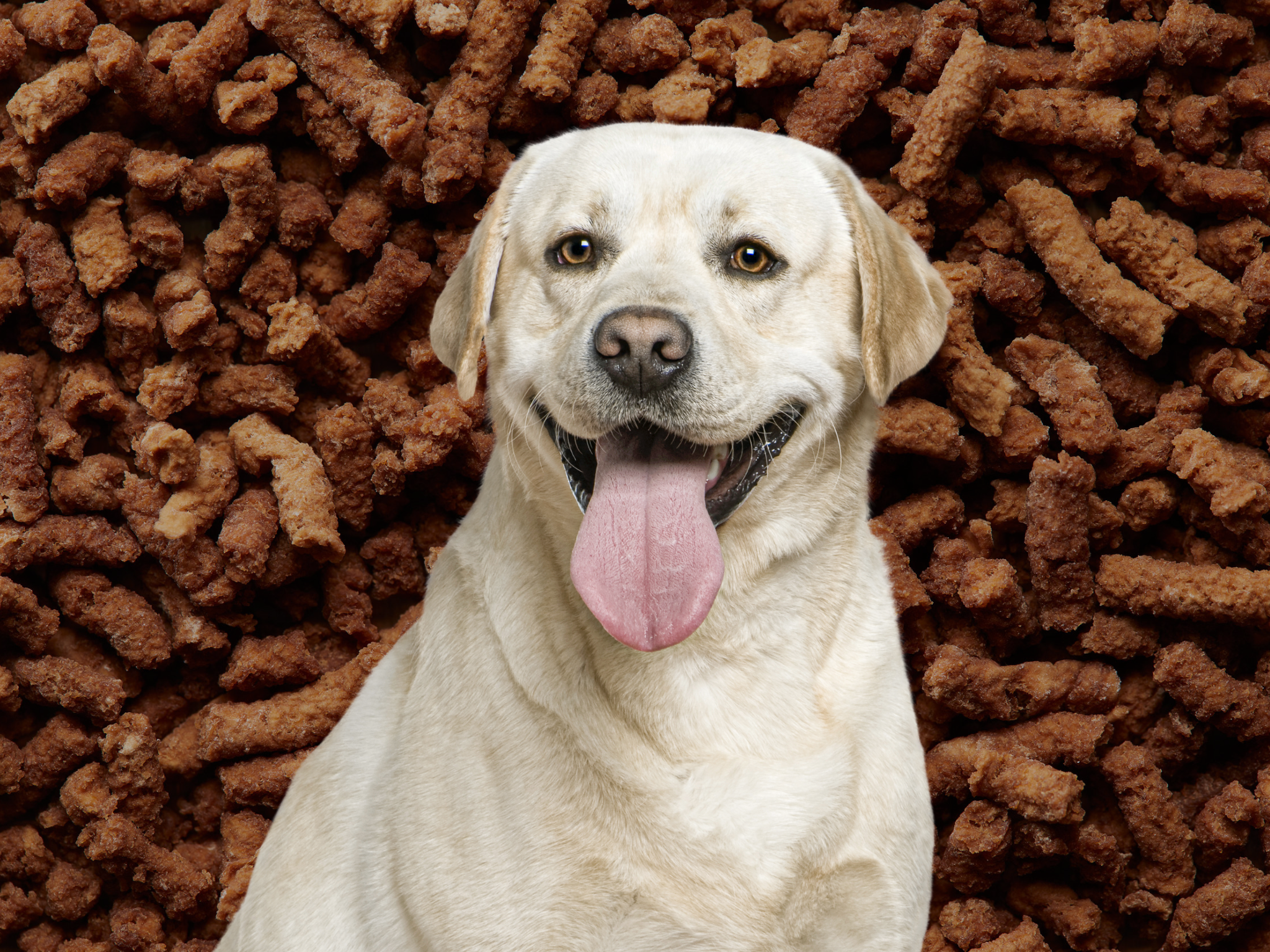
Finnish startups Enifer and Rovio Pet Foods have teamed up to launch a semi-moist dog treat made with Enifer’s Pekilo mycoprotein ingredient.
Enifer, a food tech startup producing proteins from mycelium, has entered the canine nutrition space through a new partnership with Rovio Pet Foods.
The two Finnish companies have developed a semi-moist dog treat made with Enifer’s Pekilo mycoprotein, which contains more than 60% protein and an amino acid similar to that found in meat.
The product, created as part of Rovio Pet Foods’s work on functional treat concepts, is relevant for white-label applications and represents the latest low-carbon solution for pet food manufacturers.
It follows the completion of a four-tonne commercial production run of PekiloPet in March, as well as its collaboration with Prima Pet to produce test batches of a pet food product at the latter’s dry food factory in Nokia, which will be followed by palatability trials with cats and dogs in the spring.
“Pet food has actually been a core focus for Enifer from the beginning. It’s a category where there is a clear and immediate need for new, sustainable protein sources and where innovation can be brought to market relatively quickly,” Enifer CEO Simo Ellilä told Green Queen.
“For us, this is about bringing Pekilo to market in a meaningful way. Pet nutrition allows us to validate both the nutritional value and functionality, and for us to validate our technology and the use of our Pekilo ingredient in real applications, while already contributing to a more sustainable protein system.”
“We already know that PekiloPet performs well in both extrusion and retort systems. It provides to marketeers and developers a new ingredient that combines nutrition, sustainability, and enables differentiation in a demanding consumer market,” said Jereon Schweitz, chief commercial officer at Enifer.
PekiloPet shows high digestibility and palatability among dogs

Enifer’s mycoprotein, named after the fungal strain Paecilomyces, has roots dating back to the 20th century. This strain was among more than 300 fungi selected for use in mycoprotein production for feed applications in Finland between 1975 and 1991.
At the time, the microbes were fed on forest industry byproducts. Enifer, a spin-out of the VTT Technical Research Centre of Finland, revived the process in 2020 by adapting Paecilomyces to food and agricultural sidestreams to develop food-grade mycoprotein.
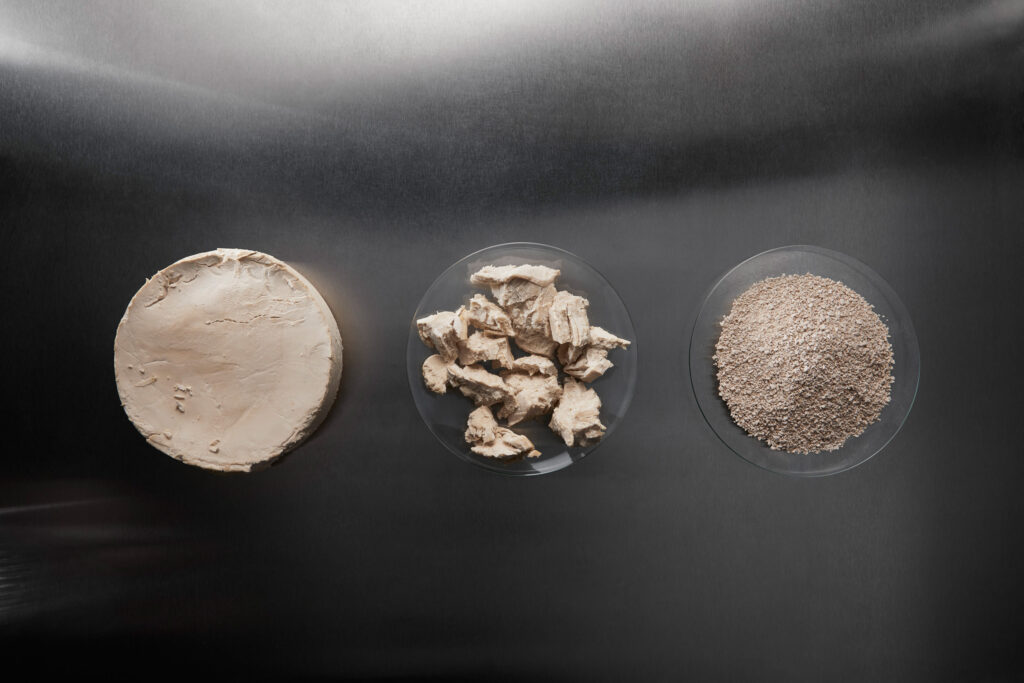
It employs a continuous submerged fermentation process similar to that used in brewing soy sauce. After fermentation, most of the water is mechanically removed from the mycelium, which is then dried and milled into a fine, shelf-stable powder.
This ingredient has an optimal amino acid profile, strong water-holding capacity, and neutral taste and colour, alongside being high in protein and fibre. It is currently being tailored for three categories: pet food, aquaculture feed, and human food.
“We see Pekilo more broadly as a future standard ingredient, similar to what soy, wheat, or whey are today. Basically, ingredients that are used across multiple categories. While formulations are always optimised for the specific end use, the underlying value remains the same: high-quality protein and fibre, produced efficiently and sustainably,” said Ellilä.
PekiloPet has over 60% protein and 22% fiber, along with smaller amounts of minerals and vitamins. Unlike animal protein, it also has a low ash content (less than 8%), enabling high inclusion rates in pet food formulations. Plus, the low-fat and carbohydrate levels make it ideal for weight-loss and grain-free products.
It is delivered as a dry ingredient suitable for standard storage and handling, and can be easily integrated into existing wet and dry manufacturing processes.
Enifer ‘hopes to see end products’ with Rovio eventually

The project with Rovio Pet Foods was funded by Business Finland, and comes as pet owners focus on premium products with clearer health and wellness benefits, a facet of the pet humanisation trend.
According to Enifer, that creates room for more differentiated treat formats built around novel ingredients, which can deliver strong palatability, reliable manufacturing performance, and clearer functional relevance.
Indeed, in a recent 60-day feeding trial involving 16 dogs, PekiloPet showed high digestibility and palatability, no negative impact on stool quality, and biomarker changes linked to immune activity and oxidative balance, backing its potential as a functional ingredient in pet nutrition.
“At this stage, the focus is on product development and validation, including functionality, production performance, and palatability. But we are expecting good results from this step and hope to see end products also on the market in the future,” revealed Ellilä.
“As with any new ingredient, these early pilots are key to ensuring that the final products meet both nutritional and quality expectations,” he continued. Samples of the new dog treats will be available at Interzoo 2026 in Nuremberg (May 12-15).
Ellilä added that the company is actively in discussions and working with several partners across the pet food sector: “There is strong interest in new, sustainable protein ingredients that can complement existing formulations and support long-term supply resilience and innovation in the pet food space.
“Our focus is on building partnerships where we can work closely together on product development and application. As this is still an emerging category, collaboration plays a key role in bringing new ingredients like Pekilo successfully to market.”
Enifer already has EU approval for pet food
“Functional treats are a growing area in pet nutrition, but to succeed in that category, the product still has to perform where it matters most – especially in palatability and consistency,” said Piritta Koistinen, chief commercial officer at Rovio Pet Foods. “Pekilo stood out as an interesting ingredient because it offered both a novel profile and the reliable raw material performance needed for product development.”
Currently, Enifer operates a pilot line that produces 5-10kg of Pekilo daily, with periodic campaigns with contract manufacturers at 10 times that capacity. It’s now building a €33M commercial-scale facility in Kirkkonummi, which would churn out 3,000 tonnes of the protein annually.
It has self-affirmed Pekilo as Generally Recognized as Safe (GRAS) for human food applications in the US, and submitted a notification to the Food and Drug Administration in pursuit of a ‘no questions’ letter. Further, it has filed for novel food approval in the EU, Singapore and the UK.
“In the EU, Pekilo is already approved for use in pet food, which enables us to move forward with commercial applications,” said Ellilä. “Regulatory frameworks differ between pet food and human food. Pet food allows us to commercialise the ingredient today. We continue to develop broader applications and as we move ahead on the regulatory pathway, too, in different markets with our food ingredient.”
Having raised around €49M in equity and debt to date, Enifer is now working on a Series C round, expected to close by the end of the year.
The development follows several advancements in the low-carbon pet food space this year. Last month, Bond Pet Foods bagged an investment from Germany’s Symrise to create precision-fermented proteins for cats and dogs. In Singapore, Friends & Family Pet Food launched eight cultivated meat products targeting different functionalities for pets, with another four set to be rolled out this month.
And last week, fellow mycoprotein maker MicroHarvest announced it would co-launch 15 new pet food products with its partners by the end of June.
“We’re seeing a broader shift in how people think about sustainability – and that increasingly extends to pets as well,” said Ellilä. “At the same time, the pet food industry is facing similar challenges as the wider food system: pressure on sustainability, resources, volatility in supply chains & prices and growing demand for high-quality protein.
“This is driving interest in new production methods, such as fermentation, that can deliver nutritional quality with a significantly lower environmental footprint.”