

Plant-Rich Europe: Supermarkets Urged to Shift Sales Away from Meat & Dairy

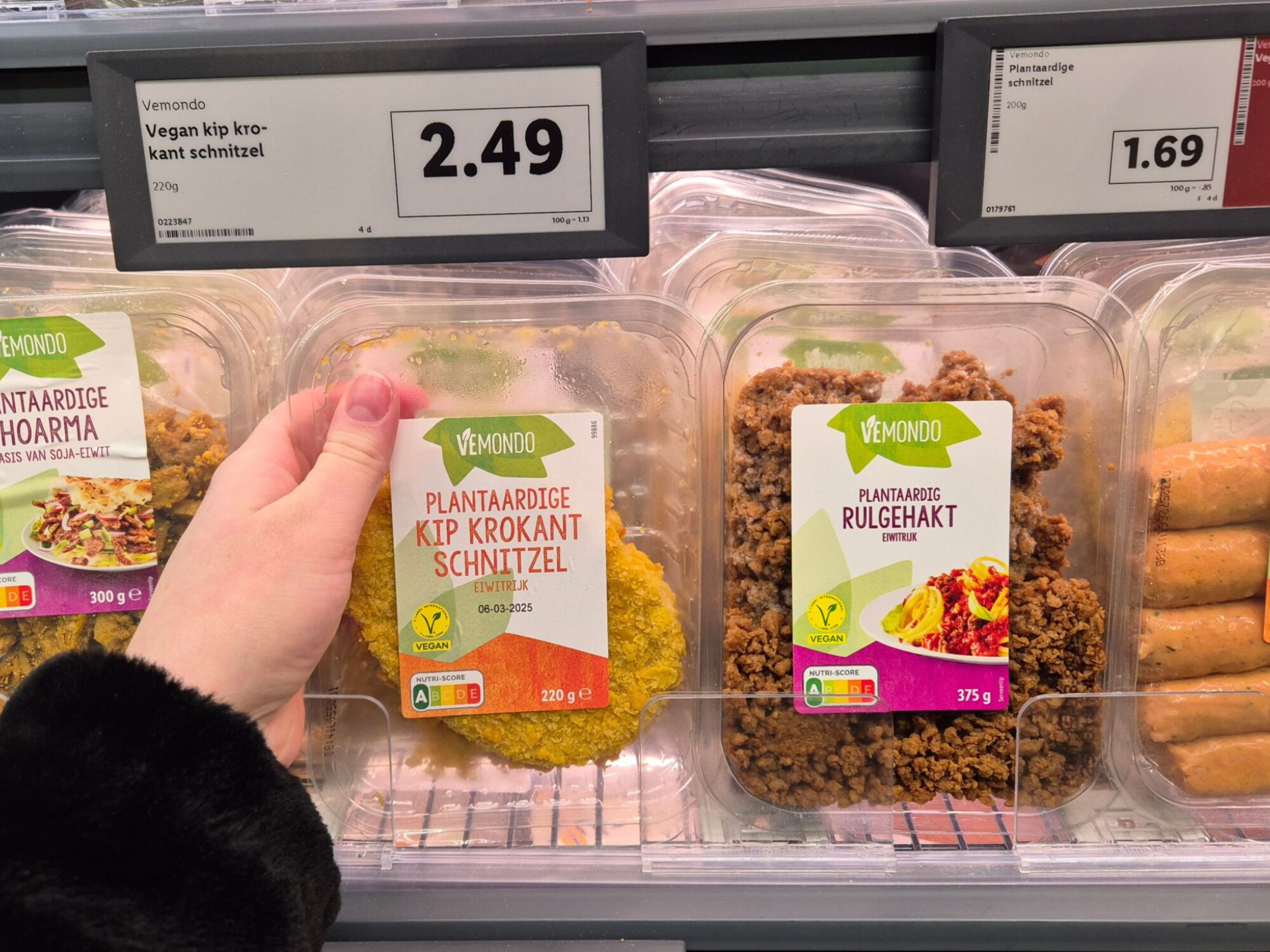
WWF, WRI and other civil society groups are calling on Europe’s supermarkets to accelerate the protein transition by increasing the ratio of plant-based food sales.
European supermarkets must disclose the share of sales emanating from plant-based and animal-derived foods, and rebalance the ratio in line with the Planetary Health Diet, civil society organisations have urged via a new Plant-Rich Europe campaign.
The call is being led by the World Wide Fund for Nature (WWF), World Resources Institute (WRI), Madre Brava, and ProVeg International. They have been joined by 21 other organisations, spanning 12 countries.
Launched today at the What’s in Store: Retail & the Future of Protein summit in Berlin, the initiative is asking European retailers to drive healthier, more sustainable food choices by increasing the share of plant-based products they sell.
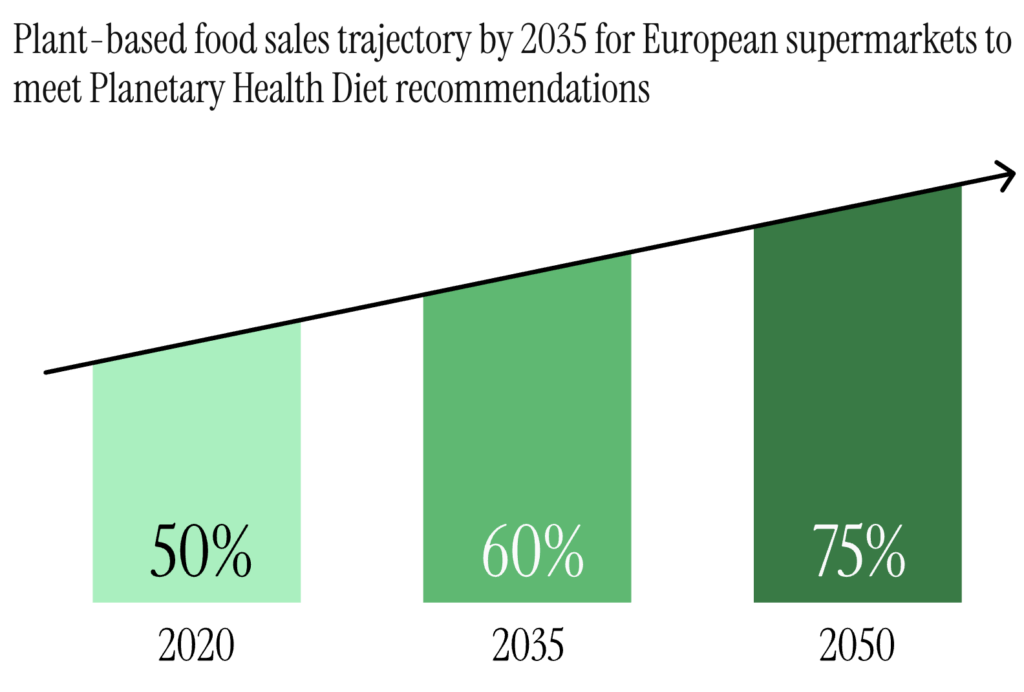
The organisations cite the Eat-Lancet Commission‘s Planetary Health Diet as a benchmark for retailers – this emphasises a plant-forward eating pattern for better human and environmental health. Optimised for human health, this diet would contain at least 75% plant-based foods by weight by 2050.
To stay on track with that goal, European supermakets would need to have 60% of their sales come from animal-free products by 2035, according to the founding group. The main shift must occur in the protein category, where plant-based options should make up at least 33% of sales. Meanwhile, sales in the dairy category should account for no more than 29% of all food sales by this year.
“This is a clear, united call from civil society, asking supermarkets to act now in a way that will provide their customers with healthy, affordable food and bring down the sector’s emissions,” said Mariella Meyer, senior manager of corporate sustainability at WWF Switzerland.
Why supermarkets should support plant-rich diets
The organisations are calling on retailers to measure, disclose, set targets and take action on the ‘protein split’, i.e., how many protein sales come from plant-based and animal sources.
They highlight several reasons why supermarkets should do so. For one, these grocers are “powerful gatekeepers of food environments” and influence what people buy and eat through product availability, pricing, placement and promotions.
Shifting diets towards plant-rich foods is also essential to meeting climate, nature and health goals. Animal agriculture causes 81-86% of the EU’s food-related greenhouse gas emissions, despite only supplying 32% of its calories and 64% of its protein intake.
Adopting plant-rich diets is the “single most effective intervention” to reduce agrifood emissions and is critical to reducing biodiversity loss. One study has shown that vegan diets can reduce emissions, water pollution, and land use by 75% compared to meat-heavy diets.
Plant-forward eating is associated with lower risk of cardiovascular disease, premature mortality, and type 2 diabetes, and has been found to potentially deliver immense savings for healthcare systems globally. According to the Eat-Lancet Commission, the Planetary Health Diet could prevent 15 million premature deaths every year.
Moreover, supermarkets face growing business and supply chain risks from their continued reliance on animal proteins, including climate volatility, land and water constraints, and their failure to meet science‑based environmental targets. It makes plant-rich sales a “core resilience and risk management strategy”.
On top of that, a transition to less meat and dairy and more plants “represents an economic buffer for vulnerable families hit hard by the cost-of-living crisis”, the organisations say.
Civil society groups offer challenge and support
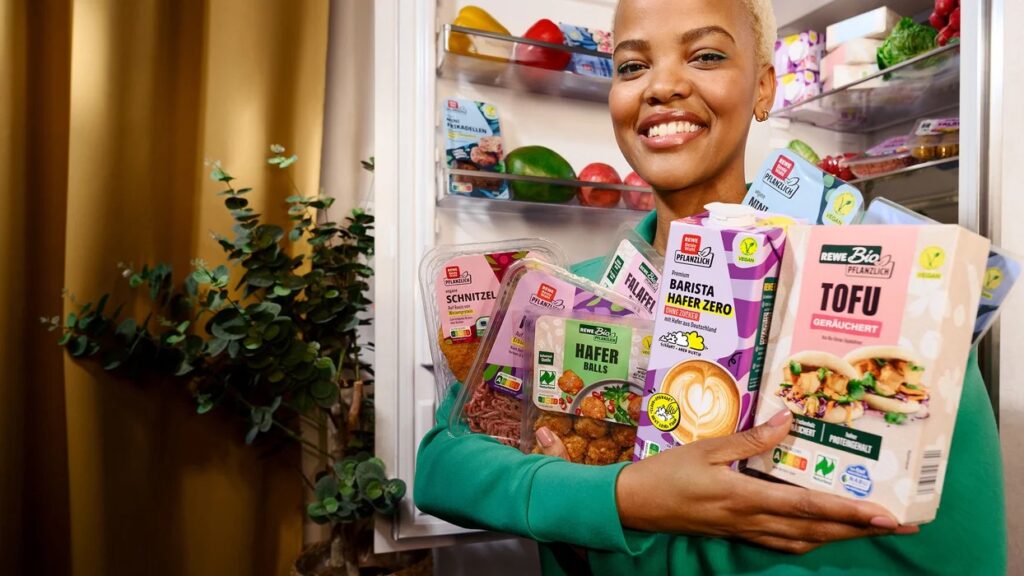
The event in Berlin drew representatives of retailers from across Europe, including Ahold Delhaize from the Netherlands, Rewe and Lidl from Germany, Tesco from the UK, and Migros from Switzerland.
These are among the supermarkets have been leading the protein transition. Lidl, in particular, expanded the sales of healthy food in the UK by 80% since 2019, reaching the target two years ahead of schedule. And it blew past its goal to increase own-label plant-based sales by 400% by 2025, recording a 694% increase over the previous five years.
The discount retailer aims to increase the proportion of plant-based foods sold globally by 20% by 2030. Albert Heijn has a 60% target in the Netherlands for the end of the decade, while Rewe‘s 60% goal is set for 2035.
The Plant-Rich Europe campaign is pushing others to follow these retailers’ lead by setting targets for 2035 at the latest, pointing to tools such as the WWF’s Planet-Based Diets methodology and the Green Protein Alliance and ProVeg Nederland’s Protein Tracker.
“This call shows the consensus among civil society groups on the importance of the issue for planetary and human health, as well as strong agreement on who is best placed to act. It’s clear there is a huge appetite for action and great interest in being part of the solution,” said Nico Muzi, chief programmes officer at Madre Brava.
“Civil society groups are challenging the supermarkets, but we’re also saying: ‘We can support you in this shift,'” he added.
Other organisations that have joined the call include the Changing Markets Foundation, Green Protein Alliance, the Vegetarian Society of Denmark, the Food Foundation, the Physicians Association for Nutrition Germany, and Compassion in World Farming, among others.