

In Amsterdam, Meat & Fossil Fuel Ads Are Now Officially Banned

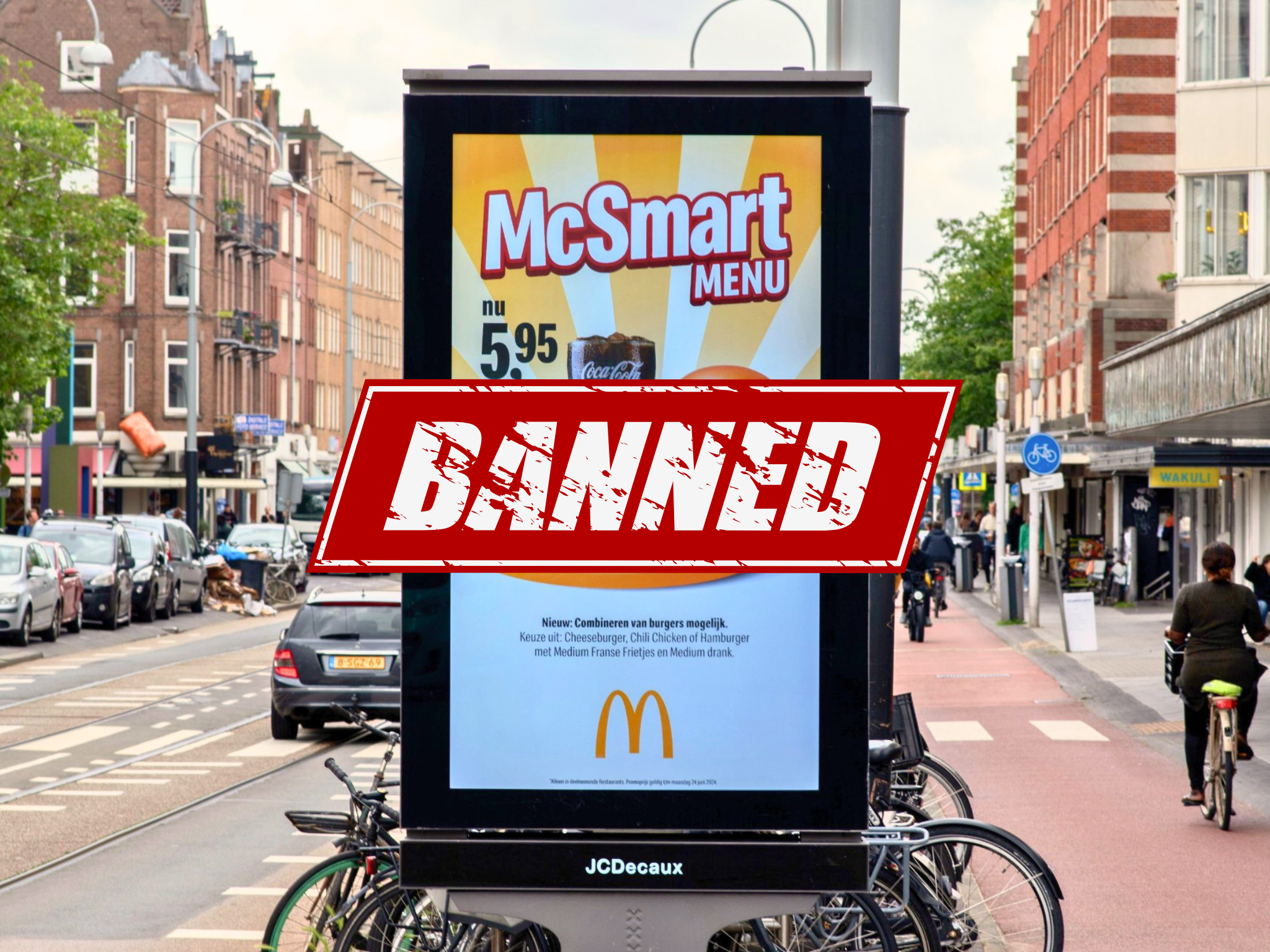
Amsterdam has become the world’s first capital city to ban advertisements promoting meat or fossil fuels, in light of the city’s targets to increase plant-based consumption and lower emissions.
Billboards and metro stations in Amsterdam will no longer feature ads plugging burgers, bitterballen, gas-powered cars, tropical getaways, and other carbon-intensive offerings.
The Dutch capital’s ban on meat and fossil fuel ads came into effect on May 1, as part of the city’s efforts to encourage plant-rich diets and greener mobility to lower its climate impact.
Passed by the city council in January, the law makes Amsterdam the first capital city in the world to prohibit ads for fossil fuel products and meat in public spaces.
Amsterdam has a goal to reach net-zero emissions by 2050, and increase the share of plant-based protein consumed by residents from 40% to 60% by the end of the decade.
Amsterdam’s ad ban exempts private stores, newspapers and digital media

The law to “stop advertising that contributes to the climate crisis” was first proposed in April 2024 by GreenLeft and the Party for the Animals, and approved by Amsterdam’s city council earlier this year with a 27-17 vote.
It prohibits ads for beef, pork, chicken, and fish due to the livestock industry’s climate harms, as well as for airlines, cruises, petrol and diesel cars, and trips to faraway destinations, because they promote the burning of fossil fuels.
“If you spend lots of tax money and have lots of policies trying to manage climate change in Amsterdam, why would you rent out your public walls to exactly the opposite?” said Anneke Veenhoff, a city councillor from the GreenLeft party, according to the New York Times.
She compared emissions-intensive lifestyles to addictions. “If you’re trying to get rid of an addiction, it’s not very handy to see it everywhere,” she added.
The fossil fuel and agricultural sectors account for the majority of human-caused greenhouse gas emissions. Livestock farming alone is responsible for up to a fifth of global emissions, and one recent study argues that meat and dairy production is the leading driver of climate change.
Amsterdam’s ban will apply to city-owned properties and public spaces, such as billboards, bus stops, train and tram stations, and all public transport vehicles. However, it doesn’t extend to privately owned shops, newspapers, radio and digital formats.
That begs the question: in a chronically online world where people tend to look at their phones instead of a billboard while waiting to board a bus, does Amsterdam’s law go far enough to have a tangible impact on high-carbon consumption?
Bans on fossil fuel and meat ads on the rise globally
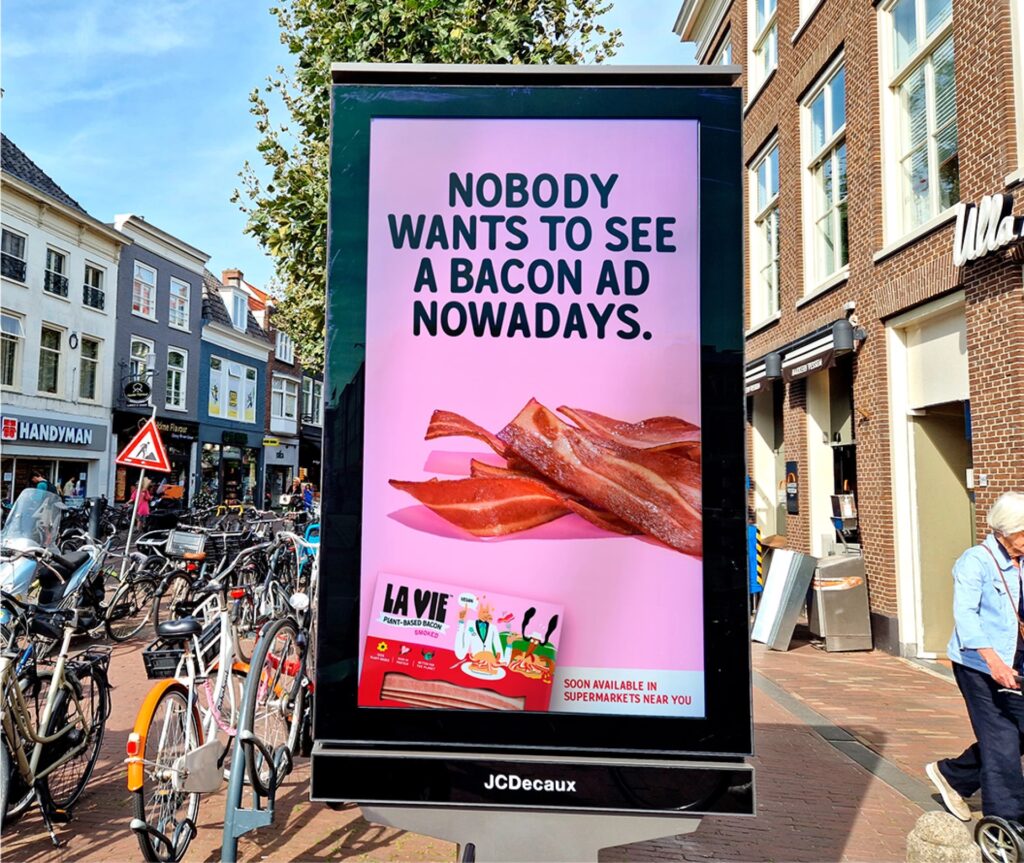
Even Amsterdam, known worldwide for its live-and-let-live approach to consumption, can’t ignore the climate-harming realities of the fossil fuel and livestock industries. It first passed a motion to ban fossil fuel ads in 2020, though this wasn’t legally binding and didn’t carry any penalties. It also applied only to new contracts and did not effectively cover the majority of the city’s public spaces.
The new law, however, equips the city with enforcement powers and applies to all public spaces, while adding more detail to the framework of banned ads. According to the New York Times, 2026 will largely be considered a grace period, but violators could still face fines.
It has, predictably, received pushback from associations representing meat and fossil fuel producers, as well as advertising companies like JCDecaux, which said the revenue from these ads helps maintain public infrastructure. On the other hand, agencies such as KesselsKramer, Publicis and Wieden+Kennedy, hailed the move.
It comes two years after UN secretary-general António Guterres called on countries and media companies to stop fossil fuel advertising. “Many in the fossil fuel industry have shamelessly greenwashed, even as they have sought to delay climate action – with lobbying, legal threats, and massive ad campaigns,” he said in a speech in New York City.
“They have been aided and abetted by advertising and PR companies. Mad Men – remember the TV series – fuelling the madness,” he added. “Many governments restrict or prohibit advertising for products that harm human health, like tobacco. Some are now doing the same with fossil fuels.”
Globally, over 50 cities have announced their ambition to restrict fossil fuel advertising, and within the Netherlands, 12 municipalities have now banned this practice, including The Hague, Utrecht, Delft and Leiden.
Haarlem, meanwhile, was the first city to ban meat ads in 2022. Since then, seven other Dutch cities have begun working on similar bans, and Amsterdam is the third to implement one. It comes as meat consumption fell to a record low in 2025 in the Netherlands, with the new national dietary guidelines advising citizens to lower their meat intake and replace it with plant-based proteins.