

Dutch Meat Consumption Falls to Lowest Levels on Record, But Not Low Enough

In the Netherlands, individuals ate 74.4kg of meat on average in 2024, the lowest since records began two decades ago. But experts are calling for a faster transition.
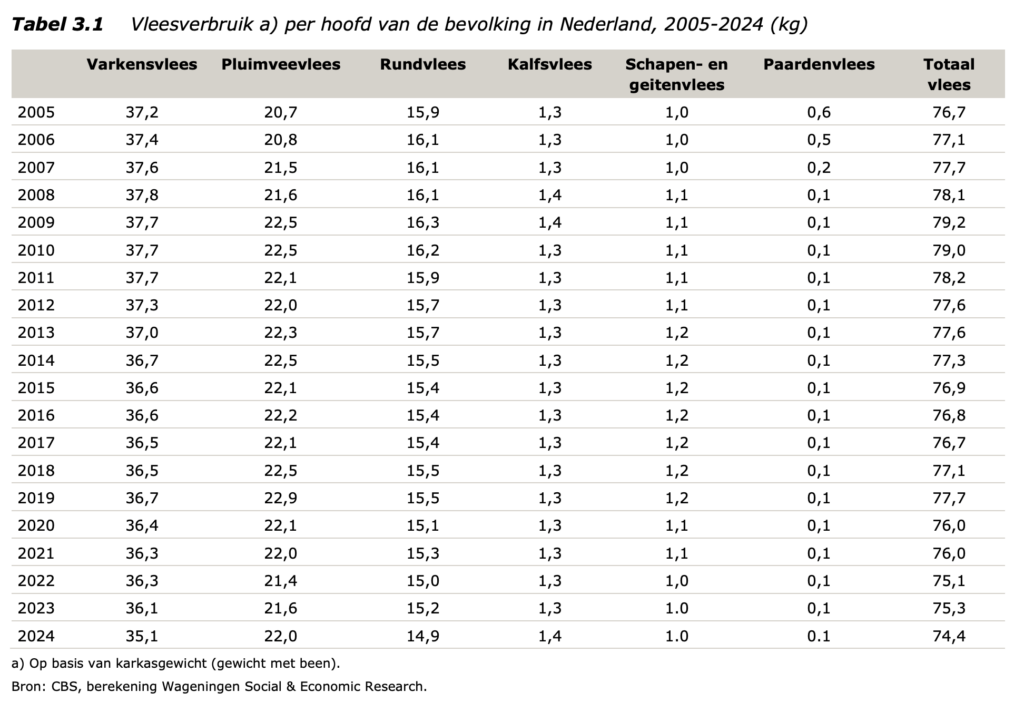
Meat consumption is at its lowest point in 20 years in the Netherlands, according to an annual survey conducted by Wageningen Social & Economic Research (WSER).
The annual survey, commissioned by animal rights group Wakker Dier, has been running for a decade, and covers a period starting in 2005, when per capita intake of meat was 76.7kg.
In 2024, though, that declined by 3% to 74.4kg, the first time this figure has fallen below the 75kg mark. This is the so-called carcass weight, which includes the weight of the bones. Only half ends up on the plate, though – in 2024, that amounted to just over 37kg per person.
Decline in meat intake ‘slow, but steady’
WSER uses a supply balance system to calculate meat consumption, involving the number of animal slaughters, meat imports and exports, and stock changes. A large number of species and types of meat are recorded, though the trade of products like lasagna and chicken soup is not explicitly included.
The decrease in meat consumption hasn’t been linear. It was level in 2020 and 2021, fell in 2022, and rose again in 2023. What’s striking is the gravity of the decline in 2024, when Dutch consumers ate nearly a kg less of meat. Compared to the peak in 2009, when per capita intake was at 79.2kg, meat-eating dipped by 6% last year.
Pork is by far the most consumed meat in the Netherlands, though individuals ate 1kg less of it in 2024, the largest drop across animal protein categories. The difference is smaller in the two other main categories, with beef consumption down by 300g and poultry recording an increase of 400g.
According to WSER, the shift away from red to white meat follows trends from other countries, as well as in the retail sector. Beef and pork sales declined in supermarkets and butcheries, while poultry sales were on the rise.
According to Wakker, more than 650,000 animals are eaten in the Netherlands every year. Collin Molenaar, a campaigner at the group, noted that the national decline in meat intake was “slow, but steady”.
Could blended meat fast-track the protein transition?
While the Dutch are eating less meat, consumption levels are still way above the recommended limit set by experts on the Eat-Lancet Commission, who reinforced the Planetary Health Diet in an updated report on the future of food systems last month.
That eating pattern, which could save 15 million people from premature death, suggests consuming a maximum of 45g of meat a day, or 16kg per year. It means the Netherlands needs to reduce its meat intake by 57% to adhere to the Planetary Health Diet (when discounting the weight of bones).
Shifting to plant proteins can bring about a multitude of benefits, and supermarkets in the country are increasingly encouraging this. Last year, 11 retailers pledged to sell less meat and dairy by ensuring that half of the proteins sold in their stores are plant-based by 2025, rising to 60% by the end of the decade.
Unfortunately, things haven’t gone to plan. Purchases of meat alternatives fell by 7% in the Netherlands last year. Ahold Delhaize, the parent company of Albert Heijn, admitted that sales of its plant-based products have been disappointing. The ‘protein split’ ratio failed to increase in favour of plants in 2024, instead falling slightly from 44.5% in 2023 to 44.2%.
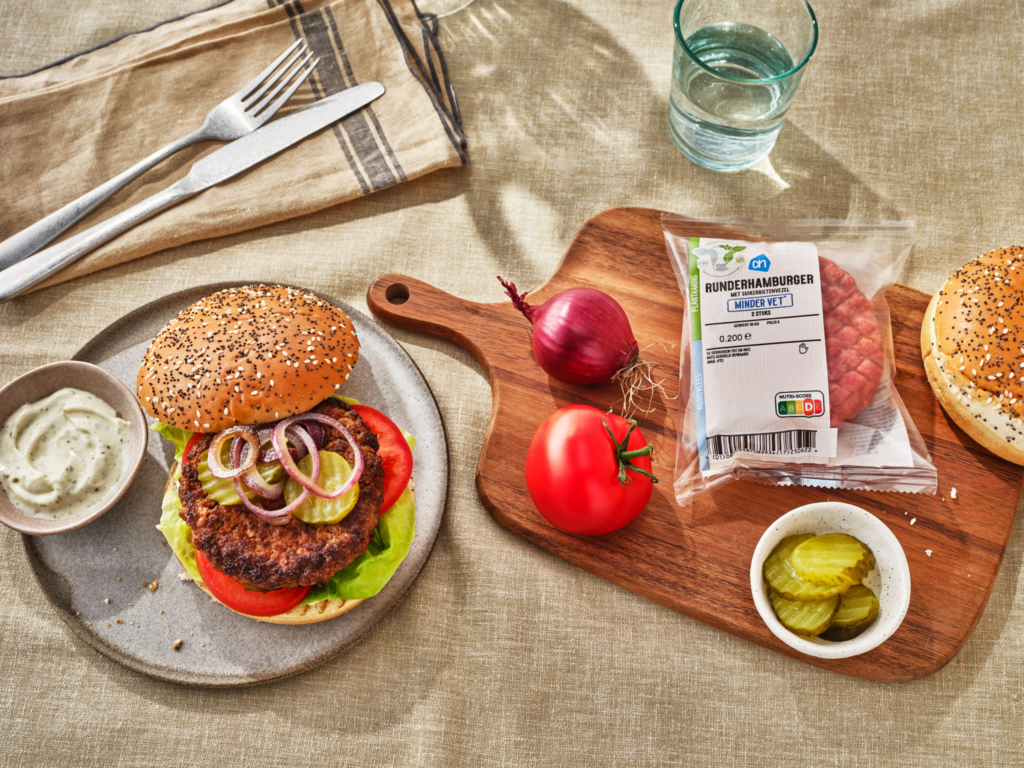
So the company has taken a different approach, combining animal proteins with plant-based ingredients to offer the best of both worlds. Albert Heijn offers 13 blended meat products, two hybrid milks, and a hybrid yoghurt – all priced at parity with or lower than 100% meat.
It isn’t the only supermarket to do this either. Lidl was the first, introducing a mince SKU with 60% beef and 40% pea protein, which is 33% cheaper than conventional ground beef. And earlier this year, fellow discounter Aldi launched a similar 60/40 mince, with a price tag 45% lower than 100% beef.
So as meat consumption falls in the Netherlands, blended meat could present a golden opportunity to accelerate this shift.