

Aqua Cultured Foods: US Fish-Free Startup Shuts Amid Scale-Up & Funding Challenges


Aqua Cultured Foods, a fermentation startup known for its cellulose-based seafood, has ceased operations after being unable to secure financing “without taking on undue risk”.
Fish-free seafood maker Aqua Cultured Foods has reached the end of the road amid the wider investment challenges plaguing the alternative protein category.
The US startup concluded operations in December after five years of building its biomass fermentation platform and creating a cellulose-based whole-cut seafood portfolio.
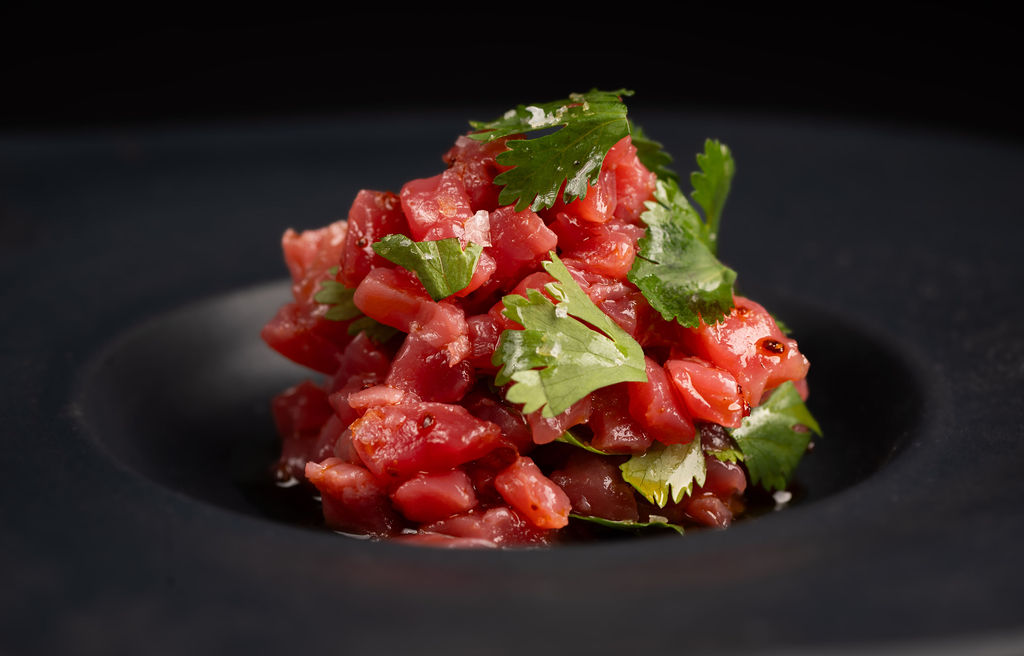
Its vegan tuna and scallops graced the menus of Michelin-starred restaurants and piqued the interest of global ingredient companies and retailers, after self-determining its cellulose ingredient under the US Food and Drug Administration’s Generally Recognized as Safe (GRAS) rule in 2024.
“Despite meaningful technical and market progress, we reached a point where the timing and capital required to scale no longer matched the company’s financial reality,” co-founder and CEO Brittany Chibe tells Green Queen.
“We’re exploring pathways to place the assets – technology, IP, know-how, and potentially the brand – with a partner who can take it forward,” she confirms. “We developed valuable technology and learned important lessons, and I’d love to see that work continue to benefit the field. This shouldn’t be the end of the story for what we built.”
Fundraising market ‘shifted faster’ than startups could adjust

Chibe co-founded the startup with former CEO Anne Shaeffer in 2020, developing a low-capex production process that transformed cellulose fibre into clean-label, whole-cut filets naturally resembling the appearance and texture of raw seafood.
The startup acquired a 5,000 sq ft food-grade facility in Chicago for its pilot plant, which could produce 5,000 lbs of raw product, enough to cater to about 20 high-end eateries. Its tuna and scallops have been served at restaurants like the three-starred Alinea and Mama Delia (owned by Michelin-starred chef Marcos Campos Sanchez).
“We proved the technology works, validated product-market fit in foodservice, and built a platform with multiple applications, but scaling fermentation-based manufacturing is capital- and time-intensive, especially when you’re holding a high bar for taste, texture, consistency, and food safety,” she explains.
“At the same time, the external funding environment for alternative proteins tightened dramatically over the past two years, and we couldn’t secure financing that would allow us to keep operating without taking on undue risk.”
Aqua Cultured Foods had raised $10M in total funding, and was actively fundraising to scale up its technology, which garnered strong interest from investors.
“But the bar moved,” says Chibe. “Fewer funds were writing new checks, diligence cycles got longer, and many investors prioritised their portfolio companies or later-stage companies with near-term margins, or categories perceived as less risky. Meanwhile, the capital needs to scale a novel manufacturing platform don’t pause just because the market does.”
She suggests that the fundraising market has “shifted faster” than most early-stage companies could adjust: “It wasn’t a lack of belief in the mission or the product. It was the mismatch between what it takes to scale and what the market was willing to fund at this moment in time, at terms that made sense.”
Alternative proteins ‘five to 10 years too early’
Aqua Cultured Foods is a victim of a broader issue in food tech. After the highs of 2021, when alternative proteins attracted nearly $7B in venture capital, investors have retreated in droves. Financing for the sector fell to $3.2B in 2022, $1.5B in 2023, and $1.1B in 2024. The trend continued in 2025, with only $611M raised in the first nine months of the year.
That has either accelerated consolidation or led to the closure of many startups in the alternative protein industry. Since September 2024, more than 60 firms have either been acquired, merged, fallen into liquidation, or ceased operations.
Alternative seafood, which still makes up a tiny fraction of the future food market, has found it particularly tough. France’s Olala! and Dutch startups Upstream Foods and Vegan Finest Foods all shut down in this period. And in the US, celeb-favourite vegan sushi chain Planta was acquired out of bankruptcy by a VC group for $7.8M.
Chibe believes the sector was five to 10 years too early. “The technology works, but the market conditions haven’t caught up. Consumer behaviour, price parity, distribution infrastructure, and cultural acceptance all need to align, and we’re not there yet. Seafood remains a huge opportunity, but it requires patient capital and realistic scaling pathways,” she explains.
“It’s a convergence of challenges: cost structure, consumer readiness, market timing, and in some cases, regulatory complexity. We created a product that world-class chefs were using, but that wasn’t enough. The reality is that consumers today can still access conventional proteins easily and affordably, so there’s limited motivation to switch to alternatives, especially at a premium price point.”
Aqua Cultured Foods eyes acquisition or licensing deal for fermentation tech
In her announcement, Chibe hailed Aqua Cultured Foods’s team and “culture of accountability and excellence”, highlighting the leadership skills she developed in “taking this from concept to commercialisation”.
Asked how alternative protein businesses can right the ship, she calls for “patience, pragmatism, and a longer-term view”. “These technologies are essential for the future. If we’re going to sustain life on this planet as wild fish stocks decline and demand grows, we will need these solutions,” she says.
“But the industry needs to be honest about timelines and stop overpromising on near-term scale and adoption,” Chibe outlines. “We also need more diversified funding sources. Less reliance on venture capital alone, and more support from government research programmes, philanthropic capital, and strategic corporate partnerships that can weather longer development cycles.”
The focus must be on building products that “meet consumers where they are, not just where we hope they’ll be”, she points out. “The alternative protein movement isn’t failing; it’s maturing. We’re learning what works, what doesn’t, and how long true innovation actually takes.”
As for Aqua Cultured Foods’s technology, Chibe says the near-term focus is to preserve what the team built and find a responsible home where the platform can keep creating value, whether that’s through an acquisition or licensing partnership. “We’ve had interest across multiple verticals because the underlying material and process are broadly applicable,” she reveals.
Her co-founder Shaeffer (who left the company in 2024) said she was “genuinely saddened” about the outcome: “The product was exceptional, and in many ways ahead of its time. Building in alternative protein isn’t for the faint of heart. Timing, capital cycles, consumer readiness, and infrastructure all matter just as much as the science. When any one of those lags, even great products can struggle.”
Both Shaeffer and Chibe maintain an upbeat outlook on the future of alternative proteins. “I remain optimistic that these technologies will be critical in the decades ahead, even if the path forward is longer and harder than many of us anticipated,” Chibe says.