

75 Projects, Seven Pillars, €3B in Funding: How Europe Can Achieve A Sustainable Protein Transition

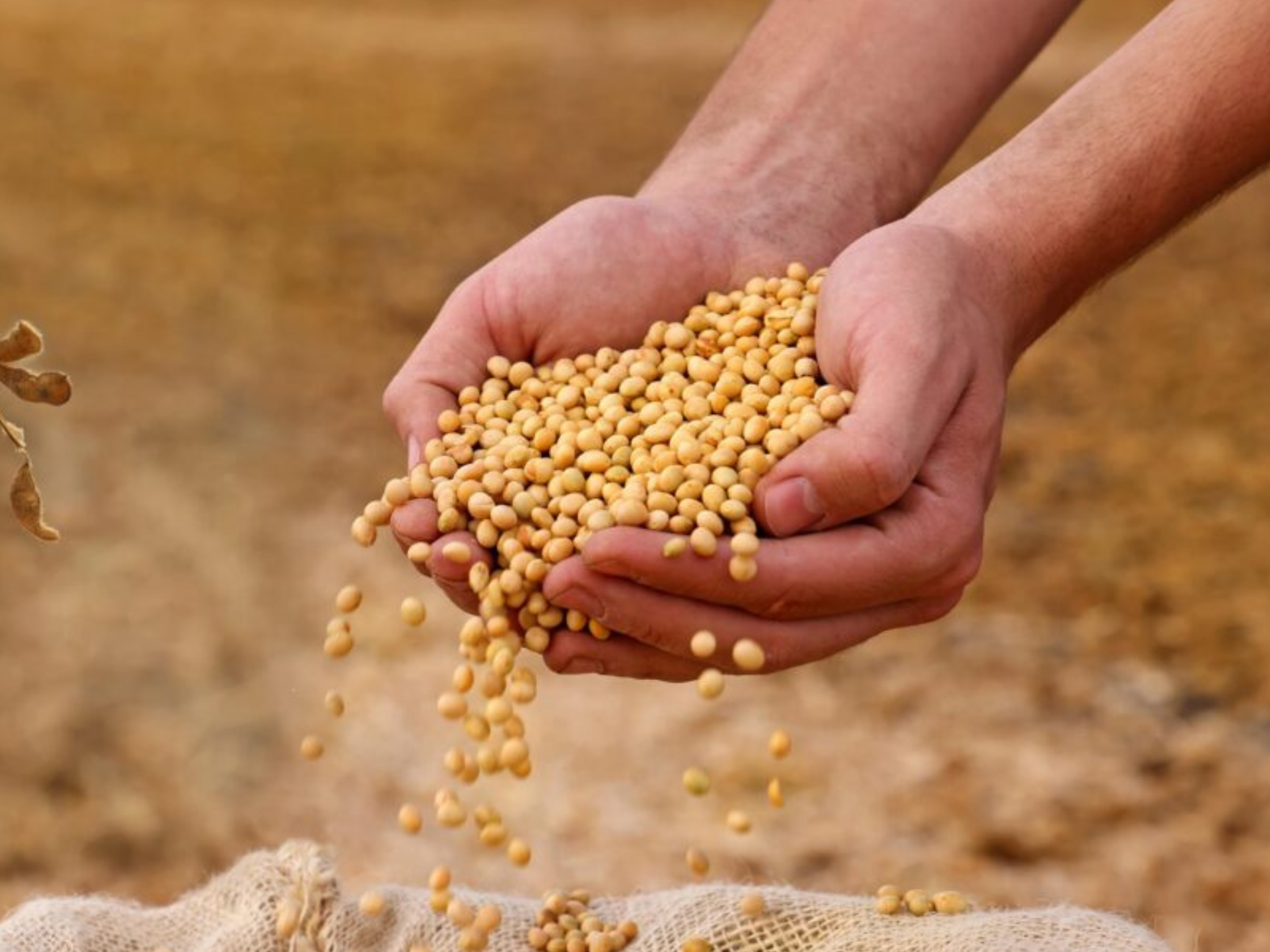
A coalition of plant-based food representatives is calling for €3B in research and innovation funding to rebalance and greenify Europe’s protein supply over the next decade.
Europe is in desperate need of a transition towards plant-based proteins for better public and planetary health, which could be unlocked with a €3B investment between 2026 and 2035, according to a new report.
A group of companies, researchers and stakeholders have laid out an innovation roadmap to rebalance Europe’s protein supply. Currently, the protein ratio is in favour of animals over plants (60:40); the coalition’s strategies would level the playing field with a 50:50 split.
Penned by the Plant-Based Foods Europe, the European Alliance for Plant-based Foods, the European Vegetable Protein Association, and the FoodConNext Foundation, the report outlines 75 projects based on seven innovation pillars, covering health, artificial intelligence (AI), regulation, consumer engagement, and more.
Research from the Good Food Institute Europe shows that between 2020 and 2024, R&D funding for plant-based foods in the region has totalled €441M. The coalition argues that Europe’s protein transition requires a threefold increase from these levels.
“Scaling up investment in plant-based research and innovation to at least €3B by 2035 is essential to match the ambition of the sector,” states the report, which has inputs from industry leaders like Nestlé, Unilever, Kraft Heinz, General Mills, Quorn, Oatly, and Alpro.
“At the same time, policies and funding need to be better aligned across the European Commission’s departments – from agriculture and research to health, environment, industry, and finance – to ensure coherence and maximise impact.”
What are the seven pillars for Europe’s protein transition?
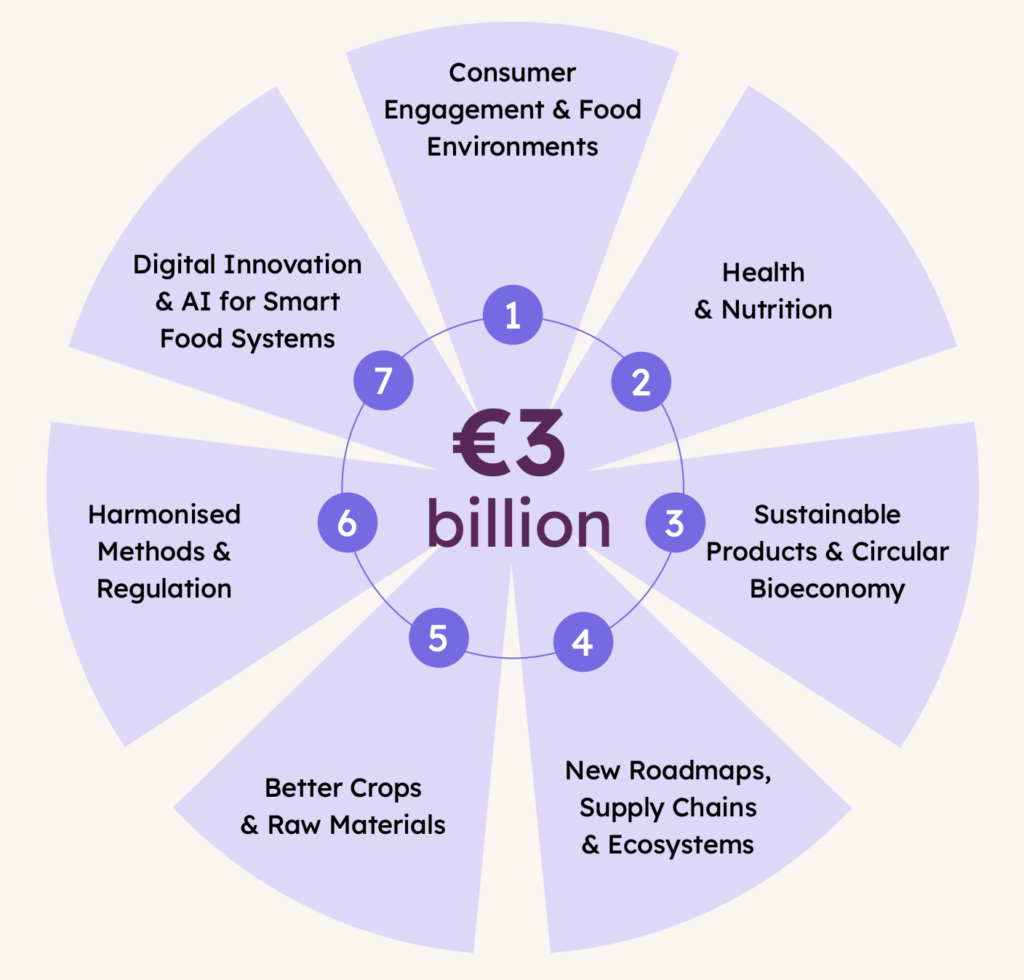
The largest allocation of the €3B budget goes to the sustainable products and circular bioeconomy pillar. (€995M). Here, projects are focused on improving the taste, texture and nutrition of plant-based products through enhanced fats, masking and colour systems, emulsifiers, heat stability, and protein functionality. This pillar also features projects on novel processing methods.
Consumer engagement and food environments is the second most-funded category in this plan (€720M), involving initiatives to develop integrated policy frameworks at all government levels, design nudging and behavioural intervention strategies, and advance innovation in retail and foodservice via AI-led insights.
Next on the list is health and nutrition, a pillar that would be pumped with €455M in funding. This will go towards long-term studies on the health effects of plant-based diets, developing knowledge on the impact of protein ingredient technologies, and defining healthy vegan diets and meal quality recommendations for older adults.
The report allocates a further €360M to new roadmaps, supply chains and ecosystems. It involves creating plant protein crop roadmaps, multi-stakeholder networks for collaboration and communication, and strategies that incentivise farmers who recognise legumes’ environmental benefits. Under this pillar, the coalition proposes the establishment of a €25M European Tofu & Tempeh Research Centre.
Meanwhile, €220M of the funding is allocated to better crops, raw materials and protein diversification – think higher-protein yields for soy, pea, faba bean, sunflower, and oat crops, with enhanced functionality and nutritional value, all bundled in a comprehensive protein crop database.
The sixth pillar, worth €195M, is dedicated to harmonised methods and regulations, with the report calling for the development of better analytical and sensory systems for plant-based protein development, as well as rapid tests to assess legume quality and isoflavone content. Plus, this funding should be used to accelerate the regulatory approval for Rubisco, yeast, algae and bacterial proteins.
The final segment of the strategy concerns digital innovation and AI for smart food systems. Through a €50M investment, Europe is being urged to create an AI-powered, open-access research platform called AlphaFood, which can fast-track R&D cycles, enhance nutrition and sensory qualities, valorise agricultural sidestreams, and incorporate sustainability metrics into plant-based food design.
Why the EU should promote plant-based proteins
Laying out a case for change, the report’s authors point out how the EU faces €900B each year in public health costs linked to poor diets. Plus, diets low in legumes account for the loss of two million years of good health and 130,000 avoidable deaths from all causes.
There’s the economic benefit, too. By diversifying their crop portfolio, farmers can get an additional income source with higher profit margins and lower input costs. Plant-based foods can stimulate innovation and job creation, as well as save on public spending.
In 2022 alone, animal-sourced foods – through their impact on climate, health, land use, water and air pollution – cost the EU €3T, over seven times the cost of their production and consumption. A transition to healthier, plant-forward diets could save 43% of these externalities (amounting to €1.3T annually).
In addition, investing in plant proteins reduces import reliance and bolsters the supply chain, making the EU less vulnerable to climate shocks. Speaking of which, these foods need a fraction of the land, water and energy than animal proteins, which emit way more greenhouse gases and are linked to deforestation, overfishing, and biodiversity loss.
“Strategic investments will enable Europe to remain a leader as nations like the USA and China scale up plant-based foods and protein sectors, keeping innovation and manufacturing within the EU,” the report adds.
The EU spends 77% of all subsidies under its Common Agriculture Policy on the livestock industry, which only provides 32% of its calories and 64% of its protein intake. But the European Commission has also committed to creating a protein diversification strategy.
And separate research shows that plant-based, fermentation-derived and cell-cultured foods can meet 10% of the EU’s meat demand and 25% of its dairy demand by 2040. If the EU invested just €1.4B annually into alternative proteins, it could generate €111B in annual gross value to the bloc’s economy by 2040.
The plant-based roadmap report calls for strong partnerships between the EU Commission, member states, industry and civil society. “The transition must actively engage both consumers and farmers, ensuring that healthier and more sustainable diets are accessible to all while delivering fair and rewarding opportunities across the value chain,” it states.