

California Cultured Targets 2026 Launch of Cell-Based Cocoa Powder After US GRAS Filing


US startup California Cultured has secured self-affirmed GRAS status for its cell-based cocoa powder and notified the FDA of its determination. It’s currently fundraising and eyeing a launch later this year.
Having already landed deals with two major players in the chocolate industry, California Cultured has taken another step towards commercialising its cell-based cocoa.
The company has self-determined its ingredient as Generally Recognized as Safe (GRAS) in the US, enabling it to sell its future-friendly cocoa powder to customers nationwide.
With the self-affirmed GRAS provision under threat of being removed, California Cultured has taken the additional step of submitting a GRAS notice to the Food and Drug Administration (FDA), in pursuit of a ‘no questions’ letter.
The startup claims this is the first GRAS filing for cocoa powder produced through plant cell culture, and is planning to launch the ingredient later this year.
“We are starting where cocoa powder is already used at scale. That includes baked goods, beverages, coatings, and snacks,” Steve Stearns, head of strategy and business development at the startup, tells Green Queen.
“The first products you will see are in those categories, especially where consumers are looking to add flavonols in their diet to increase heart health during workouts, in the morning or anytime, really,” he says. “You should expect initial launches in that format, with broader chocolate applications following as we continue to expand.”
Stearns confirms that the company has raised around $15.9M to date. “We have raised capital to get through product development, scale up, and partnerships to date,” he reveals. “We are currently in market raising our Series A3, which is focused on scaling production capacity, expanding commercial partnerships, and supporting initial product launches.
The development follows its partnership with the US subsidiary of Belgian confectionery giant Puratos, whose VC arm, Sparkalis, has been an investor in California Cultured from an early stage. Puratos intends to make a cell-based chocolate product available to its clients by the end of the year.
Plant cell culture enables high flavanol concentration in cocoa
Founded in 2020 by CEO Alan Perlstein and COO Harrison Yoon, California Cultured uses plant cell culture to make its cocoa.
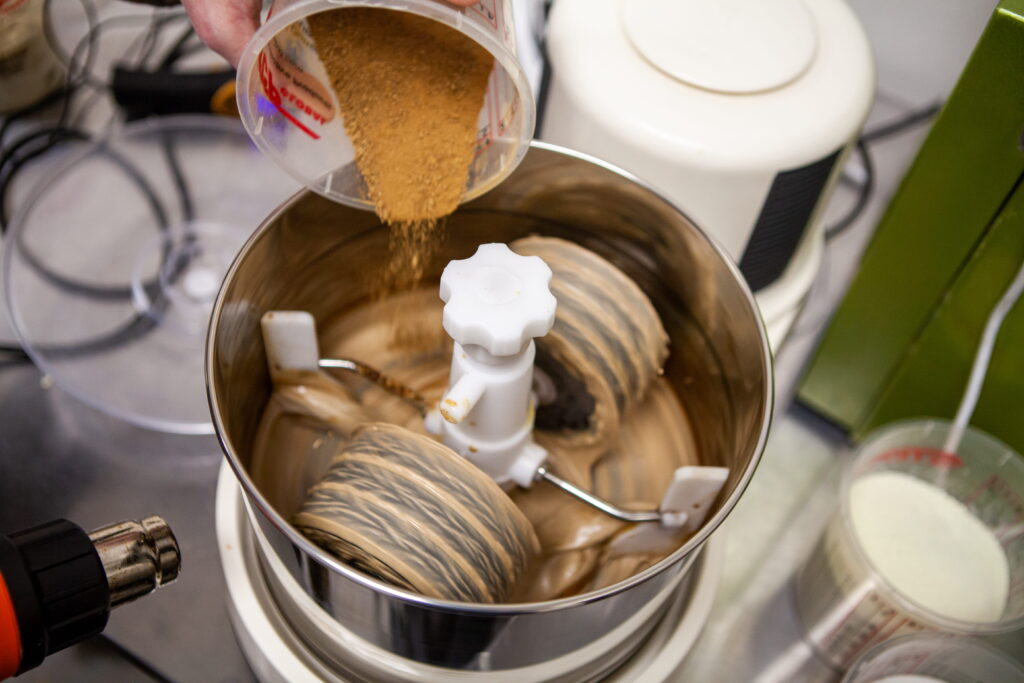
“We start with cocoa plant cells and grow them in controlled bioreactors, similar to fermentation, but with plant cells instead of microbes. Plant cells are the current only viable non-GM cellular agriculture products,” says Stearns.
“The cells produce the same compounds you find in cocoa, including the flavanols. Once the culture reaches the right density, we harvest, dry, and process it into a cocoa powder format,” he adds.
Unlike cultivated meat or precision fermentation, the media, R&D, capex, and bioreactor costs for culturing plant cells are much lower, since they use inexpensive nutrients like sugars, minerals, and vitamins and don’t require costly growth factors or pharmaceutical-grade facilities. The tech enables its cell-based cocoa to be price-competitive with supermarket chocolate products.
One of its major advantages is the flavanol content, which is roughly 20 times higher than what’s found in conventional cocoa. These compounds are responsible for the numerous health benefits attributed to cocoa, and plant cell culture can concentrate these in ways difficult to achieve with traditional agriculture.
“Flavanols are one of the most valuable parts of cocoa from a health standpoint. They are associated with cardiovascular benefits and are a big reason cocoa has been studied so heavily in nutrition science. The challenge is that traditional processing destroys a large portion of them,” explains Stearns.
“Because we control the production environment, we can consistently produce cocoa that is significantly higher in flavanols than conventional sources and maintain that through processing.
“One of the biggest problems in the flavanol industry is heavy metals such as lead and cadmium. Some of the leading products are high in heavy metals. Our product is free of lead and cadmium because we don’t grow cocoa in lead-rich soils.”
California Cultured bets on B2B model amid growing interest from Big Chocolate
California Cultured’s road to the market comes as climate change wreaks havoc on the cocoa industry. It pushed cocoa stocks to their lowest levels in a decade in 2024, when the prices of the crop broke all-time records.
The two largest producers of cocoa – the Ivory Coast and Ghana – have lost over 85% of their forest cover since 1960, and scientists have warned that a third of the world’s cocoa trees could die out by 2050, leading to a global shortage.
One of the food-related drivers of the climate crisis is chocolate itself, which emits more greenhouse gases than any other food except beef, and is linked to widespread tropical deforestation. Plus, a single bar of chocolate requires 1,700 litres of water on average.
“We are not dependent on farming, so we are not exposed to deforestation, climate volatility, or long supply chains,” Stearns says of California Cultured’s cell-based cocoa. “From a climate perspective, it removes a lot of land use pressure and significantly reduces transportation and agricultural inputs.”
Alan Perlstein, founder and CEO of the startup, adds: “For over a century, the chocolate industry has depended on a single agricultural system that is increasingly under pressure. Culturing cocoa cells gives us a path to produce chocolate ingredients with far greater stability while dramatically reducing environmental impact.”
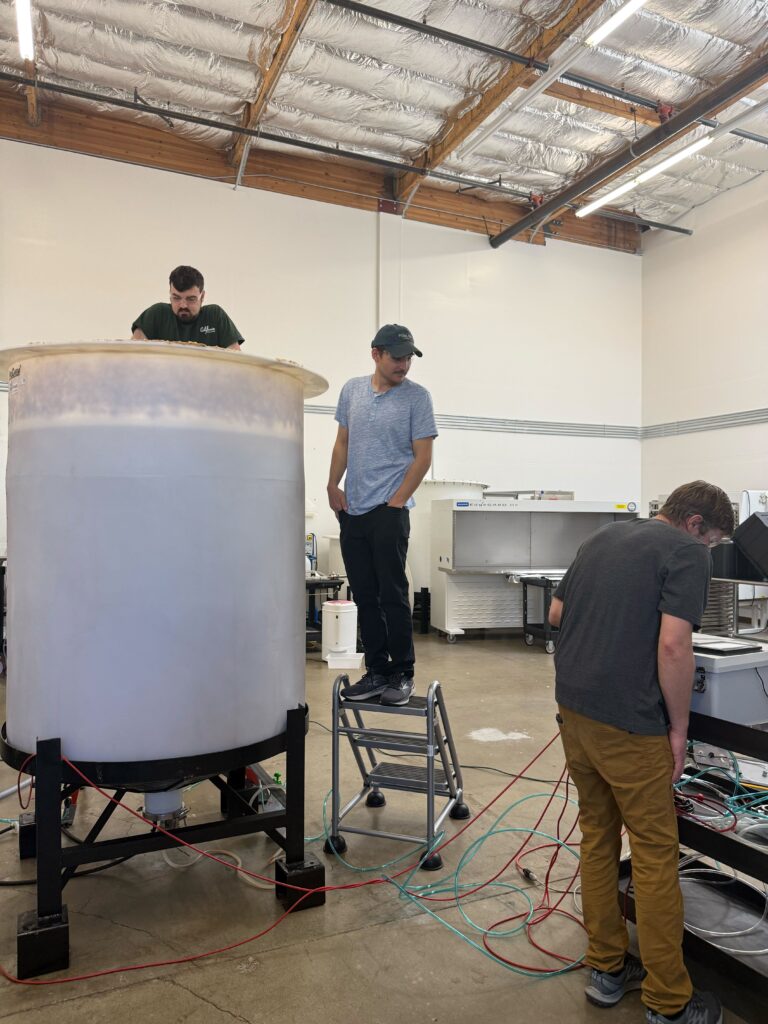
In 2025, the firm moved from lab-scale shake flask experiments to large-scale manufacturing in precision-controlled bioreactors via a partnership with biomanufacturing firm Pow.Bio. It then opened a 12,000 sq ft facility in West Sacramento, and has been co-developing high-flavanol products with Japanese chocolate giant Meiji, which are also set to launch in the US this year.
“The capacity over the next year will be at 160,000 litres. At that capacity, we will see [around] 76% operating margin on our first product, [a] Cultured Cocoa Powder high in flavanols,” says Stearns.
“We partner with large chocolate and ingredient companies and co-develop products with them,” says Stearns. “Today, we are working with groups like Meiji and Puratos, and the model is to plug into their existing manufacturing and distribution rather than trying to build a consumer brand ourselves. That lets us scale faster and meet demand where it already exists.”
More and more chocolate giants are entering the alt-cocoa space. Barry Callebaut, the world’s largest B2B chocolate supplier, is exploring both cell-based and cocoa-free chocolate. Puratos has invested in another cell-based cocoa startup, Food Brewer, alongside Lindt. And Mondelēz International and Cargill are developing cultured cocoa solutions with Celleste Bio and Kokomodo, respectively.
“Big chocolate companies are investing here because the supply side is getting more fragile. Demand is increasing globally while yields are under pressure from disease, climate change, and ageing farms. That creates real risk in their supply chains,” says Stearns. “Technologies like ours offer a way to stabilise supply, bring production closer to end markets, and potentially improve consistency and quality.”