

What Your Dog Eats May Matter More to the Planet Than Your Own Diet


Dogs that eat premium, meat-rich diets can have a larger climate impact than their owners, with the ingredients in British dog food making up 1% of the country’s total emissions.
Your dog’s diet could harm the planet more than your own, according to new research that puts the spotlight on the meat industry’s climate consequences.
Published in Journal of Cleaner Production, the study is the largest to analyse dog food’s environmental impact, and suggests that dogs fed premium, meat-heavy pet food can have a bigger dietary carbon footprint than their owners.
“As a veterinary surgeon working on environmental sustainability, I regularly see owners torn between ideals of dogs as meat‑eating ‘wolves’ and their wish to reduce environmental harm,” said John Harvey from the University of Edinburgh’s Royal (Dick) School of Veterinary Studies, the lead investigator of the study. “Our research shows just how large and variable the climate impact of dog food really is.”
UK dog food responsible for 1% of national emissions
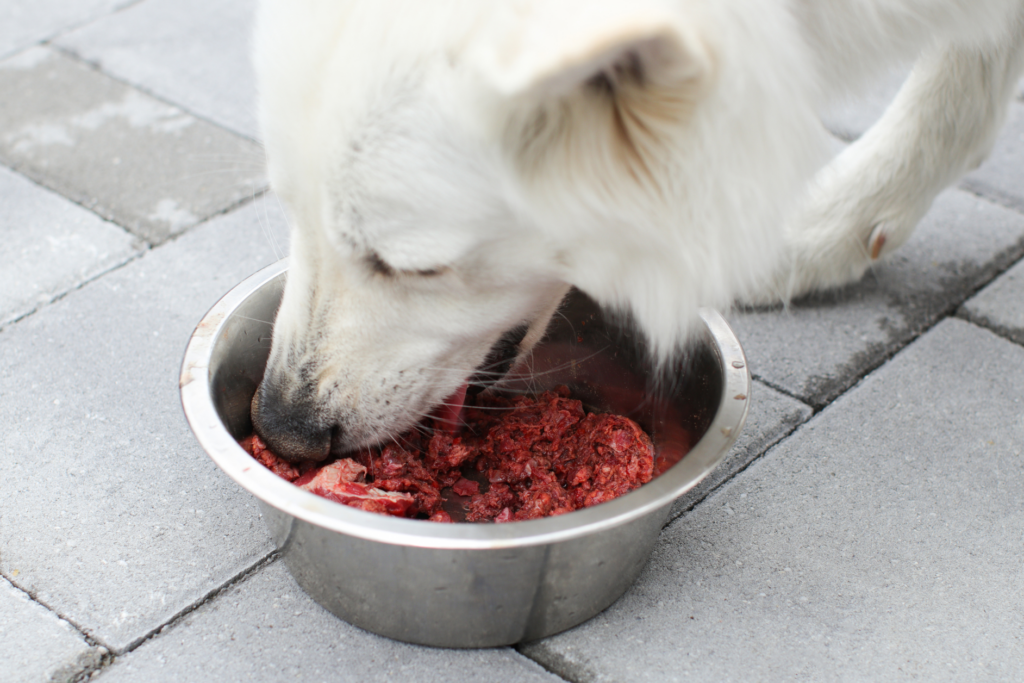
Harvey and his colleagues from the Universities of Edinburgh and Exeter used ingredient and nutrient labelling information to calculate the climate footprint of nearly 1,000 dog food products available on the market.
They based their research on the emissions generated during the production of ingredients, and their sample included a selection of dry, wet and raw foods, including plant-based and grain-free options.
Their findings reveal that the production of the ingredients used in British dog food contributes around 1% of the country’s overall greenhouse gas emissions.
In fact, manufacturing enough food of the types fed in the UK for canines globally could lead to emissions equivalent to over half of those from burning jet fuel in commercial flights each year.
The study uncovered striking differences in the environmental ‘pawprint’ of dog food products, with the highest-impact foods responsible for up to 65 times more emissions than the most climate-smart options. In particular, wet, raw, meat-rich and grain-free offerings cause significantly higher emissions than dry dog food.
“It’s important for owners to know that choosing grain-free, wet or raw foods can result in higher impacts compared to standard dry kibble foods,” Harvey said.
The impact of animal byproducts and plant-based pet food

Some argue that the use of animal byproducts (like bones, meat meal, or intestinal linings) means pet food has a lower environmental impact, since these are ingredients that would otherwise be discarded. Others contend that byproducts actually have a worse environmental impact, since it requires more livestock carcasses to produce the same amount of ingredients as human-grade meat.
This new study finds that using large amounts of prime meat that could otherwise be eaten by humans drives up emissions, and the use of nutritious carcass parts that are low in demand does help limit the environmental impact.
That said, a 2025 Frontiers in Sustainable Food Systems study found that only around a quarter of animal byproducts produced in wealthy nations go towards the pet food industry, which competes for these ingredients with the livestock, energy and pharma sectors.
For dog owners who want to lower the climate impact but not change their pet’s food type, Harvey and his colleagues recommend checking the label description of meat cuts used in the food and opting for products with a lower content of prime meat. They also called on the pet food industry to increase transparency and improve the labelling of dog food ingredients.
“The pet food industry should make sure meat cuts used are of the types not typically eaten by humans, and that labelling is clear. These steps can help us have healthy, well-fed dogs with a smaller pawprint on the planet,” said Harvey.
His research found that an increase in the use of plant-based dog food is also likely to reduce emissions, although only a small number of vegan products were available to test in the analysis. This aligns with the aforementioned Frontiers study, which concluded that feeding plant-based food to pets is the “most effective” way to mitigate their climate impact.