

Opinion: How to Build A Moat in Alternative Protein Manufacturing


Building a technology moat is hard for any company, but especially for alternative protein producers, which have considerably less funding available. But they can build moats through a strategic approach to co-manufacturing, ingredient sourcing, and IP.
The alternative-protein industry faces relentless pressure. Both industry experts and consumers demand price parity and improved texture or nutrition.
Meanwhile, competition has intensified. Ten years ago, plant-based burgers and minced meat were novelty items, often offered by only one or two brands. Today, the category is crowded with dozens of similar products, most of them largely commoditised.
Thus, to survive in today’s market, a strong technology moat is more important than ever. A good technology moat achieves at least one of two potential unique selling points.
It either radically improves sensory or nutritional performance – as companies like Oshi, New School Foods, or Offbeast demonstrate – or it drives cost reduction to reach or beat price parity, as seen with companies like Rebellyous Foods.
Why building a moat is hard for alternative protein companies
Creating a technology moat is difficult for any business, but it’s especially hard in alternative protein. Many alt protein start-ups face the same scientific and technological challenges as other biotech ventures, while experiencing the same margin pressure as CPG companies.
To make matters even more difficult, the funding available to reach a moat is drying up. According to the Good Food Institute, funding in the alt protein industry was down by 85% in 2024, compared to 2021
A winning moat must therefore balance strong technology and defensibility with resource efficiency and speed-to-market. In other words, alt protein companies have to deliver more with fewer resources available.
A roadmap to build a tech moat for alternative proteins
To build a real technology moat in alternative protein with little resources, you have to be strategic about three things: co-manufacturing, ingredient sourcing, and your IP.
1) Get your early co-manufacturing strategy right
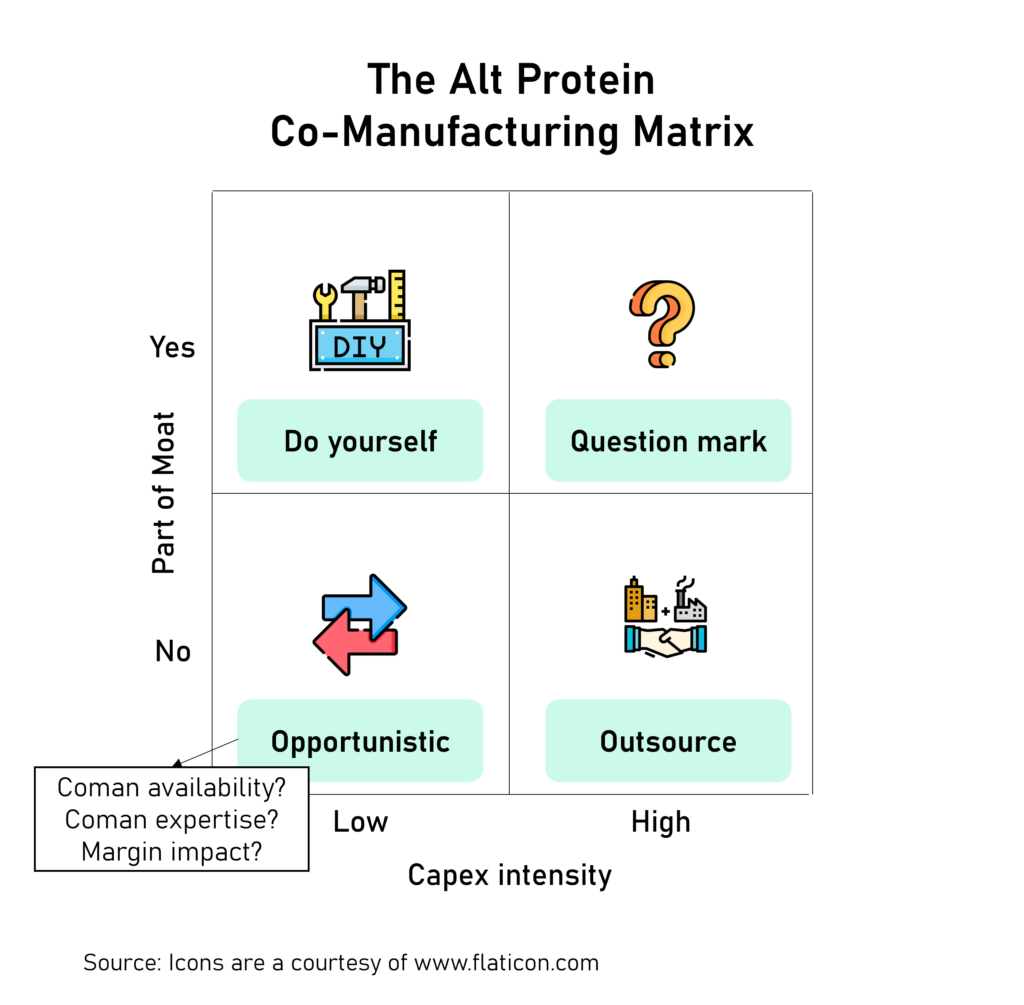
Your early co-manufacturing strategy can make or break your technology moat. Used wisely, co-manufacturing partners allow young alt-protein companies to avoid massive capital expenditures. For example, co-mans can provide access to industrial extruders – machines that can easily cost a million dollars or more.
Used unwisely, however, co-manufacturing can become your biggest liability, leading to delays, poor quality, loss of control, or even IP theft. Beyond Meat’s infamous legal battle with its co-manufacturer Don Lee Farms showed how those risks can become painfully real.
Thus, you should only outsource manufacturing, if it’s not relevant to your moat and if it’s too costly to build yourself. If, however, a process is central to your moat and funding allows, you should do it yourself to retain control.
It is important to understand that the outsourcing decision can be done on a per-process basis. Impossible Foods, for instance, may choose to protect its heme IP by self-manufacturing while outsourcing much of its commoditised manufacturing, thereby reducing CapEx while keeping its core technology secure.
2) Start sourcing downstream, then move upstream
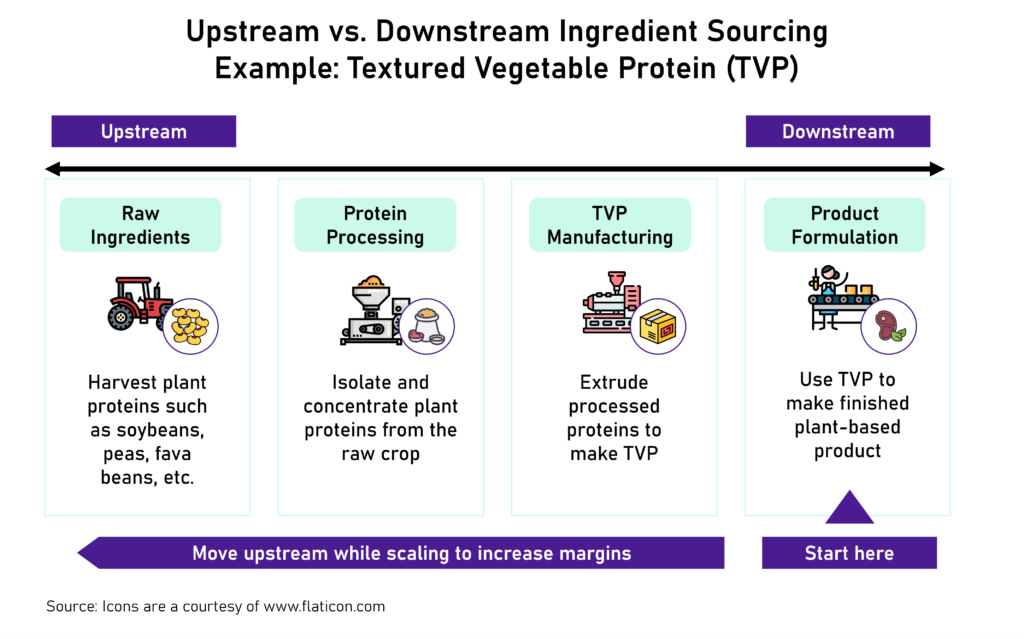
An important lever for speed-to-market that is often overseen in alt protein is smart ingredient sourcing. The fastest way to build a plant-based MVP with minimal R&D is to scrape the market for existing ingredients that work well enough. Using readily available materials, like textured vegetable protein (TVP) or plant-based extrudates, can save months of development and get you to market faster.
Once production scales and cost pressures rise, the focus should shift to cost control and vertical integration, moving upstream when the time is right. For TVP, for example, once you produce at scale and understand the process, you can add a TVP line yourself, making your technology moat deeper and harder to copy.
A great real-life example of this is Fable Food, an Australian-based company making centre-of-plate proteins from Shiitake mushroom stems. It started by sourcing its ingredients from mushroom farms, but is now developing its own cultivation process, allowing it to source ingredients more cheaply and a larger scale.
3) Build a nimble but mighty IP fortress
Defensibility matters in alt protein, but it has to be built in a resource-efficient way and focus on the right things. The most well-known way to be scrappy about IP protection is to first file a provisional patent. One year later, this provisional patent can be converted into a non-provisional patent.
Here’s the truth about this approach, though: If anyone infringes your IP, you most likely can’t – or shouldn’t – defend yourself with your limited resources. The costly patent fights that have consumed Meati vs The Better Meat Co and Motif FoodWorks vs Impossible Foods are sad examples of funding that went to lawyers instead of a technology moat.
Thus, you need to be smart about what to put and not put into your patents. After all, you don’t want your patent to become a blueprint on how to copy your technology thereby risking IP theft and costly lawsuits.
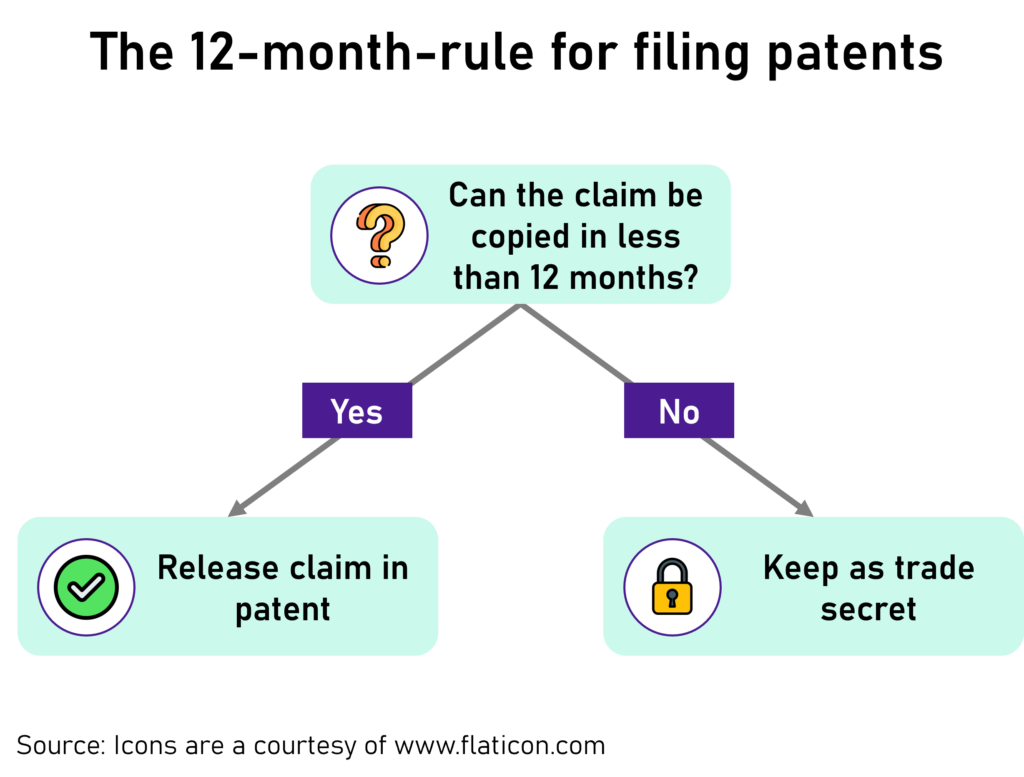
One practical approach many founders follow is the 12-month rule: for each claim, if someone knowledgeable would be able to take our product off the shelf and reverse engineer it within 12 months, release those details in a patent. If, however, it’s more complex to develop, keep these details as a trade secret.
In that way, you keep an important part of our moat a trade secret, making it significantly harder to replicate. At the same time, this makes you less vulnerable to being involved in costly lawsuits.
A future outlook for alternative protein companies
Despite the challenges around building a moat in alternative protein, the sector still fortunately, and perhaps surprisingly, continues to attract many savvy deep-tech founders.
The companies that succeed in the current environment share one core skill: they make more out of the funding that is available. In fact, many of the strongest performers in 2025 were not the ones that raised hundreds of millions, but the ones that operated with focus and strategic clarity about their moat.
It is this focus, and not the amount of capital, that determines who endures. Because in a capital-constrained market, clever use of capital isn’t just efficient, it’s existential.