

New Food-Based Dietary Guidelines Drive Growth of Plant-Based Proteins in Finland

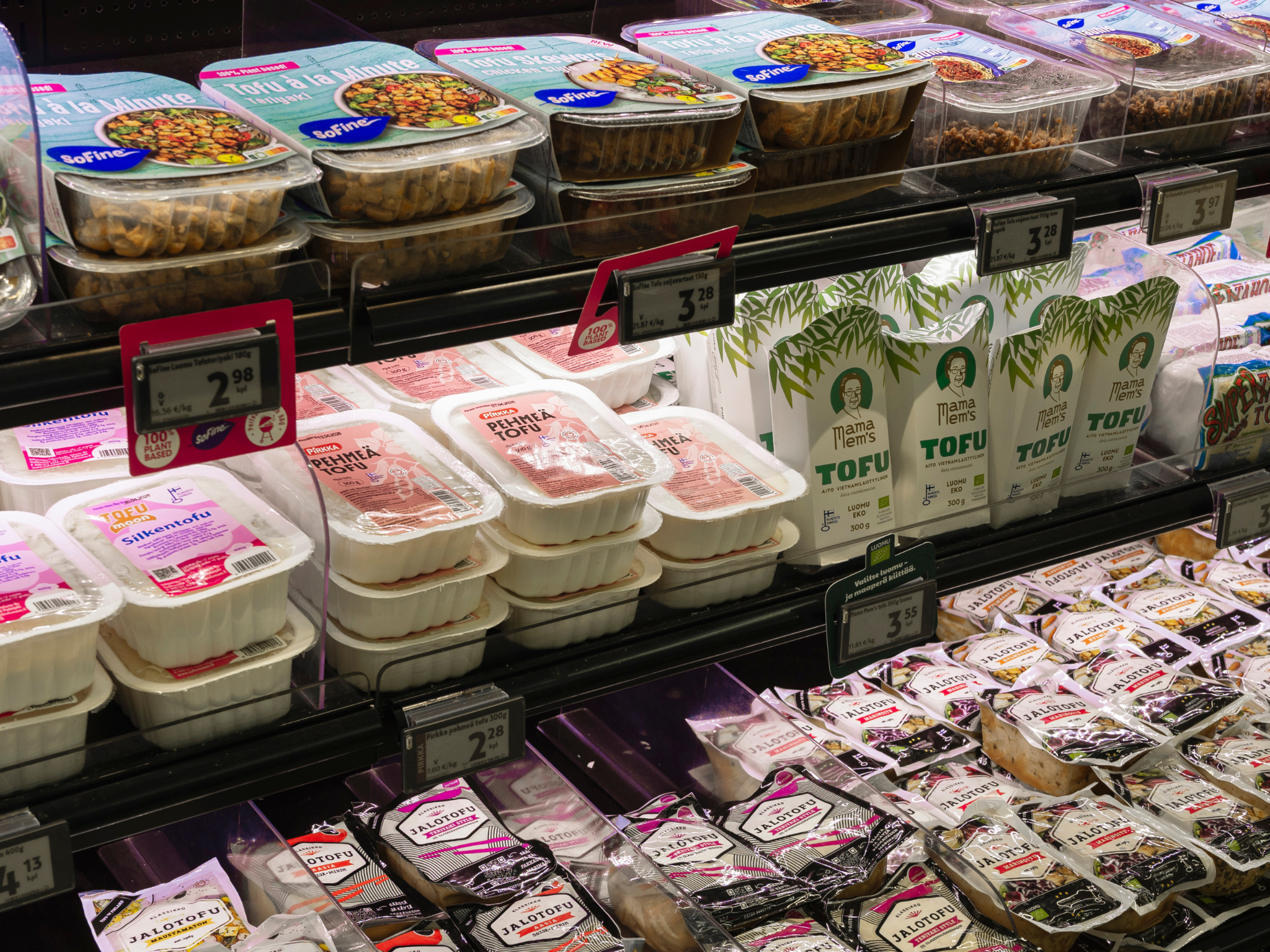
Finland’s plant-forward nutrition guidelines have spurred increased intake of whole-food proteins like tofu and legumes, with meat reduction the most popular dietary change.
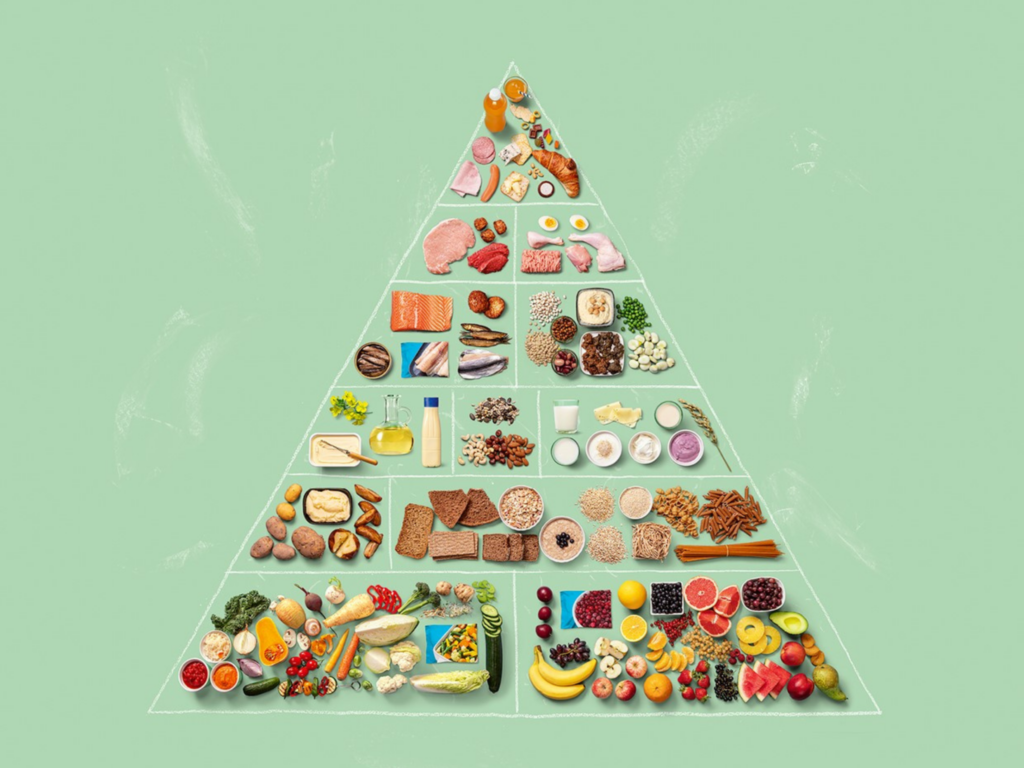
In November 2024, the Finnish Food Authority updated its national dietary guidelines to enhance both public and planetary health, calling for a shift in protein intake from meat to plant-based sources such as legumes, whole grains, and tofu.
Produced by a working group led by the National Nutrition Council, these were Finland’s first new dietary guidelines since 2014, and urged people to limit red meat intake to 350g per week (down from 500g), and increase the amount of fruits, vegetables, berries, legumes, and whole grains in their diet.
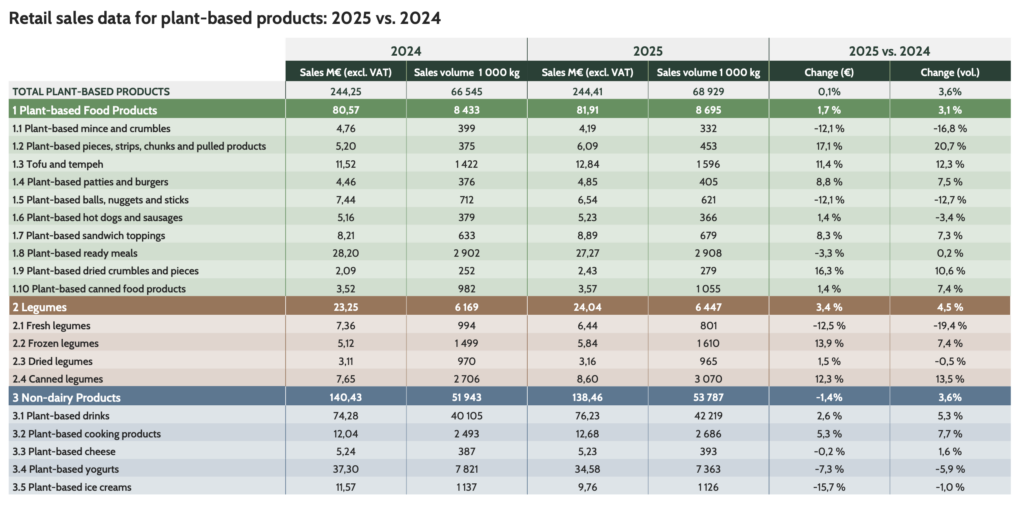
Now, it appears Finnish consumers have heeded that advice, with consumption of plant-based whole foods like tofu and canned lentils on the up as meat goes on the back burner. Overall, sales of plant-based products flatlined at a 0.1% hike year-over-year, reaching €244M, though volumes rose by 3.6% in 2025.
According to a survey by Plant Based Food Finland (or Pro Vege), 15% of Finns reoriented their diets in line with the updated nutritional guidance, and 2 in 5 are more interested in plant-based products. The most popular shift is reducing meat consumption, a change made by 69% of people who made a change.
This was followed by higher intake of fruits and vegetables (64%) and legumes (61%), and lower consumption of processed meats such as cold cuts (63%) and saturated animal fats like tallow and butter (50%).
“The impact was strongest among those meat-eaters aiming to reduce their consumption,” Jukka Kajan, executive director of Plant Based Food Finland, tells Green Queen.
Indeed, 28% of meat-reducers altered their eating habits to better align with the dietary guidelines, and 59% are more interested in plant-based products (even more so than vegans or vegetarians).
“In these cases, there was an underlying intrinsic motivation, and the dietary guidelines from a trusted public authority provided an additional push towards action,” says Kajan.
Finland’s dietary guidelines in contrast with America’s MAHA-led advice
The impact of the Finnish dietary guidelines appears strongly gender-dependent, with only 11% of men reporting that they changed their food habits in line with the recommendations, compared with 19% of women.
Why are women more inclined to follow the advice? Kajan suggests flipping the question to: “Why not men?”
“Meat consumption patterns in Finland differ significantly by gender. Among men, the average weekly consumption of red and processed meat is around 760g, with 79% exceeding the previous recommendation of 500g. Among women, the corresponding figures are considerably lower at 390 grams and 29%,” he explains.
“The link between meat and masculinity has been widely studied and continues to shape food choices. Social and cultural norms play a significant role, and currently, there is a visible trend, particularly among younger men, emphasising meat as a superior source of protein.
“From both a business and a public health perspective, the potential is substantial if this connection between masculinity and meat consumption is cracked.”
The social media manosphere has fueled meat consumption, especially among young men, and this has been exacerbated by the appointment of Robert F. Kennedy Jr., a carnivore, as the US health secretary.
Aligning with his Make America Healthy Again strategy, the new (highly controversial) US dietary guidelines have inverted the food pyramid, encouraging the consumption of red meat, butter, tallow, and full-fat dairy, despite experts recommending a shift to plant-forward diets low in saturated fat.
“What we’re seeing in Finland is a very strong policy-to-market signal. The approach is very different from what we’ve seen in the US,” says Kajan. “The traditional pyramid is based on scientific evidence linking plant-rich diets to lower risks of cardiovascular disease and type 2 diabetes.
“A pyramid standing on its tip with red meat and associated saturated fats given a top position hardly creates a stable foundation for public health policy,” he adds.
In any case, research shows that most people don’t adhere to national dietary guidelines. What makes Finland stand apart? “The updated dietary guidelines were highly visible in public debate, which significantly increased awareness among consumers,” says Jukka.
“In addition, the recommendations aligned with an underlying shift as many consumers were already considering reducing meat consumption, and guidance from public authorities helped turn that intention into action among science-trusting and institution-respecting Finns. Without leaning too much on the slippery stereotypes, Finns tend to obey authorities.”
Plant-based meat sees strong growth despite UPF debate
One of the more intriguing results from Plant Based Food Finland’s analysis of the retail market concerns the meat alternatives category.
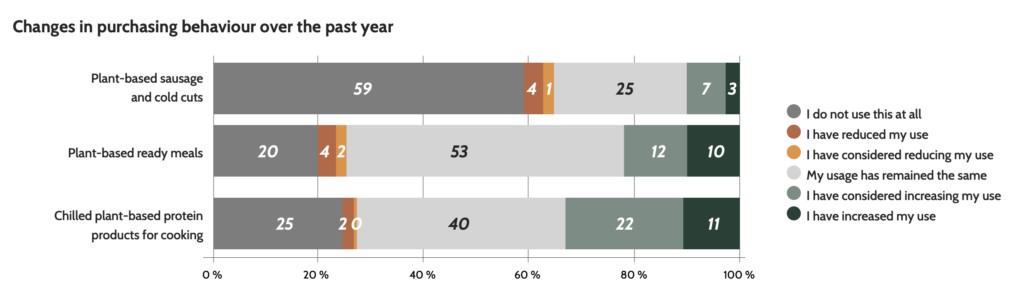
Plant-based pieces, strips, chunks and pulled products experienced the largest hike in volume sales in 2025 (up by nearly 21% year-on-year), while burgers and schnitzels saw a 7.5% increase. Other formats didn’t perform as well, including mince and crumbles (-17%) and sausages and weiners (-3%).
Despite the resurgence of several plant-based meat categories, these products did not play a major role in increasing consumption of vegan food – of those who changed their diets based on the guidelines, only 15% began eating more meat analogues, four times less than those who upped their legume intake.
“I think consumption is driven by legumes due to their familiarity and approachability. It is less obvious why tofu has received a boost in the past year, but most likely it is perceived as more approachable than newer innovations in chilled plant-based products,” says Jukka.
“These protein products, such as chunks and strips, are still widely regarded as being meant for plant-based eaters and carry a strong label as such. A similar barrier is not as strong with legumes,” he explains.
“Market development in plant-based protein products is being challenged by the intensifying public debate around food processing, which is largely based on false assumptions,” Jukka adds, referring to concerns about ultra-processed foods (UPFs).
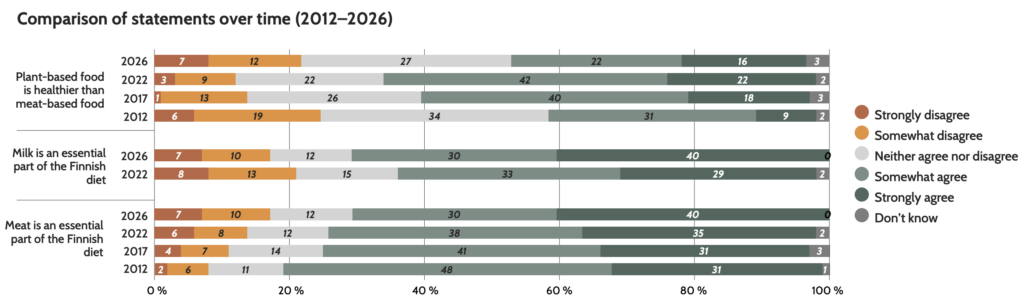
The survey shows that the share of Finnish consumers who find plant-based meat overly processed has increased from 34% in 2020 to 57% in 2026. “More and more people now have a definite opinion on the issue than before,” he says.
This also aligns with shifting perceptions of plant-based foods. In 2022, 64% of respondents agreed that these are healthier than meat; that has fallen to just 38% today (in line with the consensus among Finns in 2012). The share of people who believe meat is better for health has similarly increased from 12% to 19% since 2022.
How plant-based food producers can win over more consumers
The research reveals that non-dairy products are the largest segment in Finland’s plant-based food market, accounting for 57% of the total share. This category saw sales dip by 1.4%, but its purchase volumes increased by 3.6%.
Within this, plant-based milk is the dominant product segment, with sales up by 2.6% to reach €76M. Among omnivores with no intention to reduce meat, 43% report drinking dairy-free milk once a week, much more so than those who consume plant-based meat (5%) or legumes (18%). Vegan yoghurt, the market’s second largest space, saw a 7% decline, however.
Meanwhile, sales of tofu and tempeh grew by 11%, while legumes experienced a 4.5% increase in volume. This was largely thanks to a hike in sales of canned and frozen legumes (12% and 14%, respectively), offset by a 12.5% decline in fresh legume sales, which Plant Based Food Finland ascribed to their premium positioning and inflationary pressures on consumers.
“The future looks promising, but of course, it is not guaranteed. I expect that the changing offering of food services following the updated guidelines will help normalise plant-based eating and make these ingredients more familiar to consumers. This, in turn, will also have a significant impact on retail sales,” says Kajan.
“Together, these developments move us towards a tipping point, after which plant-forward eating becomes a self-reinforcing consumption pattern leading to an exponential growth track. Finnish plant-based food producers seek growth from export markets, as the domestic market is relatively limited.
“Here, Finland benefits from our world-class food technology expertise and distinctive raw materials, such as oats and fava beans, which enable high product quality and clear differentiation in international markets. A strong indicator of product quality is that local brands dominate the domestic market, outperforming imports in terms of desirability.”
So what can brands do to increase plant-based food uptake? “There is significant untapped business potential if brands are able to move beyond the ‘diet as identity’ dynamic, address the link between masculinity and meat, and overcome the hurdles created by the misleading debate around food processing,” Kajan responds.
“There are some early indications that many consumers are ready to move beyond identity-driven food choices and are adopting a more pragmatic approach to their diets. As tensions ease, I hope this will also give policymakers the confidence to take strategic decisions that future-proof our food production and consumption.
“Despite some very positive recent developments, what is still lacking is a truly strategic and forward-looking approach at the system level.”