

Checkerspot Unveils Microalgae-Based Alternative to Intensively Farmed Oils in Personal Care


US startup Checkerspot has launched a fermentation-derived algal oil for personal care and cosmetics applications, as part of a collaboration with La Fabrique Végétale.
Betting on the personal care industry’s expanding embrace of sustainable fats, Californian biotech firm Checkerspot has debuted Algolein, a new line of microalgae oils to replace intensively farmed fats in skincare, makeup, and other cosmetics.
The startup’s core technology is precision fermentation, which involves inserting specific DNA into microbes to teach them to produce the desired molecules when fermented.
“The market is moving away from ingredients tied to intensive agriculture, and formulators are increasingly looking to microalgae and precision fermentation to get there,” said Checkerspot CEO John Krzywicki.
The first ingredient to be launched under the range is Algolein TG C18/80, a non-GMO, high-oleic algal oil commercialised via a partnership with French cosmetics specialist La Fabrique Végétale.
Checkerspot’s algal oil offers benefits on several fronts
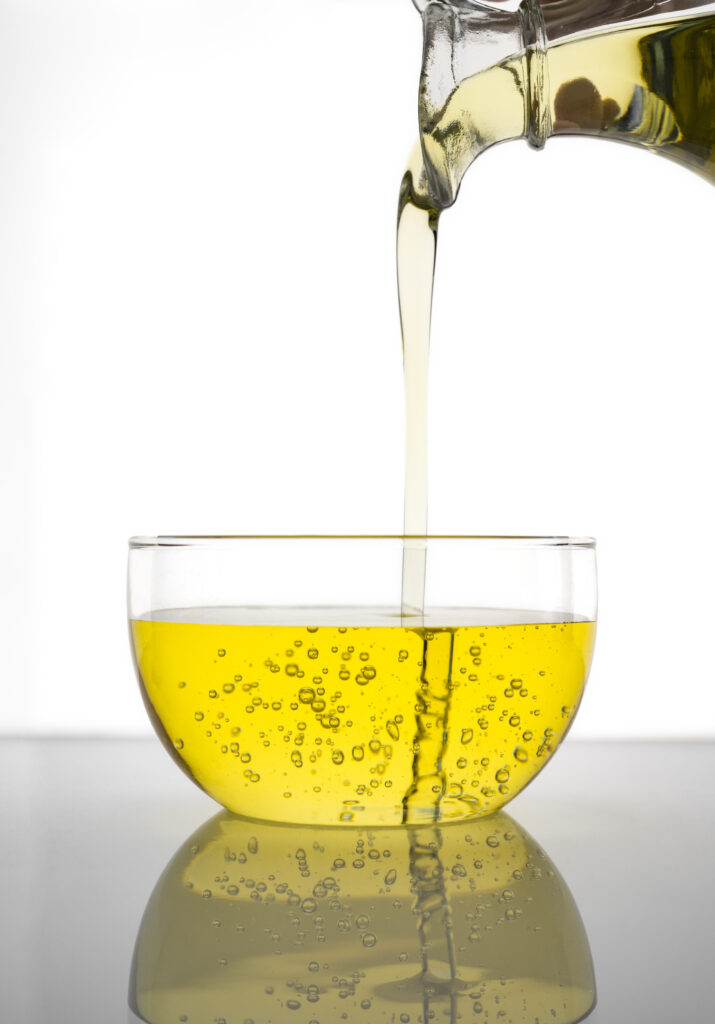
Oil crops occupy around 37% of the world’s farmland, and the demand for these ingredients could require a 14% increase in production by 2050.
Checkerspot’s new ingredient is designed as a sustainable replacement for high-oleic sunflower, camellia, olive, and avocado oils across skincare, suncare, haircare, and makeup formulations.
It contains over 80% oleic acid, which is complemented by the presence of ergosterol, a naturally occurring sterol not typically found in conventional vegetable oils.
Algolein TG C18/80 is said to provide exceptional oxidative stability, reducing the rancidity concerns commonly cited with natural oils, as well as having a neutral sensory profile that doesn’t affect the colour or odour of finished formulations, and offers a silky sensorial experience suited to premium products.
The fermentation-derived lipid can also support skin repair and the healing process, help protect and strengthen the skin barrier, and reduce oxidative stress and inflammation.
Moreover, the production process is free of phytosanitary inputs, ensuring the absence of pesticide residues or other agricultural contaminants. And the controlled fermentation tech enables consistent and reproducible composition, reducing batch-to-batch variability.
“Our platform gives the industry drop-in alternatives that outperform the oils they’re replacing and sets the stage for a new generation of innovation,” said Krzywicki.
Fermentation-derived sustainable fats take over personal care industry

Checkerspot and La Fabrique Végétale, which first announced their Europe-focused partnership in January, will debut the new fat at the In-Cosmetics Global trade show in Paris this week (April 14-16).
It comes as more and more Europeans are seeking cleaner beauty: half of consumers now prefer eco-friendly skincare products. Life-cycle assessment indicators show that Algolein TG C18/80 has a lower environmental impact than crop oils of similar composition, including land use and associated climate change, eutrophication, ecotoxicity, and human toxicity.
And since the oil is produced through fermentation rather than on-farm agriculture, it isn’t subject to the seasonal variability, crop failures, or supply chain disruptions that routinely affect vegetable oil production.
Checkerspot is one of several companies working on fermentation-derived lipids for the personal care sector. Last week, Estonian startup Äio debuted RedOil, an alternative to tropical fats like palm oil made by upcycling industry byproducts, in a skin-boosting serum created with personal care brand Tilk.
This followed UK firm Clean Food Group’s launch of CleanOil, a waste-derived yeast fat for the beauty and cosmetics sector. Last year, the company secured regulatory approval to use its yeast oil as a cosmetic ingredient in the US and Europe, and acquired microalgal oil producer Algal Omega 3.
Elsewhere, California’s Savor diversified its carbon-based fat platform by expanding into the beauty sector with four products across skincare, haircare, over-the-counter formulations, and therapeutic care.
Checkerspot, meanwhile, isn’t just producing algal ingredients for personal care. It has developed a fat analogue that can mimic the human milk fat OPO (Oleic-Palmitic-Oleic or sn-2 palmitate), an essential component for infant health that serves as a key nutritional difference between breast milk and baby formula. The firm is working with Bulgaria’s Huvepharma to produce the ingredient at an industrial scale.