

After EU Trade Deal, India Eyes Biotech Leadership with Precision Fermentation Scale-Up Facility

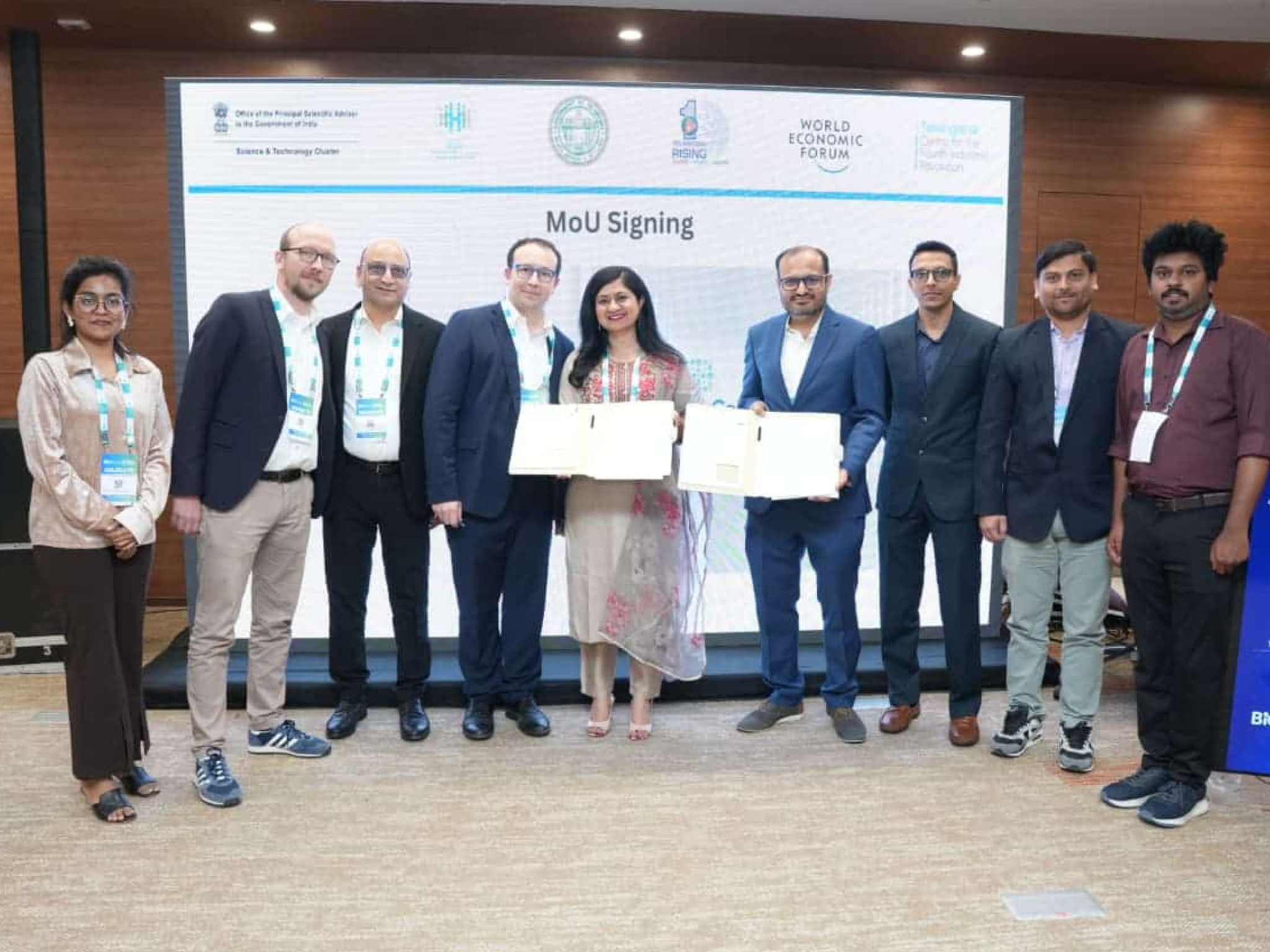
Indian firm PreferCo has teamed up with German biotech giant Glatt to launch a precision fermentation scale-up centre in Hyderabad, weeks after India’s landmark trade deal with the EU.
It was nearly a month ago that India signed its free trade agreement with the EU, which labelled it the “mother of all trade deals”.
The historic pact will cut tariffs on a range of commodities, including machinery, chemicals, processed foods, and more. It is set to support investment flows, improve India’s access to European markets, and deepen supply-chain integration.
This is India’s biggest free trade agreement, and marks a new era in its bilateral relationship with the EU. One of the sectors that will benefit most from this association is biomanufacturing, an area in which the Indian government has been investing heavily.
Against that backdrop, a new Indo-European partnership has led to the opening of a new bioprocess scale-up hub in the country, with a focus on precision fermentation technologies.
The Centre of Excellence has been launched by Hyderabad-based PreferCo and German integrated process tech leader Glatt at BioAsia 2026, and is designed to bridge the gap between lab research and pilot to pre-commercial manufacturing.
It will be a big boost to India’s BioE3 strategy, which focuses on accelerating tech development and commercialisation by setting up biomanufacturing hubs and biofoundries across the country.
Glatt and PreferCo target wide set of applications
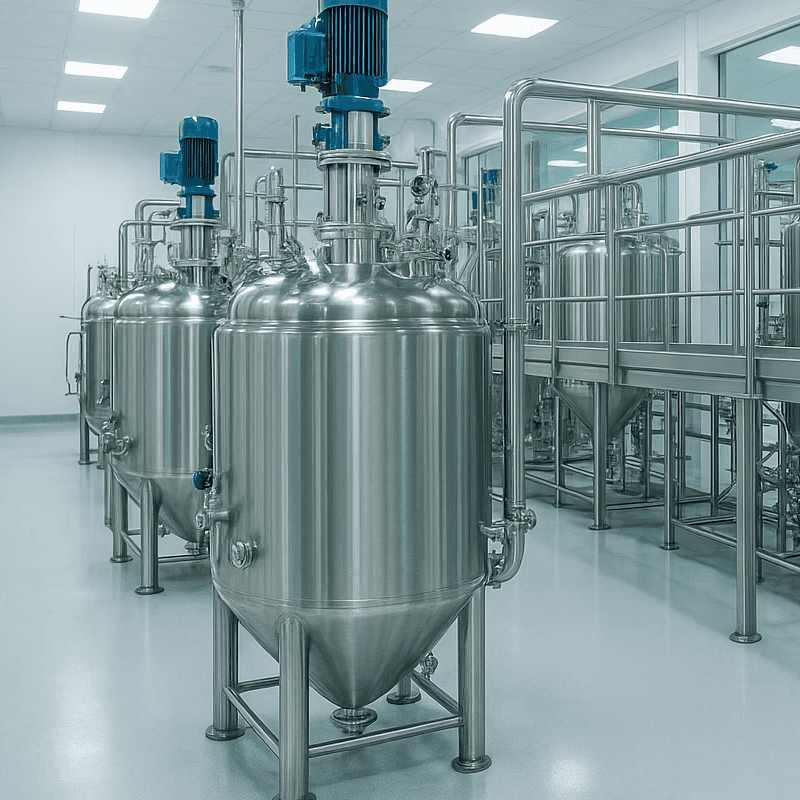
Precision fermentation involves inserting a specific DNA sequence into microbes to instruct them to produce the desired molecules when fermented. The technology uses bioreactors for the fermentation process, and can produce a range of compounds, including proteins, fats, vitamins, pigments, and flavours.
The PreferCo-Glatt facility has the capacity to support scaling up to 1,500-litre bioreactors, and is embedded with automation, advanced instrumentation, and AI-enabled process support from the get-go.
This approach can help deepen process understanding, improve reproducibility, and enable faster decision-making during scale-up, reducing technical risks and accelerating the path from proof-of-concept to commercial readiness, often referred to as food tech’s “valley of death”.
The Centre of Excellence will extend beyond biopharmaceuticals, the traditional application of precision fermentation, into emerging areas like functional foods, industrial biotech, personal care, wellness, longevity, sustainable materials, and bio-based chemicals.
By expanding access to globally benchmarked scale-up infrastructure for precision fermentation (and at accessible price points), this hub is aiming to address a long-standing gap faced by industry giants, academic researchers, and startups alike. PreferCo’s partnership with Glatt, with the wider context of the EU trade deal, puts India at the heart of this shift.
The country’s bioeconomy has exploded over the last decade or so, going from a value of $10B in 2014 to $166B in 2024, according to its science and technology ministry. By 2030, it could reach $300B.
“Sustaining this momentum will depend on strengthening the country’s ability to convert scientific capability into reliable, large-scale manufacturing,” said Rajiv Bhide, managing director of Glatt Systems. “The Centre of Excellence has been established to support this next phase of growth.”
Aligning with India’s bioeconomy vision
The precision fermentation hub aligns closely with the BioE3 policy, which focuses on six growth areas: high-value bio-based chemicals, biopolymers and enzymes; smart proteins and functional foods; precision biotherapeutics; climate-resilient agriculture; carbon capture; and marine and space research.
PreferCo and Glatt said precision fermentation represents a critical lever within this framework, offering scalable, resource-efficient pathways to manufacture high-value biological products across sectors.
“By providing a dedicated platform for structured fermentation scale–up, supported by advanced engineering and integrated digital systems, it enables technologies to be validated and industrialised on a robust technology platform,” said Bhide.
“Such infrastructure is essential to building a competitive biomanufacturing ecosystem – one that can consistently deliver high-value, fermentation-based products for both Indian and global markets.
This new precision fermentation centre is one of several alternative-protein-focused hubs that have opened in India recently. In 2024, Bengaluru saw the launch of the Centre for Smart Protein and Sustainable Material Innovation (an incubation hub) and the Alternative Proteins Innovation Center (a scale-up facility).
Last year, the government opened the National Institute of Animal Biotechnology in Hyderabad. It’s India’s first animal stem cell biobank, and is aimed at revolutionising animal health, regenerative medicine, agricultural productivity, and cultivated proteins.
And Swiss startup Planetary last month signed a partnership framework with DCM Shriram Bioseeds to bring mycoprotein production to one of the latter’s sugar mills in India.