

How The Protein Brewery is Eyeing the Longevity Space with Mycoprotein Bioactives


Can fungi help humans live better and longer? Dutch mycoprotein startup The Protein Brewery is hoping to do just that by promoting multiple pathways of healthy ageing.
In Western Europe, people born in 2024 are expected to live 17 years longer than those born in 1950. However, when the former group reaches the age of 65, more than half of their remaining 20 years will be spent in poor health.
That is the dichotomy that drives the region’s longevity space. People are now living longer, but not in undisputably better health – and that calls for a more holistic, consumer-centric approach to nutrition and wellbeing.
This is, at least, the philosophy of The Protein Brewery, a Dutch startup that will soon launch its high-protein, high-fibre fungal ingredient for the food industry. “Rather than focusing on lifespan extension, we think [of longevity] in terms of maintaining good overall health across life stages: weight management, microbiome health, cognitive capacity, physical vitality, etc.,” says CEO Thijs Bosch.
“These are the outcomes our customers’ consumers care about, and they are where nutrition through our innovative ingredient Fermotein plays a meaningful role.”
Diets and longevity are intricately linked. Eating a plant-rich diet with tons of whole foods and limited amounts of animal protein is consistently associated with better health outcomes – that’s the gist of the Eat-Lancet Commission’s recommendations for a healthy and sustainable food system.
Our quest to live longer, fuelled by figures like Bryan Johnson and documentaries such as Live to 100, has shifted the conversation from climate to health, prompting food tech innovators to pivot.
“Longevity is not about a single nutrient or intervention. It sits at the intersection of diet quality, physical activity, and lifestyle – and you hear this often from experts in longevity like Dr Eric Topol and Dr Peter Attia,” Bosch points out.
“Our role as an ingredient company is to contribute to that system by offering a nutrient-dense food ingredient that supports everyday nutritional adequacy, particularly in mid- to later life when protein needs increase, and diet quality often declines.”
What is Fermotein, and how does it contribute to longevity?
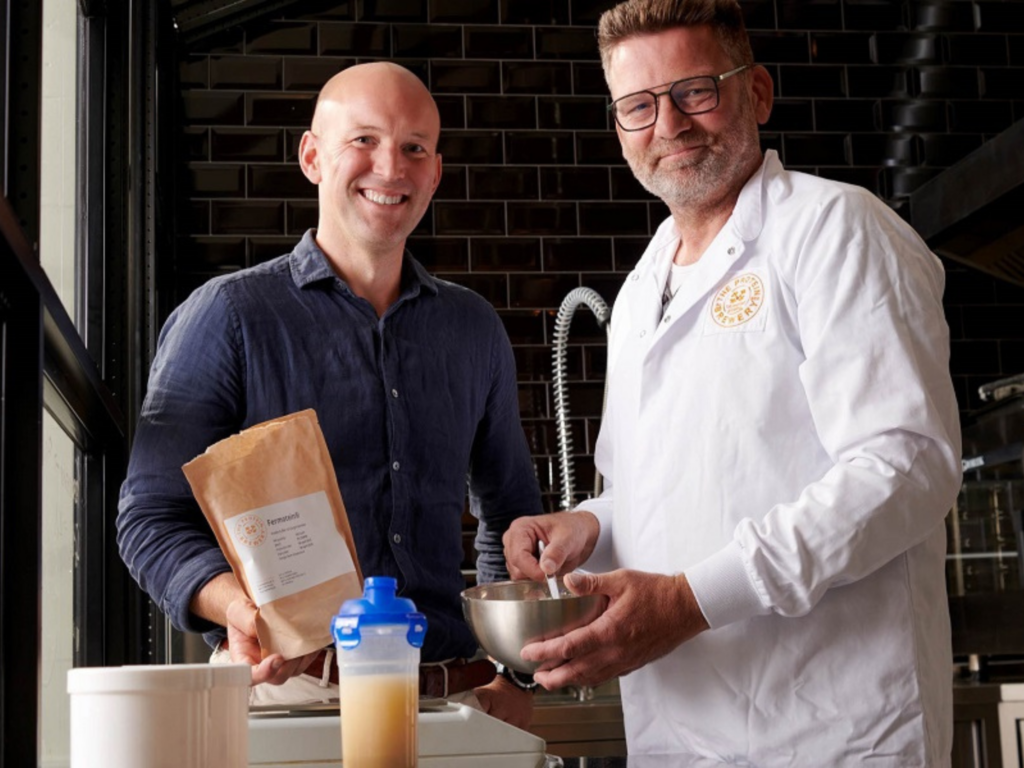
The Protein Brewery, which was formed as a demerger of industrial biotech company BioscienZ BV in 2020, converts low-nutritive crops into low-carbon, nutritional powerhouse products. Fermotein is its first innovation.
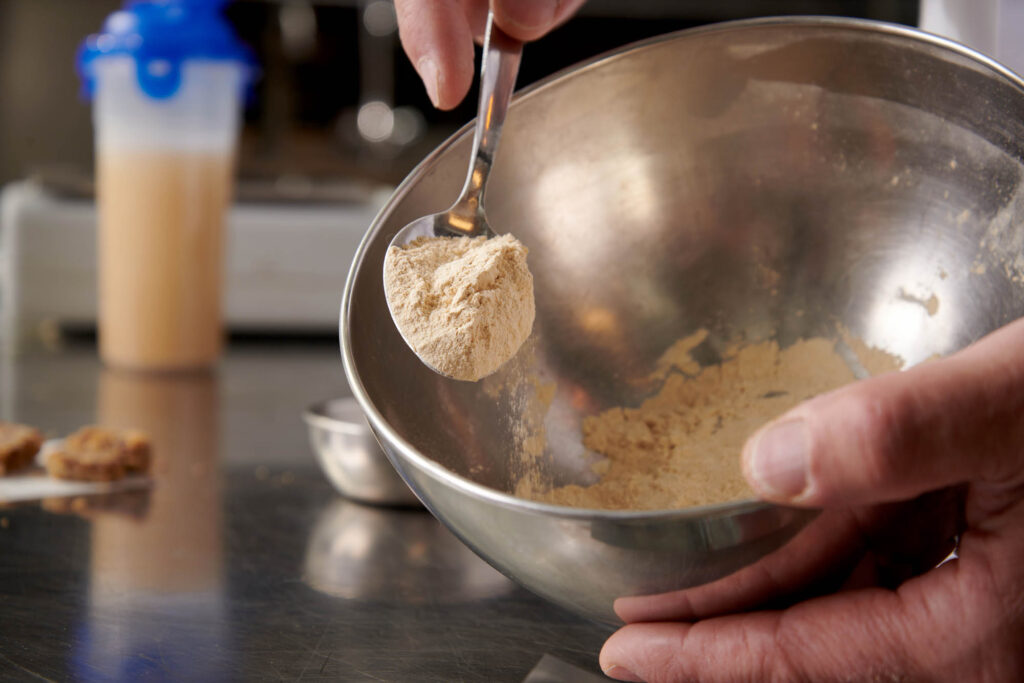
It’s a whole-cell bioproduct derived from Rhizomucor pusillus, an extremophilic strain that can deal with low pH levels and high temperatures. The startup grows it in fermentation tanks using glucose as a feedstock, pasteurises and dries it, and then mills it into powder.
The resulting mycoprotein yields 26 times more protein than meat, five times more than soy, and four times more than peas. And when compared to beef, Fermotein uses just 1% of the land, consumes 5% of the water and releases 3% of the emissions.
“Fermotein is a minimally processed, whole-food mycoprotein ingredient, which means its nutritional value comes from the combination of macronutrients, micronutrients, and naturally occurring bioactive compounds rather than from any single isolated component,” explains Bosch.
Half of the ingredient is comprised of complete protein with a PDCAAS score of 1, which helps maintain muscle mass. “Adequate protein intake is particularly relevant for older adults, where age-related muscle loss (sarcopenia) is a well-established risk factor for reduced mobility and independence,” he says.
“In addition, approximately 30% of the ingredient is dietary fibre. This fibre acts as a substrate for the gut microbiota, and we have promising preliminary prebiotic effects of Fermotein, indicating a stimulation of short-chain fatty acids and a change in the microbiome.”
Naturally occurring spermidine boosts healthy ageing
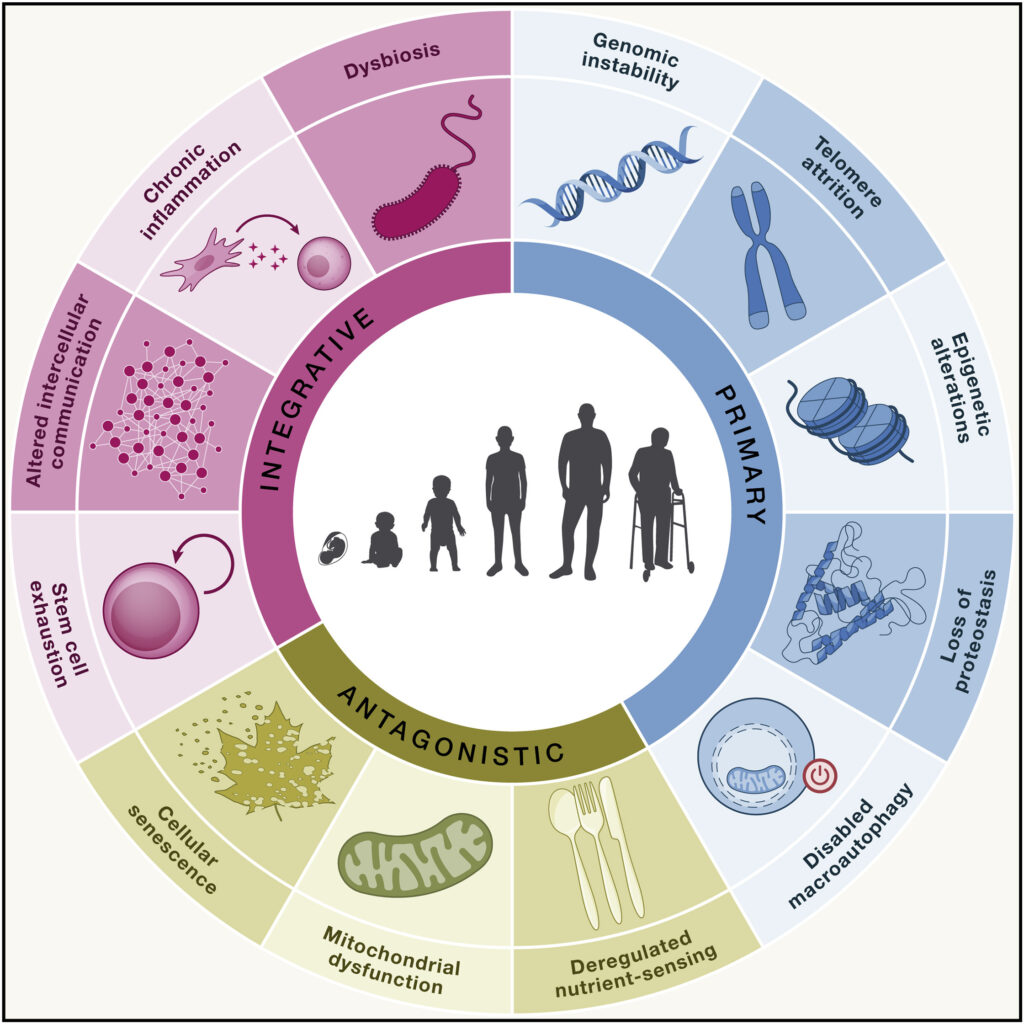
The key bioactive in Fermotein is spermidine, a polyamine that is vital for cell growth and regeneration, immune regulation, DNA stability, and more. It is an increasingly popular component for anti-ageing supplements, and human studies and mechanistic research have associated it with cellular maintenance pathways like autophagy.
“Autophagy is a core cellular maintenance mechanism, recognised by the 2016 Nobel Prize awarded to Yoshinori Ohsumi,” notes Bosch. “It allows cells to recycle damaged components and renew themselves, supporting cellular resilience, adaptation, and long-term function.”
Spermidine, he says, induces autophagy: “By supporting cellular housekeeping, autophagy may indirectly reduce oxidative stress within cells, which is one of several factors that can contribute to DNA damage over time.”
Some suggest that spermidine can help maintain the length of telomere (protective caps on chromosomes), thus slowing down the ageing process. But Bosch says spermidine does not directly act on telomeres – any connection is “indirect and mechanistic”.
Spermidine is a natural fungal metabolite, which is why it occurs naturally in Fermotein. “The spermidine content in Fermotein is therefore not added or fortified; it is an intrinsic property of the mycelium biomass produced through fermentation,” he explains.
“During strain development, we screened over 100,000 food-grade fungal strains for nutritional composition, scalability, and sustainability. Nutrition was a key selection criterion. As part of this process, we conducted detailed compositional analyses, including screening for polyamines such as spermidine,” reveals Bosch.
“Altogether, Fermotein contributes to healthy ageing by supporting protein adequacy, fibre intake, and overall dietary nutrient density, rather than by targeting a single longevity pathway.”
Opportunities in the GLP-1 space
For years, longevity studies and documentaries have continued to spotlight evidence emphasising whole foods like fruits, vegetables, legumes and nuts. It forms the crux of the Blue Zones movement, too. How does Fermotein, a fungi-derived ingredient, fit into that conversation?
“‘Whole food’” is not a regulated term, and its meaning varies widely in public discourse. One commonly referenced framework is the Nova classification, which focuses on the degree of processing rather than the source organism,” says Bosch, nodding to the debate around ultra-processed foods.
“Within this framework, foods produced through fermentation without fractionation or recombination fall into the same category as minimally processed foods. Fermotein is a whole biomass, and although it is dried and milled for practical use, its macro- and micronutrients remain within the same cellular matrix,” he argues.
“For that reason, we believe Fermotein can sit alongside other minimally processed whole foods in the diet, alongside vegetables, fruits, and legumes.”
The growing interest in fibre-rich whole foods (and longevity in general) is partly a result of the GLP-1 boom, with drugs like Ozempic and Mounjaro changing the way we eat as a society. To survive in the post-Ozempic era, any food company must adapt with high-protein, high-fibre, satiety-boosting options.
The Protein Brewery has been exploring the potential of Fermotein as a natural GLP-1 booster, and counts Novo Holdings, the parent company of Ozempic maker Novo Nordisk, as one of its investors.
“The nutrient density of Fermotein may help support individuals using GLP-1–based therapies during weight loss by contributing essential protein and nutrients within a reduced caloric intake,” says Bosch. “It may also support older adults in meeting protein needs associated with the maintenance of muscle mass.”
The Protein Brewery expects EU approval by mid-2026

In September, The Protein Brewery raised €30M ($35M) in Series B funding to bring Fermotein to market, having already been approved for sale in Singapore and the US. It then received two grants from EU-backed initiatives, the latter a $2.7M investment from the EU LIFE programme to commercialise the ingredient for use in dairy alternatives.
“The EU LIFE grant complements our commercial ambitions in active nutrition. Its focus is on improving the nutritional quality and environmental performance of alternative dairy products, in addition to studying the ageing-related health benefits of Fermotein,” explains Bosch.
“For example, many plant-based dairy alternatives are relatively low in protein and higher in sugars (think oat milk). Fermotein can be used to increase protein density while keeping available carbohydrates low, thereby improving the overall nutritional profile,” he adds.
The Protein Brewery is working with partners in the US and Singapore to introduce Fermotein to the market, primarily as a hero ingredient in ready-to-mix powders, ready-to-drink products, bars, and targeted supplement formats. These include companies like Nepra Foods and CK Ingredients.
“Our commercial partnerships are focused on health and wellness applications, with particular interest from brands operating in active nutrition and longevity,” says Bosch.
And in late 2025, the startup received a positive opinion from the European Food Safety Authority, the penultimate step before it can enter the EU market. “We are progressing our regulatory process with the European Commission and expect to receive approval to enter the EU market in Q2-Q3 of 2026,” he reveals.
“Our priority for 2026 is commercial and operational execution,” the CEO outlines. “On the production side, we are scaling our fermentation capacity to reach approximately hundreds of tonnes of Fermotein, establishing the foundation for broader market adoption.”