

Mewery Hits Cultivated Pork Yield Milestone Amid $8M Funding Drive

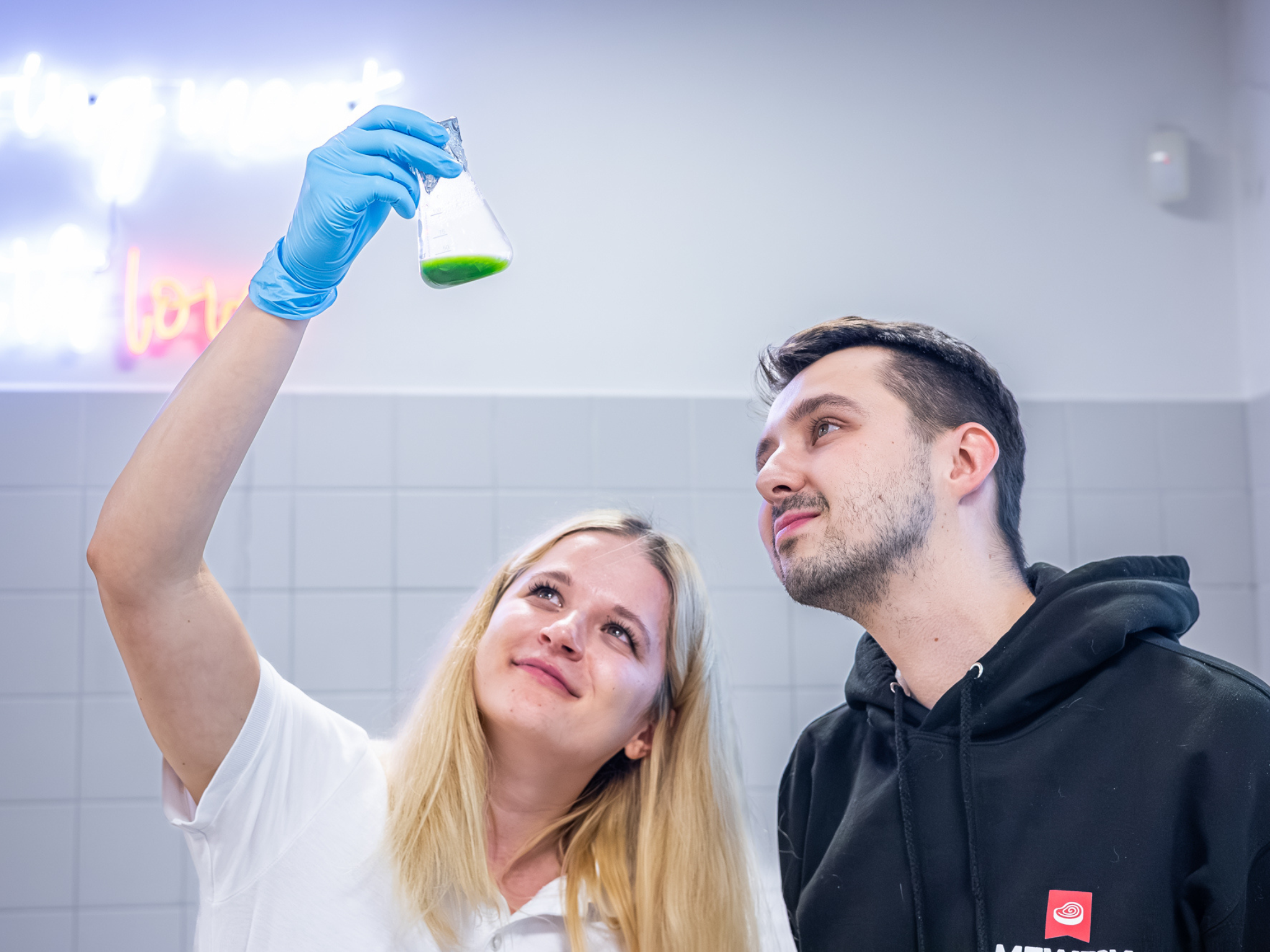
Czech food tech startup Mewery has achieved one of the highest yield densities in the cultivated meat sector, and is now halfway through a €7M ($8M) fundraising effort.
Mewery has taken a major step to move its cultivated pork from pre-pilot development to industrial-scale implementation, with a new CTO, a production milestone, and an ongoing funding round.
The Czech startup has achieved a biomass yield of 300g per litre, making it among the highest reported in the cultivated meat industry. This increases productivity per bioreactor and significantly improves the unit economics for these proteins.
“Yield density refers to the amount of biomass produced per litre of cultivation volume – in our case, 300 grams per litre. It’s a key indicator of how efficiently a bioprocess uses space and inputs,” Moria Shimoni, the company’s new CTO, tells Green Queen.
She has had extensive experience working with industrial cultivated meat production systems, including designing what was the industry’s largest facility at the now-defunct startup Believer Meats, as well as developing a multi-species platform and advancing technologies towards regulatory approval.
Additionally, Mewery has welcomed Vesna VC as its latest backer, which has invested several hundred thousand euros into the company. It is now in talks for follow-on financing as part of a larger €7M ($8M) seed round, which is underway and expected to close by Q3 2026.
“This investment represents strong validation from a specialised deep tech fund with a track record in supporting breakthrough innovations,” Mewery founder and CEO Roman Lauš tells Green Queen.
How Mewery achieved its yield breakthrough
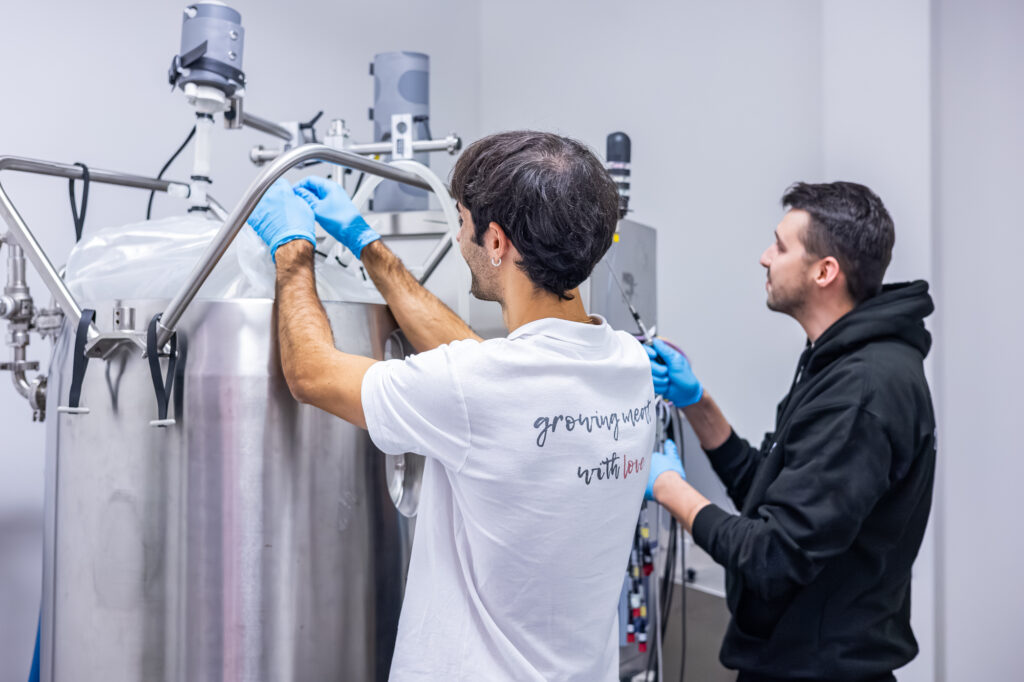
Founded in 2021, Mewery has developed a co-cultivation process that combines microalgae and mammalian cells in controlled bioreactors, enabling it to enhance cell growth efficiency and lower the costs of producing cultivated meat.
In 2024, the company established a stable cell line and expanded its cell bank to include multiple types of non-GMO porcine cells. It has since been operating a pilot plant within its facilities at Brno’s Mendel University, working to scale up its tech to higher kg volumes of biomass in 200-litre bioreactors.
Last year, its cost per kg of meat was in the tens of euros, and its production pipeline had been pointing towards a price below €10 per kg, driven by the continuous optimisation of its inputs.
Its latest yield breakthrough will further drive cost reductions for its cultivated pork. “Higher yield density directly improves unit economics. Simply put, more biomass per litre means fewer cultivators, lower capex per unit of output, and reduced operating costs,” explains Shimoni.
“Combined with our co-cultivation approach – which lowers media requirements and improves efficiency – this brings us significantly closer to cost-competitive production at scale,” she adds.
The co-cultivation strategy enhances cell viability and overall process stability. This is complemented by the stable suspension cultivation of porcine cells, eliminating the need for scaffolds and growth factors, as well as a continuous growth and harvesting approach (which significantly boosts biomass productivity).
Mewery eyes approval in four markets as it preps for fundraise
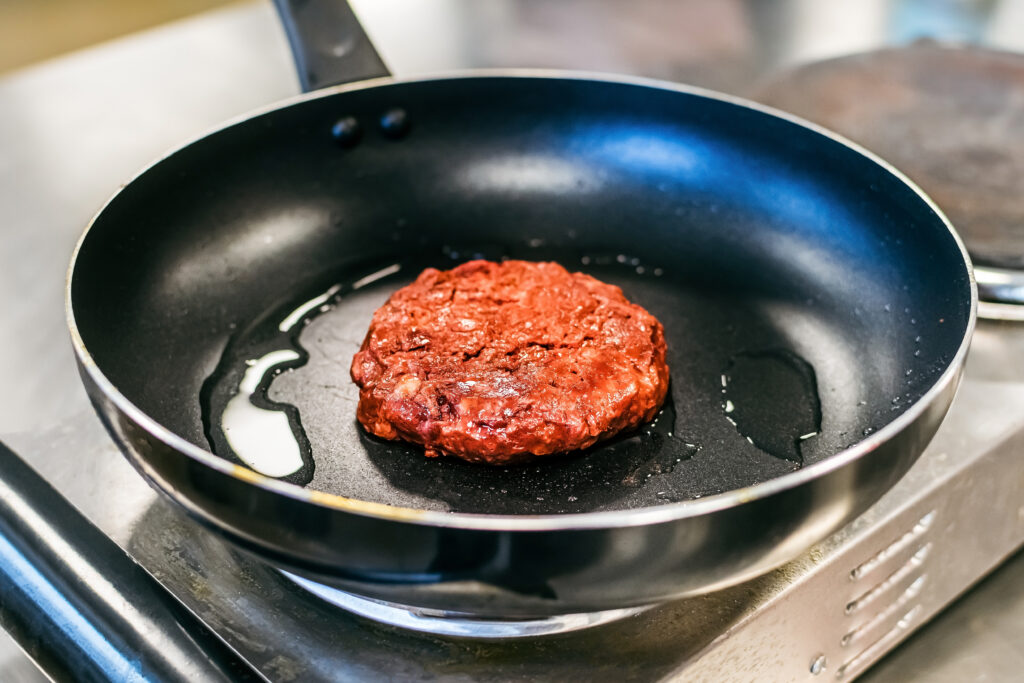
Mewery has previously teased meatballs made from 75% porcine cells and 25% microalgae cells. In 2023, it debuted a cultivated burger at a music festival in Czechia, where over 90% of attendees indicated their willingness to taste it.
Now, the company is looking to enter its next stage of development, which entails the industrial validation of its technology, a shift to pilot-scale production with several partners in Europe, and the preparation of regulatory applications to enter the market.
To support these efforts, Mewery is in the middle of a new funding round. “So far, we have managed to raise €3M, and we have received a soft commitment for another €1M, which means that the funding round is currently offering the remaining €3M for the new investors,” says Lauš.
Speaking of regulatory filings, the CEO says Mewery’s strategy focuses on markets where approval pathways for cultivated meat are standardised or straightforward.
“Singapore could serve as an early entry point thanks to its regulatory clarity and a market that is already somewhat familiar with cultivated meat. Our key long-term markets are the EU, the UK, and the US,” he reveals.
“Europe is our preferred route for initial commercialisation, but that depends on regulatory readiness from the relevant authorities – we are excited to hear more and more recently that the situation is moving forward in this regard. At the same time, the US is highly relevant because they offer credible regulatory pathways and strong market potential,” Lauš explains.
“Our plan is to stay prepared for all four (Singapore, EU, US, UK) in parallel and submit applications by the end of 2027,” he says.