

Ingredion Teams Up with Shiru to Advance Gut Health with AI-Discovered Novel Proteins


Ingredient giant Ingredion has partnered with AI protein discovery platform Shiru to commercialise next-gen prebiotics for the GLP-1-fuelled era of gut health.
Protein, fibre, artificial intelligence (AI), and gut health – these are some of the trendiest areas in food tech today, and a new partnership hits on all of them.
Global ingredient provider Ingredion has begun an R&D collaboration with Shiru, an AI-led sustainable protein discovery startup, to accelerate the commercialisation of novel functional proteins for the food, beverage, supplement and specialised nutrition sectors.
The collaboration is initially targeting the development of “next-generation” natural prebiotics to promote healthier gut microbiomes. This is an area where AI-driven protein discovery can create possibilities that conventional R&D can’t easily access, according to the companies.
“As consumer expectations rise, food companies need new ways to move faster and innovate smarter,” said Michael Leonard, chief innovation officer at Ingredion.
“Shiru helps us discover better natural ingredients more quickly so we can help our customers deliver new products at a pace the market expects,” he added.
Giving 77 million proteins a potential path to 18,000 companies
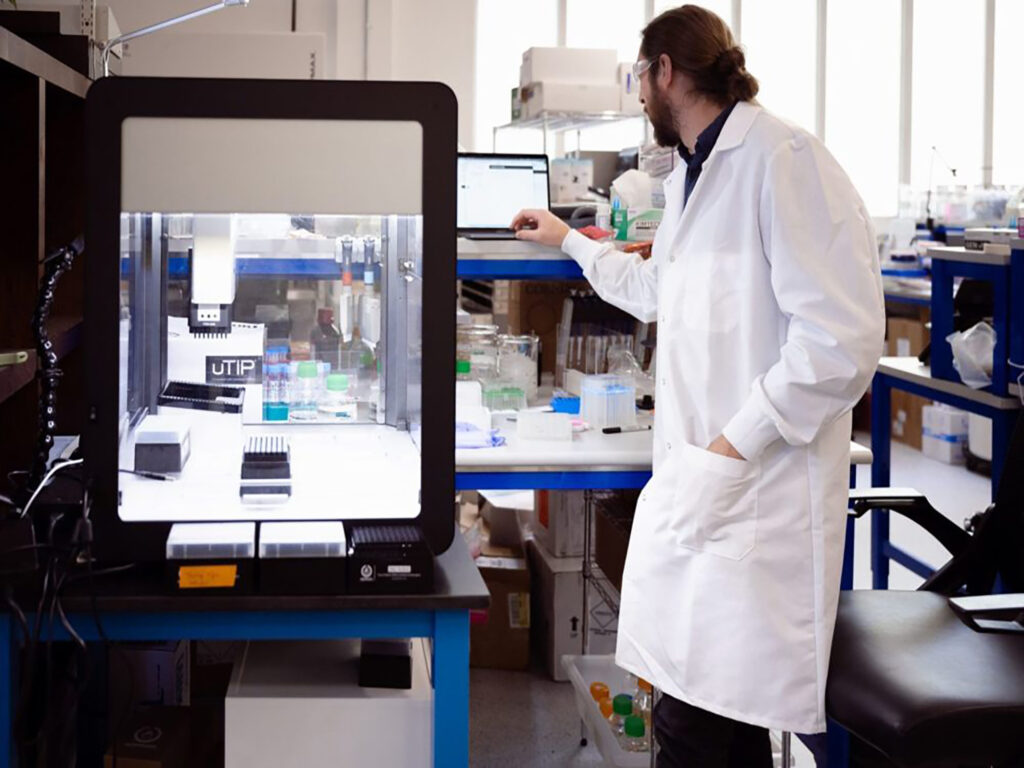
Shiru leverages AI to discover plant-derived and microbial alternatives to animal-based proteins and lipids. Its tech platform, Flourish catalogues and maps the performance of 77 million unique, natural proteins.
It also operates ProteinDiscovery.ai, a public-facing marketplace that hosts the world’s largest database of plant-derived and microbial proteins and enables corporate partners to swiftly identify and test highly functional, natural ingredients.
“We have broken the mould on how ingredient discovery is done. Disrupting the speed at which we can identify high-performance natural proteins has opened the floodgates for healthy, targeted nutrition,” said Shiru founder and CEO Jasmin Hume.
“What once took a team of 50 scientists a decade and a healthy dose of serendipity, we can now do strategically and efficiently in months. Pairing that capability with Ingredion’s scale and customer relationships creates a direct path from discovery to market,” she explained.
The two firms are jointly pursuing a targeted R&D programme enabled by Shiru’s AI capabilities, with an eye on the booming gut health market. Ingredients developed through the research will have a path to Ingredion’s 18,000+ customers across 120 countries.
The gut health focus comes as evidence links microbiome health to improved immunity, metabolic function, and cognitive performance. As a result, CPG companies are being forced to reformulate their products with clinically credible ingredients that can be produced at scale. Ingredion and Shiru are directly aiming to meet this demand.
Food industry goes big on gut health with GLP-1 wave
The partnership comes during a year when 37% of Americans have made gut health one of their top wellness priorities. This interest has expanded on the back of documentaries like Netflix’s Hack Your Health, personalised nutrition apps such as Zoe, and online trends like the TikTok-fuelled fibermaxxing and fibrelayering.
The other driver of gut health awareness is the popularity of GLP-1 drugs like Ozempic and Mounjaro. The share of Americans using these weight-loss medications more than doubled between early 2024 and summer 2025, from 5.8% to 12.4%.
These drugs work by mimicking a natural hormone in our bodies, called incretin, which boosts GLP-1 to help regulate blood sugar, fulfil satiety, and manage weight.
Dietary fibres and prebiotics do this naturally, feeding good gut bacteria and breaking them down into short-chain fatty acids, which can trigger GLP-1 release from intestinal cells. One of the most prominent examples of the food industry embracing this effect is the boom in prebiotic sodas from the likes of Olipop and Poppi, whose success led PepsiCo to buy the latter and Coca-Cola to launch its own version.
Shiru is already embedded in the GLP-1 space, having founded the GLP-1 Innovation Alliance to facilitate collaboration with food industry giants and emerging startups on natural approaches to activating GLP-1 pathways.
The firm, which has raised $36M in funding, produces its own ingredients. It has commercialised uPro, a plant blend that mimics animal fats for plant-based meat, dairy and cosmetics applications, as well as OleoPro, a structured fat alternative made from unsaturated oils and uPro.
Additionally, it’s working with plant biotech platform GreenLab to commercialise novel food proteins for CPG applications using the latter’s corn expression system.
Several other startups are targeting the natural GLP-1 space. Chile’s NotCo also uses AI to develop a botanical powder that acts as a natural GLP-1 booster, and Lembas has created a bioactive peptide to activate the body’s GLP-1 response.