

Asia’s Oatside Looks to Modernise A Classic with High-Protein Soy Milk Brand Nobo

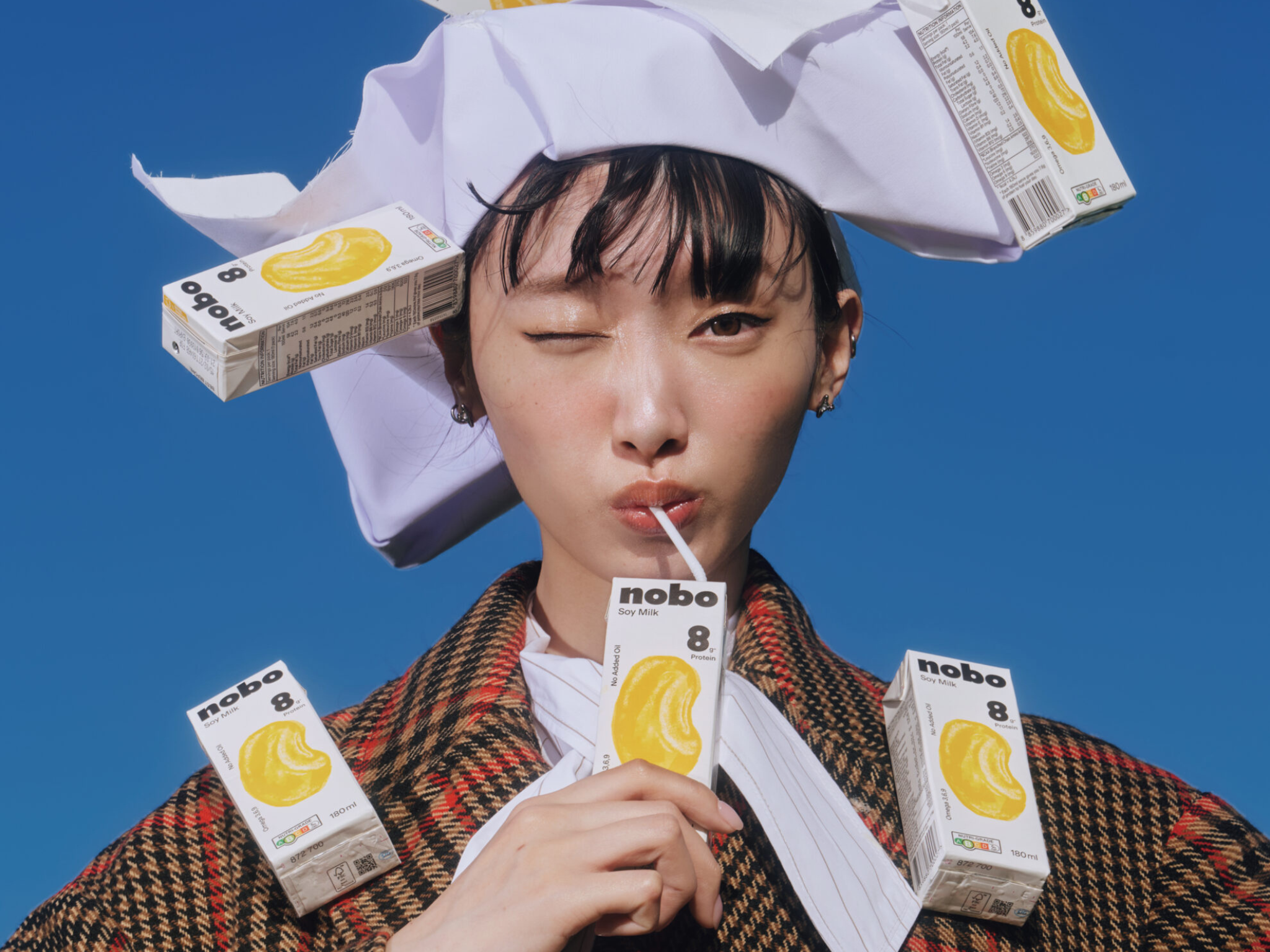
Singaporean plant-based milk leader Oatside has unveiled a new brand, Nobo, featuring two high-protein soy milks that aim to give the Asian classic a modern makeover.
As the home of the original plant-based milk, Asia’s centuries-old non-dairy legacy is unparalleled.
It remains the world’s largest market for milk alternatives, but the product that started it all – soy milk – isn’t as trendy as younger counterparts like oat milk, which analysts say is now the most lucrative segment in the region’s dairy-free market.
And while soy milk still captures the majority of the market share of these products in Asia, it risks being shunned by young adults, who just aren’t drinking it as much as other non-dairy milks – at least according to Oatside, the Singaporean oat milk giant.
“Soy milk is something I grew up drinking; it’s nostalgic and nourishing. Yet, it’s something I drink less and less frequently,” admits Benedict Lim, its founder and CEO.
His company is on a mission to change that. “We wanted to make a soy milk we could feel good about drinking,” he says.
It’s what sparked the launch of Nobo, its new brand of soy milk that delivers more protein than dairy with a thick, creamy texture and upgraded flavour profile. It’s available in an original and a roasted almond variant in Singapore and Malaysia.
The launch is an extension of the low-cost oat and barista coconut milks Oatside has been selling under the Nobo label. “The bigger idea behind Nobo is about giving soy a modern cultural lens,” the plant-based milk maker said.
Nobo’s double extraction takes the beany edge off of soy milk
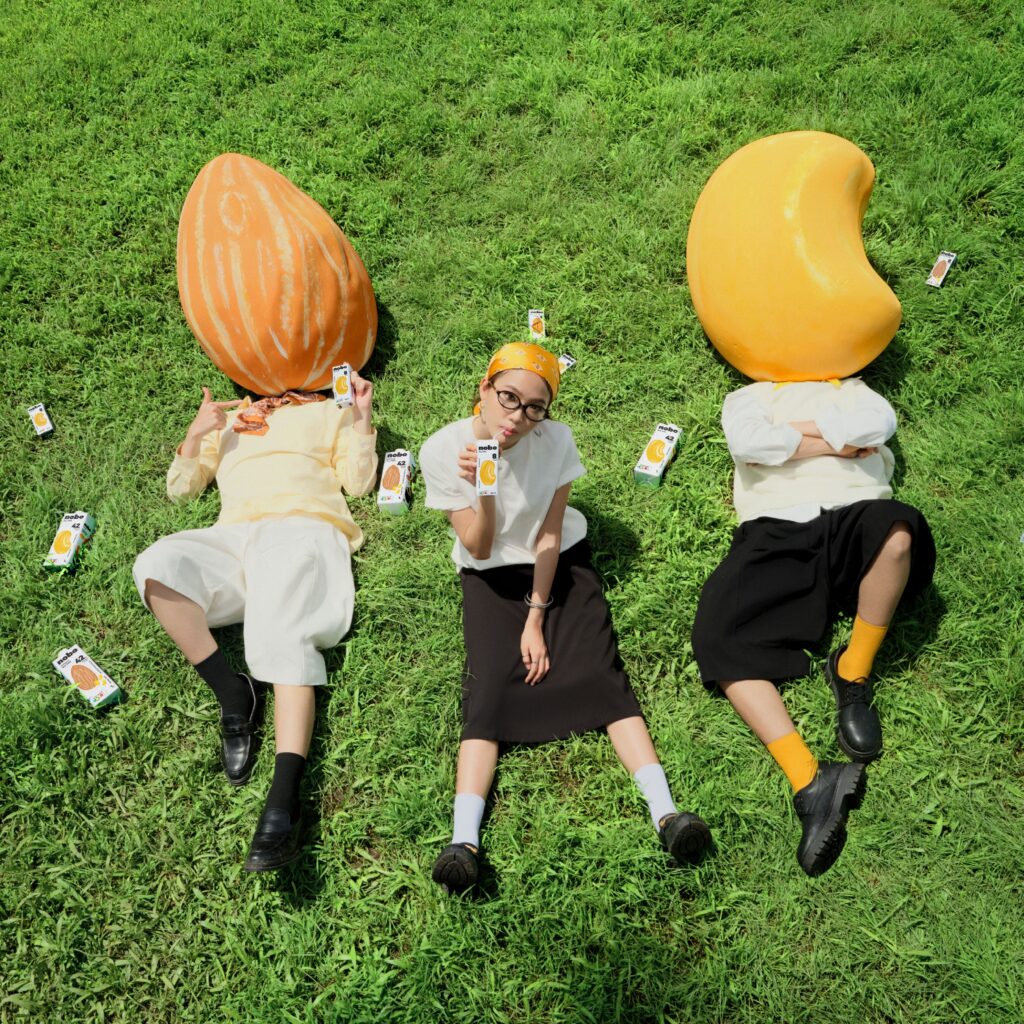
Soy milk is deeply rooted in East and Southeast Asian culture, embedded in local coffee shops (or kopitiams), street stalls, and households. It’s revered for its nutritional benefits, culinary heritage, and its ability to cater to the two-thirds of Asians suffering from lactose intolerance (some estimates put this figure even higher).
However, for many people, it carries a particular ‘beany’ tasting note that can be off-putting. And for Gen Z and millennials, its flavour doesn’t blend well with modern coffee drinks as well as oat milk. The latter is why Oatside is Asia’s leading oat milk player – its sales continue to grow, and its products are available in 19 markets now.
It’s now eyeing a slice of the soy milk market with Nobo. “We spent a lot of time sourcing the right soybeans and eventually chose non-GMO, high-protein beans from Canada for their nutrition and flavour,” says Lim.
“From there, it was about developing a process that could pack more soybeans per pack to deliver a creamier texture and higher protein levels without adding ingredients like gums, emulsifiers, oils or protein powders.”
To modernise its flavour, Nobo employs a proprietary double extraction technology, which involves flash-heating, roasting, and vacuum-cooling to soften the beany flavour while preserving the nutritional content of the soybeans.
The resulting soy milk has a flavour reminiscent of kinako (roasted soybean flour), and contains 4.2g of protein per 100ml, nearly twice as much as conventional soy milks and around 40% more than dairy. It has 4.8g of sugar, and is fortified with vitamins D, E, B1, B3, B6 and B12, and calcium.
The soy base ameans Nobo’s milks provide all nine essential amino acids, alongside omegas-3, 6, and 9 fatty acids, catering to the demand for complete protein and functional nutrition.
The original contains 85% soybean extract and no gums or emulsifiers, and the almond soy milk features over 50% soybean and 45% dark-roasted almond grounds. They’re available in one-litre and 180ml packs across Singapore and Malaysia.
“Ultimately, our philosophy with Nobo is to be minimalist and allow soy’s natural richness and nutrition to shine through without unnecessary additives,” says Lim.
Oatside marks soy milk launch with slate of partnerships
The launch comes as nearly half of consumers (48%) in Malaysia aim to increase their consumption of plant-based milk, and 30% of Singaporeans look to limit their dairy intake. These efforts will be supported by the continued growth of Asia’s non-dairy sector.
According to Euromonitor data published by the Good Food Institute, over 96% of Asia-Pacific’s vegan food sales came from dairy alternatives in 2024. The region recorded $8.6B in retail sales of plant-based dairy, accounting for over a third of the global total.
Oatside is already a major player here, and it’s looking to expand its reach with Nobo. To mark the launch, it teamed up with This Humid House’s Senang Supper Club in Singapore, which hosted a dining experience where every dish incorporated its soy milk.
The tasting menu included Pidan tofu with Nobo soy curd, drunken eggplant with smoked Nobo soy and sambal balado, and a Teochew congee made with its soy milk.
In Malaysia, the brand collaborated with heritage bakery Fung Wong Biscuits and bakehouse Floccus Floccus to reimagine classic pastries and kuihs (bite-sized local desserts and snacks), such as soy rolls, mochi, soy pudding, and a thousand-layer cake.
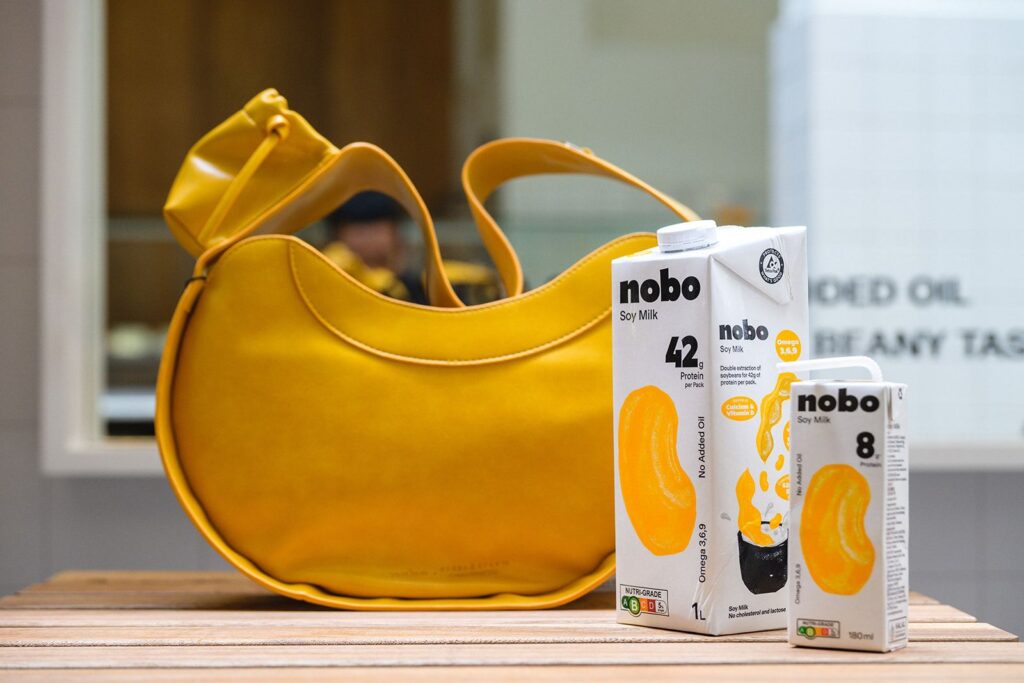
Moreover, Oatside has been working with Vietnamese fashion label Chautfifth, which has created a limited-edition soybean-shaped handbag to mark Nobo’s launch.
“What we love about Nobo is how clear and honest the idea behind the brand is. It’s functional, but it’s also expressive and design-led, which is how we approach our design philosophy too,” said Chautfifth founder Chau Tran. “The soybean is such a huge part of so many cultures across Asia. It was an honour, and a challenge, to turn this iconic flavour into something you’d actually want to carry around with you day-to-day.”
Oatside isn’t the only plant-based milk brand leaning into the fashion world. Swedish oat milk pioneer Oatly has rolled out seasonal recipe ‘lookbooks’ and a Future of Taste trend report reminiscent of the fashion industry, and teamed up with designer brand Avavav to pair its Autumn/Winter 2026 collection with three signature drinks at the Milan Fashion Week.