

NS/TX Industries Raises $10.5M to Build Automated Plant-Based Meat Production System

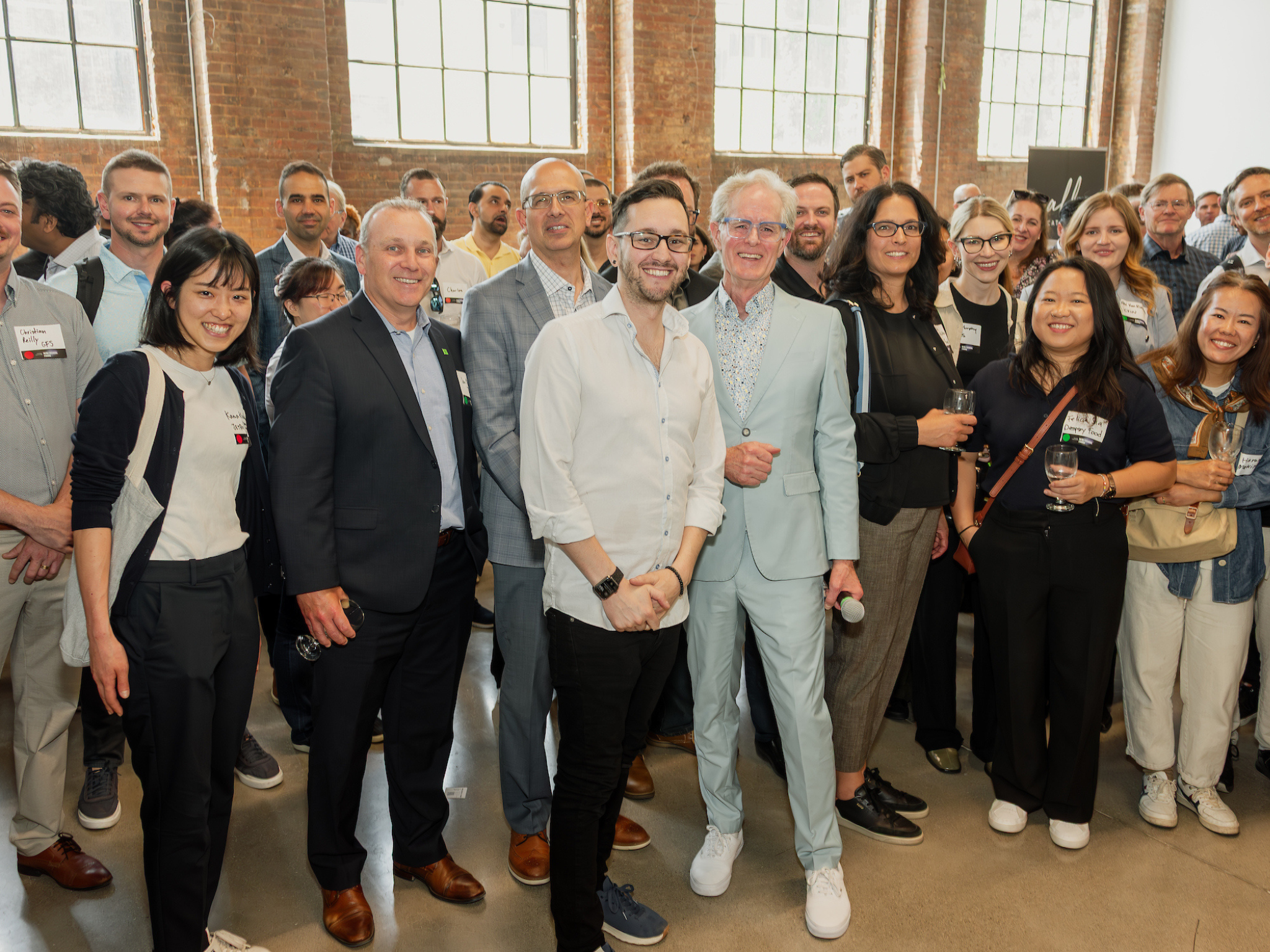
Canadian startup NS/TX Industries has secured $10.5M in funding to construct an automated assembly line for its whole-cut plant-based meat and seafood products.
A year after reorganising its business and broadening its focus from seafood to a wider portfolio of plant-based analogues, NS/TX Industries has obtained fresh capital to rapidly scale up its capacity tenfold.
The Canadian startup has raised $10.5M in Series A financing and non-dilutive grants. The venture funding was co-led by Inter Ikea Development BV and Lever VC, with participation from Good Startup, Verdex Capital, and NS/TX’s own founder and CEO, Chris Bryson.
The non-dilutive capital comes from Protein Industries Canada, one of the national government’s five innovation clusters, which last month committed $4.9M in a $10.9M project focused on scaling up NS/TX’s manufacturing tech for whole-cut meat and seafood alternatives.
The latest funding takes the startup’s total raised past $30M. It will use the capital to begin work on its V2 commercial assembly line (set to be completed in 2027) and reduce the production costs of its plant-based proteins.
“We have been very impressed with NS/TX’s rapid progress in solving key scale-up challenges and demonstrating the versatility of its manufacturing platform, and we are excited to support them through this next chapter of growth,” said Raffaele Govinazzi, innovation ventures leader at Inter Ikea Group, the parent company of the Swedish furniture giant and an existing investor in the startup.
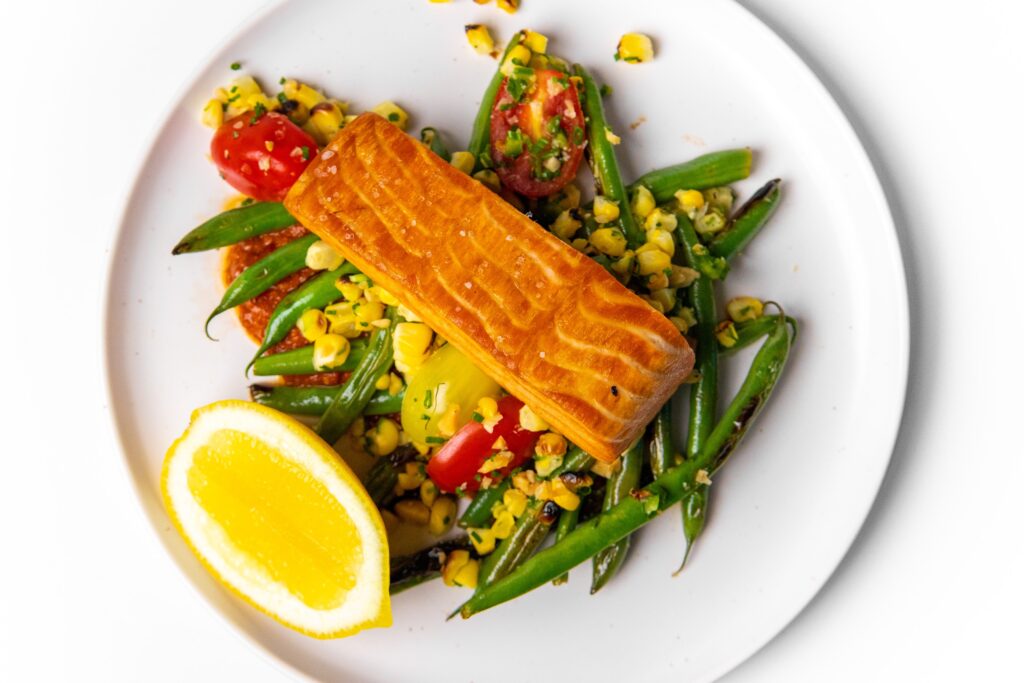
New line would produce 2,500 kg of plant-based meat a day
Based in Toronto, NS/TX evolved from New School Foods, serving as the parent company of the latter brand, as well as its R&D and manufacturing divisions.
The firm uses directional freezing to allow products to start raw and cook like conventional meat. A plant-based scaffolding mimics animal muscle and connective tissues, with the same diameter, length, strength and behaviour. The layers of tissue are reproduced via a patent-pending injection process, giving products a flaky texture.
“Our process uses a proprietary scaffolding technology,” Bryson tells Green Queen. “These scaffolds mimic both the macrostructure of the animal product, including the shape and the arrangement of fat versus muscle tissue sections, while also recreating the microstructure.
“Our scaffolds have thousands of small channels that emulate muscle fibres. Our scaffolds and these channels are then infused with proteins, fats, flavours, and colours. This process enables flexibility to create multiple products, all while using the same equipment.”
The scaffolding tech solves a number of issues commonly found in extruded plant proteins. It enables the production of whole cuts as well as formats like burgers and strips, all in the same assembly line. It can also help tune flavour profile and offers multiple flavour delivery systems within each scaffold, alongside a cleaner-label nutritional profile.
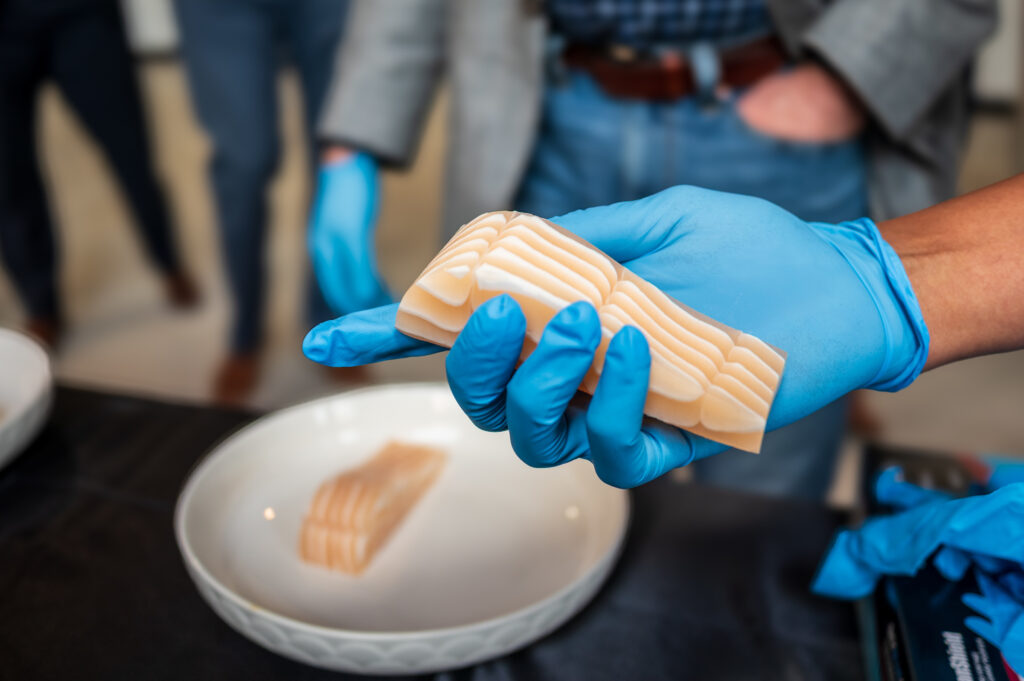
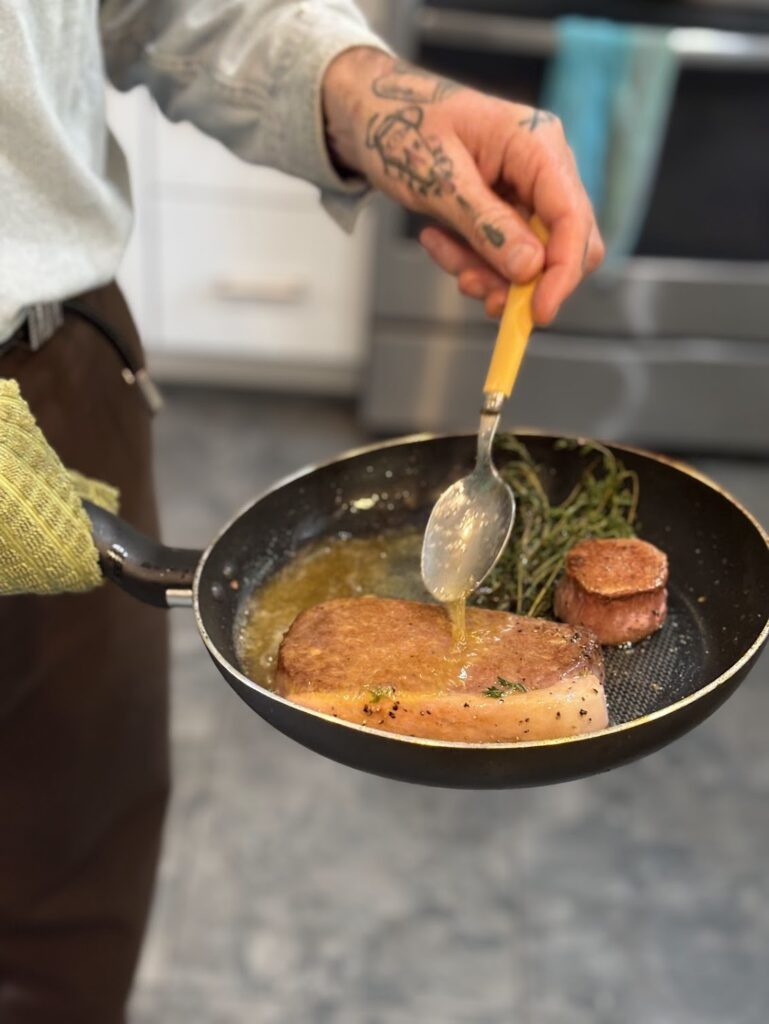
Plus, the technology is more scalable, ensuring greater consistency as production expands. NS/TX built and launched its V1 assembly line in 2024, when it was known for its vegan salmon fillet. It can now create red meats like beef and pork, too, and is working towards a significantly larger scale with the V2 system.
NS/TX operates a 28,000 sq ft facility in Toronto, using off-the-shelf food manufacturing equipment that significantly lowers costs compared to extrusion or cellular agriculture. Since the development of the V1 system, it has lowered manufacturing costs by over tenfold and validated the scalability of its tech, filed new patents and developed proprietary equipment designs.
“Firstly, we’re fully vertically integrated; we do not use a co-manufacturer. We do all the development and production ourselves in our SQF-certified food facility,” Bryson says when asked how the company has lowered its costs.
“Secondly, we have created an assembly line and manufacturing technologies that are purpose-built for creating whole-cuts, and we design and build a lot of the equipment ourselves to support an efficient production process,” he adds.
“Thirdly, we can take any waste/scraps from the production of our whole cuts and use them to create additional products, improving our overall unit economics.”
The V2 line, commissioned at the Toronto facility, will automate the startup’s production process, increasing capacity to 2,500 kg of product a day and further reducing costs.
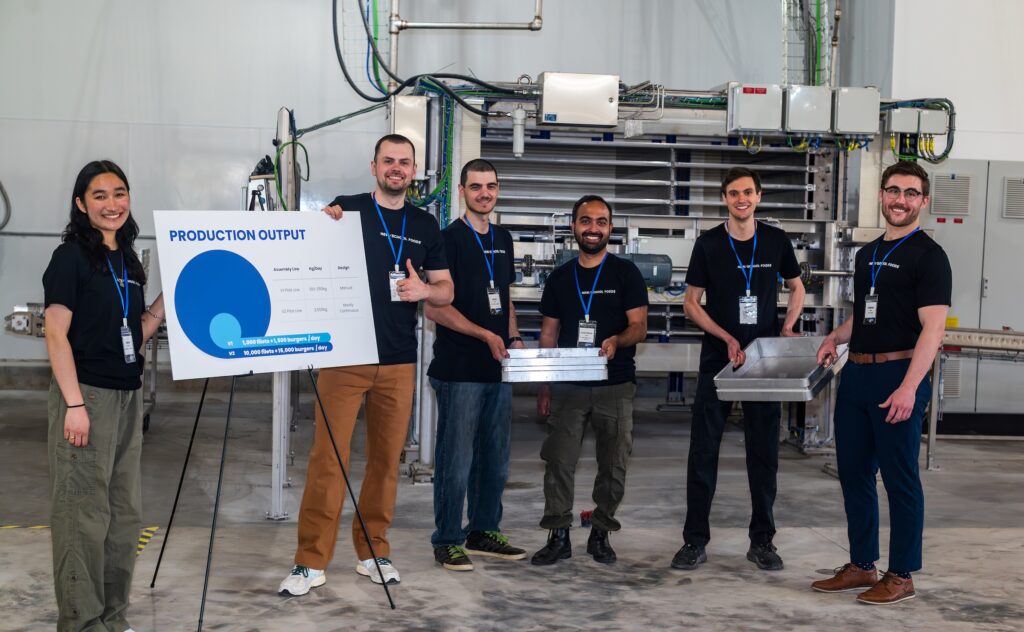
NS/TX Industries keys into Canada’s demand for better plant proteins
Over the last year, the company has made a number of upgrades to its commercial machinery to produce a wide range of products, which will be sold to Canadian consumers, foodservice operators and white-label brands.
This is also the focus of the project backed by Protein Industries Canada, in which NS/TX is working with New Protein International and Infusd Nutrition to increase output, decrease unit costs, and support B2B manufacturing. Its expanded manufacturing capabilities will feature a broad range of locally grown peas, fava beans and soybeans to improve the nutritional profiles of its proteins.
“New School Foods and NS/TX Industries have been a valuable partner in the development of new technologies and talent in the Canadian food production and value-added agriculture sector,” said Protein Industries Canada CEO Tyler Groeneveld.
Canada is a leader in state-led financing for alternative proteins, having committed C$353M for Protein Industries Canada between 2018 and 2028. The country’s plant-based sector has been recognised as “central” to its broader food tech ecosystem, representing a quarter of all domestic food tech companies and garnering 12% of the industry’s total funding.
NS/TX’s technology will appeal to the 54% of Canadians looking to increase the amount of plant-based food they eat, as well as the 36% who cite taste and texture as a key barrier.
“Food is incredibly challenging. Authentically emulating the sensory experience of meat is very difficult, and ensuring that the products have a compelling value proposition in terms of nutrition and/or price makes it even harder. Accomplishing all of this requires a lot of R&D, vertical integration, and time,” says Bryson.
“The current funding market and the maturity of most VC funds are not well aligned with this – many do not have the ability to invest in longer-term opportunities,” he adds, nodding to the 20% drop in global funding for alternative proteins last year.
“We’ve been very intentional about creating a defensible technology that enables differentiated products, and creating a manufacturing technology that solves root issues with conventional alt-protein production methods,” he notes.
“We’ve also sought out more patient capital, while raising a lot of non-dilutive capital that is available in Canada, thereby reducing risk for our investors. This also allows us to invest in our own manufacturing infrastructure. This is key, because if you don’t own your manufacturing, you can’t control your COGS, and your R&D is extremely limited. And in our view, both of those are necessary for long-term success.”