

UK Gut Health Startup Myota Raises $4.5M to Expand Prebiotic Fibre Supplements for Food Industry


London-based startup Myota, which makes prebiotic fibre blends to enhance gut health, has secured $4.5M in Series A funding to scale its D2C sales and set up a B2B business in Europe and the US.
UK gut health supplement brand Myota has closed a $4.5M Series A investment round to expand the reach of its prebiotic fibre supplements for consumers and the food industry.
The funding was led by PeakBridge, and will fund a dedicated B2B sales operation in Europe and the US, support the rapid scale-up of Myota’s D2C business, and extend its clinical research.
Myota already launched a global partnership with Joe & The Juice last year, signed supply agreements with a fast-growing coffee alternative brand, and has product development underway with household names across dairy, bakery and functional beverages. Its distribution deals with Suannutra and Denava now cover the UK, the US, and the EU.
Its D2C business in its home country tripled last year, surpassing 60,000 customers. “Most gut-health products are a marketing story built on one or two commodity fibres,” said Yoni Glickman, managing partner at PeakBridge. “Myota built and patented the science first and then validated the outcomes in clinical trials.”
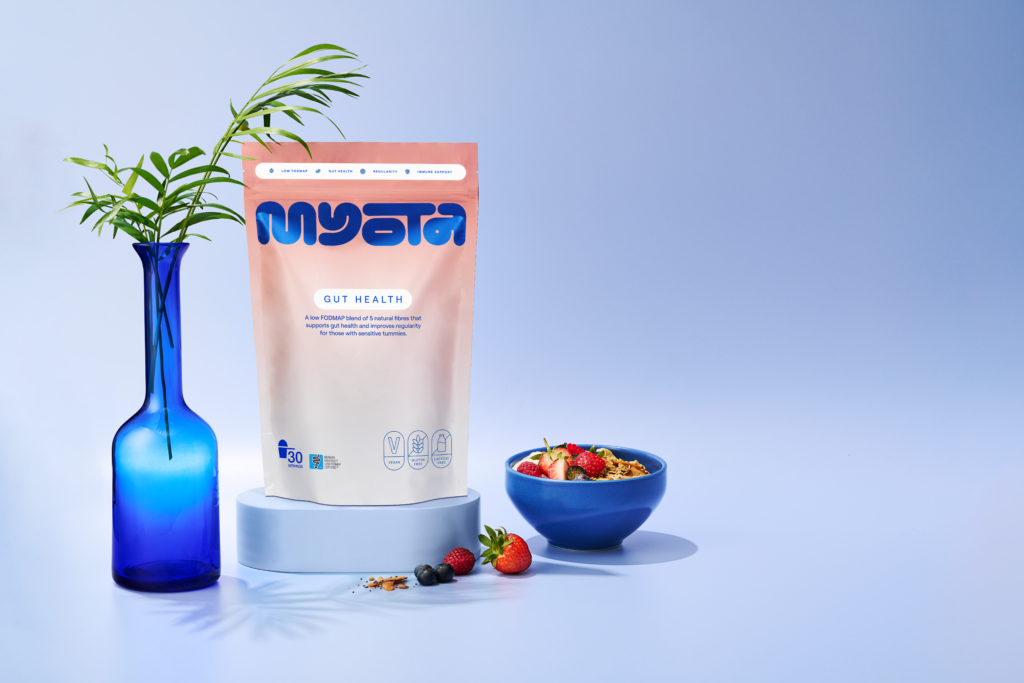
Myota’s prebiotic fibre blends can work across different microbiomes
Fibre appears in three main formats in food. Soluble fibres dissolve in water and form a gel-like substance that moves slowly through the digestive tract, preventing constipation, balancing glucose levels, and lowering cholesterol. Insoluble fibres pass through the gut to add bulk to your stool, promoting regular bowel movements – these are essential for our gut bacteria.
Then there’s prebiotic fibre (or resistant starches). These bypass digestion in the small intestine and ferment in the large intestine, feeding good gut bacteria. Myota is focused on this form of the nutrient.
The company suggests that most fibre supplements today rely on one or two ingredients, and the same fibre produces very different results among different people, since individual gut microbiomes ferment it differently into short-chain fatty acids, the metabolites that carry most of fibre’s benefits.
Myota’s patented blends are instead designed to work across very different gut microbiomes, built on proprietary research to maximise short-chain fatty acid production, while minimising the gastrointestinal discomfort that often comes with high-fibre products.
This ingredient platform is said to be able to demonstrate efficacy in gold-standard clinical trials and be used at meaningful doses in everyday food and drink products – a rare combination, according to the startup.
Its current lineup for consumers includes a gut health blend made from partially hydrolysed guar gum, gluten-free wheat and oat fibres, cellulose, guar fibre, and zinc. In four weeks, this has been said to reduce bloating and diarrhoea in 80% of users, lower abdominal pain or cramping in 74%, and enable more regular bowel movements in 93%.
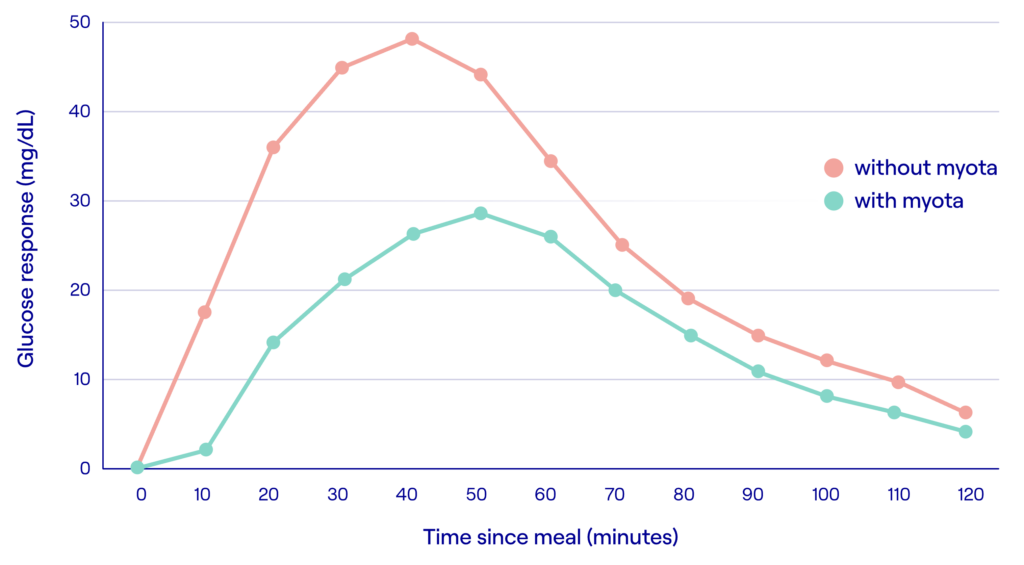
The metabolic health blend combines oat and wheat fibres with fructooligosaccharides, galactooligosaccharides, inulin, soluble corn fibre, guar fibre, and zinc. This has been shown to improve insulin sensitivity in 61% of consumers, reduce systemic inflammation in 42%, and lower blood glucose responses in 28% within four weeks.
Both powders are flavourless and can be blended into water, everyday foods, and hot or cold drinks, much like protein powder. The metabolic version also comes in a chocolate flavour. Myota also makes plant-based snack bars in apple-cinnamon and peanut butter-chocolate variants, which pack 13g of fibre and 2.3g of protein per 50g serving.
Fibre takes centre stage amid GLP-1 wave
Fibre is looking to take protein’s crown as the most Myota in-demand nutrient in the food industry, given that almost all (95%) of Brits and Americans are deficient in fibre.
They’re also more aware of this, thanks to gut health documentaries like Netflix’s Hack Your Health, the 30-plants-a-week movement, online trends such as fibremaxxing and fibrelayering, and the rise of GLP-1 drugs.
In the UK alone, 9% of consumers have used these weight-loss medications, and another 18% are now considering them. Dietary fibre can trigger the body’s natural GLP-1 response, helping your gut bacteria produce short-chain fatty acids, which help regulate appetite and keep you feeling full.
There’s another benefit here: gastrointestinal side effects are common among GLP-1 users, creating a market for companion products that support digestion, the microbiome, and metabolic health.
Research shows that 52% of British adults are actively trying to add more fibre to their diets, rising to 62% among Gen Z consumers. And most Brits recognise its benefits for gut health (82%), digestion (83%), and weight management (61%).
“We can measure how an individual’s gut bacteria ferment different fibres, and we use that to build blends that produce short-chain fatty acids reliably across very different microbiomes,” said Thomas Gurry, co-founder and CSO of Myota.
“Our randomised controlled trials have shown improvements in insulin sensitivity, blood sugar control, inflammation and mood, including stress and anxiety. That evidence base is what separates a functional ingredient from a marketing claim,” he added.
Kat Stennett, the firm’s co-founder and CEO, said fibre is among the most “powerful and overlooked levers” for health, and products that currently line the shelves haven’t done it justice.
“What’s been missing is fibre that works across real, varied microbiomes and stands up to clinical scrutiny,” she noted. “That is what we’ve built, and it’s why companies across F&B, food service, and wellness, are coming to us to put genuine, claimable benefits into their products. This round lets us meet that demand at scale.”