

Nestlé Deepens Work on Climate-Resilient Coffee with High-Yielding Robusta Varieties

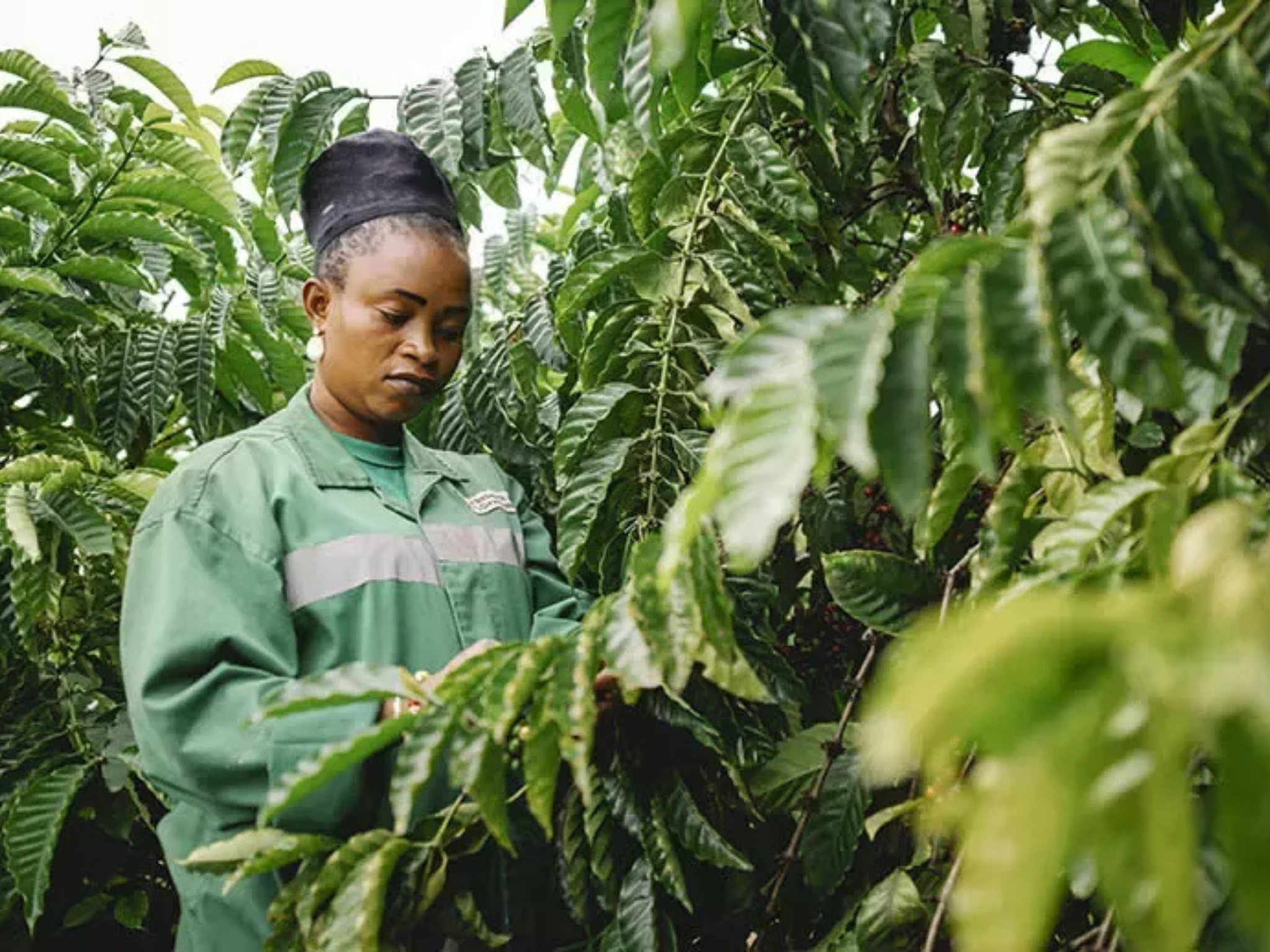
Working with the Ivory Coast’s Centre National de Recherche Agronomique, Swiss food giant Nestlé has developed six new robusta coffee varieties that are resistant to climate change and can nearly double yields.
With the most abundant coffee species, arabica, facing extinction risks this century, many in the industry are hedging their bets on the other dominant variety of the crop.
Robusta has always been a hardier crop that can be grown at lower altitudes, withstands higher temperatures, and offers high yields to farmers. But most of this species is reserved for the commodity coffee market, with a perception that robusta is inferior in flavour to arabica.
However, robusta is set to play an outsized role in the future of coffee, 60% of whose species are under threat, mainly due to the climate crisis. Globally, this species accounted for 28% of all coffee produced in the 90s, but that grew to 44% in 2023.
Farmers in Brazil – the top coffee-producing country – are already reviving the robusta economy. Now, Nestlé has developed six high-yielding, climate-resilient robusta varieties in the Ivory Coast, in partnership with the Centre National de Recherche Agronomique (CNRA).
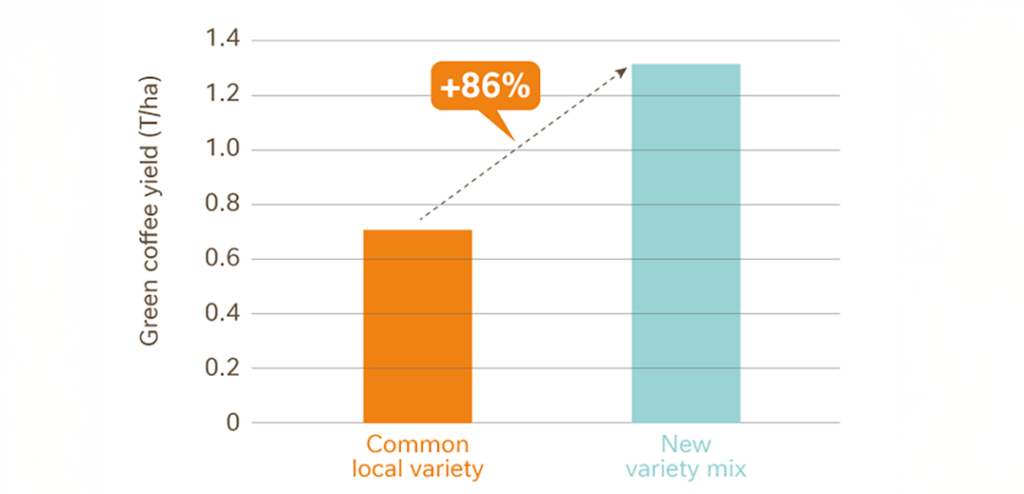
Research conducted by the Nestlé Institute of Agricultural Science shows that planting a mix of these robusta crops can amplify yields by up to 86%, using the same inputs as the commonly used variety of the species.
Robusta mix lowers bitterness and climate susceptibility
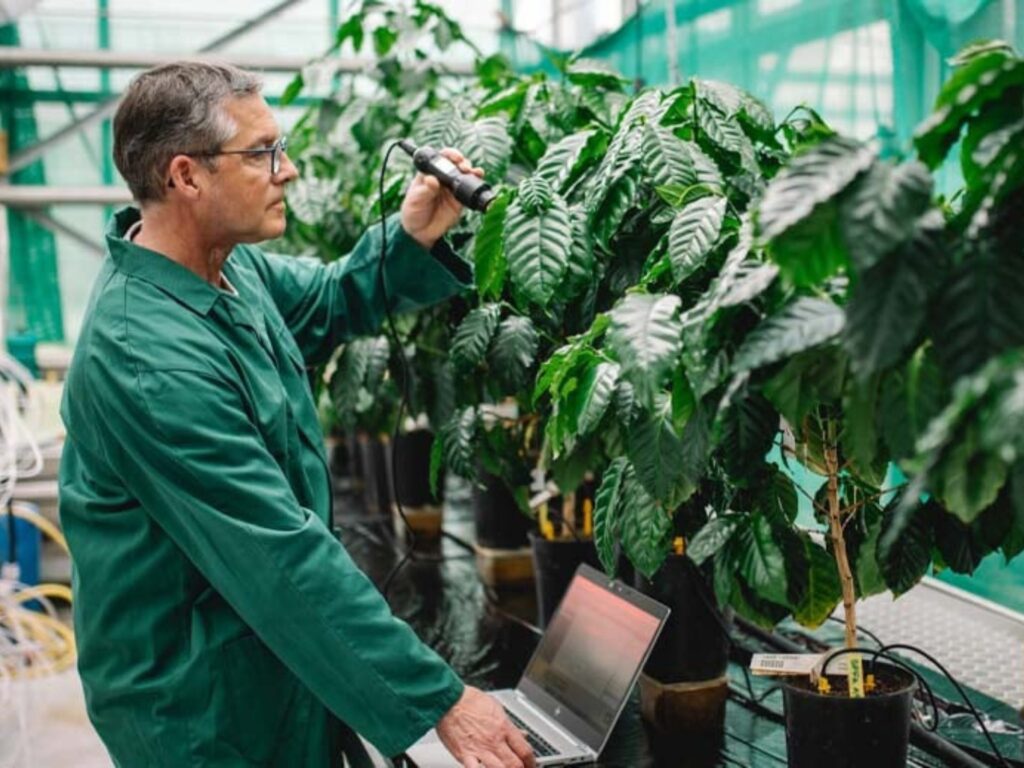
Plant science experts from Nestlé and CNRA have been studying 18 robusta varieties across four coffee-growing regions in the Ivory Coast since 2018.
They evaluated the yield, flavour, bean quality, drought tolerance, and overall performance of these crops under climate stress, before testing the six best-performing varieties to see how they performed together.
Two of these were developed by Nestlé and four by CNRA. Trials proved that planting a combination of these six orbusta varieties delivered the strongest results by boosting yields, enhancing performance under climate shocks, and improving overall cup quality.
Sensory testing also confirmed that the coffee made from this mix had a smoother flavour, with less bitterness and fewer woody notes than are typically associated with robusta, a major breakthrough for its taste credentials.
Nestlé’s coffee plant breeding work was led by experts at its experimental farm in Zambakro, in collaboration with local partners like CNRA, as well as its Institute of Agricultural Sciences’s Plant Sciences Department in Tours, France.
The Swiss conglomerate is also working closely with local farmers in the Ivory Coast to improve agricultural practices – at Zambakro, producers receive hands-on training in regenerative farming to support the long-term viability of coffee production.
The six robust varieties have now officially been registered in the country, and the mix will be made available to coffee farmers through cooperatives under Nescafé Plan, the company’s sustainable coffee sourcing programme.
Nestlé not alone in developing climate-resilient coffee
Nestlé, which leads the global retail market for coffee, notes how coffee production plays a crucial role in the livelihoods of Ivorian farmers, but the sector is increasingly exposed to climate change and productivity constraints. So boosting performance and reliability has become a priority for local R&D efforts.
“Côte d’Ivoire, the third-largest coffee producer in Africa, is feeling the effects of climate change, with shifting rainfall and rising temperatures impacting crop health and yield,” said Hubert Coffi, agronomy manager for the Nestlé Institute of Agricultural Sciences in Côte d’Ivoire.
It must be noted that robusta isn’t completely unaffected by the climate crisis – far from it. The species is highly susceptible to rising temperatures and dependent on rainfall. And research shows that half of all land suitable for producing arabica and robusta could be wiped out by 2050.
Between 2021 and 2025, Brazil, Vietnam, Colombia, Ethiopia, and Indonesia – which represent 75% of the global coffee supply – experienced 57 extra days of harmful heat (above 30°C). The declining yields have pushed prices to all-time highs. In the US alone, the cost of coffee is up by 47% from five years ago.
This is why the ‘climate-resilient’ part of Nestlé’s efforts is critical. “Together with partners such as CNRA, we are exploring resilient coffee varieties to help protect farmers’ livelihoods and ensure consumers can continue to enjoy great-tasting coffee in the future,” said Coffi.
This isn’t the company’s first rodeo when it comes to future-friendly coffee varieties, with Nestlé developing high-yielding, disease- and drought-tolerant variants using classical breeding methods in key coffee-producing regions.
In 2021, it created Roubi 1 and Roubi 2, two robusta varieties with up to 50% higher yields in Mexico. And in 2024, it unveiled Star 4 in Brazil, an arabica variety with larger beans that are resistant to leaf rust, a fungal disease that decimates coffee crops, has previously caused an epidemic that strained the global supply, and is worsening with climate change.
Starbucks, which alone buys 3% of the world’s coffee, has developed six arabica varietals that can withstand the climate crisis. And French startup Amatera uses a non-GMO breeding platform combining plant cell biology, automation, and AI to develop high-value “perennial crops”, including coffee.