

Nourish Ingredients Cleared to Sell Animal-Free Meat Fat in the US

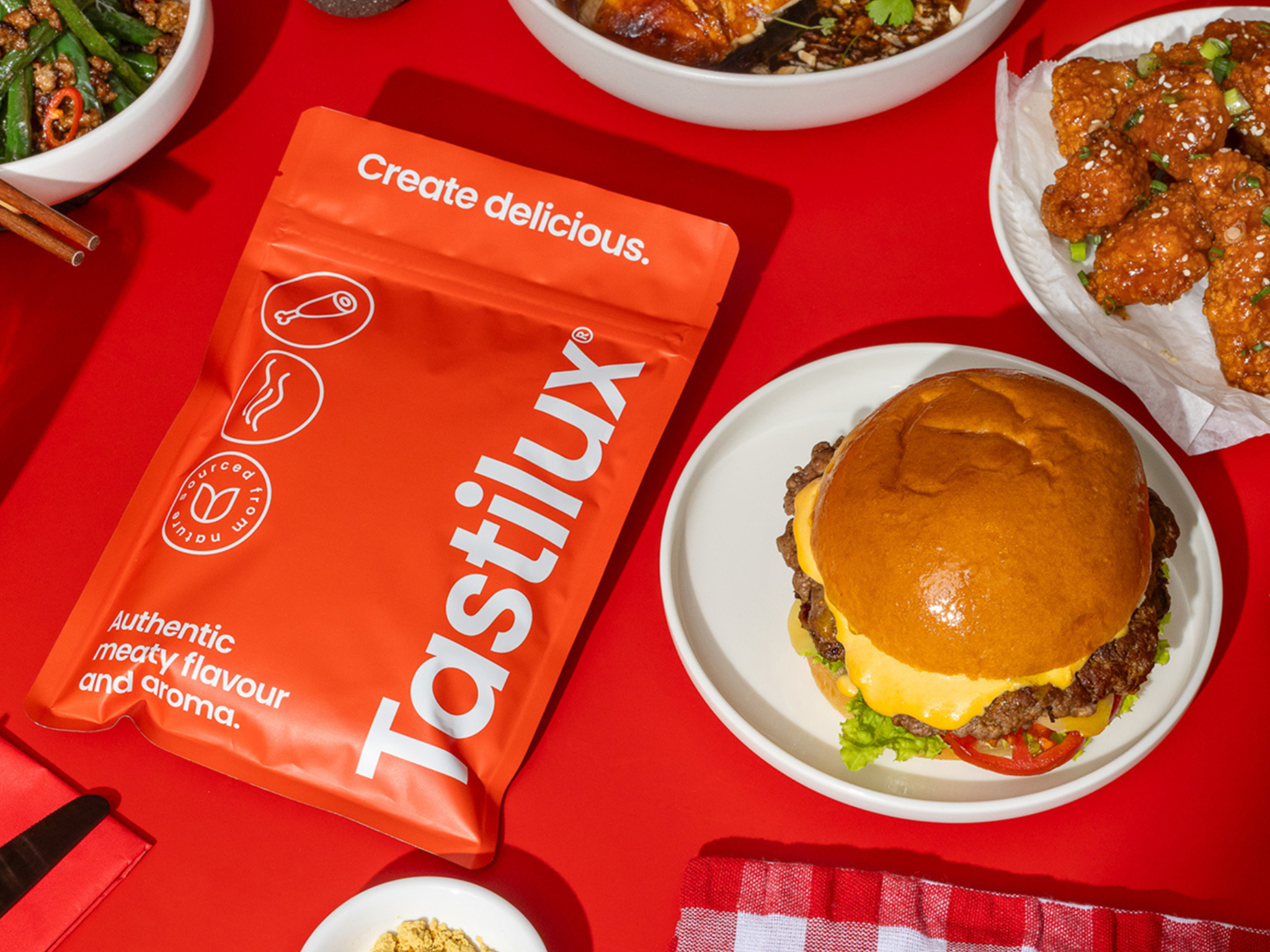
Australian startup Nourish Ingredients has received FEMA GRAS status for its precision-fermented fat for meat flavours, Tastilux, in the US.
Nourish Ingredients can now sell its animal-free fat in the US, allowing manufacturers to add meaty flavours and aroma at low inclusion rates to a wide range of food products.
The food tech startup’s proprietary Mortierella alpina biomass has been determined to be Generally Recognised as Safe (GRAS) by the Flavor and Extract Manufacturers Association’s (FEMA) panel of experts. The fungal strain is the primary ingredient in its precision-fermented fat, called Tastilux.
The decision paves the way for immediate commercial sales to US food manufacturers and brands, while also opening the door to other international markets, the company said.
“The FEMA GRAS process took several months from submission in April to final confirmation, including extensive safety review and expert panel evaluation,” Nourish Ingredients founder and CEO James Petrie tells Green Queen. “Preparing the dossier submission, however, was a significant undertaking involving a large team effort and many more months of preparation.”
Tastilux to target meat alternatives, snacks, and tallow replacements
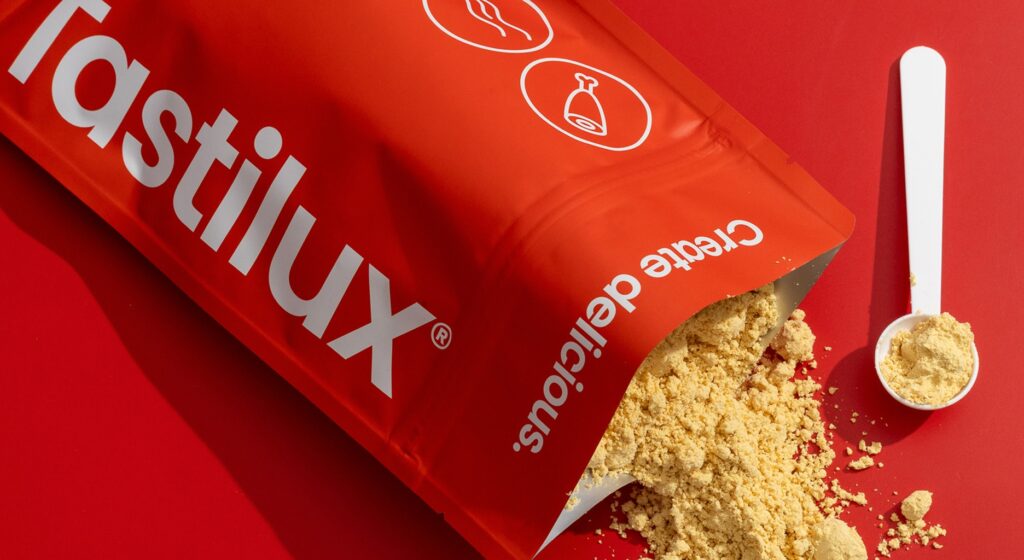
Based in Canberra, Nourish Ingredients’s “designer fat” relies on naturally occurring lipids scaled through precision fermentation, which provide the distinct flavour and cooking properties of meat fats when used in plant-based chicken, beef, pork and other alternatives.
Precision fermentation combines traditional fermentation with the latest biotech advances to efficiently produce a compound of interest. Companies insert a specific DNA sequence into a microorganism to instruct it to produce the desired molecules when fermented. In this case, the microbe is Mortierella alpina, and the resulting ingredient is an animal-free fat.
Tastilux was first exhibited at the South by Southwest conference in Sydney in 2023, as part of vegan chicken wings with calcium-based edible bones. The fat facilitates the Maillard reaction, giving products an aroma, taste and cooking experience akin to meat.
The ingredient serves as a “sweet spot” between tropical fats like palm and coconut oil (which can be a climate nightmare and are often mixed with a long list of synthetic flavours), and significantly more expensive cell-cultured fats. It is effective at just a 1% inclusion rate.
By producing the same molecules found in animals, but via microbes, Nourish Ingredients aims to address the taste, labelling and consumer satisfaction issues plaguing the plant-based protein market. It’s also targeting companies that combine these with animal proteins to make blended meat.
Additionally, Tastilux is set to enter other major food categories, including snacks, ready meals and tallow replacements – the latter category is one to watch, given the uproar around seed oils in favour of beef tallow, thanks to figures like US health secretary Robert F Kennedy Jr.
“Tastilux is our animal-free meat fat that is derived from nature and scaled through fermentation, with the hero ingredient being our proprietary biomass, over a seed or plant oil,” Petrie said.
“It delivers a rich, authentic flavour and can be incorporated with additional ingredients to work as a tallow replacement, opening up opportunities in this market without the environmental or supply constraints of animal products.”
Nourish Ingredients trialling Tastilux with US partners amid global plans

Unlike the Food and Drug Administration (FDA), which regulates all food additives in the US, FEMA only evaluates the safety of flavour additives for use in human food. Its rigorous scientific assessment is conducted by experts in organic chemistry, biochemistry, toxicology, metabolism and pathology.
The programme analyses comprehensive scientific data to determine whether ingredients are considered safe for consumption under their intended use, and is recognised as a trusted benchmark within the food and flavour industries, according to Nourish Ingredients.
“This regulatory milestone represents a major commercial breakthrough for our proprietary potent fats and technology, enabling us to deliver a true-to-meat experience that has been missing in the market,” said Petrie.
“We’re focused on the B2B market, with this approval enabling consumer-facing products to reach shelves in the near future. We’re already trialling our product with companies in the US. This milestone also creates a positive ripple internationally, helping advance regulatory pathways in other markets and opening up exciting new commercial opportunities,” he added.
Aside from the US, the company is focusing on Singapore, Australia, the UK, and the EU too. “We have completed a path-to-market assessment for Singapore and are working towards the necessary regulatory steps needed to apply with the Singapore Food Agency, supported by a third-party expert. We are actively pursuing regulatory approval in global markets,” said Petrie.
Last year, it teamed up with Chinese synbio firm Cabio Biotech to scale up and streamline its production, and this April, that resulted in Nourish Ingredients’s first industrial-scale manufacturing cycle, enough to meet 170,000 tonnes of end-product demand. Additionally, it has partnership agreements for Tastilux in the US, Australia, New Zealand and the Middle East, setting the scene for a global commercial rollout.
Nourish Ingredients has so far secured nearly $40M from investors, and has also developed Creamilux, a sister fat alternative for non-dairy applications. It has partnered with New Zealand dairy giant Fonterra to create both dairy and plant-based products with the ingredient.
“We’re currently focused on Tastilux’s regulatory pathways, but Creamilux is also underway, and we have a clear path to market established,” revealed Petrie.
The fat alternative industry is growing rapidly. California’s Yali Bio, New York’s C16 Biosciences and Sweden’s Melt&Marble are also using precision fermentation to produce fats and lipids. Bill Gates-backed Savor, meanwhile, transforms carbon into triglyceride blends via a thermochemical process to produce animal-free fats.