

Plant-Based Milk Outpaces Dairy Growth in US Foodservice As Protein Price Gap Shrinks

Non-dairy milk outperformed its conventional counterpart in the US foodservice sector last year, but sales of plant-based proteins fell despite a narrower price gap with meat.
Plant-based alternatives are encroaching upon the market share of milk and creamers in restaurants, coffee shops, and non-commercial food outlets in the US. Meat analogues, however, still have some way to go.
New analysis by the Good Food Institute (GFI) shows that dollar sales of non-dairy milk rose 16% in US foodservice last year, faster than cow’s milk. Meanwhile, plant-based creamers grew 4% in 2025, and both product segments now hold double-digit pound shares in their respective categories.
Meanwhile, sales of plant-based proteins (including meat alternatives, tofu, tempeh, and whole-food formats like veggie burgers) were down 7%, continuing the market’s decline since its post-pandemic peak in 2022.
GFI noted that foodservice operators can drive awareness and engagement with the plant-based category by presenting ingredients in creative, professionally prepared dishes, expanding availability to enable consumers to choose these foods more often, and being a strategic outlet for product launches and feedback.
Here are the key takeaways from GFI’s foodservice research.
1) Milk and creamer enjoyed a good 2025, cheese not so much
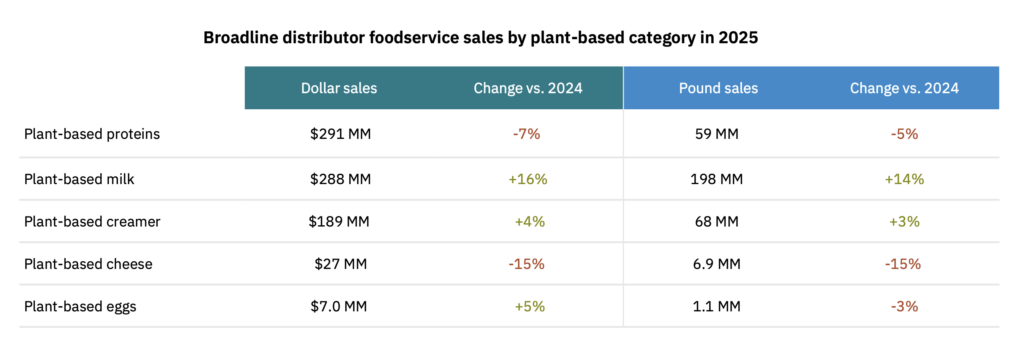
Non-dairy milk experienced a 14% hike in pound sales, against a 4% increase for conventional milk. In fact, dollar sales for plant-based milk reached $288M, growing consecutively for the last five years. That has allowed these products to achieve a 13% share of total milk-pound sales.
Likewise, dollar sales of dairy-free creamers totalled $189M in US foodservice, while pound sales were up by 3%. These have the largest market share of any plant-based category analysed, making up 28% of all creamer sales across this channel.
“Plant-based milk and creamer likely benefitted from coffee chains eliminating plant-based surcharges. Removing surcharges and offering plant-based as the default has been linked to increased sales,” GFI stated.
Vegan cheese did not enjoy the same success, however, with both dollar and pound sales dipping by 15% last year. In comparison, pound sales of dairy cheese flatlined.
Meanwhile, plant-based eggs represent the smallest category analysed, with just $7M in dollar sales, though this underwent a 5% uptick. That said, pound sales declined by 3%.
“While the category may have benefited from volatility in the conventional egg market due to outbreaks of highly pathogenic avian influenza, usage has levelled off as plant-based egg prices continue to increase, reaching over six dollars per pound in 2025,” said GFI.
2) Meat alternatives dominate plant proteins; veggie burgers the real winners
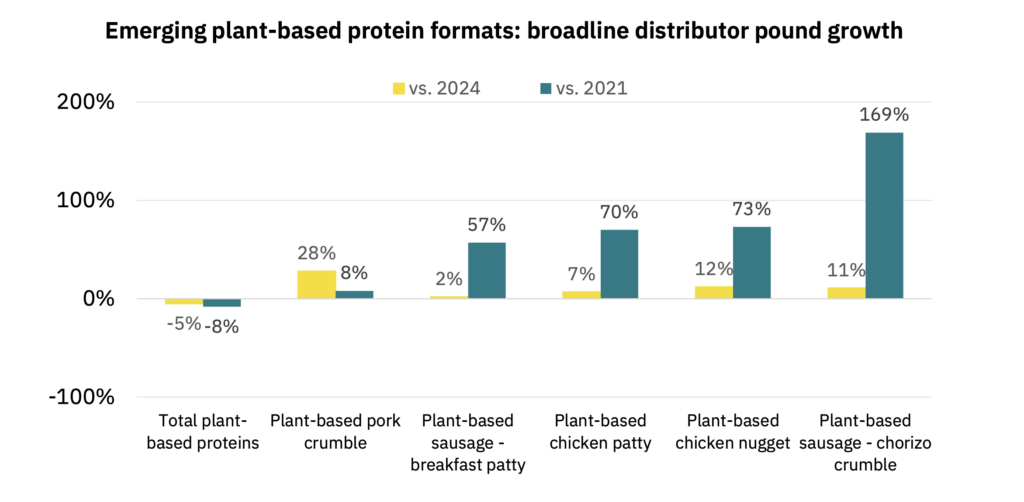
The overall plant-based protein segment posted $291M in dollar sales in American foodservice last year. Pound sales, meanwhile, declined by 5%, versus a 2% increase for conventional meat. It means vegan proteins still make up just 0.4% of the overall meat category in foodservice.
Within this segment, plant-based meat accounts for 54% of all sales. Within this, beef dominates with a 59% share, followed by chicken (22%) and pork (19%). In terms of formats, burger patties are the most popular (38%).
Despite the decline in sales, some categories emerged as bright spots. Plant-based pork saw a 3% increase in dollar sales (against declines of 16% and 6% for beef and chicken). The formats that performed particularly well included pork crumbles (up by 28% from 2024), chicken nuggets (+12%), chorizo crumbles (+11%), and chicken patties (+7%).
And although restaurants remain the largest buyers of plant-based proteins, their purchases fell by 15%, and 85% don’t offer a plant-based dish on the menu. In contrast, sales to non-commercial outlets across education, healthcare, business and industry, and government operators were on the rise.
Tofu and tempeh account for 36% of plant protein sales in US foodservice, but their performance flatlined. Whole-food products built on vegetables, grains and nuts make up another 9% of the market, and experienced a 6% growth in pound sales.
3) The price gap is large, but shrinking
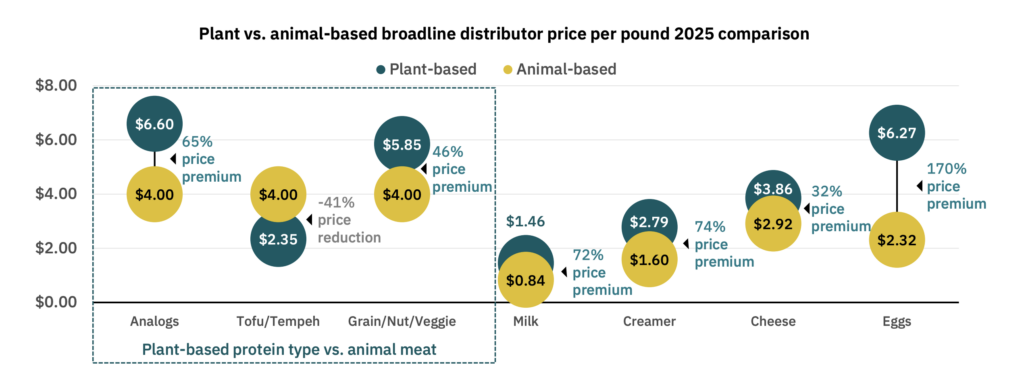
The price premiums for plant-based food persisted in 2025, with meat and milk alternatives around 60-70% higher than their conventional counterparts. However, the price gap for proteins declined slightly, thanks in large part to meat price hikes.
Plant-based meat is now 65% more expensive than conventional meat, while veggie burgers and the like are 46% dearer. Milk alternatives carry a 72% premium, and eggs have the highest gap (170%).
In contrast, tofu and tempeh are the only categories cheaper than meat, offering a 41% price reduction compared to animal protein.
GFI highlighted how these price differences have shifted over the last year. Plant proteins are 1% cheaper, while the cost of animal meat is 4% higher. Milk and non-dairy alternatives both increased by 2%, while vegan eggs are 8% more expensive; conventional eggs rose by 15%.
The price gap underscores why plant-based meat buyers make nearly 50% more purchases in restaurant chains and spend over $500 more per dining-out visit than the total population. In fact, the average party check is $2 higher when a meat alternative dish is included, highlighting the benefit for restaurants.
4) Taste and price remain the top drivers
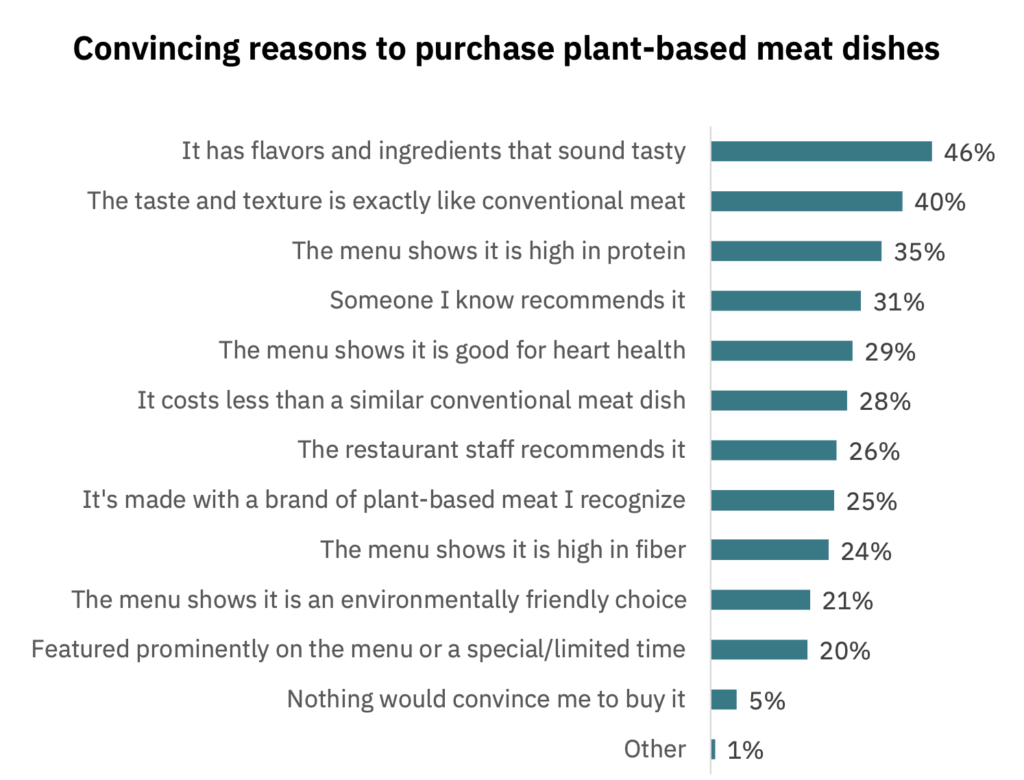
Consumer reserach has consistently pointed out that taste and affordability are the two most appealing factors for greater adoption of plant-based food in the US, and this is true for foodservice, too.
A 3,500-person survey by GFI and Morning Survey last December found that only 7.3% of diners purchased plant-based meat last year, and 62% did so only once. The lack of availability is an issue in itself, with 35% of Americans stating they haven’t ordered meat alternatives at a restaurant because they’re not on the menu.
Asked what would convince them to purchase more of these products, 46% said they must have tasty flavours and ingredients, while 40% insisted their taste and texture must be exactly like meat. For another 35%, the menu should show that a plant-based meat dish is high in protein.
The poll highlights the importance of word of mouth, too, with 31% open to eating meat alternatives if someone recommends that dish. Meanwhile, 29% would be convinced if the menu showed it was heart-healthy, and 28% would buy it if it cost less than a conventional meat dish.
Fortunately for the industry, only 5% of Americans say there’s nothing that could convince them to buy plant-based meat in a restaurant or foodservice setting.
“Improving taste and price of plant-based meat dishes would motivate diners to choose them more often,” GFI said. “Other tactics like highlighting health benefits or leveraging recommendations can further build consumer appeal.”