

This Bezos-Funded Lab Wants to Use AI to Make Tastier Plant-Based Meat


US non-profit Food System Innovations has launched an AI-led Food Intelligence Lab to create better-tasting alternative proteins with an open-source model, in an effort backed by the Bezos Earth Fund.
The use of artificial intelligence (AI) in food tech is ramping up faster than you can grill a burger.
US startup Shiru is using the tech to discover new sustainable proteins and ingredients. Israeli firm Celleste Bio is pairing biotech with computational AI to make cell-based chocolate bars, in partnership with Mondelēz International, and Chile’s NotCo has pivoted from being a CPG company to an AI startup that helps food companies accelerate product development.
Others are leveraging the tech to improve the taste, texture and nutritional credentials of alternative proteins like plant-based meat and dairy. This was one of the focuses of the Bezos Earth Fund‘s $2M grant to Food System Innovations (FSI), a philanthropic impact platform investing in the transition to a sustainable agrifood system, last year.
Large-scale taste tests by Nectar, FSI’s sensory analysis arm, show that Americans are not happy with how most vegan products taste. Only around a third of these consumers like the average alternative, compared to over three in five who find the taste of conventional meat and dairy appealing.
Companies know this. Analysis suggests that among the world’s largest food producers – think Nestlé, Walmart and Kraft Heinz – 90% continue to launch and promote new plant-based products even as 77% believe concerns over taste, cost and nutrition are hindering consumer uptake.
To solve this bottleneck, FSI has launched a new Food Intelligence Lab to develop open-source infrastructure to accelerate AI-driven alternative protein development, enhance their sensory profiles, and shorten commercialisation timelines.
“The Food Intelligence Lab combines multiple data streams, including sensory panel data from NECTAR, instrumental measurements like texture and pH, molecular composition data, and prior experiment history, to design algorithms that can guide that optimisation process,” Anna Thomas, a computer scientist at Stanford University and director of machine learning at the lab, tells Green Queen.
“We treat food formulation as an optimisation problem: how do you maximise consumer satisfaction – taste, texture, overall liking – while meeting constraints like cost, nutrition, and manufacturability.”
How FSI’s Food Intelligence Lab will improve alternative proteins
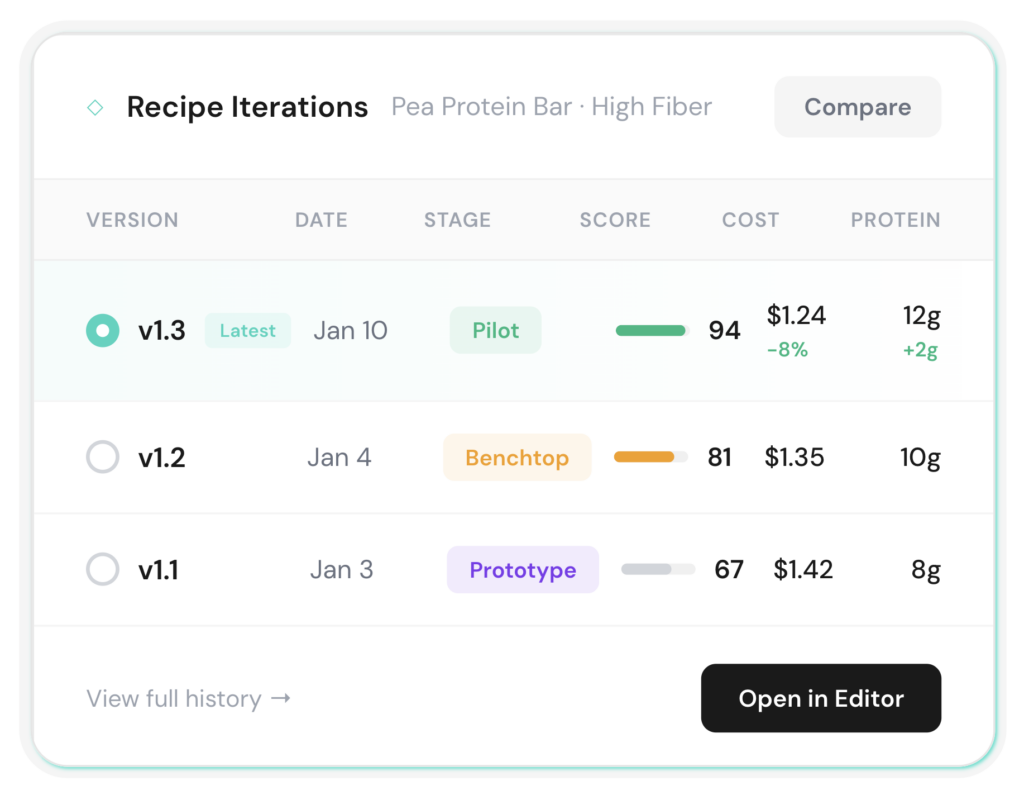
FSI argues that more R&D is needed to improve the taste of animal-free proteins, but companies are constrained by limited budgets, fragmented datasets, and long development cycles. And though AI can accelerate product development, the sector has lacked the integrated data infrastructure needed to reliably predict consumer outcomes, such as taste and texture.
The Food Intelligence Lab will generate and curate large-scale datasets, including sensory data from Nectar and instrumental measurements of alternative proteins (like texture profile analysis, pH, and shear tests) to establish public benchmarks for sensory prediction and formulation design.
It will develop open-source models to improve product design and prediction tasks, while working with companies, non-profits, and researchers to translate these into practical applications.
The lab has collaborated with Washington, DC-based Proxy Foods AI to co-develop an Expert-Guided Bayesian Optimisation (EGBO) system using the latter’s AI food scientist agent. This is an algorithm for black-box function optimisation, where a domain expert (like a human or large-language model) selects a small subset of variables for Bayesian optimisation and may expand it over time.
This EGBO improves the sensory performance of a dairy-free Greek yoghurt by 29% in just 10 formulation iterations over five days, matching the animal-based benchmark on three of four sensory attributes: consistency, creaminess, and tanginess.
“Our model is designed to work alongside food scientists, allowing domain experts to guide which variables matter most while the algorithm efficiently searches for better formulations. The system recommends the ‘next best experiment’, helping teams iterate far more quickly than traditional trial-and-error approaches,” explains Thomas.
“We’re also building a broader ecosystem beyond a single model. The lab is developing open-source benchmarks like TasteBench, evaluating foundation models for sensory prediction, and working with a range of partners across startups, academia, and industry to translate these tools into real-world R&D workflows.”
TasteBench is a benchmark designed by FSI researchers, with both food- and molecular-level prediction tasks publicly available. They evaluated existing foundation models and other baseline methods for predicting sensory similarity to the target animal product, finding that the best AI model is competitive with the median individual Nectar panellist.
Reckoning with AI’s climate impact
The lab is tackling one of the leading causes of climate change. Animal agriculture accounts for up to a fifth of global emissions, uses up 30% of the planet’s freshwater, and occupies 77% of all farmland. But it only supplies 17% of the world’s calories and 38% of its protein intake.
The system is inefficient and unsustainable, and AI can help streamline the transition towards more sustainable proteins. However, the tech itself has climate questions looming over it.
Research suggests the technology is likely to increase energy use and fuel climate disinformation. A UN report this month argues that AI’s actual climate impact doesn’t account for inference, or the use of models to answer everyday prompts.
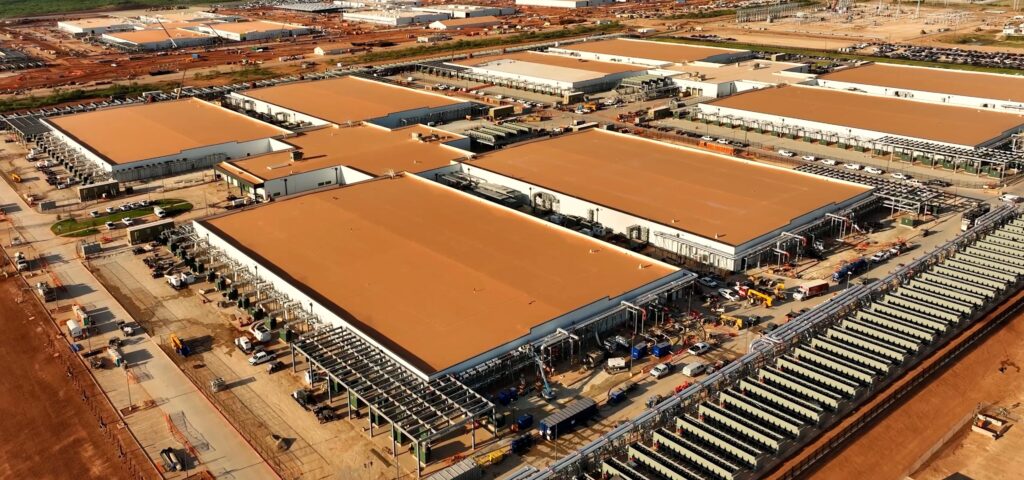
For instance, the energy required to generate a single AI image is enough to power a 10-watt LED bulb for 17 minutes and to use 2 tablespoons of water. Not to mention, data centres for AI are regularly accused of leeching resources from public infrastructure.
In Querétaro, Mexico, expanding computing infrastructure is taking up water supplies amid prolonged droughts. And in Uruguay, plans for a water-intensive data centre clashed with a 2023 drought depleting Montevideo’s freshwater reserves and making tap water unsafe for consumption.
“It’s a valid and important concern, and one we take seriously. Our view is that AI in this context needs to be evaluated on net impact,” says Thomas.
“Food systems account for roughly 26% of global greenhouse gas emissions, with livestock alone responsible for a significant share. If AI can materially accelerate the shift toward better-performing, more affordable sustainable proteins, the downstream emissions reductions can be substantial,” she adds.
“That said, efficiency matters. Our work is focused on targeted, domain-specific models rather than extremely large, general-purpose systems. Techniques like Bayesian optimisation are extremely lightweight compared to frontier AI approaches, and they are designed to reduce the number of physical experiments required, which carry a material resource and emissions footprint.
“We also see open infrastructure as part of the solution: by sharing datasets and models, the field can avoid duplicative training and move toward more efficient, standardised approaches.”
Bezos Earth Fund grant ‘catalytic’ to AI lab
That open-source model can serve as a catalyst for advancing the alternative protein category. In addition to the FSI grant, Bezos Earth Fund has backed projects by the Australian national research agency CSIRO, the UK’s University of Leeds to develop open-access AI platforms for sustainable proteins.
Later this year, Tufts University is set to launch a food innovation hub featuring an open-source cell bank for cultivated meat research.
“A core barrier in food is the lack of shared data infrastructure. Unlike fields like drug and materials discovery, food R&D is highly fragmented, with limited public datasets and benchmarks. That slows progress across the entire sector,” says Thomas.
“Open-sourcing models, datasets, and benchmarks is a deliberate choice to address that gap. It allows startups, researchers, and established companies to build on a common foundation, improving comparability, reducing duplicated effort, and accelerating collective learning.”
She calls the grant from Jeff Bezos’s fund “catalytic” to the FSI lab: “It enables us to stand up the lab, develop initial datasets and models, and demonstrate early proof points. But this is intended to be a long-term, collaborative effort. We expect continued partnerships across industry, philanthropy, and academia to expand and sustain the ecosystem over time.”
The Food Intelligence Lab is building an engine that recommends the next best experiment to try when developing sustainable protein products. Over time, it aims to establish a more open, collaborative foundation for sustainable food innovation, enabling the industry to develop better innovations.
“In year one, key goals include demonstrating measurable gains in formulation efficiency and sensory outcomes across multiple product categories, and improving model performance on benchmarks like TasteBench,” says Thomas, nodding to the early validation results from the yoghurt.