

Alpro, Oatly React as UK Govt Advisors Call Plant-Based Milk ‘Not Equivalent’ to Dairy


Nutritionists advising the UK government say only fortified plant-based milks are acceptable alternatives to dairy, and call ‘growing up’ drinks for children unnecessary.
While non-dairy alternatives are now a common fixture in UK households, nutritional experts advising the UK government have suggested that no soy, almond or oat milk is currently nutritionally equivalent to cow’s milk.
Replacing dairy with “typical” plant-based milks (those from the most popular brands) could lead to higher consumption of free sugars across all age groups and insufficient intake of certain macronutrients, particularly among children under five. The same is true for unfortified and/or sweetened options, the experts found.
These findings were based on research by the Scientific Advisory Committee on Nutrition (SACN) and the Committee on Toxicity of Chemicals in Food, Consumer Products and the Environment (COT), whose analysis is meant to inform considerations about vegan milk in the Nursery Milk Scheme and the Healthy Start initiative.
Their research suggests that nutritional concerns around almond, oat and soy milks may be reduced if they had an “enhanced” nutrient profile – this refers to unsweetened products that are fortified with vitamins A, B2, B12 and D, as well as calcium and iodine at similar levels to cow’s milk.
Their assertion that not a single plant-based milk is equivalent to dairy in the UK is “only partially true”, according to Valentina Gallani, health and nutrition manager at ProVeg International. “Fortified unsweetened soy milk is a great substitution for cow’s milk, and it also has a better lipid profile compared to it. Soy milk contains similar amounts of protein and less total fat and saturated fat,” she says.
“Unsweetened and fortified plant-based milk can offer plenty of important micronutrients without adding too much saturated fat and energy to our daily diet,” she adds.
Report highlights inconsistencies in non-dairy milk
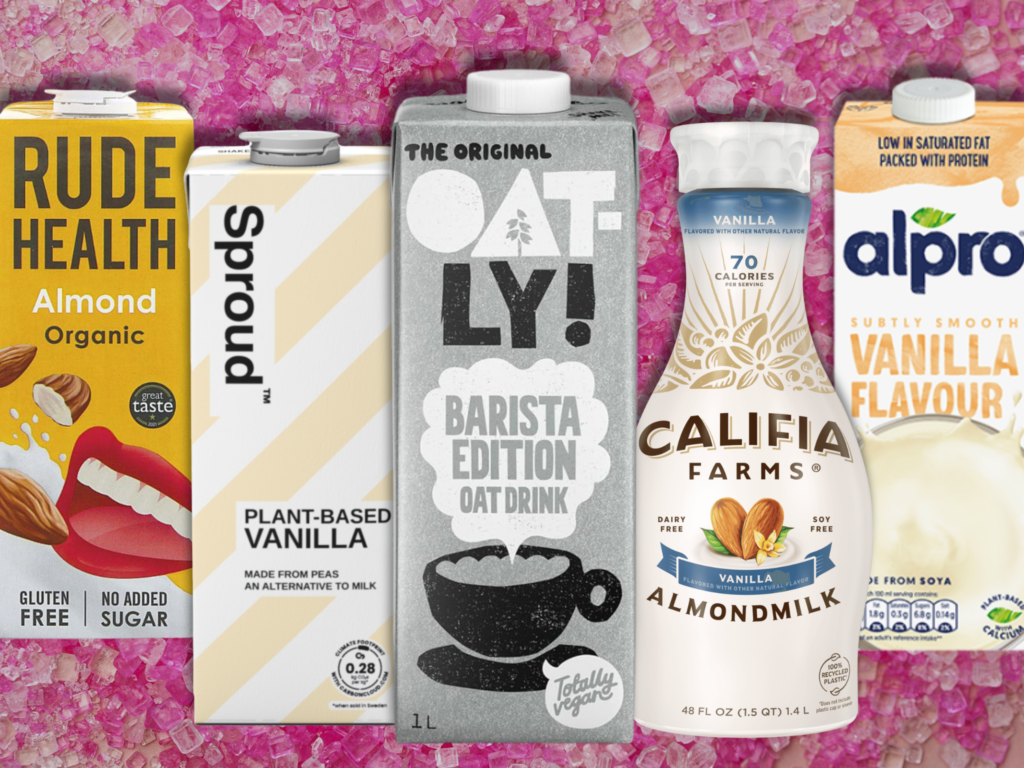
SACN and COT’s analysis acknowledged that even the typical plant-based milk product can help reduce energy and saturated fat intakes, which is beneficial for all age groups. Further, such options lead to higher consumption of dietary fibre and vitamin D.
However, almond and oat milk generally contain less protein than soy and cow’s milk, which could lower the protein intake for children aged one to five who follow a vegan diet or drink non-dairy milk. That said, the average protein consumption is above requirements across all ages in the UK.
When it comes to fortified and unsweetened varieties, it is “uncertain whether micronutrient fortificants are as ‘bioavailable’ (as easily digested and absorbed) as micronutrients that are naturally present in cows’ milk”, the review found.
The only potential toxicological concern identified by the experts relates to isoflavones (essentially plant-derived phytoestrogens) in children aged one to five, who are high consumers of soy. “This risk could be partially mitigated by ensuring that children following a vegan diet consume a variety of non-animal protein sources rather than relying solely on soya products,” the researchers noted.
While the assessment only focused on the three plant milk types, the nutritionists said their findings and recommendations “would apply to all plant-based drinks”. However, their assessment was only based on products available until January 2022, and the experts said they were “aware that the nutritional composition of plant-based drinks sold in the UK continued to change” during the assessment.
The review was particularly a blow to organic plant-based milks, which are not allowed to be fortified with any nutrients in the UK.
“The report highlights that plant-based milk has lower saturated fat and higher fibre and vitamin D than cow’s milk, but is less consistently fortified with key nutrients and has more variable sugar content. The importance of these relative advantages and disadvantages varies by age group,” explains Amy Williams, nutrition lead at think tank the Good Food Institute Europe.
“The primary challenge for plant-based milk highlighted by the report is consistency, as different brands and ingredients have different nutritional profiles.”
‘Growing up’ plant-based milks can support health, says Alpro

In 2024, 32% of UK households bought plant-based milk at least once, up slightly from the previous year. “We know that people are looking to diversify their diets, and that includes seeking healthy options to fit within a flexitarian or plant-based diet,” says a spokesperson for Danone UK & Ireland, the parent company of plant-based milk leader Alpro.
“We offer a range of plant-based drinks fortified with key nutrients that are also present in cows’ milk, such as calcium, iodine, vitamin B12 and vitamin B2, as well as unsweetened options with no added sugars. These products provide a valuable and inclusive option for people who have chosen a plant-based diet, have a lactose intolerance or a dairy allergy, or who simply want variety in their diets,” they add.
The experts concluded that whole or semi-skimmed cow’s milk is “preferable to plant-based drinks” for one- to five-year-olds who consume animal products, but that “fortified and unsweetened almond, oat and soya drinks are an acceptable alternative to cow’s milk”. For those who are vegan, soy milk is preferable as the main alternative for kids due to its higher protein content.
They added that there’s “no need for drinks specifically marketed for children aged one to three”, such as ‘growing up’ and other ‘toddler’ milks. Alpro has an entire range of ‘growing up’ products, and earlier this month, it released a new Alpro Kids line featuring 30% less sugar than the market average.
“Plant-based ‘growing up’ drinks can support the healthy growth and development of young children. They can be a valuable source of nutrients like calcium, iodine, and vitamin B12 and many include nutrients, like vitamin D and iron, that are not normally found in cow’s milk,” the Danone representative says.
“Ultimately, when it comes to feeding their children, parents deserve to have access to a range of products that can be consumed as part of a balanced, varied and healthy diet – and this should not rule out plant-based options. We recommend parents consult a healthcare professional about introducing plant-based food in their child’s diet.”
Oatly ‘disappointed’ in study’s approach, but welcomes fortification focus

“We are pleased that the SACN and COT assessment has recognised that fortified and unsweetened oat drinks are an acceptable alternative to cow’s milk for adults and children over one,” Kate Overy, nutrition science lead at Oatly, tells Green Queen. “However, despite the scientific evidence highlighting the many nutritional benefits of plant-based drinks, we are disappointed that the focus is on whether they are ‘nutritionally equivalent’ to cow’s milk.”
She adds: “The public are aware that oat drinks have a different nutritional profile to cow’s milk as one comes from a cow and one comes from oats. It is more helpful to look at the nutritional benefits to public health. Oatly’s fortified drinks are typically rich in calcium, iodine, riboflavin (B2) and vitamin D, and are a source of vitamin B12. They also contain fibre and are low in saturated fat.”
For the general population, fortified and unsweetened vegan milks were found to be acceptable alternatives to dairy. The experts called on the government to set minimum requirements for a range of micronutrients in plant-based milks, at a comparable level to semi-skimmed cow’s milk. Moreover, they urged companies to reduce sugar content, avoid non-sugar sweeteners, make toxicological and nutritional data publicly available, and fortify milk alternatives to match dairy.
The guidance on fortification is “sorely needed to diversify the available sources of key nutrients in our diets”, according to GFI Europe’s Williams. “While nutrients like iodine are not naturally high in cow’s milk, and levels of other minerals like B12 vary, routine fortification of feed and vitamin injections have led to more consistent levels of certain nutrients than those found in plant-based milk,” she says.
ProVeg’s Gallani concurs: “Cow’s milk is most of the time fortified with vitamin D and with iodine through cow’s feed and through the milk-pulling machines. Therefore, fortification should be used widely in the food industry, especially for plant-based dairy alternatives.”
This story was updated to include comments from Oatly.