

Australia’s National Science Agency, CSIRO, Ends Work on Food Innovation Despite Climate Promise


Amid CSIRO’s financial challenges, the Australian national science agency has decided to end work on food ingredients and processing, but reaffirms that agrifood will continue being one of its largest units.
One of Australia’s most beloved public institutions is facing a financial reckoning.
The Commonwealth Scientific and Industrial Research Organisation (CSIRO) was a key player in the development of early Wi-Fi technology, Australia’s polymer banknotes, the insect repellent Aeroguard, and the Total Wellbeing Diet.
At the vanguard of the country’s climate change strategy, the national science agency has also helped incubate many future food startups, including plant-based meat pioneer v2food and precision-fermented protein firms Eden Brew and Eclipse Ingredients.
Through Main Sequence, its VC arm, it has invested in several novel ingredient companies, such as precision fermentation firms Cauldron Ferm and Nourish Ingredients. Plus, CSIRO has helped advance the research of companies like Australian Plant Proteins and All G, among others.
The agency has been facing “long-term financial sustainability challenges”, leading to large-scale job cuts and a review of its research direction. Green Queen has learned that CSIRO has decided to end its food innovation work, despite its commitment to continue “addressing the pressing problem of climate change”.
That said, the agency has confirmed that food and agriculture will continue to remain a major part of its research priorities.
“We are currently in consultation with staff, and no decisions will be made until feedback gathered from staff and stakeholders during that consultation period has been considered,” a CSIRO spokesperson told Green Queen.
Insufficient government funding forces CSIRO to restructure
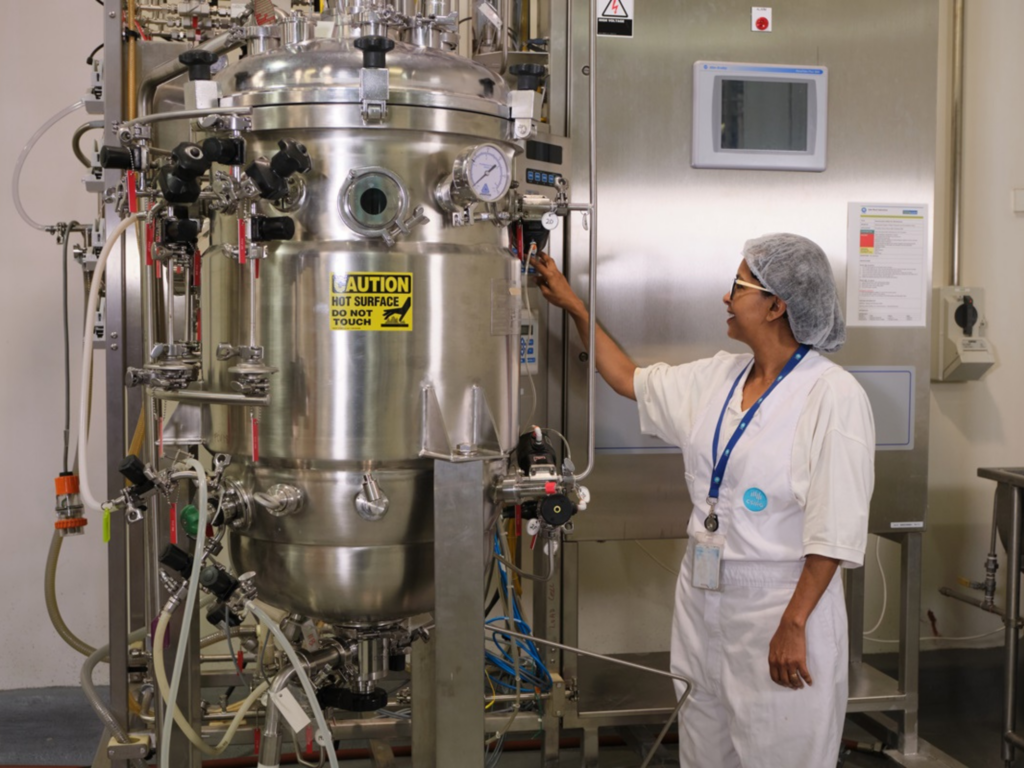
This past November, CSIRO announced its strategy to deprioritise key research areas where it lacks the required scale to achieve significant impact or where others are better-positioned to deliver.
The decision was based on the lack of financial support from the Australian government, whose funding for CSIRO has not been “keeping pace with the rising costs of running a modern science agency”.
While funding for CSIRO has grown by 1.3% annually over the last 15 years, the inflation rate has increased by 2.7% in this time. As a percentage of Australia’s GDP, the agency’s financing has steadily dropped since 1978, with few exceptions.
This has left CSIRO short-changed and stretched, leading to mass job cuts. Between 2024 and 2025, the agency was forced to let go of more than 800 employees. In the November announcement, it said it would need to reduce another 300 to 350 research jobs to achieve its “sharpened focus”.
Among its renewed priorities were a transition to affordable green energy, tech advances to boost farm productivity and resilience to climate shocks, and applying AI, robotics and other technologies in core industries, and a focus on climate adaptation and resilience.
Despite the latter commitment, CSIRO’s environment research unit is set to be hit hardest, where 120-150 jobs are on the cutting room floor (around a fifth of its total positions). Four of its nine research focuses will be discontinued, and several activities – including waste, biodiversity, and net zero – will be transferred to other CSIRO departments.
The remaining cutbacks will affect health and biosecurity (110-110 jobs), food and agriculture (45-55), and minerals (25-35).
One of the areas it is abandoning is its food research unit, with CSIRO withdrawing from its membership of a leading global food innovation community.
“CSIRO has made a strategic decision to exit work on food ingredients and food processing,” one of the agency’s representatives told the innovation platform in an email seen by Green Queen.
“We have received great value being part of the ecosystem, building connections and understanding what others are doing. We are still in the process of working through the impact on the people in research teams, and pilot plant team, but they are likely to be impacted,” they added.
Why CSIRO is ending research on food innovation

CSIRO’s decision to phase out its food ingredient work is a blow to the wider novel food industry, given its contribution to some of Australia’s leading alternative protein startups, both in terms of investment and R&D support.
In a statement sent to Green Queen, its representative said: “CSIRO has made strategic choices to evolve our research, to focus efforts where we can deliver the greatest national impact following a comprehensive review of our research portfolio.
“To achieve this sharpened focus, we need to deprioritise areas where we lack the required scale to achieve significant impact or areas where others in the ecosystem are better placed to deliver.”
Explaining why it made the decision, the spokesperson noted: “CSIRO has a strong legacy in food innovation, but the landscape has evolved, and our work in this space has become less distinct from that of other research organisations, SMEs and providers.
“A potential exit from this research area creates an opportunity to refocus our efforts on areas where CSIRO can provide differentiated capability to deliver greater impact at scale for the sector and for Australia.”
While the agency may be putting the brakes on food innovation, that doesn’t mean it is completely abandoning the agriculture sector, which alone accounts for 13% of Australia’s greenhouse gas emissions.
“Under the proposed changes, agriculture and food will remain one of CSIRO’s largest research units and will continue to contribute strongly to the resilience and productivity of the Australian agricultural and food sectors, in close collaboration with industry partners and government,” the agency said.
This is despite experts calling on the government to ramp up its support for biomanufacturing through financial and policy incentives, and to develop national strategies for the bioeconomy and plant protein production to meet the country’s future food needs.