

Australia’s Cauldron Ferm Gets $13.25M for Continuous ‘Hyper-Fermentation’ Platform

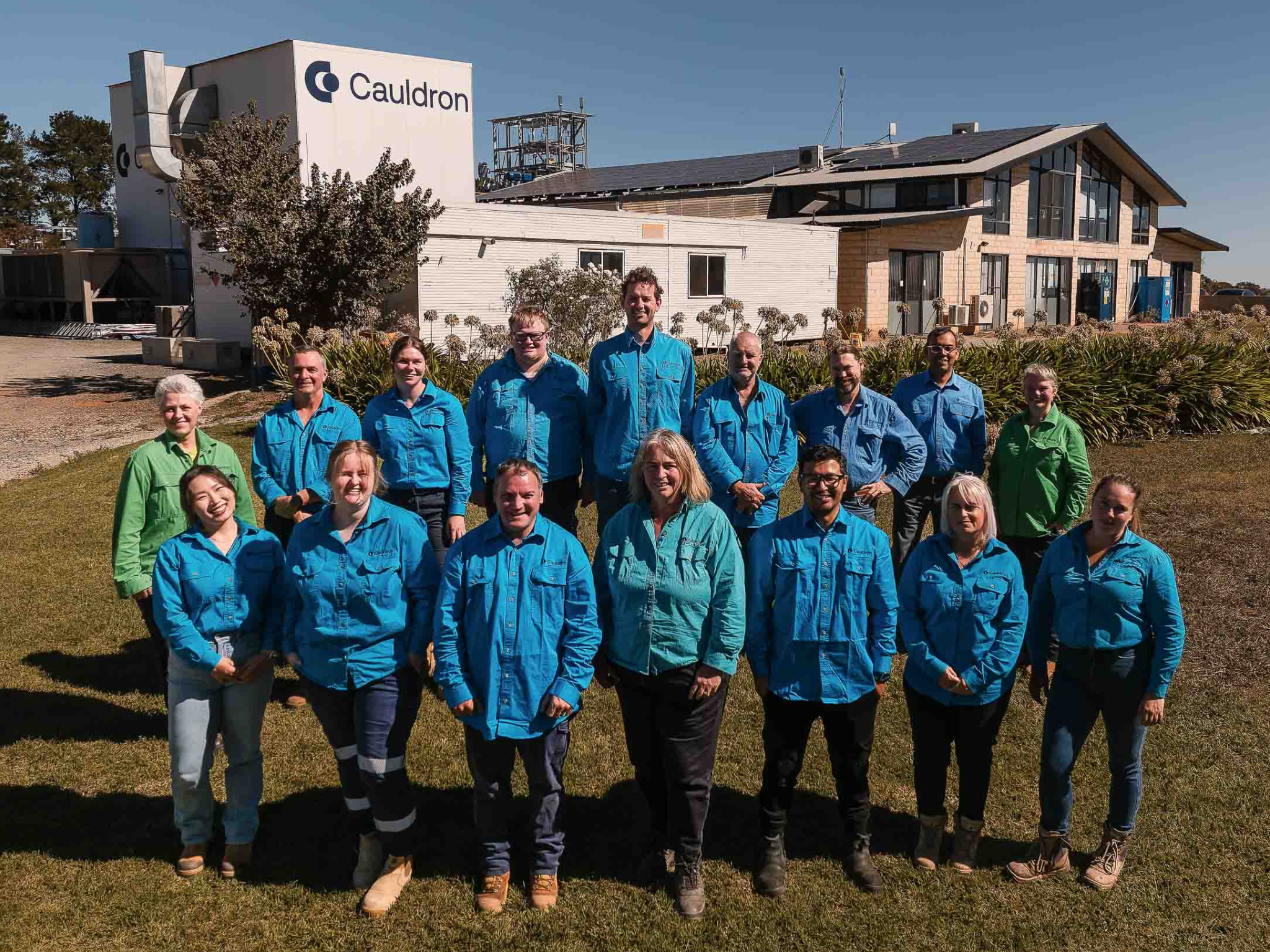
Australian biomanufacturing specialist Cauldron Ferm has raised $13.25M in funding to expand its “hyper-fermentation” platform with retrofitted facilities and meet government and corporate demand.
Scale and cost efficiency have always been the two constant bottlenecks in the food biomanufacturing industry. This week, Australia’s Cauldron Ferm has just received a big boost to solve this problem with a fermentation process that never really stops.
Based in Orange, New South Wales, the startup has secured $13.25M in Series A2 funding for its continuous “hyper-fermentation” technology, which keeps microbes as productive as possible as they churn out high-value ingredients round the clock.
The financing round was led by Main Sequence Ventures, with participation from Horizons Ventures, SOSV, and NGS Super, and brings Cauldron’s total raised to $26M.
It will use the capital to accelerate the expansion of its precision fermentation technology to meet demand from both governments and corporations investing in biomanufacturing infrastructure, with planned facilities further backed by federal and state government grants.
The investment comes just as Cauldron was named on Fast Company’s list of the Most Innovative Asia-Pacific Companies of 2026, which recognised the firm “for lowering the costs of industrial-scale biomanufacturing”.
Cauldron Ferm bets on ‘bioprocess innovation’ to fix the supply chain
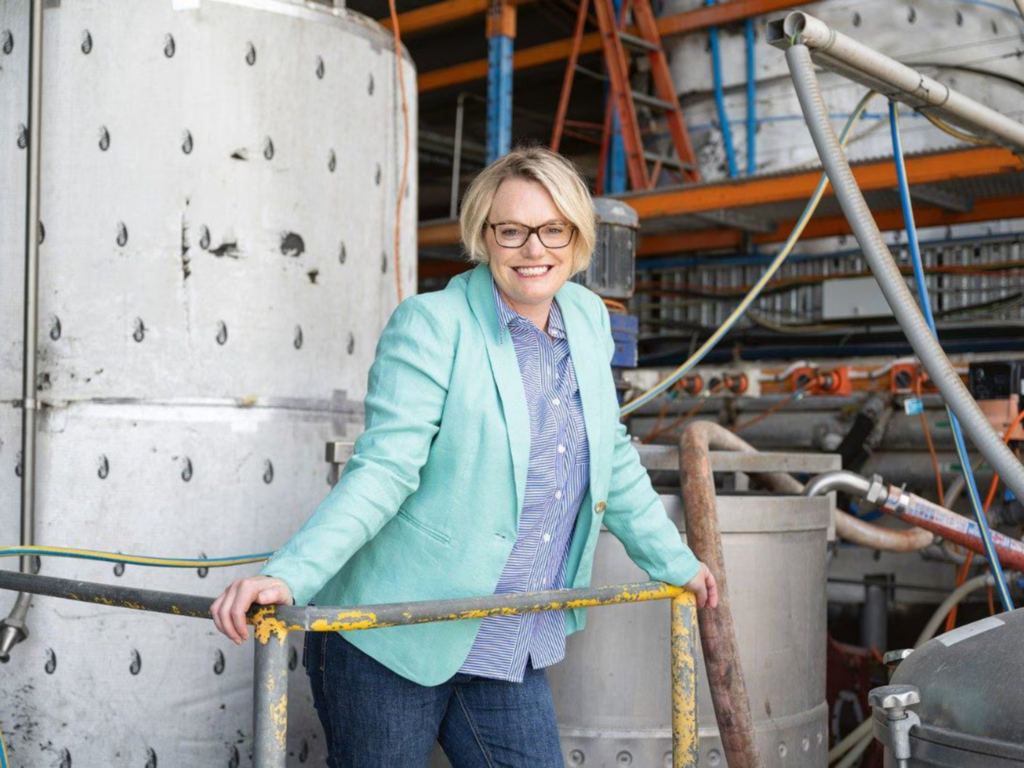
Cauldron is built on 35 years of R&D from Agritechnology, where co-founder and CEO Michele Stansfield worked for over a decade. Its tech involves a novel bioreactor design and proprietary growth medium formulation, which enable a continuous fermentation process that lowers net unit costs by up to 50%, and provides 20% more output with 45% less capex.
The hyper-fermentation tech involves unique bioprocess and operating protocols that promote genetic stability and maximise productivity, running like an assembly line with maximum efficiency, sustained over long periods of time.
Compared to fed-batch methods, this process enables Cauldron to harvest more frequently and at larger volumes, unlocking significant productivity gains. This, in turn, significantly drives down manufacturing costs.
The company’s smaller equipment uses less electricity and water, and the non-stop process entails less frequent sterilisation, which decreases utility spending. Additionally, its fixed costs are also reduced with lower labour and capex-dependent costs.
Cauldron suggests that its model addresses the fragility of the global supply chain, with 80% of organisations reporting disruptions in 2024. And according to one estimate, up to 60% of physical inputs to the global economy can be produced biologically, a reality that this Australian startup is aiming to make commercially viable.
Cauldron is the only business approved to manufacture precision-fermented protein ingredients at the 10,000-litre scale in the country. In 2024, it received a DIR200 licence for the Pichia pastoris strain from the Department of Health’s Office of the Gene Technology Regulator (OGTR), following a thorough assessment at the company’s demo facility
The firm has demonstrated its hyper-fermentation process for clients in the bio-based food, chemical, and nutraceutical sectors, and currently operates a demo facility in New South Wales, which is partly funded by the federal government and boasts a fermentation capacity of 30,000 litres.
“For biomanufacturing to compete in industrial sectors, bioproducts have to deliver on costs, scale, and quality. Bioprocess innovation is how we get there,” said Stansfield. “This milestone reflects the impact of our platform at a time when governments and corporations are urgently seeking competitive bio-based solutions to address supply chain pressure.”
Cauldron eyeing new fermentation facilities to expand biomanufacturing
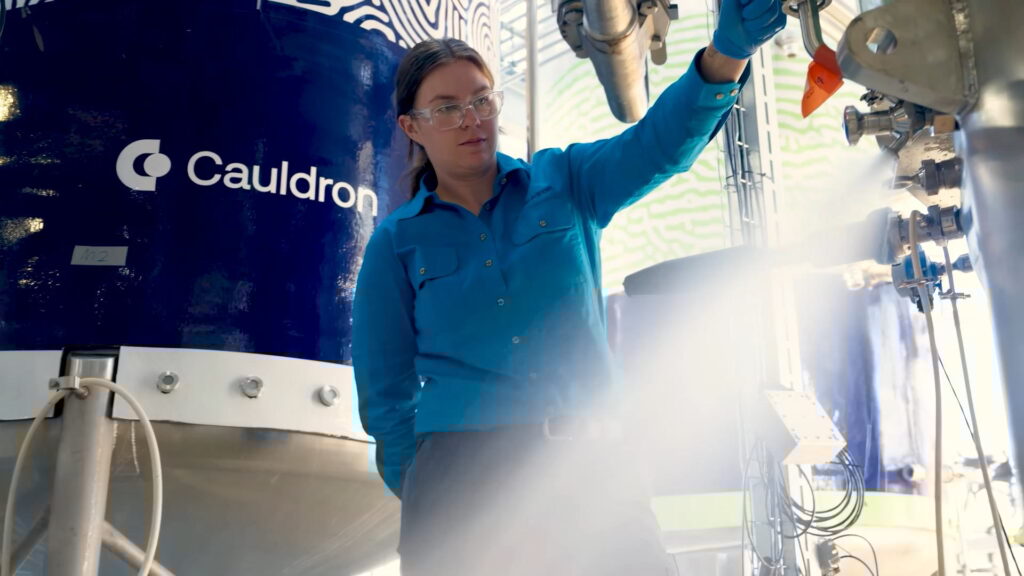
A 2025 report by McKinsey suggests that fermentation tech could account for 4% of global protein production by 2050, but it needs $250B of investment to meet the capacity needs by 2050.
“Leaders can continue building creative mechanisms to balance capital, risk, and returns. If players can enter this investment opportunity now, they have a chance to build the food supply chain of the future,” the report stated.
Cauldron, aiming to be Asia-Pacific’s largest end-to-end contract manufacturer for precision-fermented bioproducts, is at the forefront of this shift.
“Cauldron’s continuous hyper-fermentation platform is focused on the key constraint in the sector: improving productivity and unit economics at industrial scale,” said Ben Squires, chief investment officer at NGS Super. “That combination of technology differentiation and real-world commercial validation is why we decided to invest.”
The company has received government support to build a commercial-scale plant in Mackay, Queensland, which is slated to have a 500,000-litre fermentation capacity. Backed by the state government, it will produce inputs for food, nutrition, materials, beauty, personal care, chemicals, and biofuels, with an annual output of over 1,000 tonnes.
And this won’t be the last of its kind – Cauldron Ferm plans to develop a global network of industrial facilities across multiple markets. To do so, it’s working with corporate partners to explore retrofitting existing sites to deploy hyper-fermentation. Over the last year, it has already onboarded six new clients, ranging from startups to multinationals.
“Cauldron is proving that biology can run continuously, predictably, and at the volumes global supply chains demand. Hyper-fermentation closes the gap between breakthrough strains and reliable, cost-competitive production,” said Phil Morle, partner at Main Sequence.
“In a market distracted by AI hype cycles, we’re backing the hard, physical work of scaling biology. That’s what builds enduring companies, and it’s why we believe Cauldron is at the forefront of making bioindustrial manufacturing commercially inevitable,” he added.
Main Sequence Ventures was founded in 2017 by Australia’s national science agency CSIRO, “to address the ‘valley of death’ between research and commercialisation” as per their website. The agency is battling tough times. In November, CSIRO announced it would cut up to 350 jobs due to a lack of funding. Some research areas are being deprioritised, including food ingredients and processing, Green Queen has learned in an email sent to our team last week. This is despite experts calling on the government to ramp up its support for biomanufacturing through financial and policy incentives.