

EU Invests €5.7M in Project to Produce Microalgae Proteins from Marine Waste & CO2

The EU has pumped €5.7M into Alganova, a new project that seeks to establish a biorefinery for the production of proteins and functional ingredients from microalgae fed on waste and carbon dioxide.
Algae’s potential to safeguard the future of food is now being recognised by the EU too, which has backed a sustainable marine protein project with €5.7M in funding.
The investment for the four-year Alganova initiative comes from the Circular Bio-based Europe Joint Undertaking (CBE JU), a €2B partnership between the EU and the Bio-Based Industries Consortium that funds projects advancing the circular bioeconomy in Europe.
Coordinated by Spain’s Idener Research & Development, the project brings together 12 institutions to develop and validate a computationally assisted, circular biorefinery for the production of proteins and functional ingredients from microalgal biomass, which will be fed on agro-marine byproducts and industrial biogenic CO2.
Its members include Fraunhofer IVV, Algemy Ingredients, Research Institutes of Sweden, the Nova University of Lisbon, Zero Emissions Engineering, and ITQB Nova, among others.
Alganova focuses on single-cell microalgae strains
Animal agriculture accounts for 81-86% of the EU’s food-related greenhouse gas emissions and occupies 71% of its farmland, even though it provides only 32% of its calories and 64% of its protein intake. So livestock production is highly resource-intensive – around 6kg of plant protein is required to produce per kg of meat.
Alganova is looking to address this by upcycling waste streams and emissions into nutrient-optimised feedstocks for microalgae cultivation, helping support the EU’s protein transition and contribute to the circular economy.
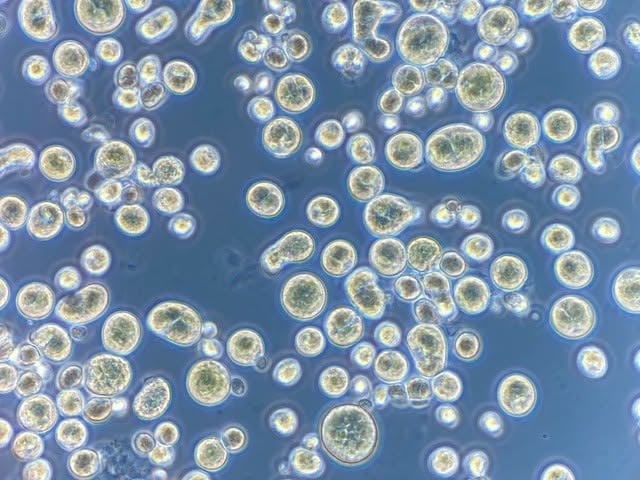
It is leveraging Chlorella vulgaris and Dunaliella salina, two widely commercialised sources of single-cell protein already classed as safe for human consumption in the EU, to produce protein extracts, polyunsaturated fatty acids, and carotenoids via parallel autotrophic and heterotrophic cultivation.
“We are going to study microalgae collected from Portuguese rivers, including Lima, Arado, and Zêzere, to evaluate their potential for producing biomass and other valuable products,” said Francisco Nascimento, an auxiliary researcher at ITQB Nova. “We will also investigate how alternative growth substrates can increase biomass production and reduce production costs.”
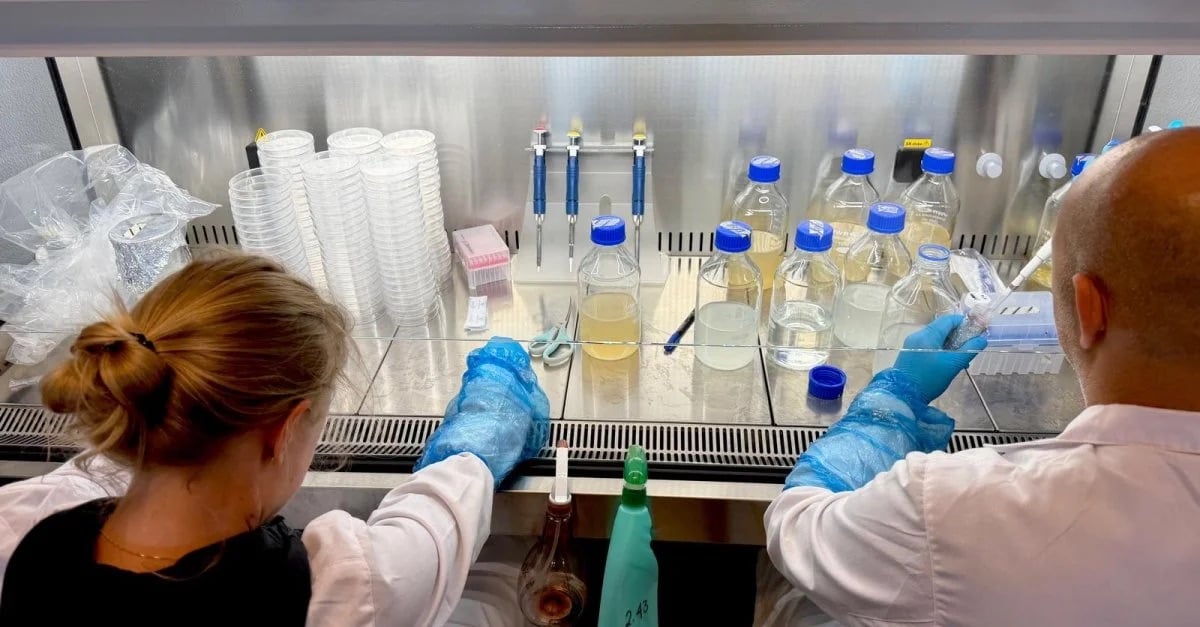
The project will design, optimise and digitalise the aforementioned biorefinery with computational tools and digital twins of the bioreactors, and scale up the core bioprocesses to Technology Readiness Level (TRL) 7 – a near-complete, pre-commercial stage – for biomass and ingredient production.
The consortium will validate the safety, nutritional quality, and regulatory compliance of algal ingredients, develop food product prototypes, and demonstrate the economic and climate benefits of the integrated biorefinery. Moreover, it plans to maximise impact through communication, dissemination, exploitation, and value-chain stakeholder engagement.
Targeting food security and price parity for plant proteins
The project has a number of goals it wants to achieve by the end of its run, chiefly a reduction of greenhouse gas emissions by at least 40% per kg of protein compared to conventional animal protein systems, and a lowering of production costs by 30-40% to €3-4, making plant proteins more price-competitive.
Through digital twin optimisation and predictive process control, Alganova hopes to boost biomass productivity by around 15%, cut energy consumption for algae protein production by 20-30%.
Further environmental aims include lowering freshwater use to 300 litres per kg (significantly below animal and soy protein), upcycling up to 95% of byproducts from the marine and agriculture sectors, and achieving 80% of land-based savings compared to crop-based protein systems.
The idea is to decrease reliance on imported protein ingredients, which is also the basis of the EU’s new Protein Plan, given that the region brings in 70% of its oilseeds and protein crops. By producing high-value ingredients from microalgae and waste streams, Alganova wants to boost Europe’s self-sufficiency, projecting a gross profit of over €5M across 10 years of operation.
It claims that each replicated facility will support rural and bio-based industrial growth by generating up to 40 direct jobs and 120 indirect roles. And its work will enable the adoption of project results by around 1,800 researchers across 90 EU institutions by the end of the decade.
Moreover, the project is targeting 50% purchase intent and 80% consumer trust scores for its algae-based ingredients, which it says will help enhance public health outcomes by offering 80% protein digestibility and high-quality amino acid and polyunsaturated fatty acid profiles.