

Robertson Foundation Invests $19M to Curb Methane Through Plant-Rich Diets & Food Waste Reduction


The Robertson Foundation has invested $19M in six organisations working to lower methane emissions from the food system via plant-forward dietary shifts and food waste reduction.
US grant-making organisation Robertson Foundation is pouring millions into efforts to reduce emissions from the agrifood system.
The philanthropic group, established by Tiger Management founder Julian Robertson Jr three decades ago, has committed $19M to six organisations advancing practical solutions to lower methane emissions from across the food industry.
The beneficiaries of the investment, which covers a three-year period, are Tilt Collective, American Heart Association, World Resources Institute, World Wildlife Fund, Full Circle Future, and Zero Food Waste Coalition.
“These six organisations are demonstrating that addressing climate change can begin in unexpected places – from the food we serve to the food we waste,” Christy Loper, environment programme director at the Robertson Foundation, said in a LinkedIn post.
Dietary shifts and food waste the two main approaches

The organisations receiving the funding are focused on one of two key approaches to curbing methane emissions from the food system.
The World Wildlife Fund, Zero Food Waste Coalition and Full Circle Future are all targeting food waste reduction. Their efforts include standardising date labels, supporting composting and food-sharing programmes in K-12 schools, and designing policies to prevent organic waste from entering landfills.
“Food waste and the methane pollution it creates is finally getting the attention it deserves, and that’s thanks in large part to funders who’ve been willing to invest in this work long before it was in the spotlight,” Katherine Blauvelt, executive director of Full Circle Future, said in a LinkedIn post.
The other three organisations are leveraging the potential of dietary shifts. Tilt Collective and the World Resources Institute will work to increase access to healthy protein offerings at universities, hospitals, stadiums, and restaurants.
And the American Heart Association will help consumers incorporate healthier, plant-forward meals into their diets through easy recipes, tools, and guidance. The group urged people to prioritise plant proteins over meat in its latest dietary recommendations, in sharp contrast to the Trump administration’s meat- and dairy-promoting guidelines.
Why curbing methane is crucial
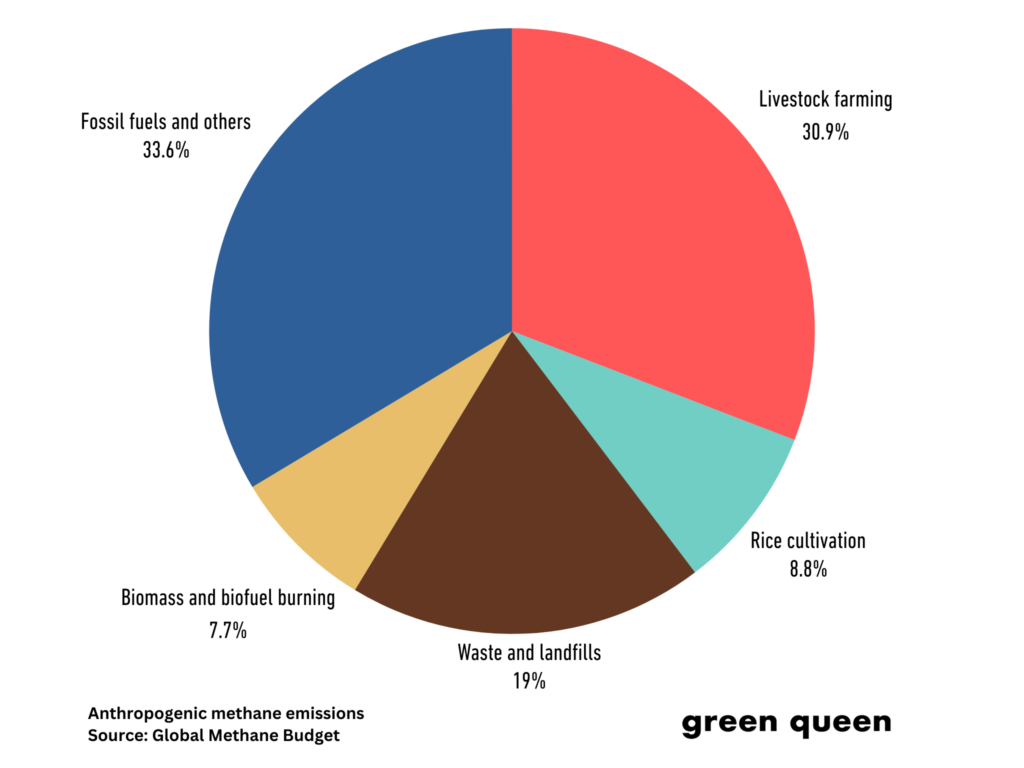
Methane has a much shorter lifespan (12 years) than carbon, but it’s much more efficient at trapping radiation – it’s 86 times more potent than CO2 over a 20-year period, and has a warming impact 28 times stronger over 100 years.
The gas is the primary contributor to ground-level ozone, a hazardous pollutant that causes 1 million premature deaths each year. It also causes air pollution, raising the risk of asthma, heart disease, stroke, and premature death.
Human activity is the main source of methane emissions, and meat and dairy production alone accounts for 25-35% of that share, thanks in large part to the digestive processes of ruminant livestock.
Waste accounts for up to 20% of anthropogenic methane emissions – this includes food waste, wastewater, and organic materials in landfills. Food waste is the single-largest contributor to landfills in the US, with 31% of the national food supply ending up lost or wasted.
Methane emissions are rising faster than ever before, growing by as much as 20% between 2000 and 2020. And without action, human-caused methane emissions will rise by up to 13% from 2020-30, taking the world in the opposite direction on the path to 1.5°C. So efforts to curb the gas’s output and impact are critical.
The Robertson Foundation itself has now committed a total of $50M towards food systems transformation since 2024. That includes $10.5M in previous grants for organisations advancing policies to cut food waste and landfill-based methane emissions, and extolling the climate and health benefits of a plant-rich diet, such as the Global Methane Hub, ReFed, and Building Impact Through Eaters (Bite).
“Collectively, the Foundation’s grantees are working to bend the curve on food-related climate emissions, and we are thrilled to support their critical work,” said Loper.