

USDA-Backed Loan Helps Plantible Foods Raise $35M to Scale Up Rubisco Protein Fivefold

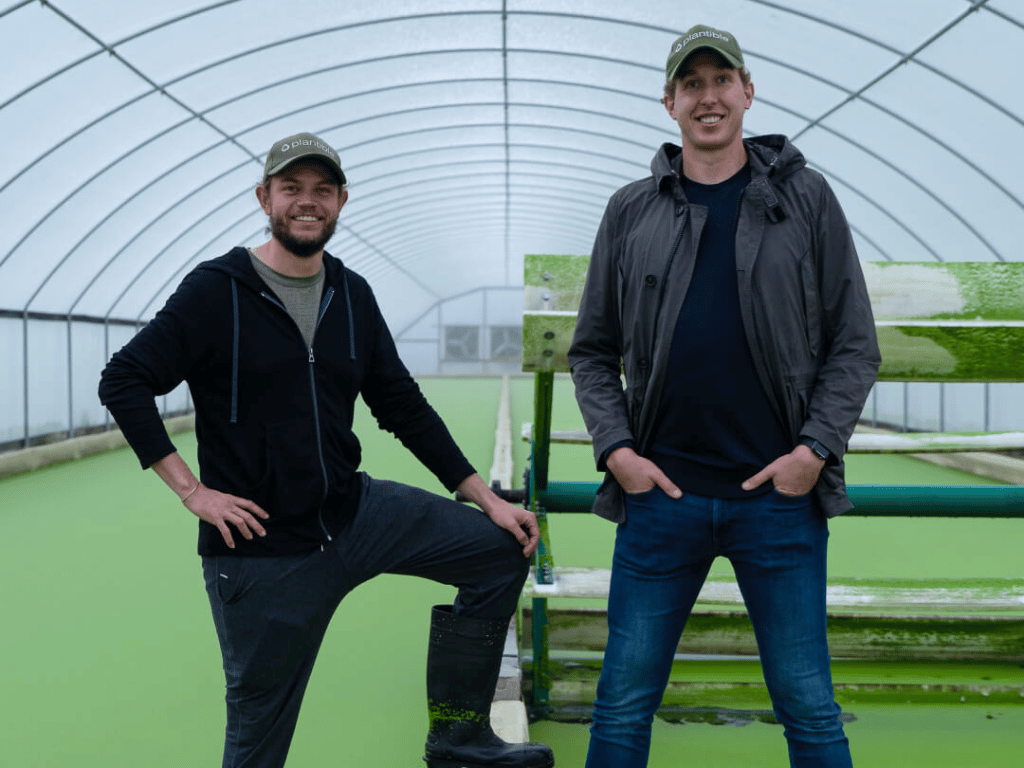
Californian startup Plantible Foods has secured $35M in USDA-backed loan and equity funding to quintuple the manufacturing capacity for its duckweed-derived Rubisco protein.
A funding effort supported by the US government will help San Diego-based Plantible Foods dramatically expand its capacity to produce the world’s most abundant protein.
The startup has received $25M in debt financing from X-Caliber Rural Capital, a licensed lender of the US Department of Agriculture (USDA), alongside $10M in equity funding from RA Capital and existing investors, including Piva Capital. Collectively, the investments take Plantible’s total raised to $92M to date.
X-Caliber Rural Capital provides financing for rural business and economic development projects under five flagship programmes that fall under the USDA’s OneRD Guarantee Loan Initiative.
Plantible will use the money to build up to 50 new greenhouses at its 100-acre enclosed aquafarm facility near Eldorado, Texas, which will enable it to increase its capacity fivefold, surpassing over 100,000 tonnes of its Rubisco protein from duckweed annually. The sum will also enable it to fulfil its existing customer pipeline and enter new markets.
The capital infusion comes six months after the startup secured a ‘no questions’ letter from the Food and Drug Administration, enabling it to sell its Rubi Protein ingredient to food manufacturers.
A ‘holy grail’ for the protein industry
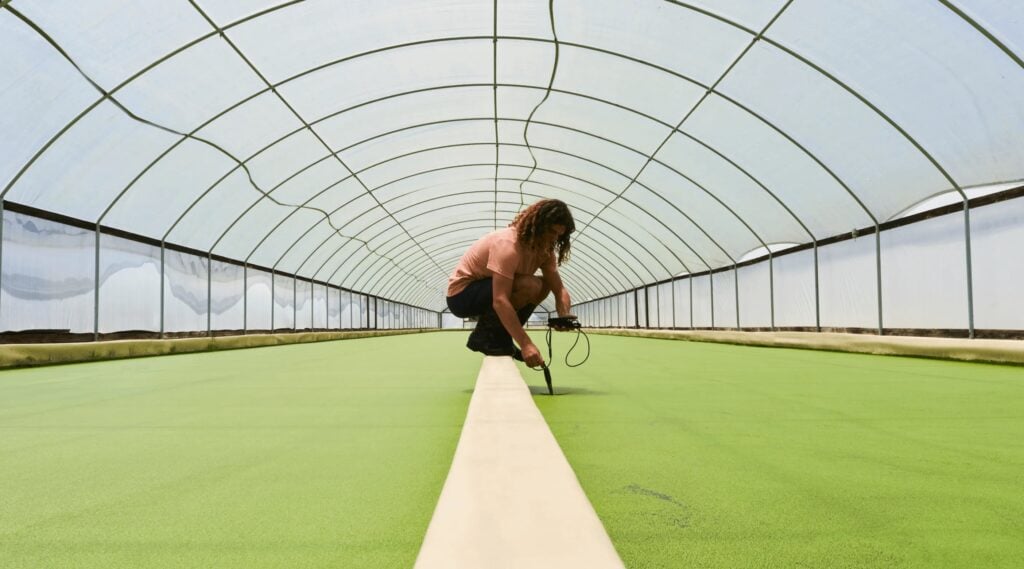
Also known as lemna or water lentils, duckweeds are free-floating freshwater aquatic plants that form a green carpet on the surface of water. They’ve been consumed in Southeast Asia for centuries, but have witnessed a rise in popularity in the last decade, thanks to their environmental and nutritional benefits.
These plants don’t occupy any farmland or contribute to deforestation, and contain more micronutrients than many vegetables. They have a PDCAAS score of 1.0 (the highest possible), and, with a doubling rate of two to three days, are the fastest-growing plants in the world.
Rubisco itself is found in the leaves of every plant, and can be grown anywhere in the world – you’ve consumed a lot of it without even knowing it. To produce its version, Plantible grows lemna on controlled aquafarms that allow freshwater to be constantly recycled and refreshed, resulting in a water footprint 10 times lower than soybeans.
Once the plants are harvested, they are milled, filtered and dried so that the pure protein can be extracted from the plant’s leaves. This protein contains all nine essential amino acids and offers emulsifying, gelling, and fat-binding properties, matching the functionality of egg whites. That will appeal to manufacturers struggling to keep up with the supply and price volatility of eggs.
Plantible produces Rubi Protein at its Ranchito plant in Texas, which was opened last year with a 100-tonne capacity. The company’s tech leverages a controlled crop cycle, which limits exposure to seasonal volatility and extreme weather events and enables steady harvests and incomes for rural communities.
Aside from being more climate-friendly, duckweed protein is far superior when it comes to output, with Plantible’s ingredient boasting 70% nutritional yield, much higher than soy (46%), pea (28%), and beef (27%).
“Plantible has translated breakthrough science into consistent, scalable production, and this expansion is the next proof point,” said Maria Buitron, a principal at Piva Capital. “Reducing water consumption and expanding protein production is a holy grail for an industry that is facing consistent constraints on available, healthy protein alternatives.”
Rubisco protein takes off

The startup’s Rubisco protein is being supplied in two forms: one offers the emulsification and binding benefits of methylcellulose to make cleaner-label plant-based meat products that can be served hot or cold, and the other provides structural integrity, moisture and oil retention properties for egg- and gluten-free baked goods like lemon tarts, macarons, and cookies.
Plus, it has launched Lemna Leaf Greens, a green powder that delivers complete protein, high fibre, and micronutrients with a mild taste and “exceptional versatility”, showcasing its vertically integrated platform. It’s well-suited for applications such as ready-to-mix beverages, nutrition bars, and supplements.
The FDA letter notes that the Rubisco ingredient can be used at levels up to 5% in a range of food applications. Functional ingredient provider ICL Food Specialties has already been using Rubi Protein in the Rovitiras Binding Solution for meat and seafood alternatives.
“The customer response to Plantible’s industry-leading tech and superior products has been phenomenal,” said Kyle Teamey, managing partner of RA Capital Management’s planetary health team. “We’re excited to help Plantible rapidly scale its modular production facilities at this critical moment in the company’s growth.”
Anna West, president of X-Caliber Rural Capital, added: “Innovative companies often face financing challenges as they scale, even when their long-term potential is clear. USDA’s Business & Industry Loan Guarantee Program helps bridge that gap, and we’re proud to provide the maximum financing available under the program to support Plantible Foods’ continued growth and investment in rural America.”
Plantible’s funding success continues a bumper year for Rubisco, which is gaining ground amid shortages and price hikes for whey and eggs. Fellow US startup Fudi Protein secured early-stage funding to commercialise its alfalfa-based Rubisco protein as an alternative to egg whites, dairy and other “subpar plant-based proteins”.
Meanwhile, Bay Area chain Palmetto Superfoods introduced a Blade Smoothie featuring the alfalfa-based Rubisco protein from Leaft Foods, which later secured funding from Japanese dairy major Lacto Japan amid an ongoing collaboration to supply the ingredient to some of Japan’s largest food manufacturers and generate tens of millions of dollars in revenue within five years.