

Finnish Govt-Backed Project Creates New Way to Make Large Amounts of Mycelium Leather

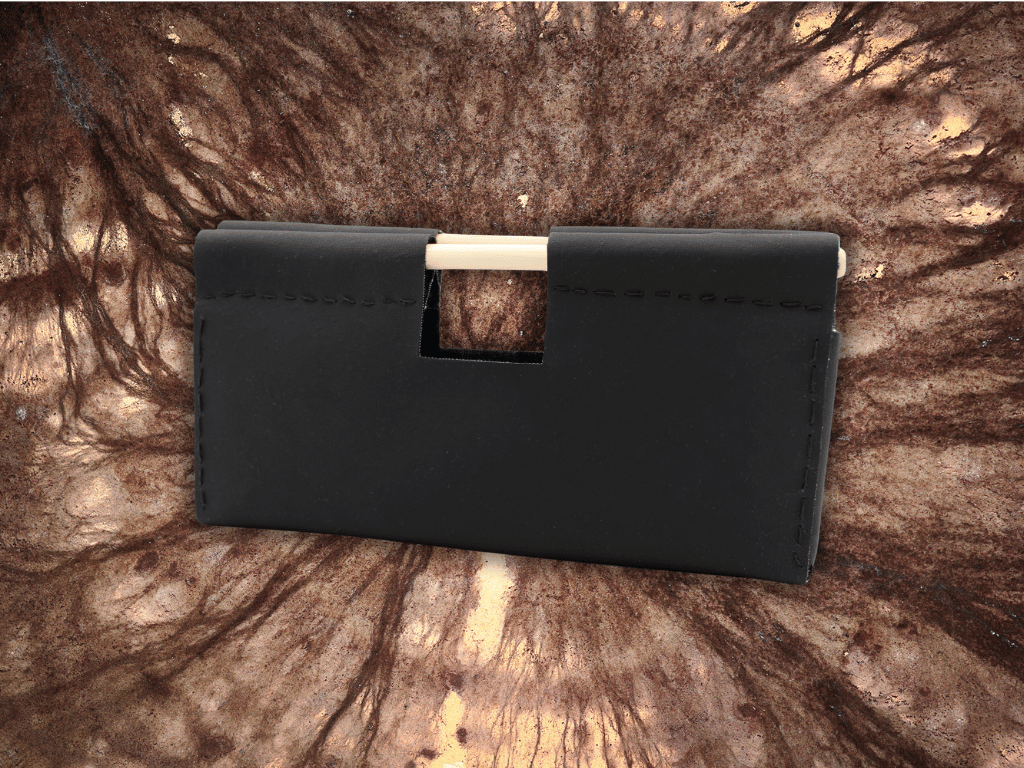
Researchers from the VTT Technical Research Centre of Finland have developed a pulp-based approach to growing mycelium leather, enabling large-scale production of the biomaterial.
In June, Italian luxury fashion house Bottega Veneta released a line of accessories made from mycelium, the root-like structure of mushrooms, in partnership with local eco materials startup Ephea.
Part of the company’s Fall 2026 collection, the six-strong range was a limited-edition launch that signalled mycelium leather’s potential in the legacy fashion industry. But it also served as a reminder of a long-standing bottleneck for this burgeoning sector.
The use of mycelium leather by fashion and automotive players has been limited to its small scale, preventing uptake from even more businesses and helping the biomaterial enter the mainstream.
“Many people are looking for alternatives to fossil fuel-based and animal-derived materials, yet scalable alternatives remain limited,” said Manuel Arias-Barrantes from the VTT Technical Research Centre of Finland.
He and his colleagues have, however, come up with a solution, developing a pulp-based method to press mycelium into a durable yet compostable leather-like fabric, which they even sewed into a purse to demonstrate its efficacy. “Our work has solved one significant bottleneck, enabling large-scale production of affordable mycelium-based fabrics,” he said.
Pulp-based mycelium method can rival conventional leather
The project was backed by Business Finland, an arm of the Finnish economic affairs ministry, as well as the Research Council of Finland, the government’s funding body for scientific research.
Most mycelium materials are made by letting fungi grow across trays until their thread-like fibres knit themselves into a solid sheet. Though this approach is effective, VTT scientists say it can’t be used for mass production.
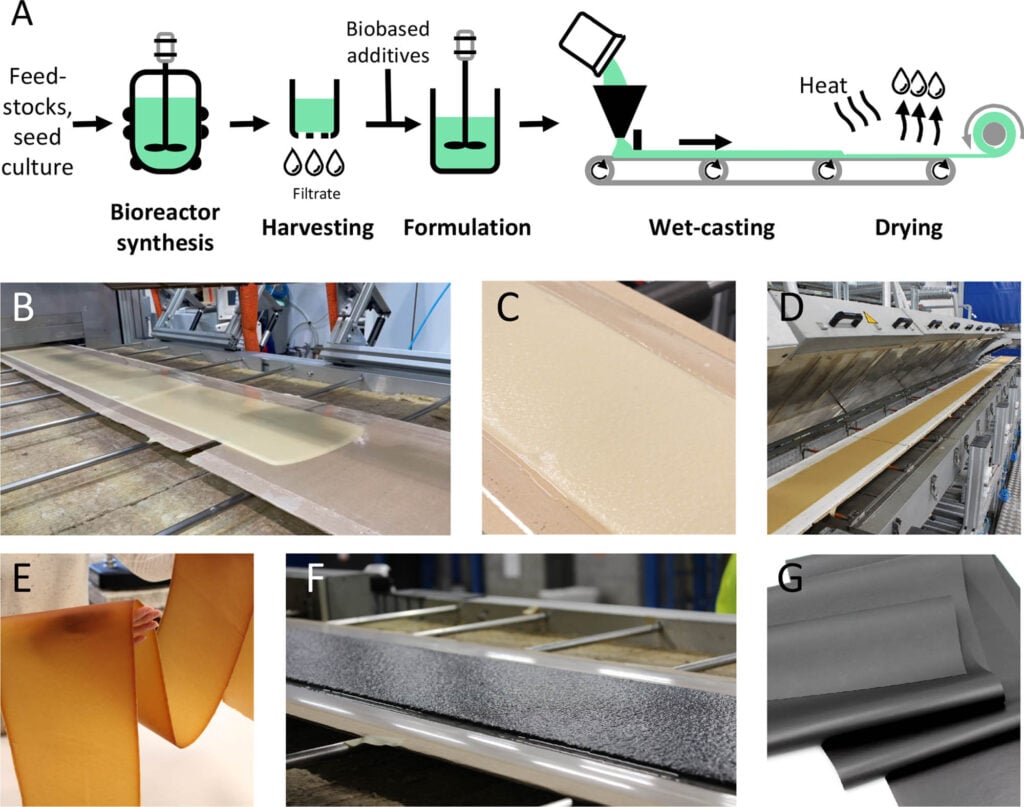
So they submerged the fungus Trichoderma reesei in a nutrient-rich liquid and grew it inside fermentation tanks similar to those used for brewing beer. This is the same strain used by precision fermentation startups Perfect Day and Onego Bio (a VTT spinout) to produce recombinant whey and egg proteins, respectively.
Instead of producing a sheet, this submerged fermentation process made the fungus grow into a thick, pulp-like mass, which the researchers then harvested, washed, and mixed in sorbitol (a natural sugar alcohol commonly used in foods and cosmetics) and cellulose (the primary structural component of plant cell walls) to enhance the material’s flexibility and strength.
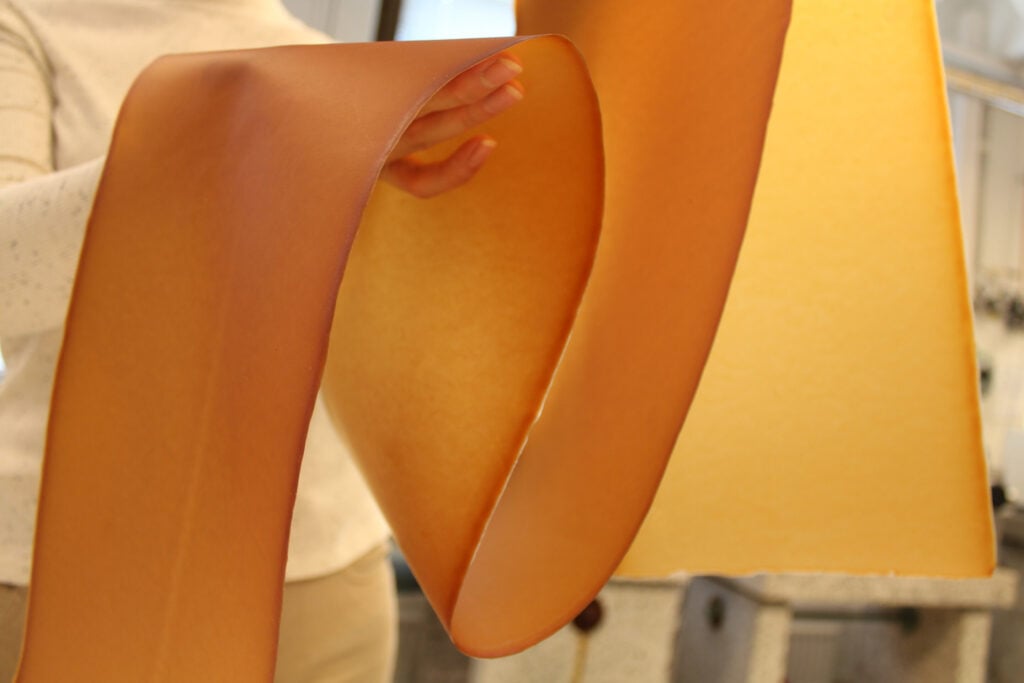
It was only then that they spread the mixture into thin sheets and dried it to create a non-woven fabric akin to leather. To test the process beyond small lab samples, the researchers used a roller system reminiscent of paper manufacturing to continuously produce large mycelium sheets, which were then used to create the prototype handbag.
Lab tests showed that the rolled-out mycelium material achieved tensile strengths comparable to those of conventional leather. While it still needs to become more tear-resistant before it can reach consumers, the authors said the manufacturing process is promising because it uses equipment already common in the biotech and printing industries.
Mycelium leather decomposes in weeks
Since leather typically comes from animal hide, producing it is an energy– and water-intensive process linked to deforestation and biodiversity loss, and it generates many hazardous chemicals during tanning, which are detrimental to human health.
The fashion industry generates 8.3 million tonnes of methane annually (nearly four times as much as France), and leather alone accounts for 54% of this share, producing 110kg of CO2e per sq m when derived from cows.
This falls to 15.8kg for plastic-based synthetic leather, an 85% reduction. But plastic, derived from petrochemicals, has its own problems. It can shed toxic microplastics that enter waterways, destroying aquatic life and wreaking havoc on our food systems. Its production is responsible for 3.4% of global emissions, and it takes 20 to 500 years to break down.
In the VTT study, published in ACS Applied Bio Materials, the authors found that the mycelium leather broke down in water within 28 days and completely disintegrated under industrial composting conditions in about six weeks.
The researchers also noted that unlike the traditional tray method, the pulp-based production process gave them more control over the final material, enabling them to adjust its properties, add colours and textures, or even layer it onto cotton fabrics.
This will appeal to fashion and automotive businesses that are searching for scalable alternatives to a highly popular but problematic industry. US startups Ecovative, MycoWorks and Mushmycel are all working on mycelium leather too, with their innovations, while Faircraft, Qorium and Cultivated Biomaterials are leveraging cellular agriculture to produce lab-grown leather.
Elsewhere, Uncaged Innovations uses proteins from grain byproducts to produce its alternative, which is already being used to line vehicles made by Hyundai and Jaguar Land Rover, among other applications. And in South Korea, Chilgok County recently created plant-based leather from discarded melon peels, partnering with fashion atelier Harlie K to launch prototypes of bags, wallets, and other accessories.