

MOA Foodtech Raises $3.8M to Expand AI-Led, Waste-Fermented Egg Substitute & Yeast Enhancer

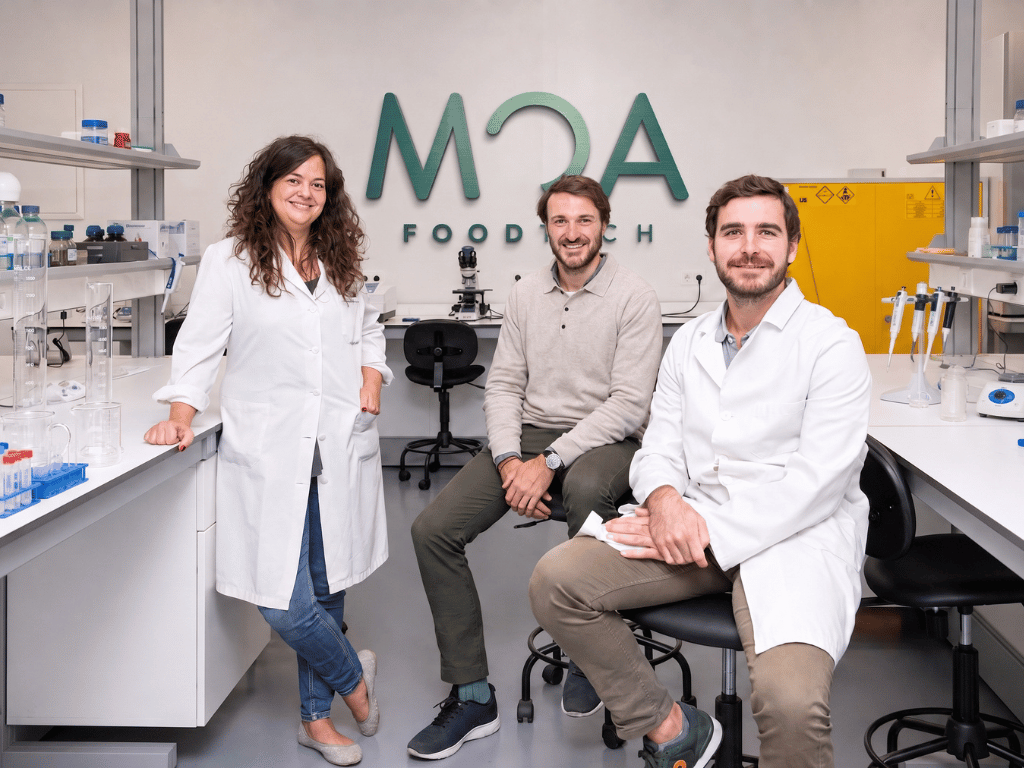
Spanish startup MOA Foodtech has secured €3.3M ($3.8M) to scale up and expand distribution of its fermentation-derived egg replacer and yeast enhancer for use in meat analogues, snacks, pet food, and more.
European fermentation startups continue to win over investors, with Madrid-based MOA Foodtech the latest to close a funding round to advance its production and commercial launches.
The firm has raised €3.3M ($3.8M) in a funding round led by the European Innovation Council (EIC) Fund, Swanlaab Innvierte Agri Food Tech, and CDTI-Innvierte, marking a transition “from product and customer validation to a stronger phase of commercial execution”.
MOA leverages microbes and food waste to make clean-label functional ingredients via an AI-directed fermentation platform, Albatros, starting with an egg substitute and yeast powder that can enhance the taste and texture of plant proteins.
Following the new round, it has raised €12.3M ($14.3M) in financing to date, €6.3M ($7.3M) in equity and €6M ($7M) in grants.
That includes a €2.3M grant from the EIC Fund last year, announced alongside an equity commitment of up to €12.5M that was contingent on matching funding from private investors. “The recently closed €3.3M round includes the first €1M disbursement from that commitment,” MOA co-founder and CEO Bosco Emparanza tells Green Queen.
Targeting expansion into probiotics and mental wellbeing
Founded in 2021 by Emparanza, Susana Sánchez, and José María Elorza, MOA leverages the “largely untapped” market for fermentation feedstocks derived from cheap agrifood sidestreams. Its AI computational platform selects the most suitable microorganism-feedstock combinations and optimises the conditions required to produce high-value ingredients at scale.
Its tech results in a biomass that contains all essential amino acids, with a protein digestibility score of 0.9 (on par with soy, beef, eggs, and casein). The MOA Yeast ingredient is described as a “nutritional booster” that can improve the taste, texture and stability of foods while reducing sodium and masking the off-notes of plant proteins.
It can be deployed as a clean-label enhancer for meat alternatives like burgers and meatballs, a fibre and protein booster for baked goods and snacks, as well as a gut-supporting palatability improver for pet food (where it’s sold as MOA Yeast FeG).
The firm’s other flagship ingredient is MOA Q5, which can replicate the functional performance of chicken eggs to help reduce or eliminate the need for them and protect margins against supply and price volatility.
This offers equivalent emulsification, foaming, and coagulation capabilities in baked goods, pasta and plant-based desserts, while maintaining volume, structure, elasticity, colour, and bite across a host of applications.
Both ingredients are produced using non-GMO microbes that already have established safety status for food use in the US and Europe. Beyond food, MOA is developping new ingredients for health and nutraceutical applications.
“Our current work includes postbiotics and ingredients targeting areas such as mental wellbeing,” Emparanza says, noting that several projects are under development for these applications.
MOA Foodtech looks to nearly double fermentation capacity
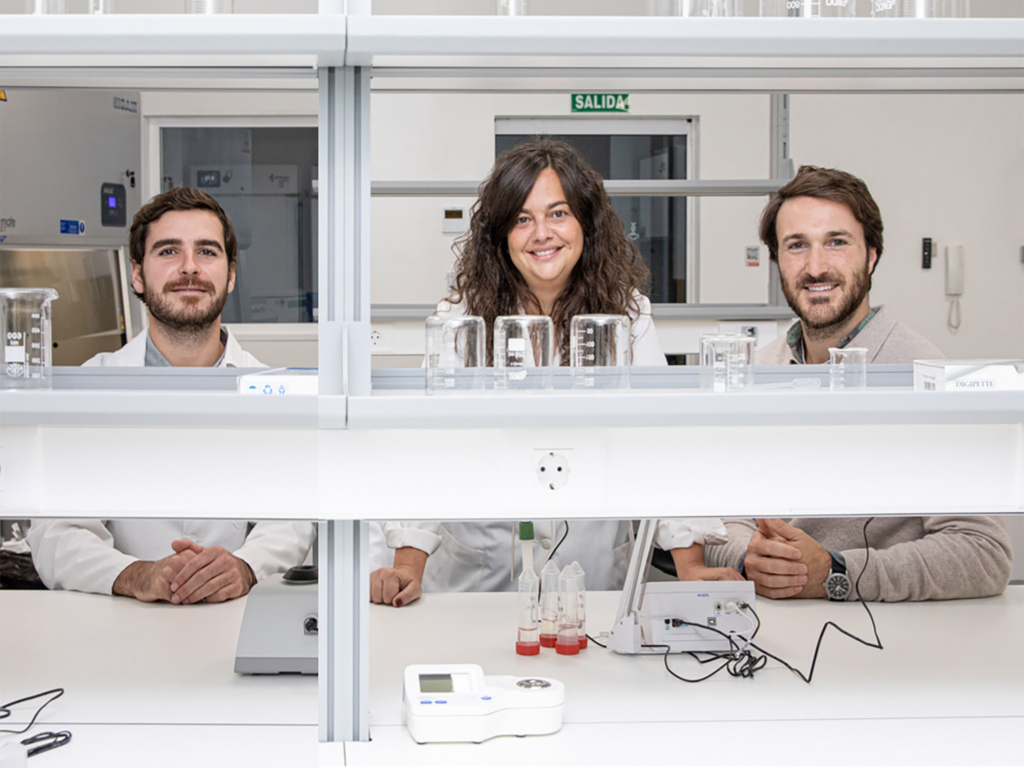
MOA is working with customers across both sides of its business: the proprietary ingredient portfolio and the co-development programmes.
“On the ingredient side, MOA Q5 and MOA Yeast have already been launched, and we currently have several active pilots with leading bakery and pet food companies across Europe. Both are supplied as biomass powders and sold directly to manufacturers through our in-house sales team,” explains Emparanza.
“On the co-development side, we work with industrial companies to valorise their agrifood sidestreams and develop new ingredients with functional or health-related benefits.”
It will use the new funds to expand sales, support customer product launches, and scale up production with its manufacturing partners in Spain. Emparanza isn’t disclosing detailed unit costs at this stage, but outlines that the firm is now increasing its fermentation scale from 120,000 to 225,000 litres. That will boost its ability to supply customers as they move from application trials to commercial product launches.
The capital will also help advance its tech licensing model. Last year, the startup launched MOA Box, a turnkey service for manufacturers that uses its AI and fermentation technology to produce upcycled starch ingredients without the typical costs, time, and regulatory barriers. And in the medium term, MOA plans to expand its commercial reach into new geographies and applications.
The investment reflects investors’ appetite for fermentation technologies. In Europe, biomass and precision fermentation startups accounted for 84% of financing for alternative proteins in the first half of this year, surpassing their segments’ respective totals for the entirety of 2025.
“We believe MOA combines a differentiated AI-enabled fermentation platform with market-validated functional ingredients highly innovative and attractive for the agrifood industry,” said Xana Belastegui, general partner at Swanlaab.