

Vegan Discovery Platform Abillion Shuts Down Amid Funding Struggles & AI Threat

Abillion, a platform that enabled people to review and rate plant-based products and restaurants, has closed down after failing to “overcome the realities of the current fundraising environment”.
Despite surpassing its 2024 investment total last year, the plant-based sector is still very much in its funding winter.
Many companies in the industry have been acquired or entered liquidation over the last couple of years due to a lack of investment, and among the ones that have managed to keep investors interested, most have seen the cheque sizes shrink.
It’s not just food producers that are faced with the challenges of an AI-obsessed fundraising market. Online platforms that help people find vegan food have struggled to keep up, too, which is unsurprising given AI is likely the biggest threat to their businesses.
One such platform, Abillion, has reached the end of the road. In a newsletter sent to its subscribers last week, the company said it “will be shutting down by the end of March”, with both its website and app going offline.
“Building a startup is an immense challenge. Despite our team putting up an incredible fight and achieving our best metrics to date, we simply couldn’t overcome the realities of the current fundraising environment,” it said in a LinkedIn post.
Garg did not respond to Green Queen’s request for comment on the story.
Abillion ‘explored every possible path forward’ before closure

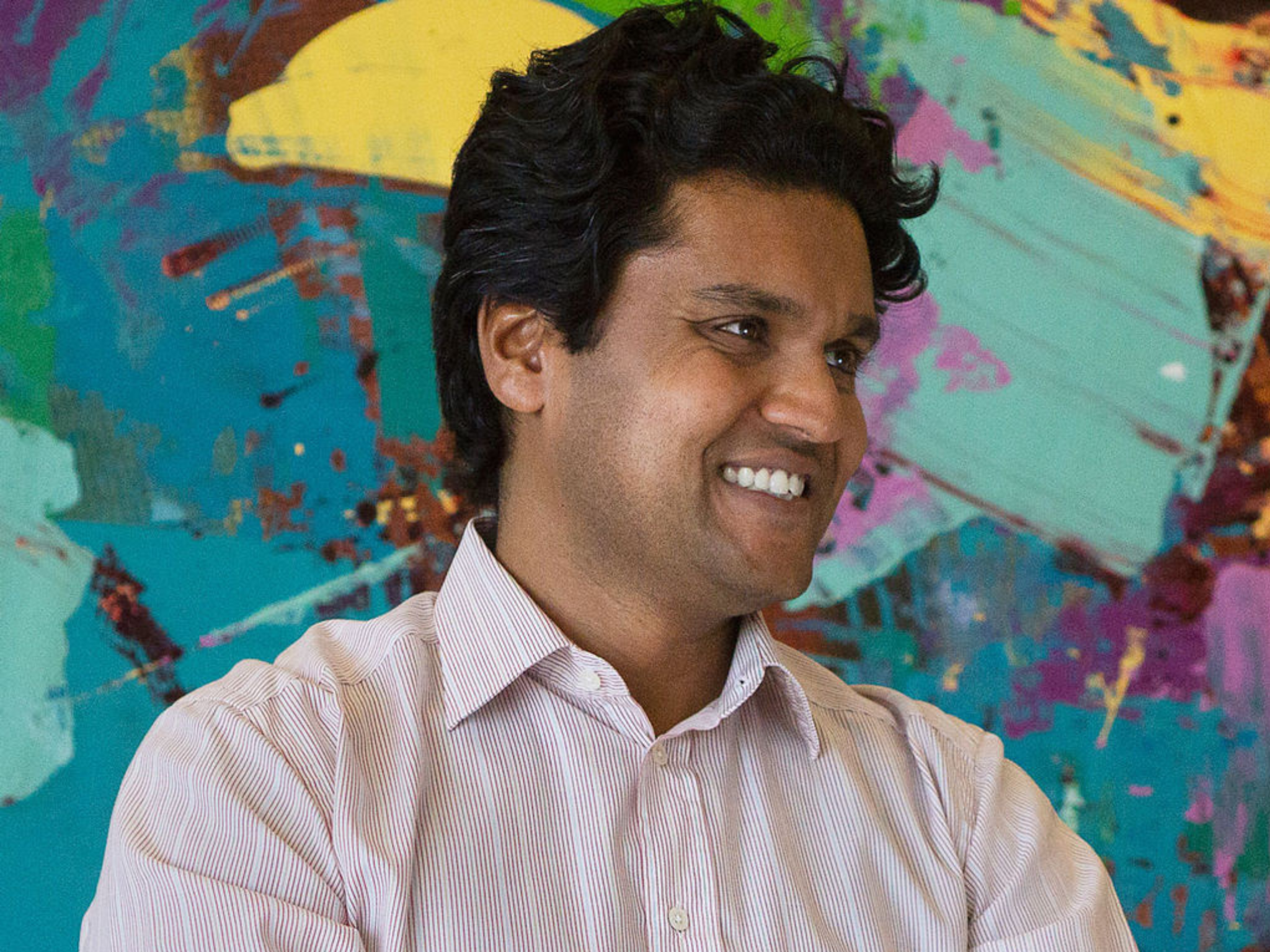
Abillion was founded in 2018 by Vikas Garg, with a mission to accelerate the transition to a sustainable food system by making it easier for people to discover plant-based and cruelty-free products across the world.
It allowed users to review and rate products and restaurants from a directory of over 1.3 million businesses in 183 countries. For each review written, the company donated between 10 cents and $1 to a charity of the users’ choosing. Members could select from one of over 150 organisations, which had collectively received $2.8M in donations from Abillion by mid-2023.
The app had over a million downloads, and its user base had expanded beyond 28 million people, with more than two million active members.
“Abillion began with a simple but radical belief: that social media could truly unify people. We believed that the time spent connecting online could be harnessed to create a better world – one that prioritised compassion, sustainability, and real change,” the company said in the newsletter.
“What started as a small dream between a couple of people in Singapore grew into something far more beautiful than we could have ever imagined. Together, we proved that technology can be a powerful force for good.”
Despite reaching the two million active user mark in December 2025, Abillion seems to have been unable to secure the funding it required to continue its business.
“Making this decision has been incredibly challenging. We’ve explored every possible path forward, but simply couldn’t overcome the challenges of the current fundraising environment,” the message to its community read.
“Our team has poured everything into this journey because we believed so deeply in you and our shared mission. But while the abillion platform is coming to a close, the movement we built together absolutely is not.”
Discovery platforms face threats from AI models

Over the years, Abillion raised more than $17M from investors, including through a $10M Series A round in 2021. Like others, though, it hasn’t been able to escape the significant funding downturn for plant-based companies in the years that followed.
In 2021, this category raised $3.8B, but fell to $1.5B in 2022, $854M in 2023, and $342M in 2024, before rebounding slightly to $450M last year. It means that plant-based firms collectively brought in more funding in 2021 than in the next four years combined.
“We fought hard and explored every possible path to keep Abillion alive, but ultimately, we had to make the tough call to close this chapter,” Abillion said in its LinkedIn post.
Responding to the post, Garg commented: “The mission lives on and we’ll be working to figure out how to motivate a billion people to go vegan. Thank you to all of our users, customers, investors and folks here rallying behind the mission.”
Fellow vegan discovery platform HappyCow has faced similar challenges, which let go of its management staff and was acquired by Peruvian business consultant Claudia Torres for an undisclosed sum. The platform is now undergoing a “full-scale tech reboot”, expanding beyond meat-free restaurants to “eco hotels, organic stores and global plant-based experiences” to serve a wider set of consumers.
Discovery apps like Abillion and HappyCow face an existential threat from AI. In the US, 20% of consumers turn to large-language models for venue discovery, particularly young people – 61% of 24- to 35-year-olds have used AI for personalised food and drink recommendations. Plus, 56% of Americans rely on Google Search for restaurant discovery.
It’s why there are few like-for-like competitors for these two platforms. And new ones, like Spinach (launched by a former HappyCow employee), are using AI to help users find the best vegan food in their areas.
Abillion isn’t alone in succumbing to the pressures of the fundraising environment. Earlier this month, vegan business news site Vegconomist published a note saying it had suspended operations, citing the current economic climate as a reason: “We can no longer operate viably as a small, independent publisher.”
In the last 18 months, around 70 alternative protein companies have announced M&A deals, bankruptcy, or closures. Among those that have shut or discontinued include major players such as Motif FoodWorks, Believer Meats, Meatable, Nurishh, and Yves Veggie Cuisine.