

Can Fermented Algae Oils Clean Up Europe’s Cosmetics Industry?


As Europe’s personal care brands look for eco-friendly alternatives to animal and tropical fats, a new partnership bets on microalgae oils to usher in a new era for cosmetics.
More and more Europeans are seeing cleaner beauty, with half of consumers now preferring eco-friendly skincare products. In fact, together with North America, Europe dominates the natural cosmetics market, accounting for over 80% of total sales.
A more climate-literate demographic than their global pioneers, European citizens have been at the forefront of the demand for a more sustainable personal care sector.
Answering those calls is a new collaboration between US biotech startup Checkerspot and French cosmetics specialist La Fabrique Végétale, which will bring the former’s fermentation-derived algal oils to the European personal care market.
“This partnership allows us to take a focused, market-led approach in Europe,” said Checkerspot CEO John Krzywicki. “By working directly with La Fabrique Végétale, we can collaborate closely with leading European brands and generate application-ready data and formulations that are directly aligned with their needs.”
Checkerspot’s algal oil offers sustainable alternative to palm oil
The beauty and cosmetics industry is heavily reliant on tropical fats like palm oil, which are linked to widespread deforestation, human rights abuses, and wildlife threats, not to mention a lack of traceability and transparency in their supply chains.
The EU’s Deforestation Regulation, which has been delayed by yet another year, will ban the import of products like palm oil and shea butter linked to deforestation. Violators face fines of up to 4% of their global turnover – currently, 34% of palm oil imports potentially come from deforested land.
The continent’s personal care industry has been seeking alternatives to oils with increasingly complex supply chains and climate challenges. Checkerspot offers a number of bio-based ingredients that deliver superior functional performance using renewable inputs, with a fully traceable supply chain.
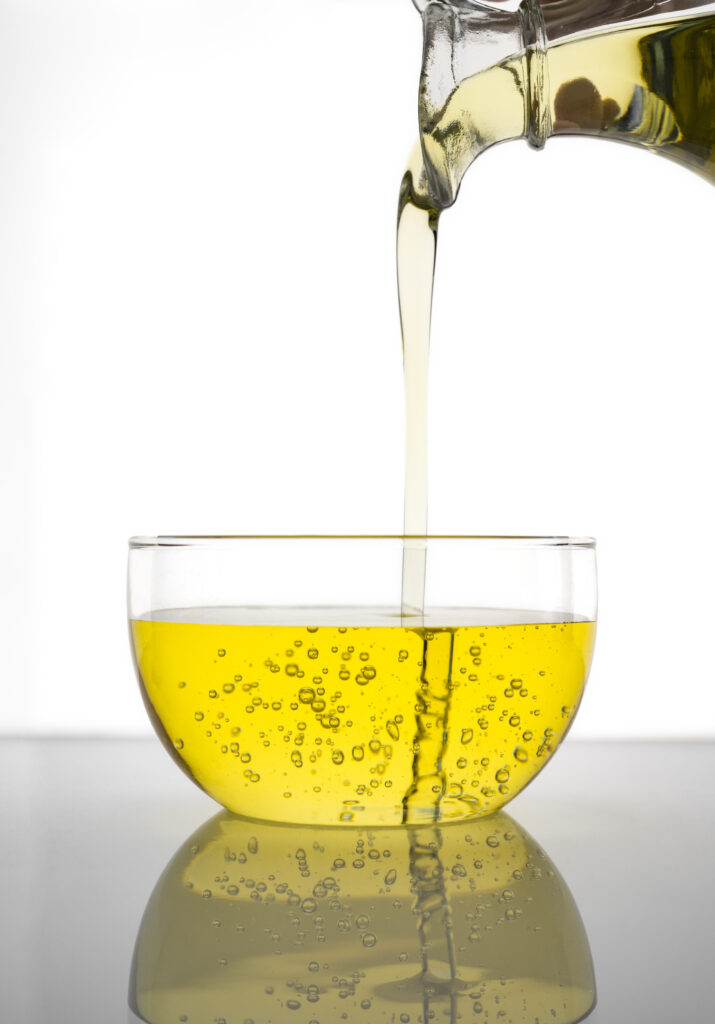
It uses controlled fermentation to produce high-oleic algal oil from non-GMO microalgae, which is optimised for consistent quality and functional performance. This oil delivers a “rich, silky” sensorial profile with high oxidative stability and a neutral odour and colour, and offers a reproducible composition and contaminant-free quality that supports a continuous supply.
“Algal oils open new formulation opportunities by combining a unique triglyceride composition with outstanding sensory performance. They offer a sustainable and contaminant-free alternative with a reduced environmental footprint,” said Caroline Rousseau, head of applied research and formulation at La Fabrique Végétale.
“This collaboration allows us to translate Checkerspot’s technology into formulation solutions, helping brands enhance their products through the use of innovative, state-of-the-art ingredients,” she added.
Alternative fats on the rise in beauty and personal care

The collaboration seeks to commercialise Checkerspot’s high-oleic algal oil, with La Fabrique Végétale spearheading formulation development and customer engagement. It will use prototypes of the fat to showcase real-world functionality in finished cosmetic and personal care products.
The ingredient is being launched at Cosmet’Agora in Paris (January 13-14), where La Fabrique Végétale is directly engaging with brands and distributors for potential partnerships.
Checkerspot’s algal ingredients go beyond the personal care category. The company has developed a fat analogue that can mimic the human milk fat OPO (Oleic-Palmitic-Oleic or sn-2 palmitate), an essential component for infant health that serves as a key nutritional difference between breast milk and baby formula. The firm is working with Bulgaria’s Huvepharma to produce the ingredient at an industrial scale.
Its European expansion comes amid a rapid shift towards sustainable fats in the beauty and personal care categories. Estonian startup Äio also uses fermentation to turn industry byproducts into fats that can replace palm, coconut and petroleum-based mineral oils, and is set to roll out its cosmetics ingredients soon.
Dutch firm NoPalm Ingredients is building a large-scale factory for its yeast-derived palm oil alternatives for food, personal care and cosmetics products, which is set to open in the second half of this year.
And UK-based Clean Food Group, which last year secured regulatory approval to use its yeast oil as a cosmetic ingredient in the US and Europe, acquired microalgal oil producer Algal Omega 3 in September. This deal included the latter’s 12-acre site in Knowsley, Liverpool, giving Clean Food Group access to one million litres of fermentation capacity.
Algae-based future-facing ingredients are similarly ascendant. Scottish biotech player MiAlgae has begun construction of a commercial-scale facility to recycle whisky waste into algal omega-3, with a £3M investment from the UK government. And in July, Canada’s Mara Renewables raised $9.1M in funding to expand production of its algae-based omega-3 DHA.