

Chipotle’s Cultivate Next Invests in Plant-Based Regenerative Farming Startup Simpli

Chipotle Mexican Grill’s food tech venture fund, Cultivate Next, has made investments in six agrifood tech companies, including regenerative farming company Simpli.
Regenerative agriculture has been in sharp focus under the Trump administration’s food policy, and investors are taking note.
Cultivate Next, the $100M agrifood tech fund launched by Chipotle Mexican Grill, has announced the six latest entrants in its portfolio, including Simpli, a company specialising in regeneratively farmed whole-food plant-based products.
The four-year-old fund focuses on companies working to solve critical challenges across agriculture, supply chains, sustainability, food systems, and restaurant technology.
Benchmark Labs, IMIO, Clean Crop Technologies, Athian, and PopID are the other additions to the Cultivate Next portfolio. “Their technologies have the potential to create meaningful value for farmers, suppliers, restaurant operators and guests alike,” said Curt Garner, president and chief strategy and technology officer at Chipotle.
Why Chipotle is betting on Simpli’s regenerative agriculture approach
Founded in 2020 by Sarela Herrada and her husband, Matt Cohen, Simpli aims to build a transparent, responsible supply chain rooted in regenerative organic products.
Herrada grew up on an organic farm in Peru, where she gained an early understanding of the link between agriculture, communities and food production. She soon became aware of the lack of transparency and the challenges many producers face in food supply chains, prompting her to establish Simpli’s range of pantry staples.
The company partners directly with farmers committed to regenerative and organic practices that rebuild the soil and restore systems. It works with producers in countries such as Peru, Spain, Greece, Ukraine, Argentina, and more, and independent testing brings transparency to both food production and nutrition.
Simpli operates a vertical supply chain and emphasises practices like carbon sequestration, crop rotation, composting, no- or low-till farming, and cover crop production to boost soil health and nutrient density.
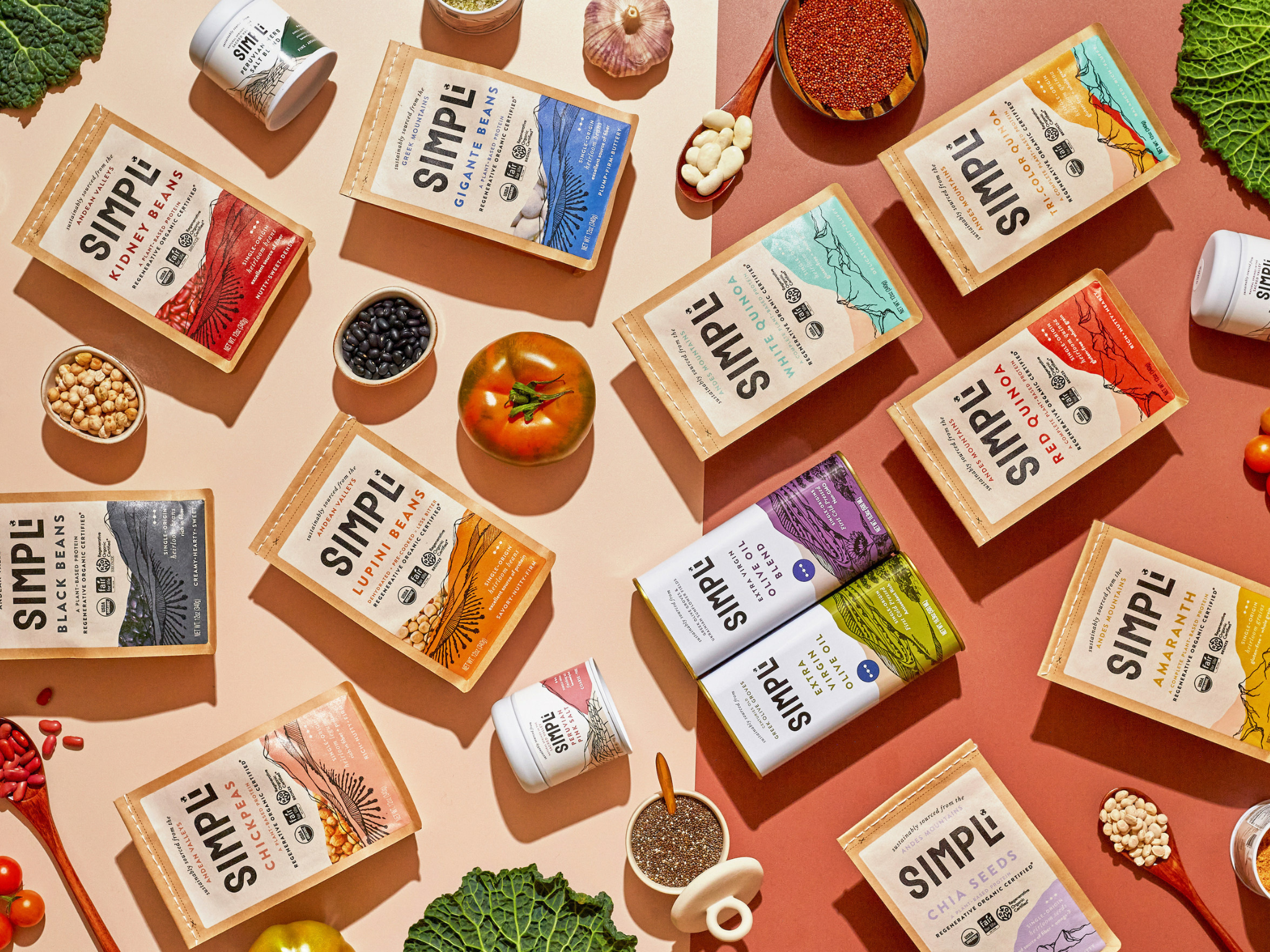
It sells a range of regeneratively farmed pantry staples, including legumes such as beans and lentils, grains such as quinoa, farro, and amaranth, olive and avocado oils, seeds, and sea salts.
The focus on whole grains and legumes fits neatly into current consumer trends, with Americans looking to ditch ultra-processed foods in favour of fibre-packed whole foods amid the rise of GLP-1 drugs.
Explaining why it decided to invest in Simpli, Chipotle noted: “Consumers want greater visibility into where their food comes from and how it was produced.
“Simpli’s approach to sourcing and transparency through regenerative organic practices, third-party nutrient-density testing, and sustainability tracking aligns with growing demand for visibility throughout the supply chain.”
Regenerative farming gains ground under Trump

Regenerative agriculture has been thrust into the spotlight in recent years with documentaries like Kiss the Ground, its sequel Common Ground, and Feeding Tomorrow, as well as the appointment of Robert F Kennedy Jr as US health secretary.
In December, the Trump administration announced a $700M Regenerative Pilot Program to help farmers adopt practices that improve soil health, water quality, and long-term productivity, aligned with RFK Jr’s Make America Healthy Again (MAHA) campaign.
While food companies have been accused of using it as a silver bullet to greenwash consumers – particularly since it doesn’t have a standardised definition – regenerative farming does have benefits for soil and nature, especially when used to grow crops, not livestock.
One study called it the most effective approach for a just transition of the global food system, highlighting its “enormous potential to contribute to climate-resilient, equitable and economically sustainable protein production systems”.
“By partnering directly with farmers, investing in regenerative organic agriculture, measuring both nutrient density and environmental impact, and building fully traceable supply chains, we’re working to create a new gold standard for pantry staples,” Simpli said in a LinkedIn post.
Chipotle’s latest investments have focused on areas like climate intelligence and forecasting, soil health and agricultural biology, food waste reduction, sustainability and emissions tracking, supply chain transparency and nutrient density, and digital identity and payments.
For instance, Clean Crop Technologies is working to enhance food quality and reduce waste by tackling contamination challenges, IMIO creates microbial agricultural solutions designed to improve soil health, crop performance and farm productivity, and Behcmark Labs uses AI-led weather forecasting and climate intelligence tech to help farm operators make more informed decisions.
“These companies demonstrate how innovation is reshaping agriculture, sustainability, supply chains and the guest experience, creating new opportunities to build a more resilient food system,” Gartner said.