

WHO Partners with GFI APAC to Publish Public Health Report on Alternative Proteins

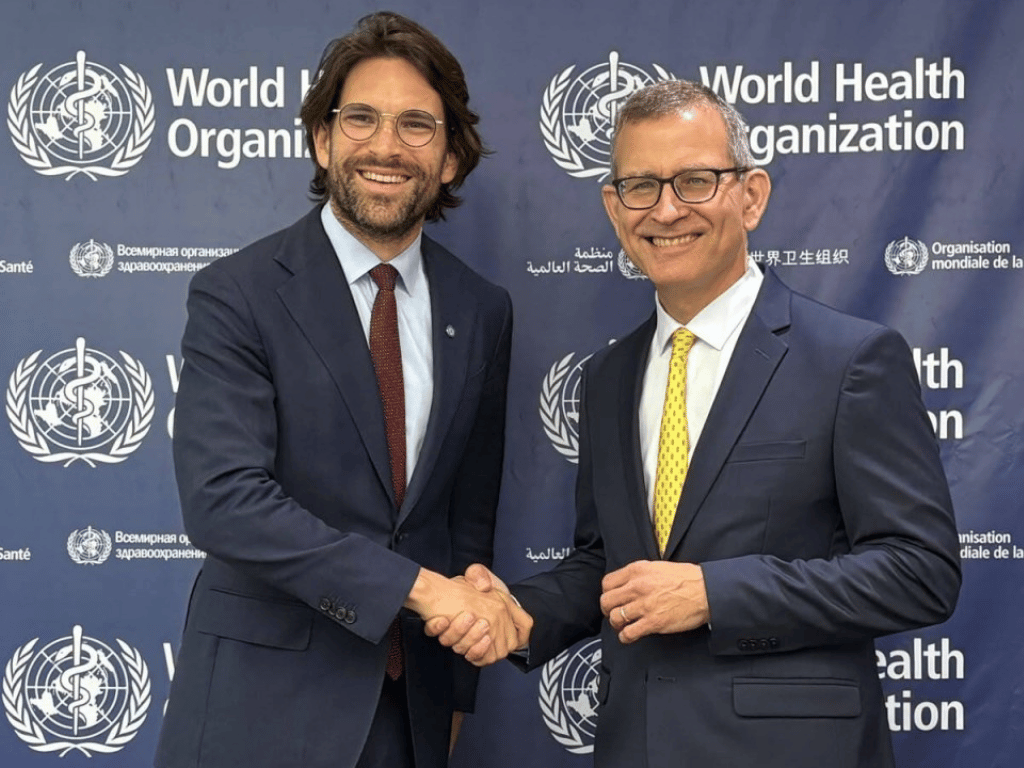
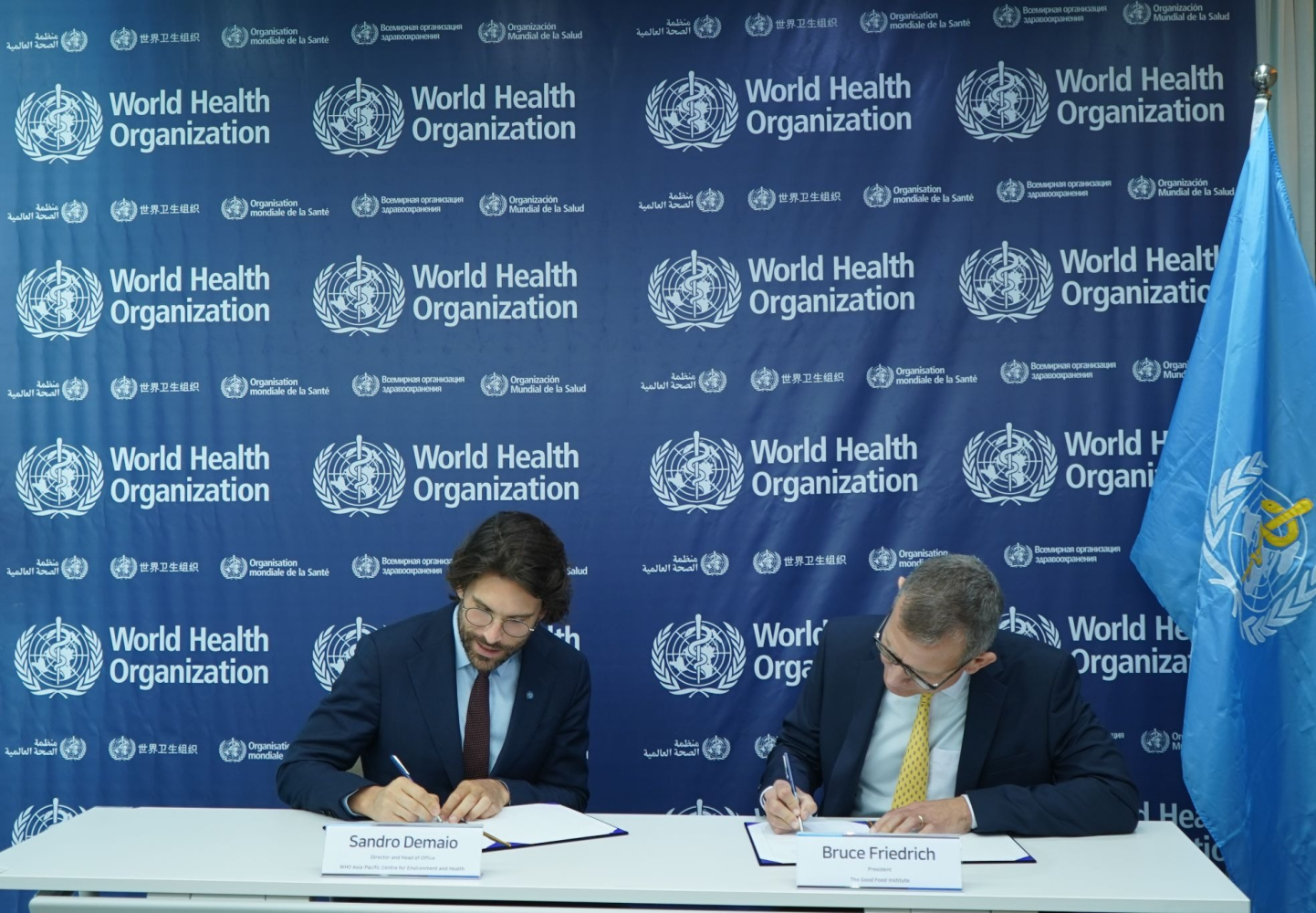
The World Health Organization and the Good Food Institute APAC have signed a multi-year partnership to explore the role of alternative proteins in public health policies in Asia-Pacific.
The planet’s leading authority on public health is going deep into the potential of alternative proteins like plant-based and cultivated meat through a new collaboration.
The World Health Organization (WHO) has teamed up with the Good Food Institute (GFI) APAC to explore how these future foods could be incorporated into health policy across Asia-Pacific, which is home to around 60% of the global population.
GFI APAC’s multi-year partnership with the WHO’s Asia-Pacific Centre for Environment and Health in the Western Pacific Region (ACE) was ratified at a ceremony in Seoul, before being announced during the World Food Forum at the UN Food and Agriculture Organization (FAO) headquarters in Rome today.
“In the WHO Western Pacific region, nine out of 10 deaths are now caused by non-communicable diseases, and many of these are diet-related,” said Sandro Demaio, director and head of the ACE.
“At the same time, our food systems are putting increasing pressure on the environment, with implications for human, animal and planetary health. This is why the transformation of food systems is an important part of the WHO ACE’s five-year strategy.”
Partnership will strengthen evidence and knowledge base around alternative proteins

The deal seeks to enhance cross-sector collaboration between health, environment and food system stakeholders, and support WHO member states in transitioning towards climate-resilient, sustainable and healthier food systems.
As part of the alliance, the WHO will publish a first-of-its-kind report on the role of alternative proteins in the foodscape. This flagship document is set to serve as the foundation for a series of seminars and issue-specific technical briefs aimed at building international consensus and policy alignment on incorporating these foods into regional public health strategies.
The partnership further sets aside funding for two technical staff members at the UN body dedicated to advancing the signatories’ mission, as well as an external academic researcher, all of whom will be based in South Korea.
“Through this new partnership, WHO and GFI APAC will bring together complementary expertise to advance this important and urgent agenda,” said Demaio.
“We will work closely together to strengthen the evidence and knowledge base around sustainable food systems and alternative protein solutions, and explore their health, environmental, and climate dimensions. We will engage with member states and partners across the region through policy dialogue, consultations, workshops and capacity-building activities.”
Already home to food tech hubs like Singapore, China, Japan, and South Korea, Asia-Pacific is responsible for 45% of global agrifood emissions. Experts say plant-based, fermentation-derived, and cell-cultured alternatives would need to make up 50% of the region’s protein supply by 2060 if it is to decarbonise.
The WHO, as the largest intergovernmental health organisation with more than 150 field offices, is uniquely positioned to explore how these climate-friendly proteins can support its mandate to promote health and safety, particularly among vulnerable populations across Asia.
WHO, GFI APAC seek policymakers to implement their recommendations
The UN has been banging the drum about food systems change for a while now. At COP28 three years ago, the UN Environment Programme published a landmark report endorsing alternative proteins as a way to significantly cut emissions, deforestation, water and soil pollution, biodiversity loss, and zoonotic disease risks.
Another UN-commissioned report framed meat reduction as one of the key measures to halve nitrogen pollution from agriculture in Europe, a critical focus given the gas is 300 times more potent than carbon.
And earlier this year, the WHO itself published a report on how to create healthy food environments in schools, suggesting that “offering more plant-based options and minimising food waste” can not only promote health, but also broader climate goals.
The one UN agency frequently criticised for its silence on the livestock industry’s harms – it’s responsible for nearly 60% of global agrifood emissions – is the FAO, which has caved in to lobbyists by downplaying the environmental impact of animal agriculture by misusing research on the topic.
Even the FAO has admitted that not a single country is on track to meet food system emissions goals for 2030, noting that the industry would require annual declines of over 60% to achieve these targets. And in February, it called on governments to streamline their regulatory frameworks to speed up the commercialisation of cultivated proteins and precision-fermented foods.
GFI APAC notes that antibiotic use in livestock production is significantly higher in Asia due to intense confinement, and that raises the threat of antibiotic-resistant superbugs, which the UN estimates could kill 10 million people annually by 2050. Former WHO director-general Dr Margaret Chan said this crisis could bring in “an end to modern medicines as we know it”.
By removing animals from the equation, alternative proteins eliminate the need for antibiotics. They also boast higher fibre levels and lower saturated fat and cholesterol, and could offer meaningful health benefits when replacing processed meat. Cultivated meat provides advantages for product safety and risk management, including a reduction of contaminants and foodborne pathogens.
WHO and GFI APAC are now on the lookout for policymakers in the region open to implementing their recommendations at a regional, national, or international level. “Bringing together WHO’s public health expertise and policy leadership with GFI APAC’s expertise in research, innovation and policy engagement, we hope to support informed discussions and practical actions across the Western Pacific region,” said Demaio.