

Beef-Backed Bipartisan Bill Seeks to Ban ‘Meat’ from Cultivated & Plant-Based Protein Labels


A group of bipartisan Congress members have reintroduced a bill that would ban the sale of plant-based and cultivated proteins in the US if they use meat-like terms on their product labels.
In the 2023-24 legislative session, a group of lawmakers from across the aisle floated the Fair and Accurate Ingredient Representation on Labels Act (or the Fair Labels Act).
The idea was to impose labelling restrictions on alternative protein products, like plant-based and cultivated meat, which the bill argued shouldn’t be allowed to use terms like ‘meat’ or ‘beef’ in their marketing materials.
Both the House of Representatives and Senate versions of the bill went nowhere. Now, however, legislators are back with another attempt.
Senators Pete Ricketts (a Republican) and John Fetterman (a Democrat) have co-sponsored the latest version of the FAIR Labels Act, which has been reintroduced in the House by Republican Representatives Mark Alford, Mike Flood, and Buddy Carter (all Republican).
The text of the bill is much the same as its predecessor, and the effort is now being endorsed by the beef industry, which argues that using meat-like terminology on alternative protein products creates the “potential for consumer confusion through misleading marketing”.
Beef industry endorses Fair Labels Act
The policymakers behind the new Fair Labels Act note that plant-based and cell-cultivated products are not required to be explicitly labelled as alternative proteins, asserting that this “hurts American farmers and ranchers” and “degrades consumer trust”.
The bill intends to amend the Federal Meat Inspection Act and the Poultry Products Inspection Act to ensure consumers can discern between meat products and alternatives. This is curious, since research shows that 75-88% of Americans are clear that plant-based meat doesn’t contain animal protein.
The Fair Labelling Act requires cultivated and plant-based meat products to bear an accurate label that clearly differentiates them from conventional meat. If passed, it would also prohibit the sale of mislabelled alternative proteins.
Further, product labels would be mandated to include a disclaimer clearly indicating that plant-based and cultivated meat innovations, in their final form, are not derived from live animals.
Under the legislation, terms like ‘cell-cultivated protein burger’, ‘ground plant-based alternative protein’, and ‘alternative protein’ are fair game, but ‘cruelty-free steak’, ‘cultivated beef burgers’ and ‘plant-based ground beef’ are prohibited.
“Families deserve to know exactly what they are putting on their tables, not to be confused by deceptive labelling and marketing tricks. Meanwhile, our farmers and ranchers continue to be undercut by the fake meat industry’s labelling,” said Flood, who has previously drafted a resolution disapproving what he claimed was a UN recommendation to reduce meat consumption in the US (which it never explicitly did).
He added that the Fair Labels Act was a “common-sense bill, which will finally bring about honest labelling of fake meat products and better inform consumers when making choices at the grocery store”.
Alternative proteins face legislative battles across the US
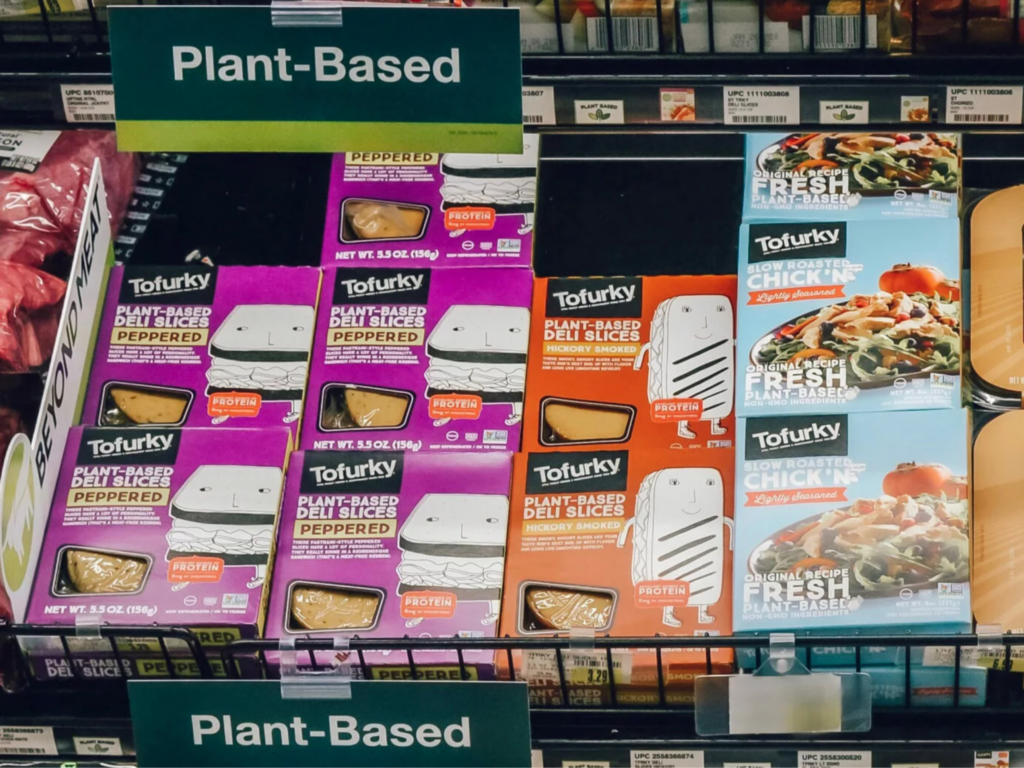
The legislation confirms the shared jurisdiction of the US Department of Agriculture and the Food and Drug Administration (FDA), which will oversee labelling and maintain product inspection standards. It would require an updated cooperative agreement for labelling.
Last year, the FDA updated its draft guidance for the labelling of plant-based alternatives, which states that plant-based producers can use terms like ‘sausage’ and ‘burger’ on their packaging, so long as they don’t mislead consumers.
There is a big caveat, though. The FDA prefers that companies highlight the source ingredients in their products. So instead of ‘plant-based nuggets’ or ‘meat-free bacon’, the regulator is more comfortable with ‘chickpea and lentil nuggets’ and ‘plant-based soy bacon’, respectively.
Crucially, the FDA’s guidance is not legally enforceable – it merely reflects its “current thinking on a topic”. In any case, critics argue that label censorship undermines the free market, and is unnecessary and unconstitutional, since it violates the First Amendment.
The new bill has notably received backing from the cattle industry. “The Fair Labels Act will establish a federal guideline for labelling cell-cultivated and plant-based alternative protein products, ensuring consumers can easily differentiate these products from real beef products produced by US cattlemen and cattlewomen,” said Gene Copenhaver, president of the National Cattlemen’s Beef Association.
Livestock interest groups spend millions on lobbying policymakers in the US every year – in 2024, pressure from this industry forced the Department of Defense to withdraw a funding call to develop cultivated meat products for the military.
It has also played a key role in state-level prohibitions on the sale of cultivated meat – so far, Florida, Alabama, Mississippi, Montana, Indiana, Nebraska, Texas and South Dakota have placed bans or moratoriums on these products. And health secretary Robert F Kennedy recently promised that these proteins will “have to get through a lot of scepticism” from the FDA to prove that they’re safe.
Speaking of states, many have lost similar battles to censor alternative protein labels. Arkansas and Texas’s efforts were labelled unconstitutional by courts, while judges in Missouri and Oklahoma ruled that the laws failed to apply to plant-based producers.