

Top US Food Outlets Serving Up ‘Climate Disaster’ with Beef Recipes on Social Media


The annual carbon footprint of beef recipes promoted by the US’s leading food outlets on social media exceeds that of Belgium, shows new analysis.
The media’s influence on sustainable eating is under the spotlight once again, with a new report accusing some of the top food magazines in the US of perpetuating “climate disaster” with their promotion of beef.
The combined annual emissions from beef recipes published on their social media platforms total 145 million tonnes, surpassing the entire carbon footprint of Belgium. These outlets include Cook’s Illustrated, Food & Wine, Allrecipes, and Food Network, among others.
Americans consume four times more beef than the global average. Cattle farming is the leading source of the country’s agricultural emissions, and contributes to deforestation, water pollution and wildlife extinction.
While many of the websites in this report have published articles about the climate impact of beef, it appears their recipe content doesn’t align with their reporting, according to the Center for Biological Diversity, which conducted the analysis.
“Recipe outlets have an enormous influence on what people eat and buy at the grocery store. By promoting beef-intensive recipes, food media outlets are helping home cooks serve up climate destruction,” said Stephanie Feldstein, population and sustainability director at the organisation.
Who publishes the most beef recipes?

The researchers analysed beef promotion on the Instagram accounts of 10 top US food media outlets, selected from a list of 20 magazines by Muck Rack. They collected data across a month-long period between April and May.
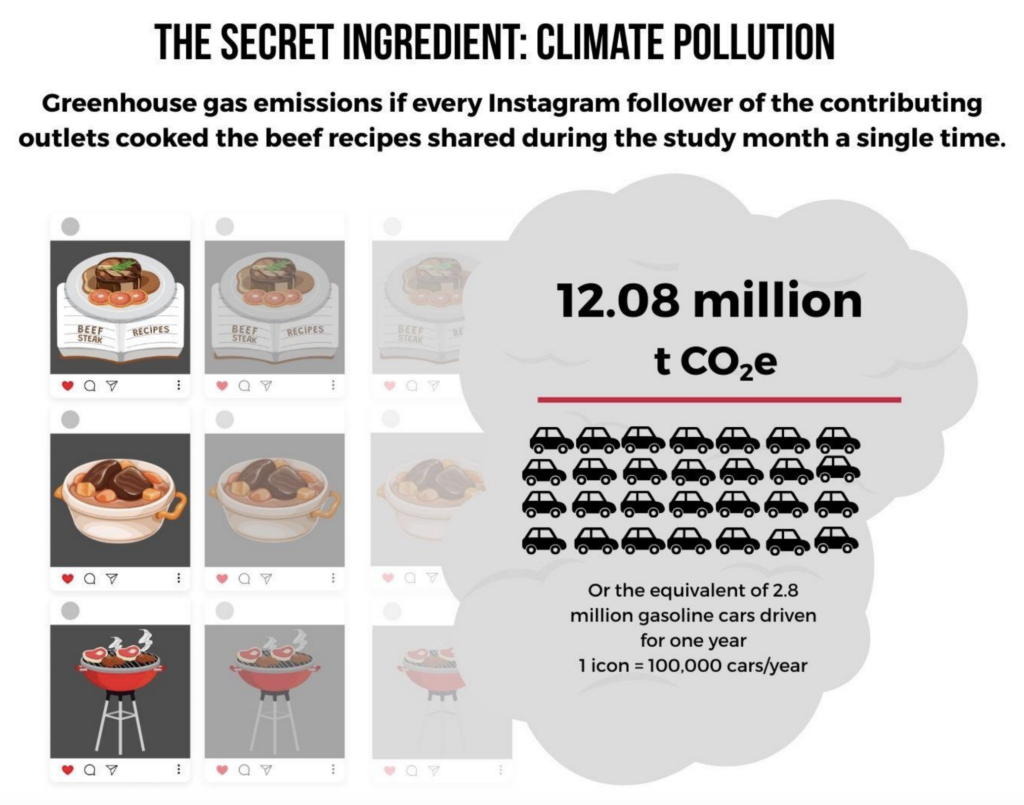
Collectively, the outlets published 38 beef recipes in this timespan, requiring a total of 57 lbs of beef. If every single Instagram follower of these platforms cooked those recipes just once that month, it would have resulted in 12.08 million tonnes of CO2e, the equivalent of driving 2.8 million gas-powered cars for a year.
The biggest culprit was Allrecipes, whose website is visited by 129 million users a month (by far the largest share across the research). This publication promoted 19 beef recipes on Instagram in the study period, representing 15% of all its recipes, despite calling beef “by far the single-largest contributor to climate pollution associated with the food we eat” in a story about making menus more sustainable.
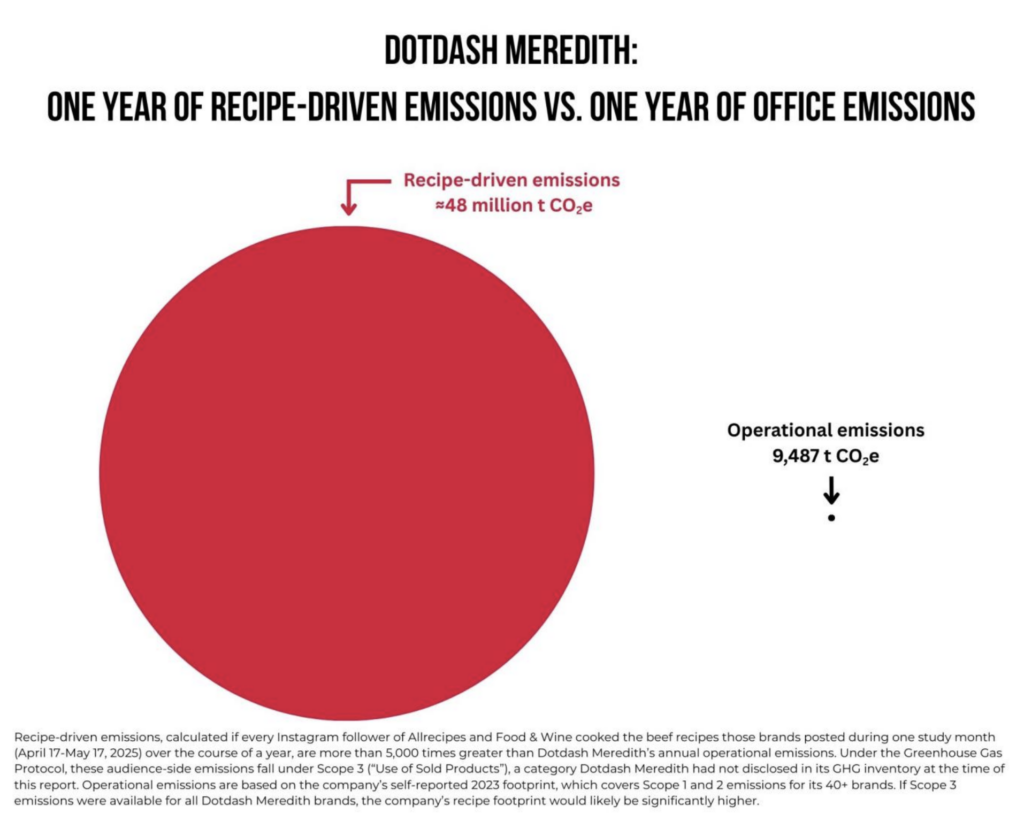
Allrecipes’s sister website, Food & Wine, was on the lower end of the spectrum, publishing three beef recipes. But if each follower of the two outlets cooked these beef dishes, the resulting annual emissions would be 5,000 times greater than the operational emissions of all 40+ brands owned by their parent company, Dotdash Meredith. Even if just 1% of followers did so, the emissions would still be 50 times greater than the latter.
For its part, Food Network (with the largest set of Instagram followers, at 13 million), posted four beef recipes, and together, they required the third-highest amount of beef. Most notably, a brisket taco recipe called for 4.5lbs of beef – if this were replaced with cooked black beans, it would slash emissions by 98%.
Taste of Home posted six beef recipes, and ran a paid partnership post with the Beef Checkoff scheme, a national marketing programme to increase demand for beef (though this wasn’t a recipe). Cook’s Illustrated published five beef recipes, collectively requiring 11.5 lbs, and has largely avoided engaging in the environmental discourse around food, instead leaning into culinary nostalgia and indulgence.
Weight Watchers only shared one beef recipe (though it made up 10% of its recipe content), while Prevention and Real Simple – both lifestyle publications – didn’t post any. Good Housekeeping also has a lifestyle focus, and 12% of dishes in its 50-recipe roundup included beef. Finally, one of the most popular food websites, Bon Appétit, published zero beef recipes in the research period.
Food websites give up beef recipes, champion plant-based eating
The researchers noted that Bon Appétit’s lack of beef recipes aligns with the policy implemented by its sister publication, Epicurious. In 2021, the Condé Nast-owned site promised to stop publishing beef dishes on its website, newsletters and social media.
That said, a 2023 investigation by climate newsletter Heated found that although Epicurious hadn’t written any new beef recipes since that announcement, it had published 61 beef recipes from Bon Appétit. Still, the Center for Biological Diversity suggests the latter appeared to be moving in Epicurious’s direction, at least in its snapshot.

To align recipe content with sustainable eating, the report says food media should stop promoting beef across all platforms, including a pledge to neither publish new beef recipes, nor repost archived ones on homepages, newsletters or social media. In addition, the report states that publications should decline all partnerships with the beef industry, including the Beef Checkoff program.
For each high-traffic beef recipe in the archive, these websites should provide climate-friendly replacements, whether that’s a plant protein substitute or a link to an alternative plant-based recipe. These meat-free suggestions should be clearly labelled as lower-impact options.
Finally, food outlets must look to increase the share and visibility of plant-based recipes by committing to making at least 25% of all recipes vegan, and tagging and indexing them as climate-friendly options.
The research comes two years after a study by the Better Food Foundation and Sentient Media found that the recipe sections of five out of eight outlets in the UK and the US are dominated by meat dishes.
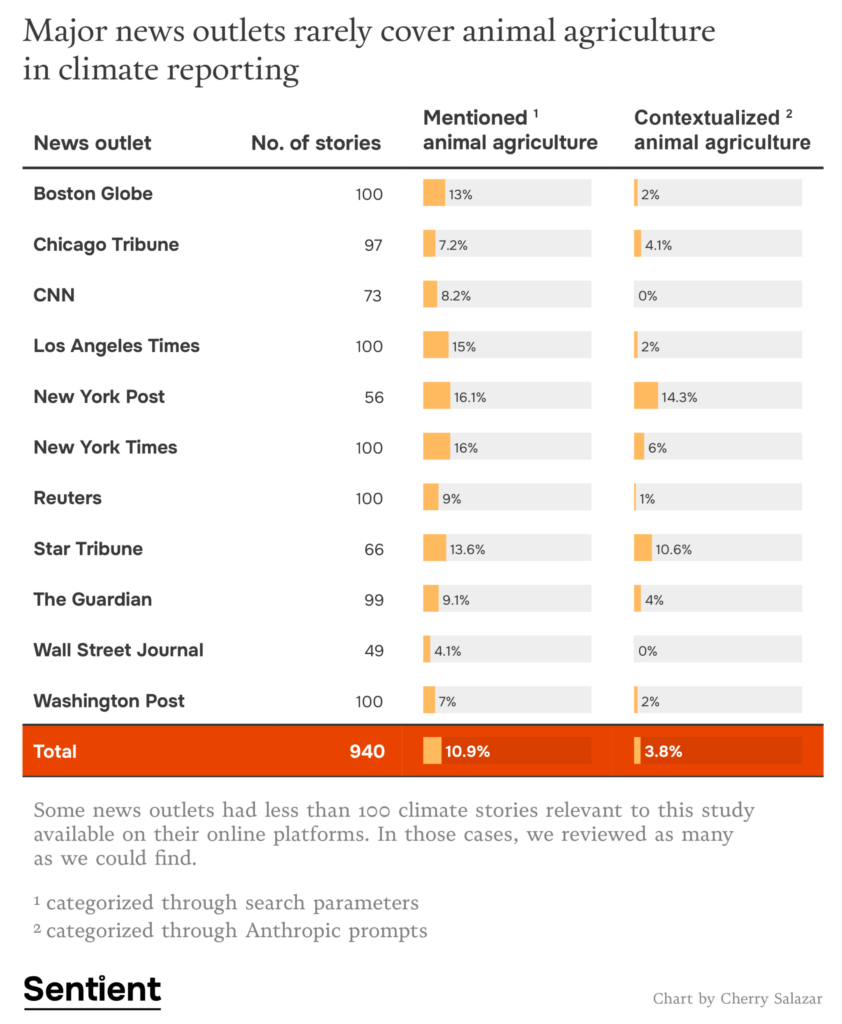
It speaks to the wider absence of livestock agriculture in media coverage of climate change. According to Sentient Media, less than 11% of climate stories in 11 major US outlets mention animal agriculture as a cause of the climate crisis, with under 4% actually contextualising this link.
Likewise, the Center for Biological Diversity looked at nearly 11,000 climate stories from US publications to find that only 3% mentioned livestock farming or meat, and just 1% covered terms related to sustainable dietary shifts.
Commenting on the new findings, Feldstein said: “These outlets have the opportunity and responsibility to take beef off the menu and promote climate-friendly plant-based recipes instead. This simple change can take a big bite out of food-related emissions and meet the growing demand for sustainable food.”