

China Convenes Future Food Leaders at the 2026 Global Forum on Cultured Meat

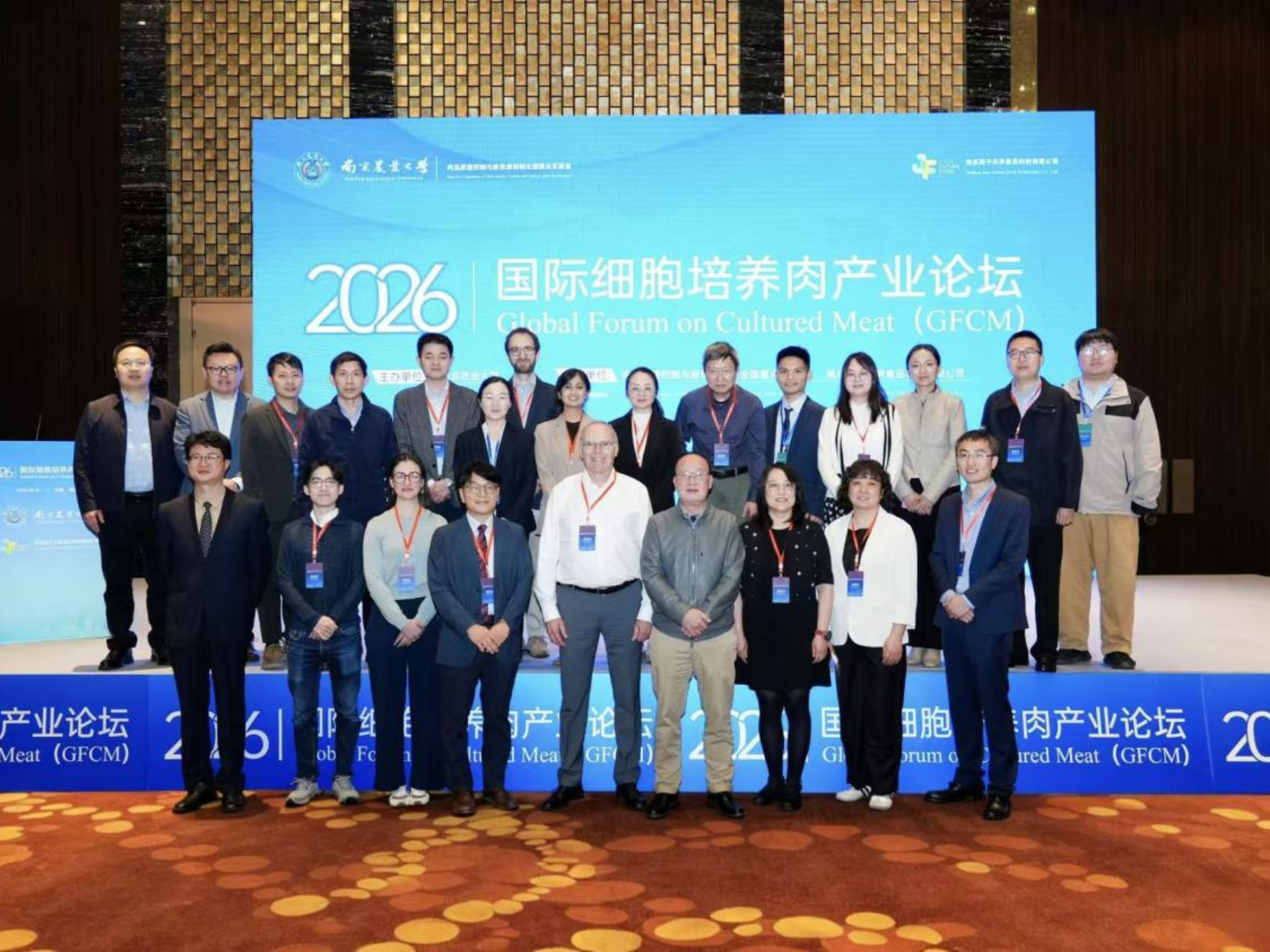
China’s Nanjing Agricultural University and Joes Future Food hosted the 2026 Global Forum on Cultured Meat last week, bringing together future food experts from across the world.
For cultivated meat to succeed, cross-sector collaboration is paramount.
That much was clear at the 2026 Global Forum on Cultured Meat in China last week, which convened industry pioneers, researchers, and government officials to address the challenges faced by these proteins, and how best to resolve them.
The event was hosted by the Nanjing Agricultural University’s State Key Laboratory of Meat Quality Control and Cultured Meat Development, as well as local cultivated meat startup Joes Future Food.
Stakeholders dug deep into core issues like technological innovation, industrial transformation, safety assessment, and standards regulation, while jointly discussing the blueprint for industry development.
It came a week before a new report pointed to China’s heightened focus on alternative proteins, suggesting that cultivated meat could capture up to 36% of the country’s meat supply by 2050.
Industry stakeholders discuss regulation and costs
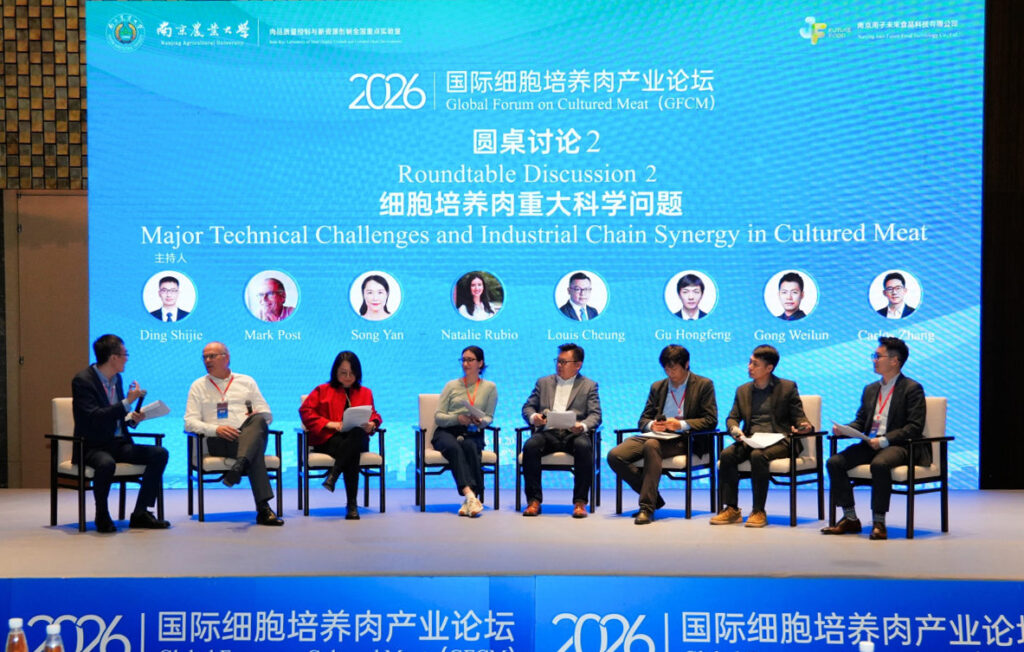
The opening ceremony of the event was chaired by Prof Zhou Guanghong, director of the university’s cultivated meat department. In his speech, he noted that cultivated meat is a highly disruptive tech that presents benefits like high conversion efficiency, comprehensive nutritional value, and excellent eating quality.
These proteins can break through the resource and environmental constraints of livestock farming and signal an important direction for the future productivity of the food sector, with broad strategic value and application prospects.
Guanghong said cultivated meat was moving rapidly from gram-level scientific research to tonne-level commercial production, calling it a critical window for its industrialisation. To accelerate this industry’s progress, he insisted on greater knowledge-sharing among academia, industry, and regulatory stakeholders
Maanasa Ravikumar, senior scitech specialist for cultivated meat at the Good Food Institute APAC, stated that increasing public access to data – via open-sourced media formulations and more industry-led studies in peer-reviewed journals – can desilo the scientific ecosystem and accelerate the readiness of production technologies.
She also pointed to several underresearched areas, from adapting cells for enhanced energy efficiency and optimising culture feeding regimes to customising bioreactor design, fabrication and installation.
Dr Mark Post, co-founder and CSO of Dutch cultivated meat pioneer Mosa Meat, outlined culture media and equipment as two of the key cost drivers of cultivated meat, and laid out approaches to address them.
Meanwhile, Song Yan, a researcher from the China National Centre for Food Safety Risk Assessment (CFSA), provided the regulator’s view on safety assessment challenges and the evaluation of cultivated meat.
And experts from Tufts University, the National University of Singapore, Seoul National University, the University of Alberta, and the University of Turin delivered special reports on topics like safety assessment applications, 3D muscle cultures, consumer-oriented R&D, seed cell construction, and global regulatory pathways.
International collaboration can prop up China’s cultivated meat economy
A key voice at the forum was Ding Shijie, co-founder and CEO of Joes Future Food, a startup that spun out from Nanjing Agricultural University in 2019, after a team led by Guanghong created China’s first cultivated meat prototype following a 10-year research effort.
The firm has since built the first full-chain R&D and production platform for cultivated meat in China, and last year completed construction of the nation’s largest manufacturing facility for these proteins. It can churn out 10 to 50 tonnes of cell-cultured proteins every year, and came shortly after the startup completed the world’s first large-scale trial production of cultivated pork in a 2,000-litre bioreactor.
Shijie has publicly published scientific breakthroughs, including the advancements that enabled that pilot project. At the forum, he underlined the importance of enabling technologies and B2B solution providers in advancing R&D and scale-up.
That entails partnering with international firms that bring complementary expertise across the cultivated meat value chain. This would build on China’s well-established R&D ecosystem for these proteins – it is home to eight of the top 20 patent applicants for cultivated meat, with Joes Future Food filing more patent families (25) than any company globally, barring Upside Foods.
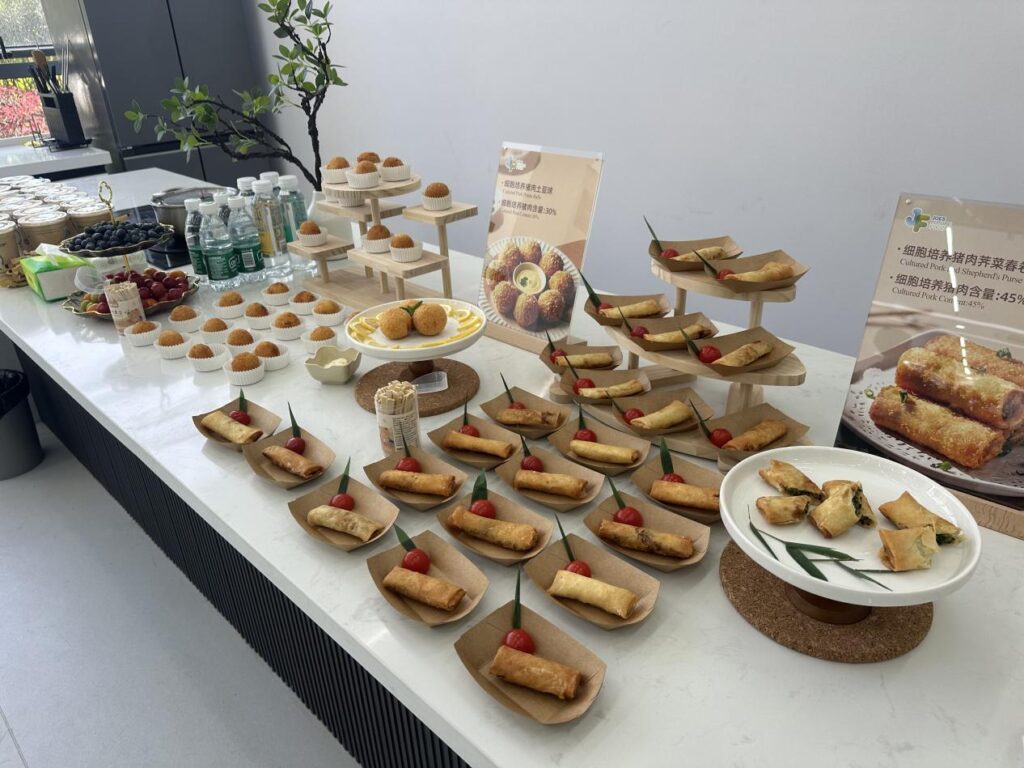
Joes Future Food invited visitors to its pilot facility to conduct on-site research on R&D and industrialisation progress. It sampled products like cultivated pork chops, potato balls, and spring rolls, the latter being particularly popular.
China’s protein supply could face a 30-50% shortfall by 2050, according to the CFSA. That makes alternative proteins crucial for its food sovereignty – and the government has recognised this, prioritising novel protein sources in the national food security strategy outlined in its 15th five-year plan.
According to Nanjing Agricultural University, the forum established a high-level and international exchange platform for the global cultivated meat industry, uniting the efforts of industry, academia, and policymakers.
The institute, along with Joes Future Food, now aims to keep deepening international cooperation and collaborative innovation to promote the “high-quality development” of the cultivated meat ecosystem.