

UK’s Gosh Expands Super Plants Line with High-Fibre Veggie Burgers

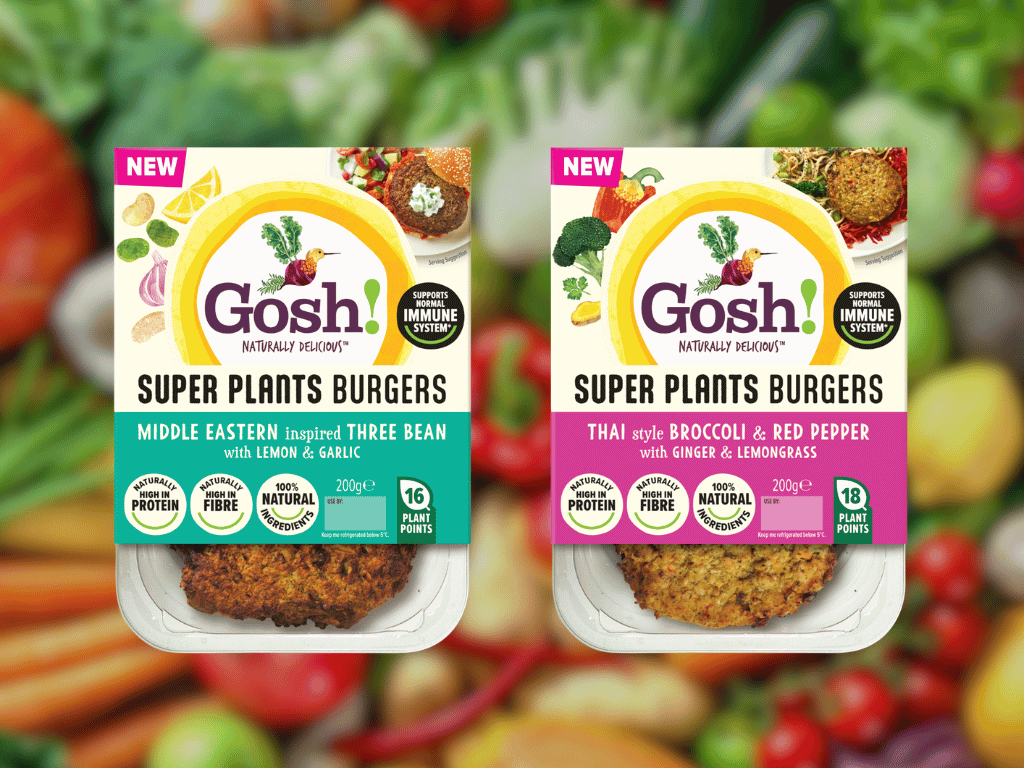
British vegan brand Gosh is building on the success of its Super Plants sausages with two fibre-packed veggie burgers high in ‘plant points’.
With fibre gaining ground among Brits, Gosh is adding a new suite of products to its vegetable-led Super Plants lineup.
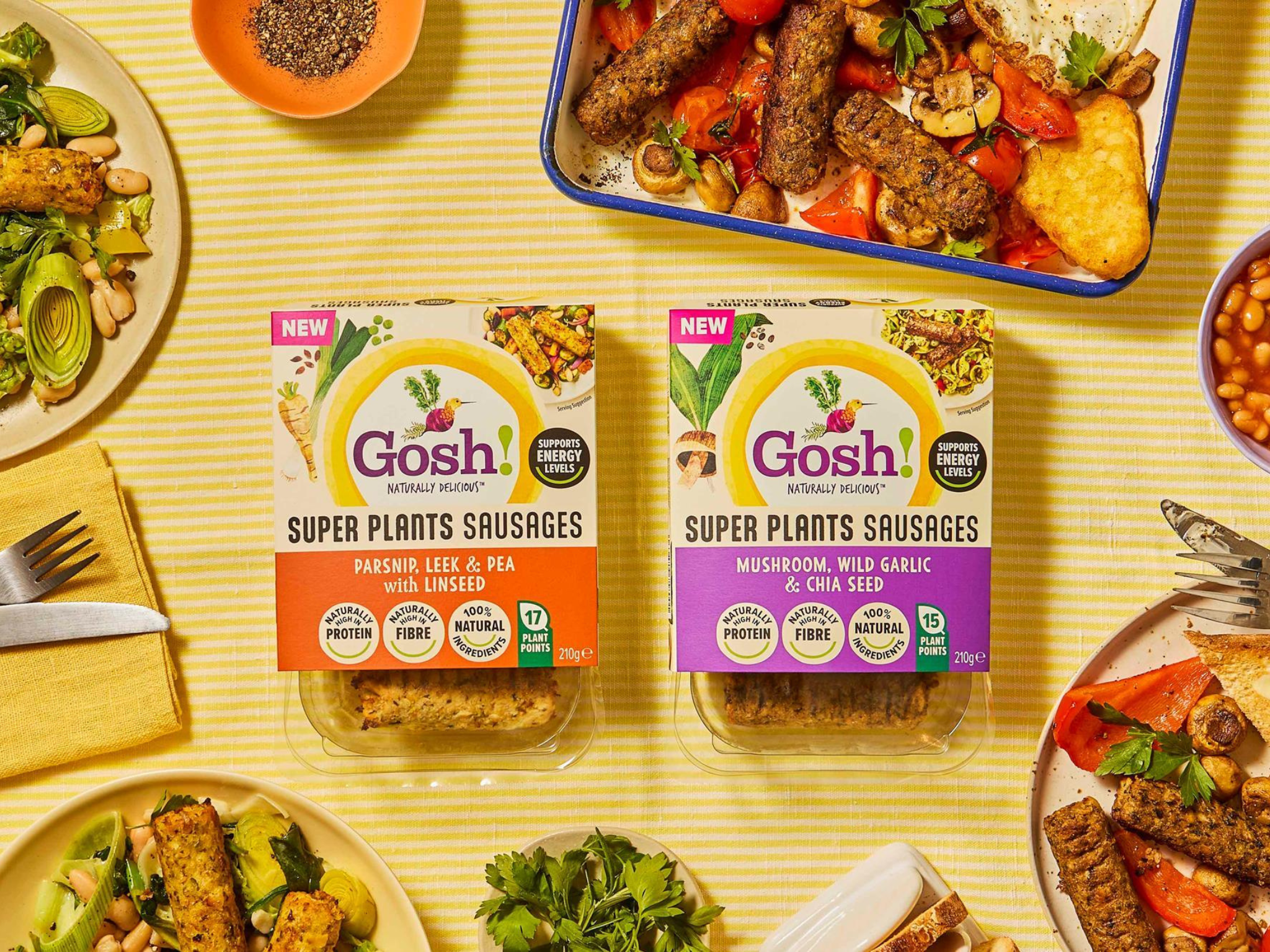
The company has launched two veggie burgers squarely targeting the UK’s growing appetite for plants and fibre, following the success of the whole-food sausages it introduced in April.
The new burgers are inspired by Middle Eastern and Thai cuisines, which Gosh said were made “entirely from natural, minimally processed whole foods that are full of plant diversity”.
Just like the sausages, the firm tapped with chefs and registered nutritionist Becca Meadows to develop the fibre-rich burgers. They fit neatly into the ’30 plants a week’ movement, which Gosh was one of the early adopters of.
“Following the success of our Super Plants Sausages, we’re bringing that same mindset to our new Super Plants Burgers, creating something that helps people feel their best without compromising on flavour,” said Gosh marketing director Caroline Hughes.
Gosh racks up the plant points

The new products include a Middle Eastern-inspired three-bean burger with lemon and garlic, which contains 10g of fibre and 8.7g of protein per serving, and a Thai-style broccoli and red pepper patty with ginger and lemongrass, offering 8.6g of fibre and 8.1g of protein.
The former contains 16 different plants, and the latter bumps that up to 18. These are double the plant points delivered by Gosh’s existing veggie burgers (eight to nine).
The launch aims to tackle one of the biggest food concerns in the UK: ultra-processed foods (UPFs). Government polling shows that up to 78% of Brits are worried about UPFs, and as much as 75% are concerned about the general healthiness of diets. It’s why sales of beans and veg-led products have surged, and those of processed meat alternatives have shrunk.
Moreover, a survey by the meal kit company HelloFresh reveals that 65% of Brits have been trying to eat more fibre compared to five years ago, and 55% are actively trying to incorporate a wider variety of plants in their diet (rising to 70% among those aged 25-34).
It’s a shift driven by the aforementioned 30-plants-a-week movement popularised by health experts like Zoe co-founder Tim Spector, which has seen companies label their products with plant points front-of-pack, as well as online trends like fibremaxxing and fibrelayering. The HelloFresh data shows that nearly half (48%) of consumers have seen content about eating plants for gut health online.
Hughes noted that consumers are today “driven by more than just taste” when it comes to their food choices: “They’re looking for food that delivers real value to their health and wellbeing.”
GLP-1 boom drives protein and fibre focus
The demand for fibre coincided with the growing appetite for protein. Gosh cited research suggesting that four in five Brits are paying more attention to protein in their diets. In fact, 43% of Brits increased their protein intake last year, as searches for ‘natural protein’ went up by 20%.
According to NielsenIQ, sales of protein-based foods hiked by nearly 10% in the six months to January 24, and 57% of UK shoppers are following a high-protein diet to some extent.
The rise of weight-loss drugs like Ozempic and Mounjaro has contributed to this shift – 9% of Brits have already used GLP-1 medications, and another 18% are now considering them.
These consumers experience a 25-40% decrease in muscle mass over eight to 16 months (much more so than non-medicated weight-loss approaches and age-related muscle loss), making protein an important dietary tool. Plus, dietary fibre can help trigger the body’s natural GLP-1 response and improve gut health.
“Balanced nutrition is about getting a range of nutrients from real food, and these burgers deliver meaningful amounts of fibre and plant-based protein alongside an incredible diversity of whole plant ingredients,” said Meadows.
“But nutritious food also has to work in real life. I love that these burgers make it easier to get more nutritional value and plant diversity onto the plate, without making healthy eating feel complicated or inaccessible.”
Gosh’s anti-UPF positioning, while effective, comes despite experts suggesting that not all UPFs are bad for health. Two recent studies have shown that swapping processed meat with plant-based alternatives can boost fibre intake and lower saturated fat and salt consumption, all key markers for good health.
Still, many plant-based meat companies have taken on the whole-food route in the UK. The most prominent examples are This, which now sells veg-led burgers, slices, and bites, a mushroom-based tofu alternative, and a chickpea tofu range with Omami; and Juicy Marbles, which launched a veg-forward Umami Burger.