

From Samosas to Momos, India’s High Time Foods Eyes Familiarity with Plant-Based Protein Snacks

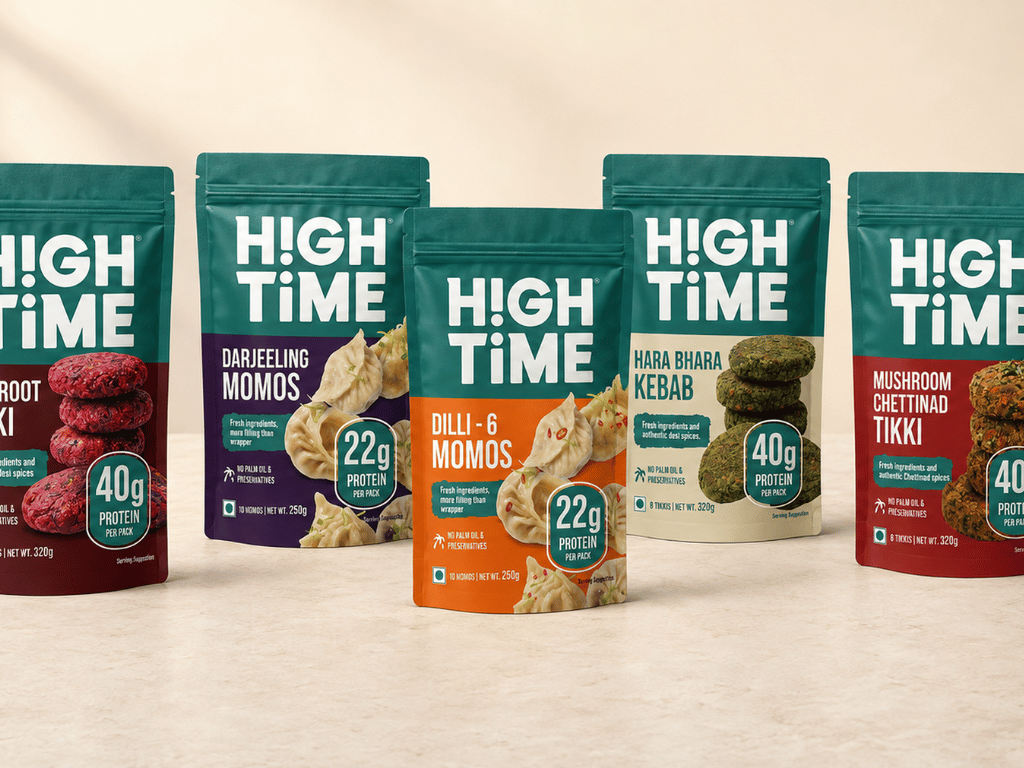
Food tech startup High Time Foods is taking on India’s protein mania with a new plant-based snacking range that boosts the macros in familiar favourites like samosas, kebabs and momos.
Why put protein into a bar when you can use it to zhuzh up foods you already love?
That philosophy underscores the retail debut of High Time Foods’s snacking lineup in India, putting plant-based protein in familiar bites to make it easier for consumers to eat more of this macronutrient.
The company’s frozen samosas, kebabs, tikkis and momos contain up to 40g of protein per pack without compromising on flavour, offering a differentiated take on a market inundated with powders, bars and supplements.
“Getting enough protein shouldn’t require changing the way you eat. India already has an incredible food culture,” says Aakash Shah, co-founder and CEO of High Time Foods.
“We started with foods like momos, samosas and tikkis because people already know and love them. Our job was to make them more nutritious without changing what makes people want to eat them in the first place.”
Putting the food, not the protein, first
Founded in 2022 by Shah and Damian Felchlin, High Time Foods has dual operations in the US and India. It began with a shelf-stable vegan chicken, before pivoting to its protein-boosted appetiser range to better align with the needs of both flexitarians and vegetarians.
Through its Street Food Lab subsidiary in Cambridge, Massachusetts, the company sells plant-based protein snacks to foodservice customers and institutional kitchens across New England.
Last year, High Time Foods relocated its headquarters to Bangalore, building on its foodservice experience stateside to enter the Indian market as a B2B supplier. “We work with a small number of partners across Mumbai, Bangalore, and Chennai. Going forward, we’re being selective about who we partner with in B2B,” Shah tells Green Queen.
“Our focus is our own consumer brand, so we’re looking for partners who put our products in front of the right customers and help build the brand, rather than just adding volume,” he explains.
Each of the new products contains a base of pea protein, which is combined with wheat protein in some of the offerings. The protein samosa is filled with tomatoes, onions, textured vegetable proteins (TVP) and a wide range of spices, which are encased in a wheat flour pastry. It contains 15g of protein and 7g of fibre per 120g serving of four.
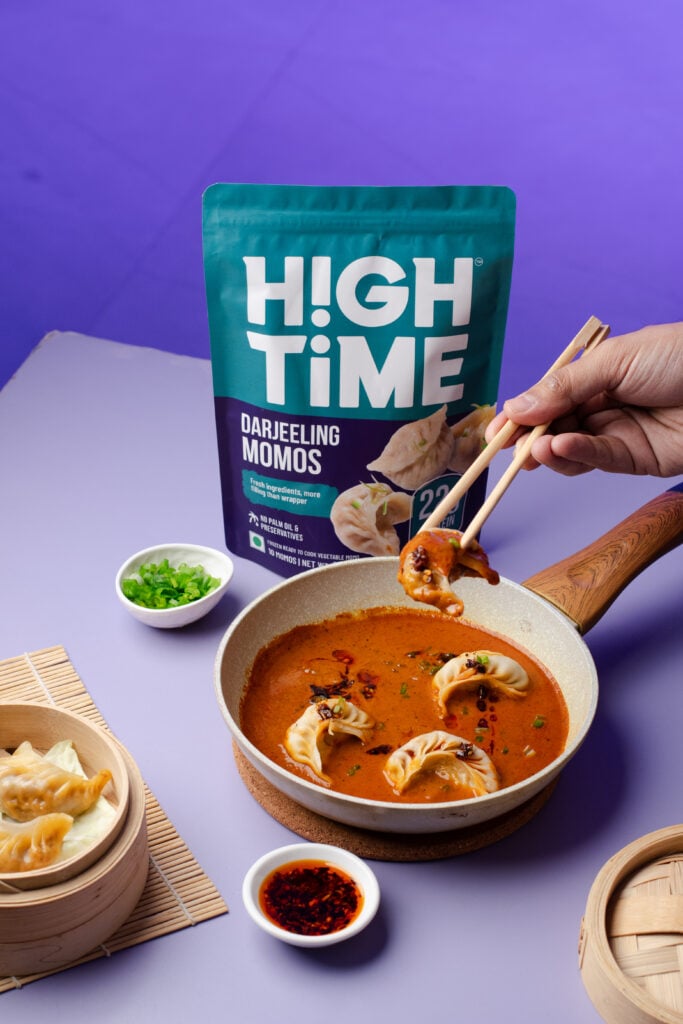
The snack lineup offers two flavours of momos, the Tibetan dumplings that are a bedrock of street food culture in India. The Darjeeling momos take inspiration from the East with a vegetable and TVP filling seasoned with soy sauce and vegetarian oyster sauce, and the Dilli-6 version is an ode to the country’s capital, centred on a tandoori spice mix. They contain 9g of protein and 1.2-1.7g of fibre per 100g serving of four.
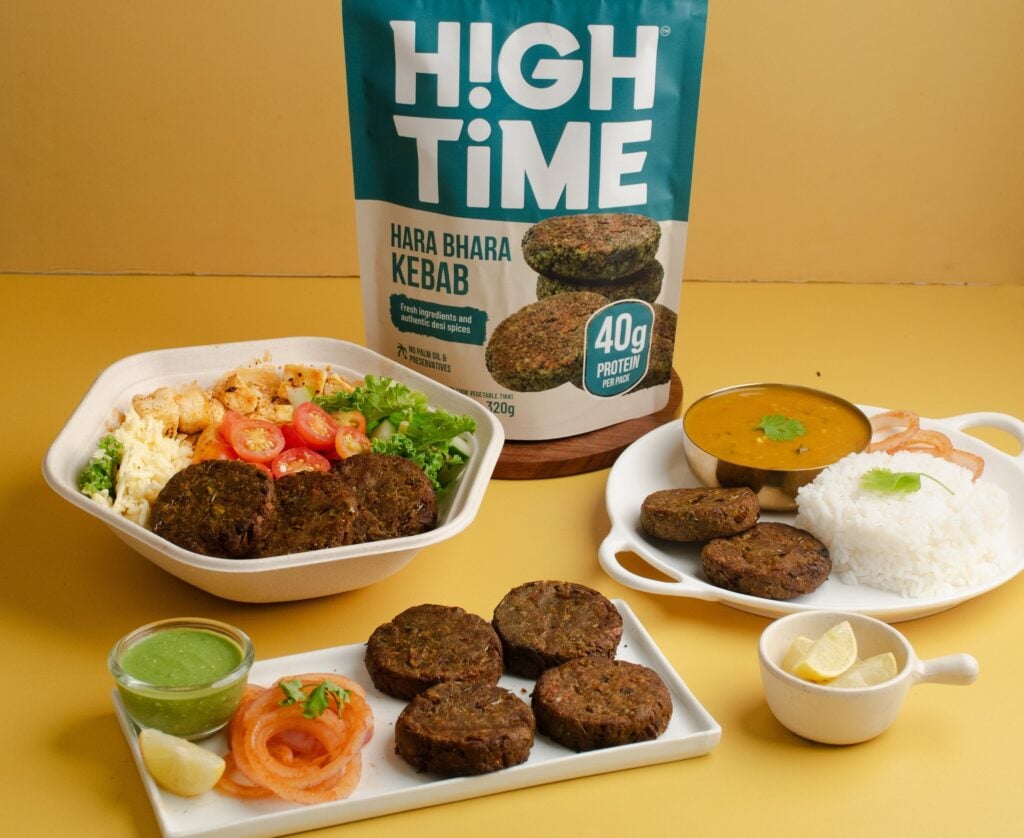
Speaking of tandoori bites, the beetroot tikki, mushroom tikki, and hara bhara kebab are packed with vegetables, spices, and textured pea protein and deliver at least 10g of protein per serving of two. The tikkis have 1.6-1.7g of fibre, while the kebab has 5.7g.
“We didn’t want to make something that tastes like a protein product trying to imitate food,” explains Shah. “The food had to come first. A samosa or a momo still has to taste the way people expect it to. The protein has to fit into that experience, not become the experience.”
‘We don’t want people to buy our products because they’re plant-based’
Studies suggest that India has a protein problem – according to one survey, 73% of the country has a deficiency. That said, a separate analysis of household food intakes reveals that the risk of protein deficiency, when adjusted for digestible quality, is low in adults and non-existent in young Indians.
Still, a 2025 poll showed that 37% of Indians want to add more plant proteins to their diets, and a greater share want to increase their protein intake from plant-based sources than from animal products. This shift is being driven by Gen Z, 82% of whom say it’s important to consume protein, and 91% are open to adopting plant-based foods (mainly to increase protein intake).
But High Times Foods isn’t leading with the plant-based claim on-pack. “That isn’t why we want anyone to buy them,” says Shah. “In India, most people who eat meat also eat a lot of vegetarian food every week. Nobody needs convincing to eat a samosa. Calling it ‘plant-based’ turns everyday food into a niche product, and that’s the opposite of what we want.”
He continues: “We’re not making meat alternatives. We’re making everyday Indian food with more protein. Most of our customers don’t identify as vegetarian, and they buy our products because they enjoy them, not because of what’s in them or left out.”
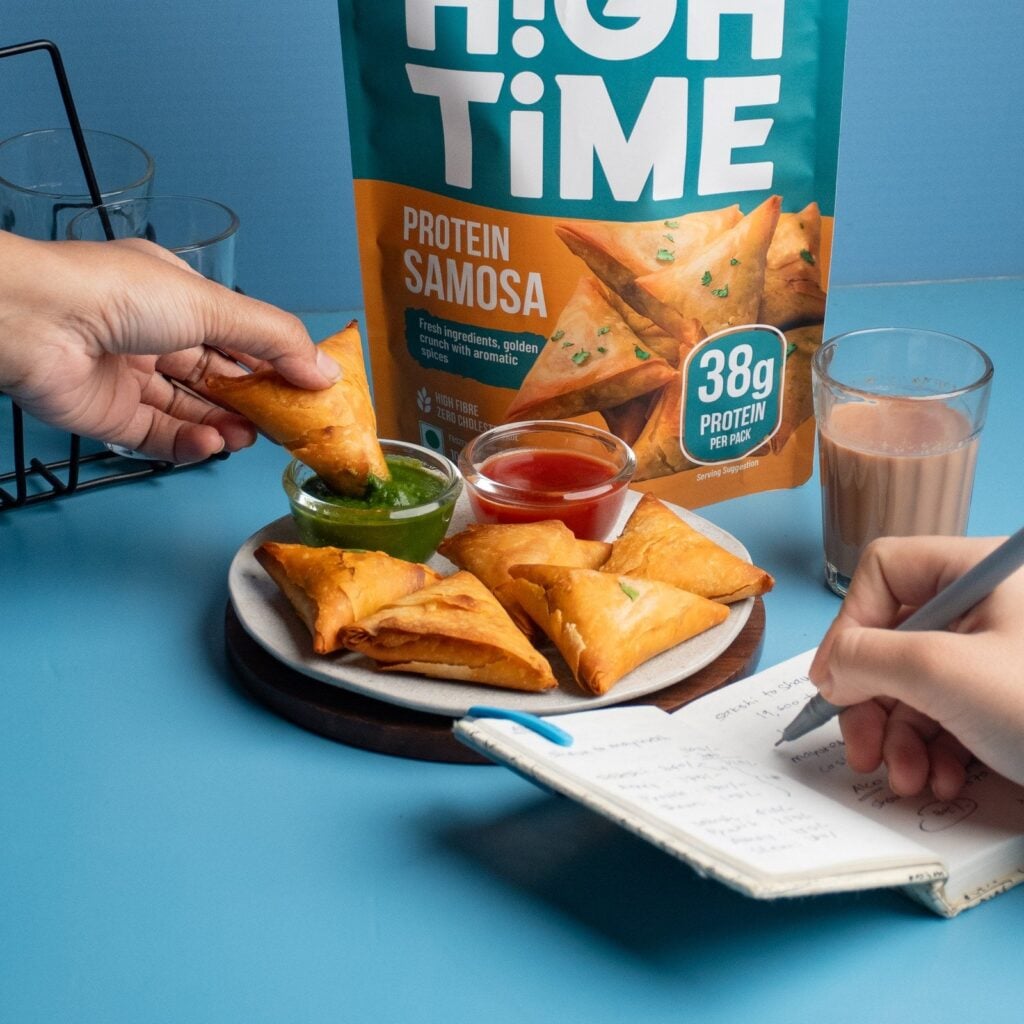
Its target consumers span busy millennials who look for clean ingredient labels and add protein to every meal for their family. The high-protein snacks contain no additives like emulsifiers or preservatives, relying on plant protein, vegetables, spices, and the cold chain.
They’re available via the firm’s website with same-day delivery in Mumbai, priced at ₹249 ($2.50) for packs of 250-320g. Depending on the product, they can be pan-fried, air-fried, steamed, or deep-fried.
“Convenience is a big part of the problem we’re trying to solve,” Shah says. “People may want to eat more protein, but that intention has to survive a busy workday, a long commute or simply not wanting to cook from scratch. We wanted to create something you can keep in your freezer, cook the way you like, and still genuinely look forward to eating.”
India’s protein tilt is also a response to the burgeoning GLP-1 market in India, which has already skyrocketed from $16M in 2021 to nearly $100M today.
High Time Foods eyes funding and expansion of protein snack range
High Time Foods’s snack range follows the same principle as recent innovations by Orkla’s MTR Foods, which launched plant-protein-boosted variants of its famed ready-to-eat breakfast range.
“We manufacture with co-manufacturing partners in Mumbai, Maharashtra, and Surat, Gujarat, who produce our products according to our recipes and specifications. We started in Mumbai, so we could control delivery and learn from customers before scaling,” says Shah.
“Quick commerce comes next, and then it’ll be launching in Bangalore. Our Warehousing partners have warehouses across major cities and a robust logistics network across India.”
Plant protein manufacturers have been a firm favourite for investors over the last year, with the likes of Inaara NeoFoods, Earthful, Arboreal Bioinnovations, and Good Monk all securing funding recently. Meanwhile, Shark Tank alum Cosmix Wellness agreed to sell a 60% stake to CPG giant Marico in a deal worth $25M.

High Time Foods itself closed a $1.2M round in May 2025, led by Avaana Capital and its existing investors. “In total, we’ve raised $1.5M to date, and our previous investors include Techstars, Sustainable Food Ventures, and Boston-based angel groups,” outlines Shah.
“Right now, we’re focused on building the business, and we plan to begin raising our next round soon. That round will fund the scaling of our consumer brand in India, including expansion into quick commerce, new cities, and new products.”
In the meantime, it will continue to supply plant protein appetisers, including samosas, momos, empanadas, and spring rolls, to university dining halls and institutional kitchens in the US.
“Harvard University Dining Services is our anchor account. We recently launched High Protein Falafel Bites, which are doing well with existing accounts,” says Shah.