

Lidl Netherlands Bets On Plant-Based Foods to Achieve 2030 Healthy Food Target

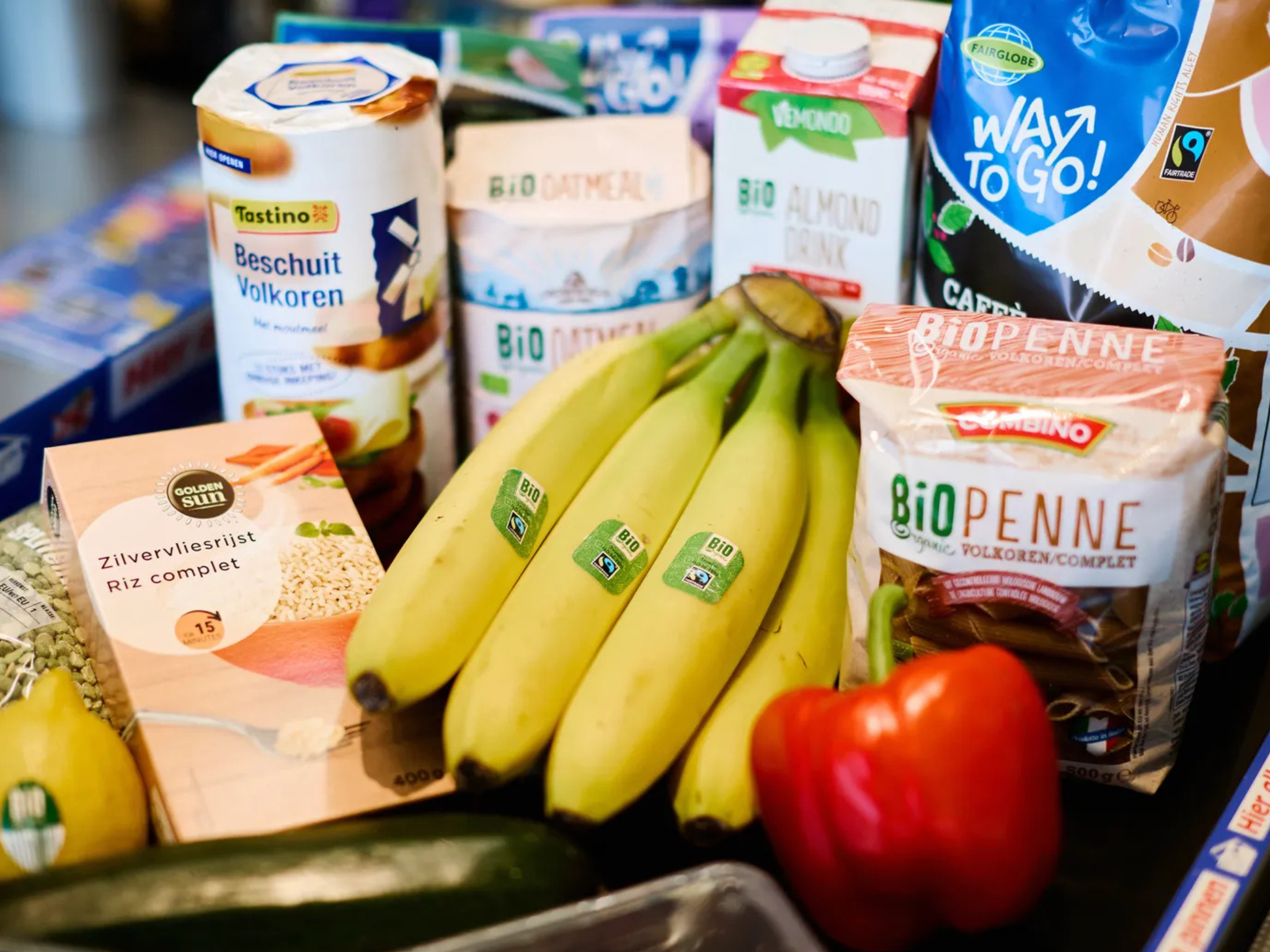
After fulfilling its 2025 target of aligning its sales with the Dutch dietary guidelines, Lidl Netherlands has set a new goal for 2030, with a focus on plant-based whole foods.
Discount retailer Lidl is extending its sustainable protein leadership, with a new sales target centred around plant-based foods.
In 2022, the supermarket’s Dutch arm announced a goal to have 38% of its sales fall within the Wheel of Five by 2025. This is an ideal dietary pattern that ensures both nutrient provision and health benefits, and forms the centrepiece of the national dietary guidelines.
Lidl Netherlands achieved the milestone with 38.4% of sales aligning with the Wheel of Five last year (up from 36% in 2022). Now, it’s taking things up a notch, having extended that target to 46% by 2030.
To get there, the retailer has outlined some key areas of growth. “We are focusing on growing our [Wheel of Five] sales in the product groups of fruits and vegetables, whole grains, and plant-based protein sources,” it said.
It’s the latest in a long list of moves to ramp up sales of plant-based products by Lidl, which has emerged as Europe’s leading supermarket in the sustainability and healthy eating race.
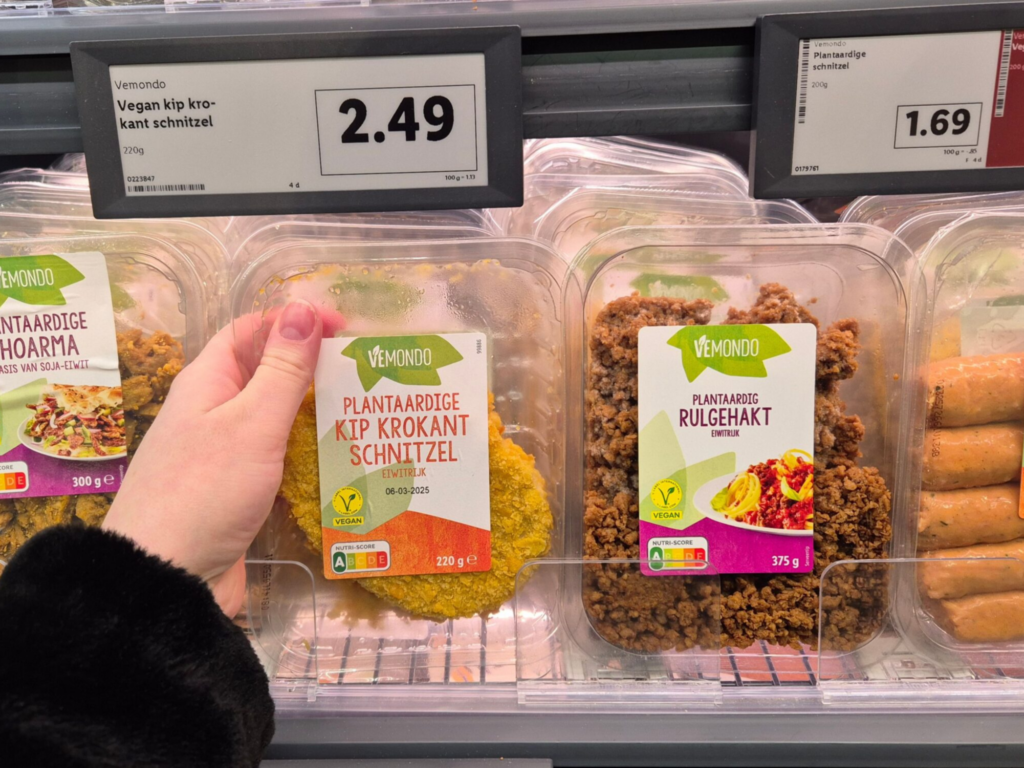
Lidl extends Wheel of Five target to entire range
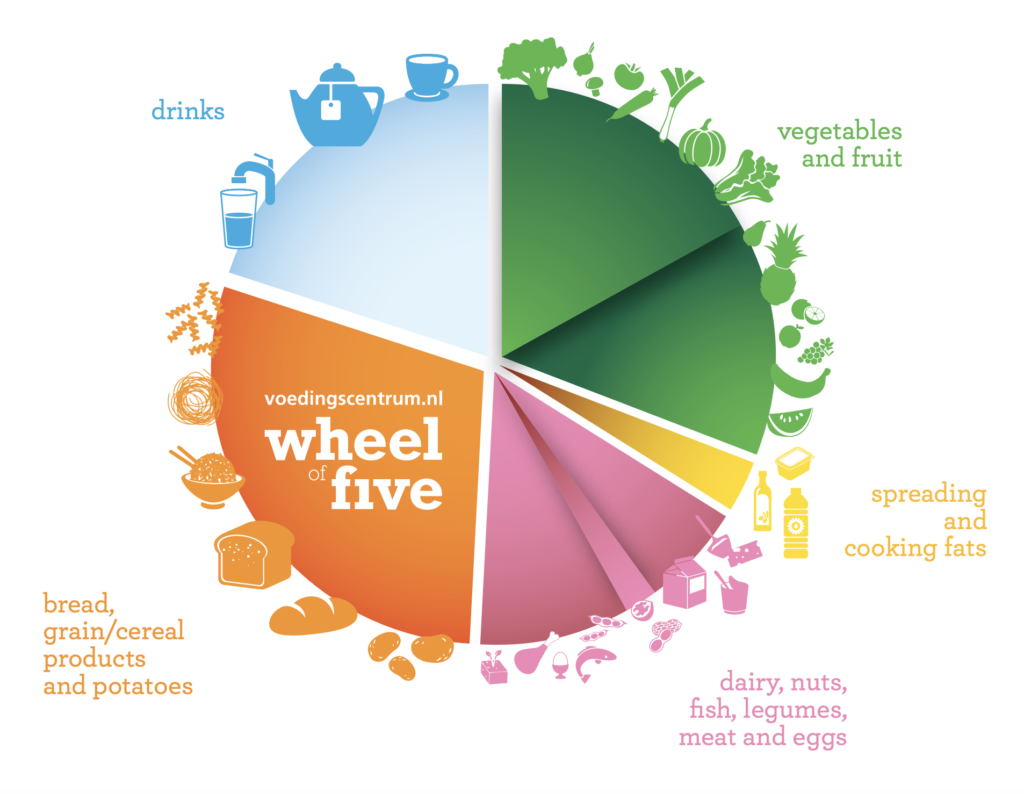
The Wheel of Five comprises five broad segments, containing food groups that are nutrient-dense or boost health. The general recommendations include eating lots of fruits, vegetables and whole grains, limiting meat and consuming more plant-based food and sufficient dairy products, eating a handful of unsalted nuts and soft or liquid fats, and sufficient amounts of fluids like water, tea or coffee.
These recommendations build on evidence-based nutritional criteria, entailing foods that are high in fibre, low in saturated fat (less than 10% of energy intake) and salt, and have no added sugar.
“We believe it’s important to contribute to increasing the consumption of fruits and vegetables, as well as other Wheel of Five products, such as high-fibre products and unsalted nuts,” Lidl said, ascribing the growth to “a healthier product range, product improvements, and encouraging healthy choices”.
The company’s 2025 target was for its private-label and A-brand products, but the new 46% goal applies to the entire product range. The target is based on a per-kg basis, and was developed with advice from the National Institute for Public Health and the Environment and the Questionmark Foundation.
Lidl also consulted the Dutch health ministry to select the uniform method that all supermarkets will use to measure these sales going forward.
“As a supermarket, we bear a great responsibility for what our customers eat every day and believe that a healthy lifestyle should be affordable and accessible to everyone,” said Stephanie Both, chief customer officer at Lidl Netherlands.
“That’s why we continue to invest in a healthier product range and in initiatives that help customers make healthier choices in their daily lives,” she added.
Lidl Netherlands tops supermarket sustainability charts
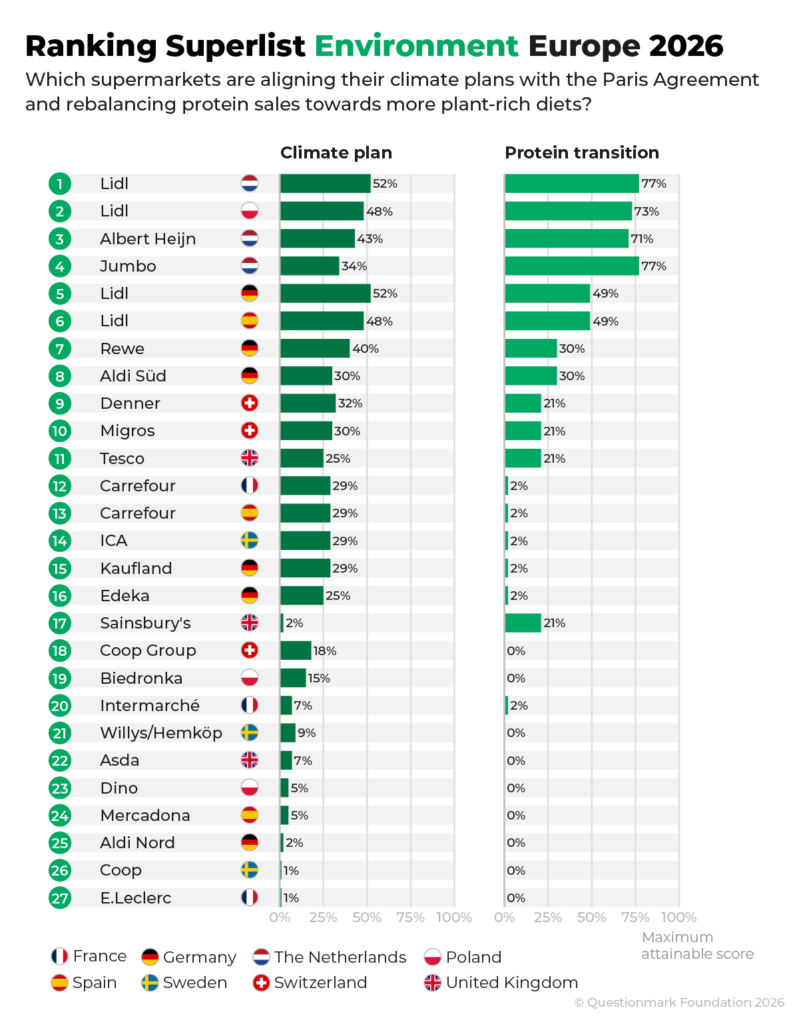
Lidl Netherlands’s announcement came shortly after it topped the 2026 Superlist Environment Europe ranking, which was developed by the Questionmark Foundation, Madre Brava, ProVeg International, and the World Wide Fund for Nature (WWF) Netherlands.
The list analysed the climate and protein transition strategies of 27 supermarkets across eight European countries, giving Lidl Netherlands the highest scores on both metrics. The researchers pointed to the retailer’s high level of transparency in emissions reporting, its published climate roadmap, as well as a time-bound target to derive 60% of its sales from plant-based products by 2030.
This aligns with Lidl’s international promises. The company has pledged to increase the share of plant-based food it sells globally by 20% by the end of the decade. In the UK, it aims to have 25% of all protein sales come from plant-based sources by 2030, while doubling the revenue share of non-dairy products from a baseline of 6.4% in 2021.
It increased the sales of healthy food in the UK by 80% since 2019, reaching the target two years ahead of schedule. And it blew past its goal of increasing own-label plant-based sales by 400% by 2025, recording a rise of 694% in the previous five years.
In the Netherlands, Lidl was a pioneer in the blended meat space, launching a 60-40 beef-plant mince in 2024. Plus, it permanently decreased the cost of its own-label meat and dairy alternatives, which are either the same price or cheaper than their conventional counterparts.
Its strengthened commitment to healthy food sales comes months after the Health Council of the Netherlands updated its dietary guidelines, advising Dutch citizens to lower red meat intake to 200g per week (they currently consume above 475g), limit processed meat as much as possible, and increase the amount of plant proteins, with an emphasis on legumes and nuts.
The guidelines are now being translated into information on healthy eating patterns by the Netherlands Nutrition Centre, which will publish a new Wheel of Five this spring. Lidl, no doubt, will keep a keen eye on it.