

Singapore University Trials Carbon-Labelled Menus to Lower Food Emissions

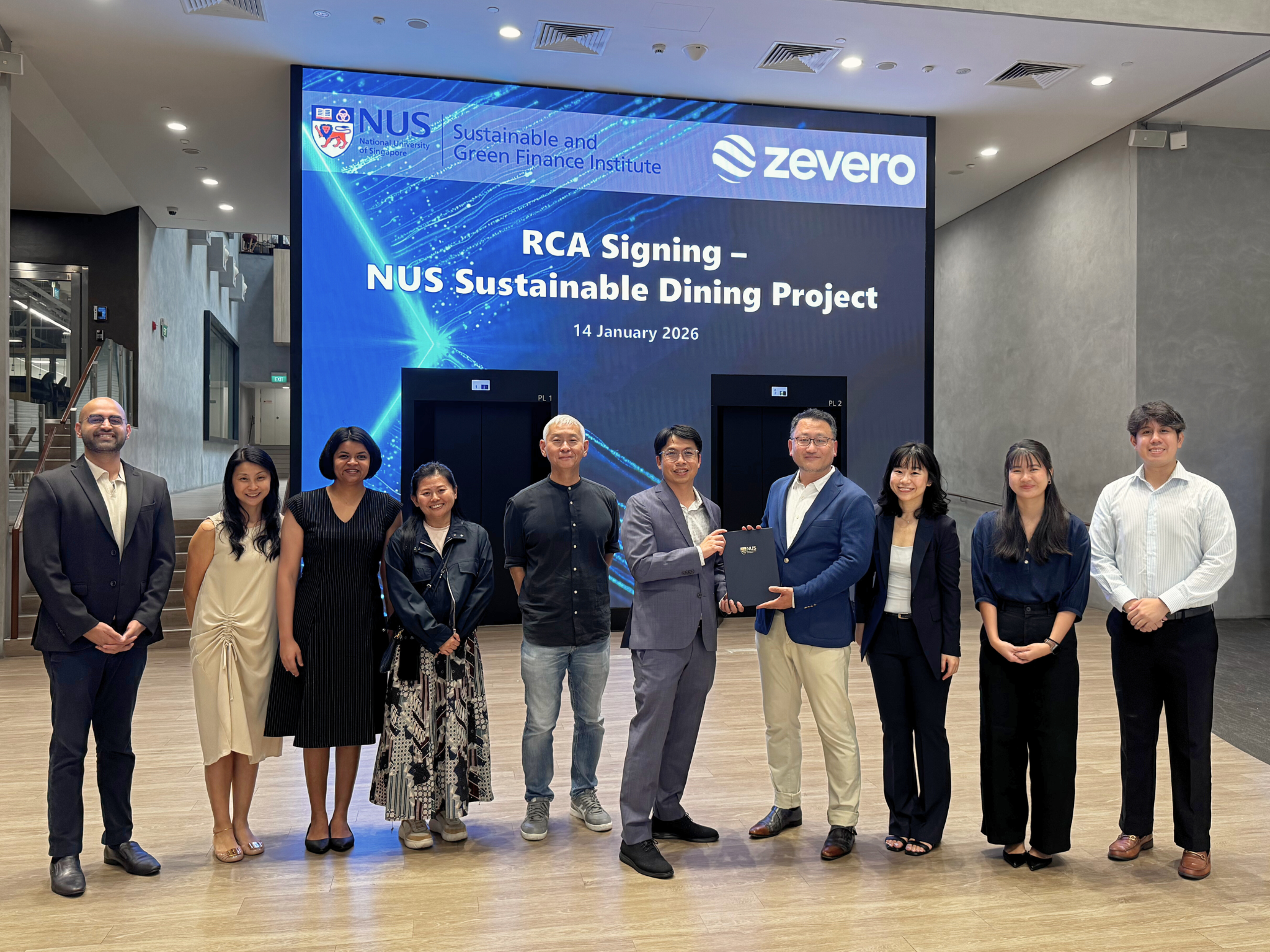
The National University of Singapore has introduced carbon-labelled meals on campus menus as part of a research initiative with carbon accounting firm Zevero.
In its bid to identify the most effective ways to lower food-related emissions, Singapore’s flagship university is trialling carbon labelling on its menus.
The National University of Singapore’s (NUS) Sustainable and Green Finance Institute is working with carbon management platform Zevero on a research partnership, which has resulted in the institute’s first campus-wide initiative to display the emissions associated with meals.
The initiative will support NUS’s broader goal of creating a low-carbon campus by measuring the carbon footprint of meals and highlighting it on the menu across 90 on-campus dining outlets.
Carbon labelling aims to kickstart long-term emissions reduction at NUS

Singapore already has a programme to display the nutritional information of food and beverages at the city-state’s foodservice outlets, as part of the government’s drive to lower diabetes rates.
The carbon-labelled menus at NUS will work similarly to the Healthier Dining Programme, outlining the emissions of each meal in kg CO2e. Zevero will deliver end-to-end measurement and analysis of menu items at participating campus outlets.
This will account for ingredient-level emissions (including farming, production, and global sourcing), cooking methods and kitchen energy use, packaging choices, and waste treatment assumptions.
By establishing a clear and credible emissions baseline, the research project aims to provide a critical starting point for informed decision-making and long-term emissions reduction within campus foodservice operations.
“Creating visibility is the first step toward meaningful change,” said Zevero co-founder and CEO Shigeo Taniuchi. “By making the climate impact of food choices transparent at the point of decision, NUS is empowering thousands of students to engage in climate action in their everyday lives. This is exactly the kind of systemic intervention that drives long-term decarbonisation.”
The findings from the carbon-labelling trial are expected to inform future research outputs and discussions around food-related emissions, consumer awareness, and institutional sustainability practices, according to Zevero.
Singapore’s rising food emissions show why carbon labels are needed

The initiative will explore how the carbon footprint of meals can be measured, standardised and displayed, with the aim of generating insights into how emissions labelling may influence meal choices.
A number of trials in university canteens globally have revealed that carbon labels shift the uptake from meat to vegetarian options by 1.7-4.6 percentage points. And in 2023, catering company Chartwells Higher Education found that displaying emissions information on university menus significantly increased student demand for climate-friendly meals.
That said, one 2025 review suggested that eco labels only have a “small-to-moderate average effect” on purchasing behaviours and tend to work better online. Still, their “indirect and long-term impacts” should not be overlooked, as they can help improve data for emissions tracking and lay the groundwork for stronger policies.
This is key for Singapore, whose food-related emissions have increased “dramatically” over the last 50 years, according to NUS researchers. In the 1970s, the island nation produced 90% of its poultry and pork needs, and significant amounts of produce too. Today, it imports 90% of its food from 183 countries.
That has heightened the climate impact of local dishes like chicken rice, a serving of which generated just 1.01kg CO2e in the 70s; it has since tripled to 3.13kg CO2e. Likewise, the carbon footprint of a bowl of laksa has increased from 1.37kg to 6.53kg CO2e over this period.
Singapore’s 30 by 30 plan had sought to tackle this issue by aiming to produce 30% of its own food by the end of this decade. Still, that initiative has since been scrapped, with the new food strategy outlining an ambition to have 20% of fibre and 30% of protein consumption supplied locally by 2035.
“Food choices are one of the most immediate and visible ways individuals can participate in climate action,” said Prof Sumit Agarwal, managing director of the Sustainable and Green Finance Institute. “This initiative will create a generation of students who not only understand their footprint, but who are equipped to make informed, climate-positive decisions.”