

How Planet A Foods is Taking Over the Chocolate World with Its Cocoa-Free Alternative

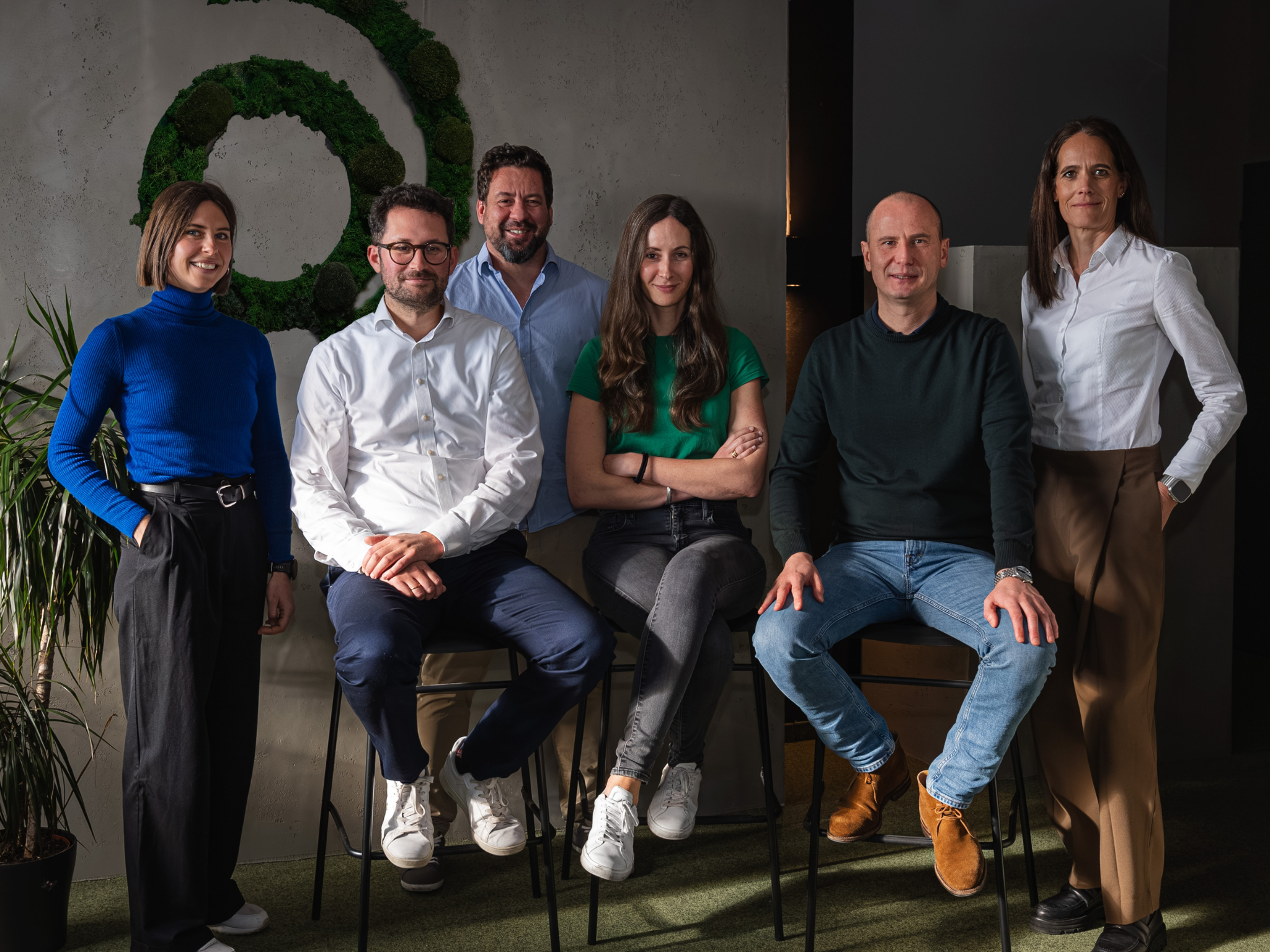
German food tech startup Planet A Foods is leading the cocoa-free alternative race to help the chocolate industry deal with the climate crisis. It has now gone global and will soon enter the US.
As chocolate collaborations go, there’s hardly anything more monumental than a deal with Barry Callebaut.
The Swiss company is the world’s largest supplier of chocolate, counting everyone from Nestlé, Unilever, and Hershey’s to Mondelēz International and Mars as customers. And much like the industry it serves, it’s struggling.
Barry Callebaut’s sales volume fell by nearly 7% in the financial year ending in August, despite a 49% hike in revenue. The main reason behind this was the climate crisis, which has decimated cocoa yields and pushed prices to record highs.
It’s what pushed Barry Callebaut to seek alternative sources of chocolate, leading to the biggest partnership in the five-year history of Germany’s Planet A Foods.
The food tech startup ferments plant-based ingredients to make a chocolate-like ingredient called ChoViva, which is now part of around 110 products across 10 countries in Europe and Asia, according to its co-founder and CEO, Maximilian Marquart.
“While exact store count is hard to measure since we don’t produce the end products, ChoViva should be available in 100,000+ stores globally,” he tells Green Queen.
That makes Planet A Foods a leader in the burgeoning and now-indispensable cocoa-free chocolate space, which includes players like Voyage Foods, Foreverland, Win-Win, and Prefer. It’s now gearing up for further international expansion, with the US firmly in its sights.
He declined to share exact revenue figures, though he says demand has been strong and continues to grow. “Our main focus right now is on scaling – expanding production capacity while ensuring consistent quality at larger volumes,” he notes.
Why chocolate companies are embracing cocoa-free solutions
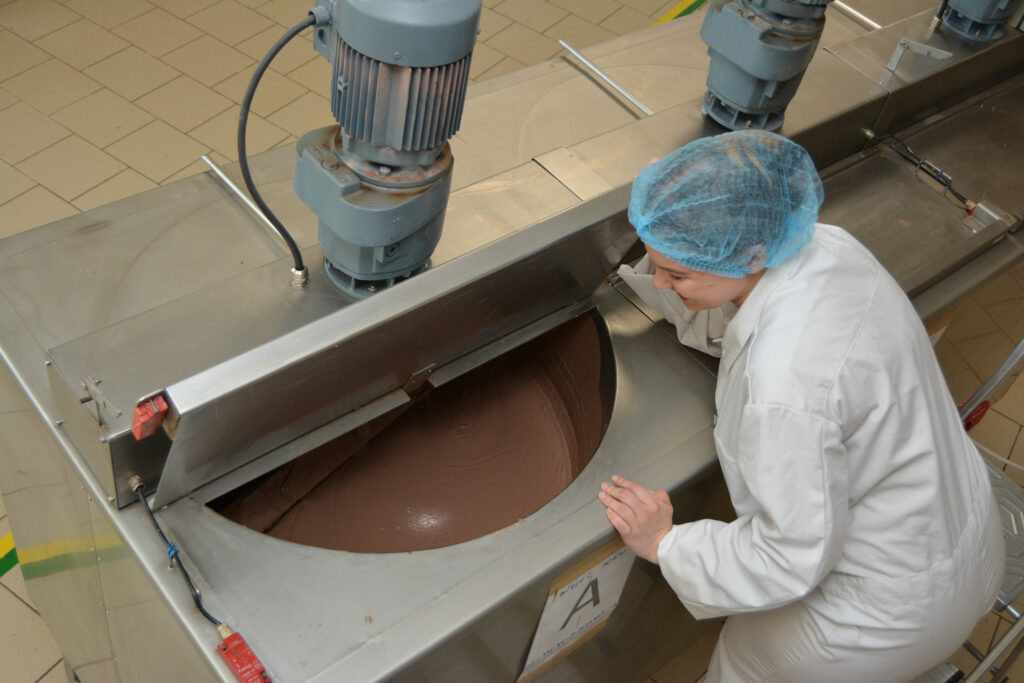
Planet A Foods’ current recipe for ChoViva contains a base of sunflower and grape seeds, which undergo a proprietary fermentation and roasting process to elicit aromas, flavours and textures similar to cocoa. These are then combined with plant-based fats and sugar to create a mass that can be used as a 1:1 replacement of chocolate.
“ChoViva is available in four recipes: vegan, milk, semi-sweet (dark) and white,” says co-founder and CTO Sara Marquart. “The percentage varies a lot – Choviva is used in coatings or dragées around nuts, to cookie coverings or full chocolate bars. So depending on the product, it can be anything from just a small share up to 100% ChoViva.”
She adds: “In the last months, we saw an increasing number of tablets with ChoViva being launched in Germany, the Netherlands and France by different partners.”
The ingredient has featured in products by the likes of Lindt, Piasten, Aeon, Peter Kölln, Lufthansa, Deutsche Bahn, Kaufland, Rewe, Aldi, and Lidl, among many others.
ChoViva’s rising popularity has coincided with the chocolate industry’s unprecedented struggles over the last couple of years. Scientists have already warned that a third of the world’s cocoa trees could die out by 2050, and climate shocks pushed cocoa stocks to their lowest levels in a decade, driving prices to all-time highs.
Extreme weather and crop diseases are hitting plantations hardest in the Ivory Coast and Ghana. These are the two largest producers of cocoa, and have already lost over 85% of their forest cover since 1960.
The cruel twist is that the industry itself is a major food-related driver of climate change. Producing chocolate emits more greenhouse gases than any other food except beef and is linked to widespread deforestation. And making a single bar requires 1,700 litres of water on average.
Planet A Foods gives chocolate companies an off-ramp, allowing them to lower emissions by 82-91%, depending on the type of chocolate.
What Big Chocolate is looking for in cocoa alternatives

“The market is being shaped by a declining cocoa supply – climate change, diseases, and geopolitical factors are affecting cocoa production in Ghana and the Ivory Coast, driving prices up. At the same time, global demand is growing, especially in countries like India and China,” Sara says when asked why alternative chocolate is an exploding category.
“That’s why the market is looking for alternatives that taste just as good but are more sustainable and less affected by current volatilities. Plus, with the technology having advanced, it’s now possible to produce cocoa-free alternatives that taste great and can deliver at scale,” she explains.
For Big Chocolate, the main draw of these alternatives differs, based on who you are. “Different teams have slightly different priorities. Often, supply issues are the main driver – they’re looking for solutions that are less price-volatile and more reliable in the long term,” says Maximilian. “Sustainability is more of a plus, but often not the main driver.”
Taste is also a primary factor, with companies and supermarkets looking for alternatives that “deliver a real chocolatey taste” at an attractive price point. ‘Alternatives’ is a key term here. Planet A Foods makes it clear that cocoa-free solutions aren’t a replacement for conventional chocolate; rather, they are a much-needed supplement.
“Commitment to alt-cocoa has been growing over the past few years, though it needs to fit alongside their other categories and complement traditional cocoa solutions and should not go against it,” outlines Maximilian.
So how does Planet A Foods manage to notch so many partnerships, and how long does a product take to develop? “Our sales team initiates discussions, or new partners reach out to us directly through their network, events, and other channels. “The sweets and snacks industry is quite connected, especially in Germany,” he reveals.
“The timeline really depends – for some of our first products, we managed to go from first contact to launch in just four to five months, especially with family-owned companies. With larger corporations, the process naturally takes longer.”
Planet A Foods eyes US expansion after successful scale-up

It’s not just chocolate makers who see potential in Planet A Foods’s ingredients – investors do too. In late 2024, the startup raised $30M in a Series B round that defied what has turned out to be the bleakest funding landscape for food tech in a decade.
“The timing was just right,” says Maximilian. “With climate change affecting the cocoa industry and prices rising, ChoViva offers a solution with long-term impact in the market. Demonstrating that ChoViva can scale while convincing in taste gave confidence even in a tough environment.”
He adds that despite the capital challenges, investors recognised the potential of its cocoa-free chocolate and the traction it has achieved with partners and products in the market.
Part of the reason Planet A Foods raised this money was to expand the capacity of its production facility in Pilsen, Czech Republic, from 2,000 tonnes to over 15,000 tonnes annually. Maximilian reveals the company has now successfully achieved this scale.
The startup is looking to expand both its product line and footprint. For instance, it’s developing a precision-fermented ChoViva Butter as a like-for-like alternative to cocoa butter.
“We’re currently working on it, closely together with partners from the industry, which is very exciting. Since it’s a different approach than with ChoViva, development timelines are naturally longer,” says Sara.
Looking ahead, Maximilian identifies both the US and Asia as “central pillars” of the company’s roadmap. “While we are intensively preparing our entry into the US market, we are already actively expanding our presence in Asia – a key milestone being the first products we have already successfully launched in Japan together with our partner, Aeon,” he says.
“We’re expanding in close cooperation with our industry and production partners – working with established chocolate manufacturers to scale. By building on proven industrial setups and leveraging partners with strong global ties, we can expand fast while ensuring reliable, consistent quality.”