

Nestlé Taps Precision-Fermented Donkey Milk to Make Whey Protein Without Dairy Allergens

Swiss food giant Nestlé has filed a patent application for producing precision-fermented donkey beta-lactoglobulin protein to cater to infants and adults with cow’s milk allergies.
Could donkey milk inspire the future of nutrition?
Nestlé seems to think so, having filed a patent application to produce infant formula and food products using recombinant donkey whey protein.
The world’s largest food company submitted its application to the World Intellectual Property Organization earlier this month, homing in on beta-lactoglobulin (BLG) protein derived from precision-fermented donkey milk.
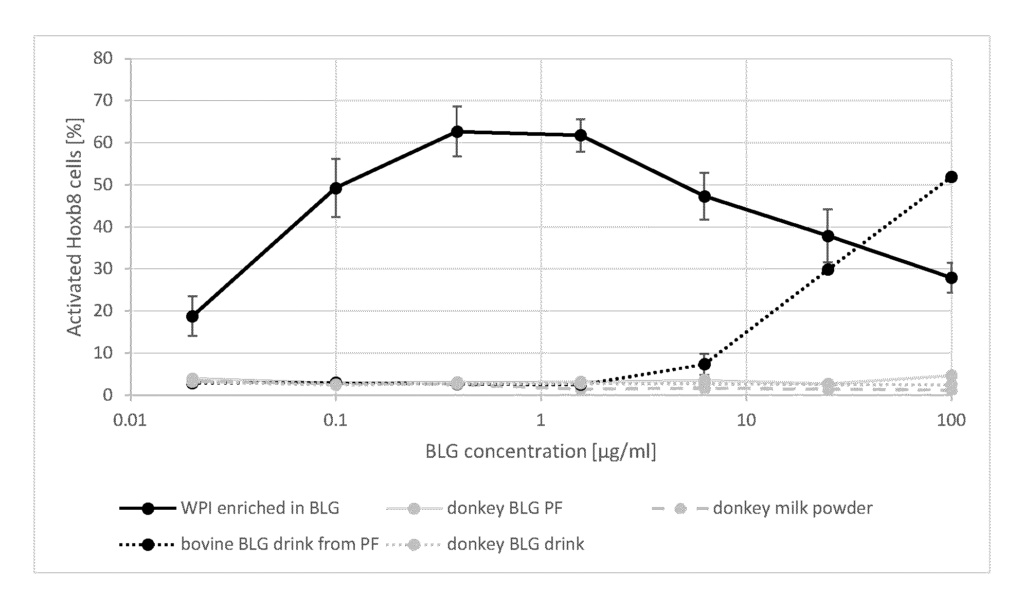
It’s working on this ingredient as a solution for babies and adults who are allergic to cow’s milk or lactose intolerant, as well as for individuals looking for alternatives to dairy or superior formula products. Unlike bovine BLG, the donkey milk version is naturally hypoallergenic.
“Individuals with cow’s milk protein allergy must avoid all cow milk-based products, which can limit their dietary options and nutritional intake,” reads Nestlé’s patent application.
“The presence of BLG in infant formula can lead to severe allergic reactions in infants with milk protein allergies, and it appears desirable to reduce or eliminate BLG in infant formula for this target population of infants.”
The company has previously worked with Californian startup Perfect Day to produce the Cowabunga line of animal-free milks using the latter’s precision-fermented bovine beta-lactoglobulin. In addition, it released a cow-free whey protein powder under its Orgain brand, though it never confirmed whether the ingredient was produced in-house or by a third party.
Why Nestlé is betting on recombinant donkey milk protein
Precision fermentation involves inserting a specific gene sequence into microbes to teach them to produce the desired molecules during fermentation. Nestlé is leveraging Komagataella phaffii (formerly Pichia pastoris), the same yeast strain used to produce the heme ingredient in the Impossible Burger.
It feeds the microbes on sugars in stainless-steel tanks to produce a BLG-rich biomass, which is then separated from the fermentation liquid and purified. BLG is the main whey protein found in mammals such as cows, sheep, goats, and donkeys, accounting for 50-60% of whey content, according to the company.
It is a complete protein rich in essential amino acids, and is revered by manufacturers for its gelling, foaming and emulsification properties. In fact, a 2025 study found that BLG outperforms all forms of dairy whey and casein in terms of muscle and metabolic benefits.
This is because it contains 1.5 times more leucine than standard whey or casein, providing a strong trigger for muscle protein synthesis. Further, it ensures sustained, longer-term amino acid availability.
However, dairy-based BLG has its own allergenic and intolerance issues. In the US, for instance, 2-3% of infants are allergic to milk proteins, and although many grow out of it, the reported allergy rate among American adults is 4.7%. Likewise, 2-3% of British babies are allergic to dairy, too.
Meanwhile, lactose intolerance is highly prevalent across the world, particularly in people of colour. At least 12% of Americans are intolerant to lactose, but this rises to 80-90% among African Americans, Native Americans and Asian Americans, according to one estimate.
Nestlé noted that donkey milk BLG has “no or very limited” potential to induce allergic reactions, and that its recombinant version, produced through precision fermentation, is also lactose-free. Plus, its functional advantages can improve the texture, solubility, and stability of food and nutritional products.
Extracting BLG from donkey milk is challenging, yielding limited amounts and low purity. The availability of donkey milk is low, since they’re not commonly bred or raised the way cows are, and even if they were, they produce significantly less milk than their bovine counterparts.
Donkey populations are dwindling in some countries, and many have banned their slaughter, amid concerns about disease spread from the donkey skin trade. Precision fermentation enables the large-scale production of BLG, eschewing the need for donkey milk as a source. According to The Donkey Sanctuary, it will only take six days to produce a batch of donkey protein once the tech is fully established.
Donkey BLG protein can boost GLP-1, baby formula, and plant-based milk markets

Precision-fermented donkey milk BLG can replicate the functional, nutritional, and sensory attributes of cow’s milk proteins without the allergen risks, making it an ideal base for a wide range of food products.
This includes protein shakes, bars and waters, dairy alternatives, meal replacement products, desserts, jelly drinks, baby food purées, fermented foods, sports nutrition offerings, and GLP-1 companion products. The latter is a booming market, with the number of weight-loss drug users doubling in the US last year.
During digestion, BLG releases bioactive peptides that can support glucose regulation and satiety. These attributes support the protein’s metabolic benefits, influencing hormones such as insulin and GLP-1. Nestlé has already launched a frozen meal brand dedicated to GLP-1 users, as well as a website to provide nutritional advice and products for them.
Another major category Nestlé is targeting in its donkey milk patent application is infant nutrition. Aside from the allergen-free benefits, the recombinant donkey BLG could enhance the solubility and stability of baby formula, ensuring consistent and easily digestible products that support optimal nutrient absorption.
The company said its BLG could make up 0.5-10g per 100ml of prepared formula products. For food products, the inclusion rate could vary from 5-20g of the protein per 100g, which would help support muscle repair and growth, and boost overall nutrition intake.
Additionally, the donkey BLG closely mimics bovine proteins, providing a milk-like taste and texture. This positions it as an ideal base for non-dairy milk, which Nestlé claimed often lacks the functional and sensory attributes of cow’s milk. The inclusion of the recombinant donkey milk protein can improve the solubility and stability of animal-free milk, resulting in a smooth, consistent texture.
It’s important to note that this is merely a patent filing for a technology that Nestlé could choose not to work on commercialising in the near future. In any case, it will be years before it comes to market, given the regulatory hurdles this novel protein would need to pass for use in food products. These are even more stringent for infant nutrition. Still, it could be a glimpse of what’s to come.
The donkey milk BLG patent filing came the same week Nestlé signed a deal with US startup Helaina to create infant formula using the latter’s lactoferrin, a recombinant breast milk protein.