

57% of UK Coffee Shops Open to Making Oat Milk the Default Option, If Demand & Costs Align

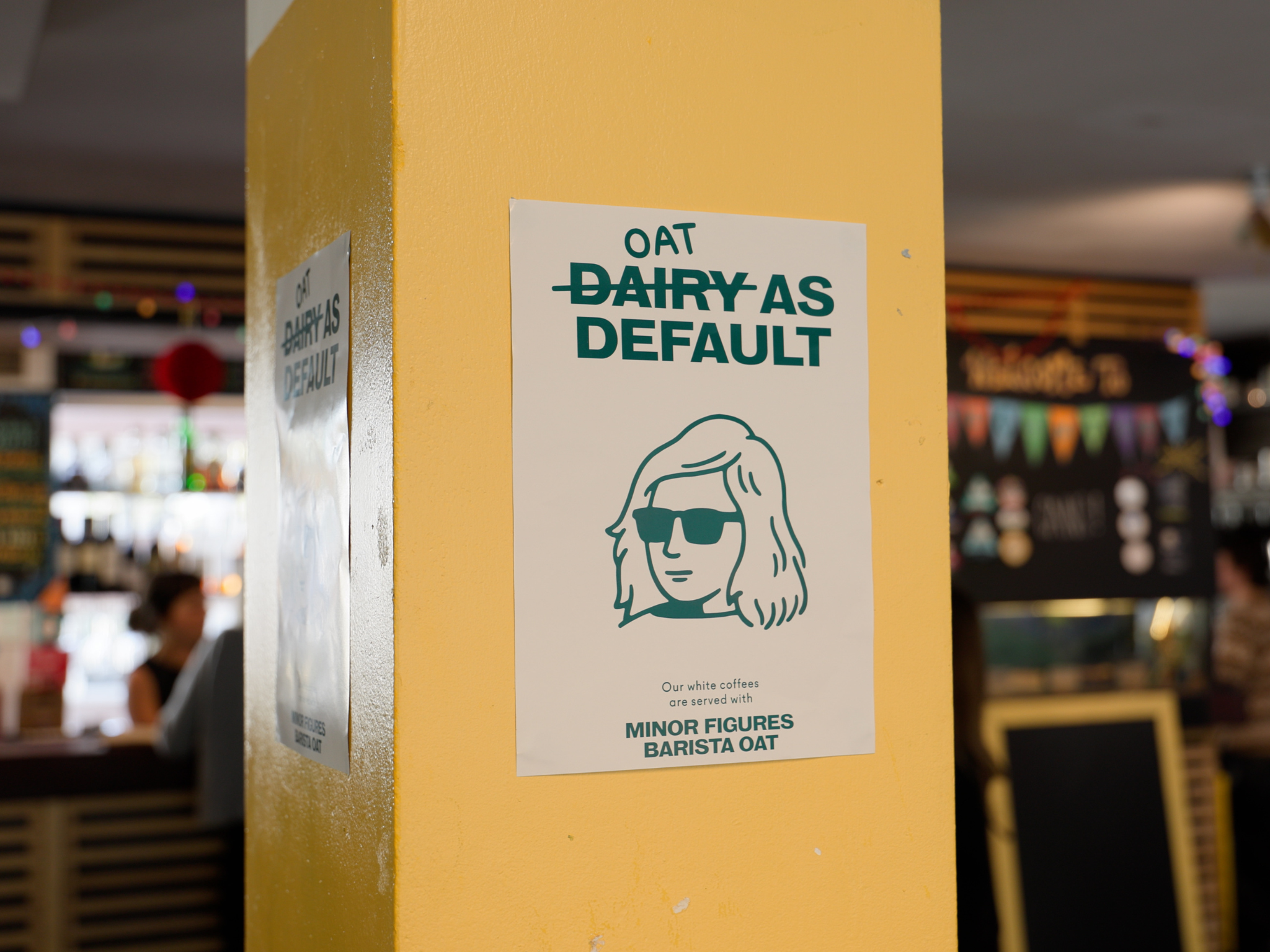
A majority of cafés in the UK would consider offering oat milk as the default option in milk-based beverages, if consumer demand exists and wholesale prices are lowered.
How would you feel if your local coffee shop served your flat white with oat milk as the standard?
The Canteen, a vegetarian café in Bristol, is putting that theory to the test. It is one of the UK’s first coffee shops to conduct an “oat milk by default” trial, which could drive greater adoption of the plant-based alternative and lower the business’s emissions.
The campaign was launched in collaboration with London-based oat milk startup Minor Figures and animal rights organisation Animal Justice Project, whose research shows that 84% of UK cafés have never previously considered making oat milk the default option, even as 57% are open to the idea after engagement.
It follows several behavioural science studies in recent years that have demonstrated the efficacy of default nudges to increase plant-based consumption and environmental outcomes.
Customer satisfaction and high prices the chief concerns for coffee shops
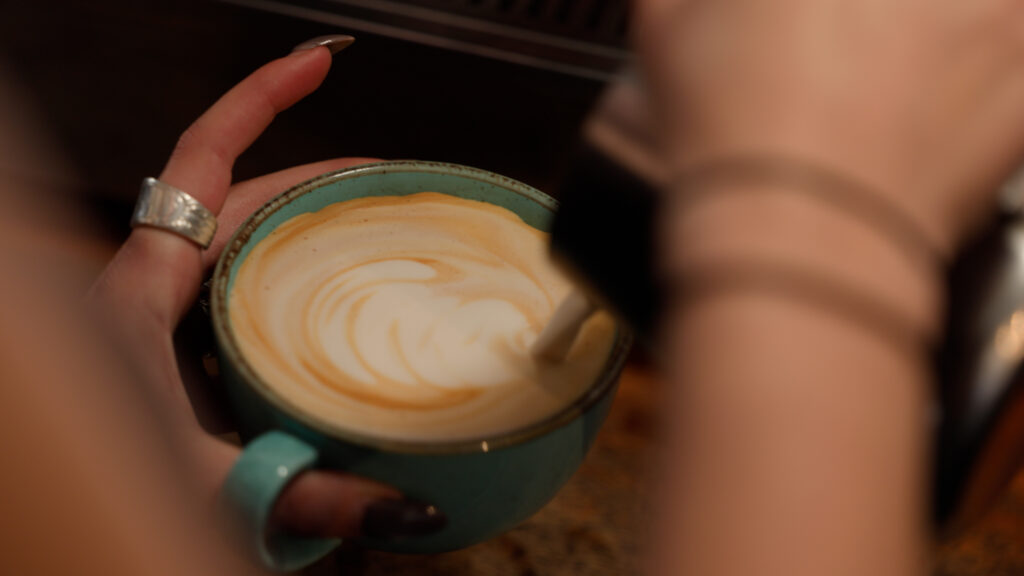
The Canteen’s move builds on a survey by Animal Justice Project this year, which involved 50 independent coffee shops and asked whether they’d ever considered adopting the default oat milk model.
It describes the approach as making drinks with oat instead of cow’s milk, unless consumers specifically ask for the latter when ordering, reversing the current practice in coffee shops.
Most respondents (84%) said they hadn’t considered making the switch, highlighting negative customer reactions (77%) and higher costs compared to dairy (68%) as the two major barriers. Far fewer businesses were worried about taste or allergens.
That said, clear consumer demand and market trends would drive over two-thirds (69%) of cafes to consider switching to oat milk as the default option. For 52%, lowering the wholesale price of the milk alternative would be another key factor.
Asked about the most effective strategies that would best encourage customers to try oat milk and support the default approach, the respondents cited introducing oat as the standard option in specialty or signature drinks (48%), clear signage about the move (41%), friendly recommendations from staff (35%), and offering a refund or the option to try a different plant-based milk for free (33%).
Coffee shops also recognised the potential upsides of this strategy, saying that they would hope to see sales increase (45%), reduce their climate impact (43%), and improve customer experience and satisfaction (38%).
And if they’re supported through this shift via funding, logistics, media publicity, and free oat milk, 19% would make oat milk the default option, while another 38% are open to it.
The default oat milk drive is part of Animal Justice Project’s Udderly Kind campaign to show how simple menu swaps can reduce reliance on animal agriculture, lower climate impacts, and influence everyday consumer choices.
‘Reducing dairy the biggest impact we can make’
Animal Justice Project said the findings have informed a collaborative approach to work with coffee shops on practical, low-risk trials supported by brand partnerships and guidance.
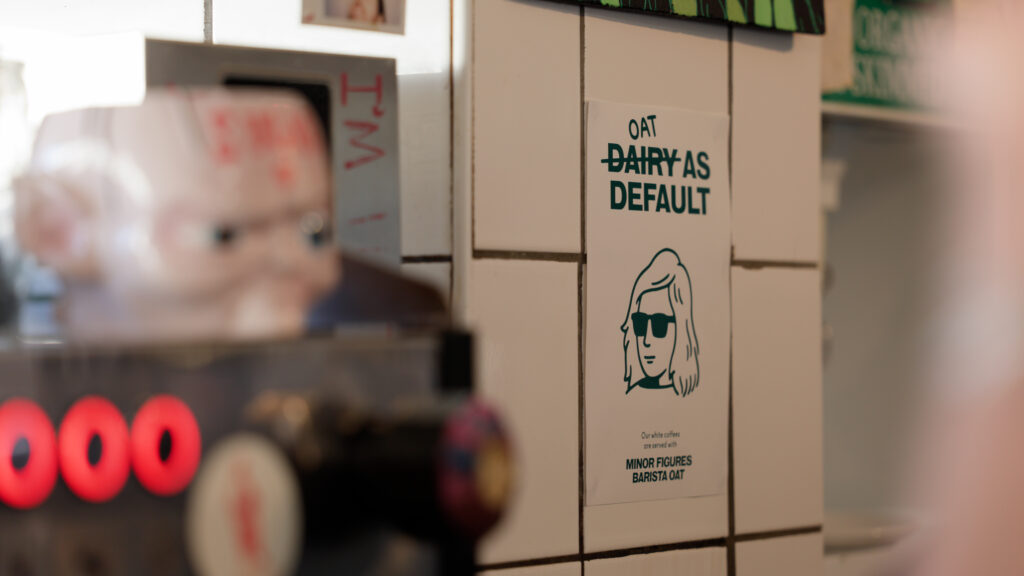
The Canteen, for instance, is being supported by Minor Figures, which has supplied the café with 60 litres of oat milk and in-store materials for free. The brand is offering similar support to other businesses interested in trialling the approach.
“Offering oat as default is not only the most ethical and sustainable choice – it’s also great for coffee and commercially viable. We want to help cafés make that transition,” Minor Figures said in a statement.
“We have done a lot of work in recent years on our carbon footprint literacy and have recognised the impact that dairy and eggs have on our overall footprint. Reducing dairy has by far the biggest impact we can make – not just environmentally, but for animal welfare,” said Liam Stocks, general manager of The Canteen.
“We’re keen to see how customers respond to oat milk being the default and hope this shows that a wider shift is possible through small changes.”
The Bristol coffee shop began its trial earlier this month, with customers able to ask for dairy or other alternatives at no extra cost. Its baristas are prompting visitors by asking: “Is oat milk okay?” That small behavioural shift is designed to normalise plant-based choices.
And research shows that these nudges work. A UK study this year found that students at a university café were thrice as likely to choose oat milk when it was the default option, reducing the milk-based carbon footprint per drink by 25%–34%.
That should come as no surprise. Dairy has a much larger climate footprint than oat milk: it emits over three times more greenhouse gases, takes up 11 times more land, and uses 13 times more water.
In 2022, catering giant Sodexo’s subsidiary, the Good Eating Company, and behavioural choice agency Greener By Default held a successful corporate pilot at LinkedIn’s San Francisco office. In the 12-week trial, two-thirds of the menu was made plant-based, and oat milk became the default coffee bar choice. The intervention halved the office’s emissions, saving 14,400kg of CO2e.
“This is exactly the kind of practical, forward-thinking change we need to see,” said Sean Barrs, a campaigner at Animal Justice Project. “The Canteen is showing that cafés can lead the way—supported by data, collaboration, and real-world trials. We hope many more businesses will follow.”