

Kite Hill’s New Vegan Cream Cheese Has Double the Protein of Dairy

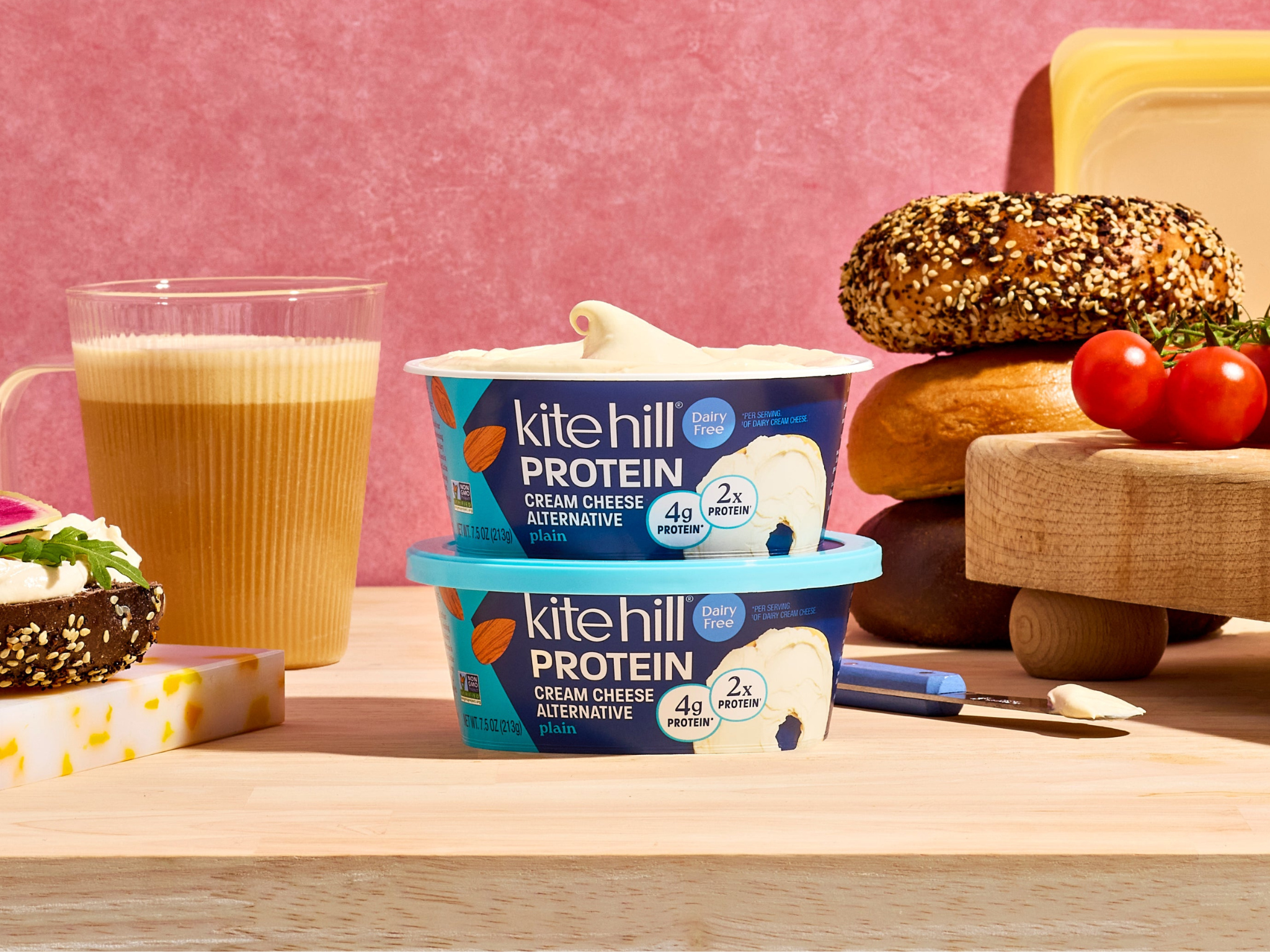
Californian dairy-free brand Kite Hill has introduced a first-of-its-kind cream cheese alternative with twice the protein of its dairy counterparts.
US plant-based food company Kite Hill is diving into the protein rush with a non-dairy cream cheese that outperforms its cow’s milk equivalent.
Described as a “first-of-its-kind” innovation that adds the macronutrient to a typically low-protein category, the new dairy-free cream cheese delivers 4g of protein per two tablespoons, twice as much as the 2g offered by conventional cream cheese.
Gram for gram, Kite Hill’s newest product delivers more protein than dairy cottage cheese. It’s available at Whole Foods Market nationwide, with more retailers to follow soon.
Kite Hill targets ‘proteinmaxxing’ wave
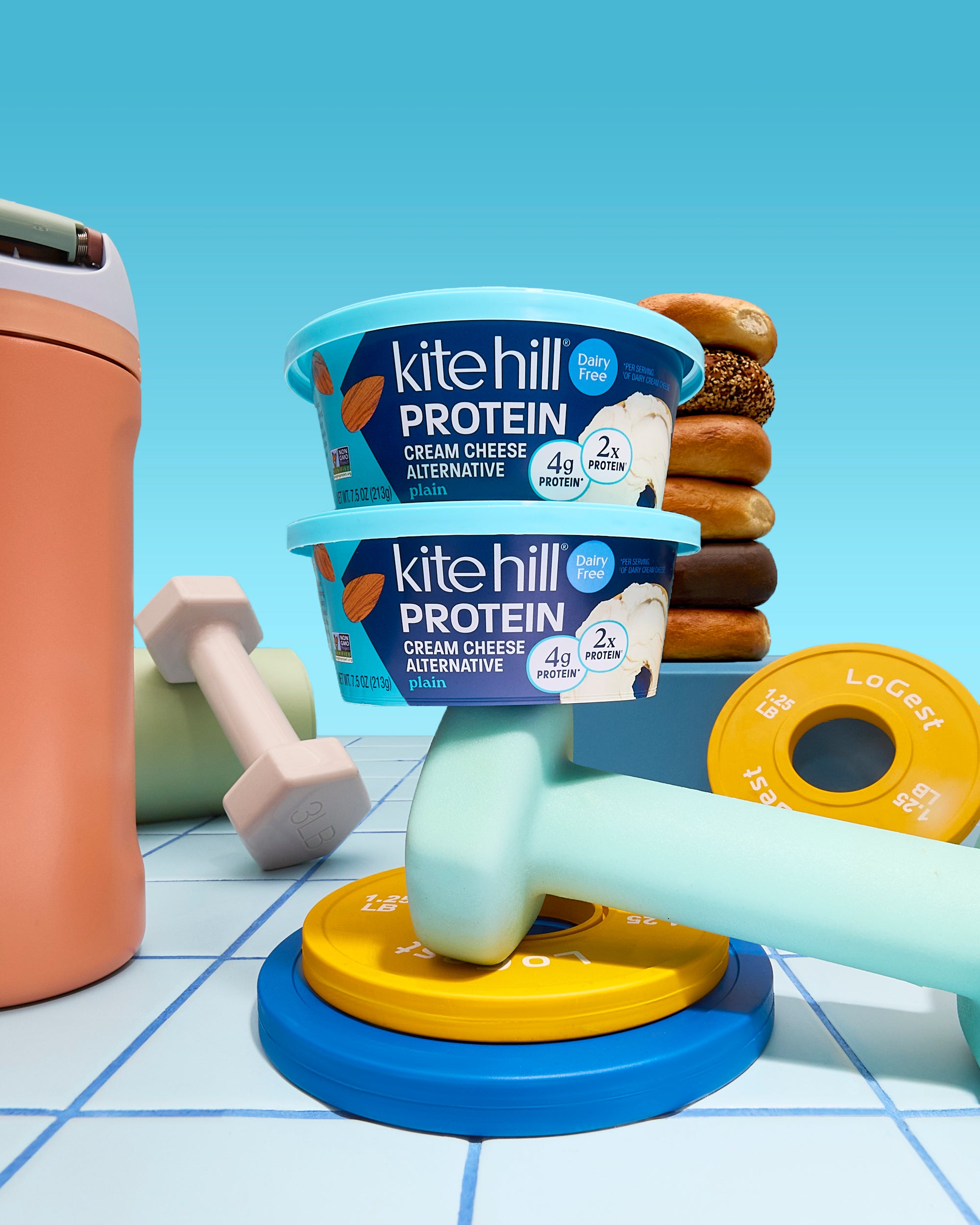
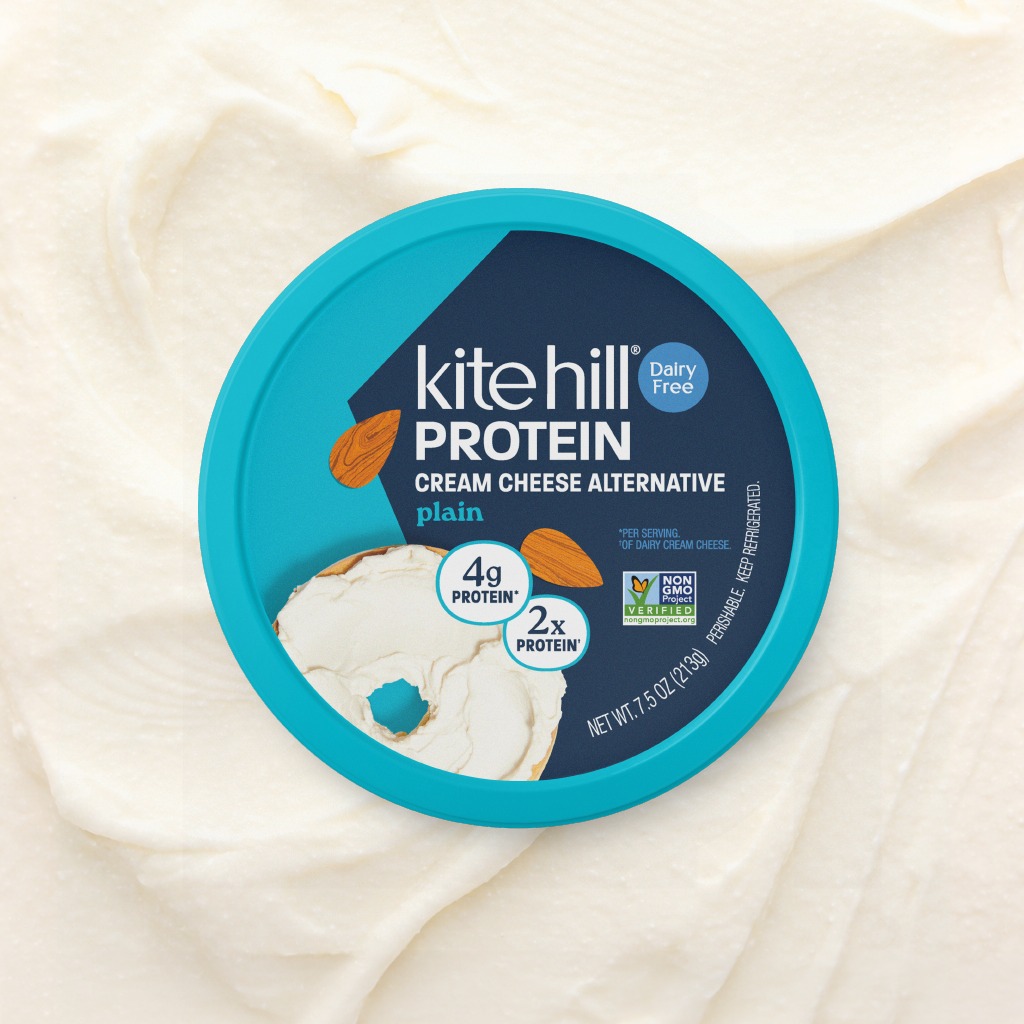
As is the case with dairy, Kite Hill’s protein cream cheese is fermented and cultured to deliver a smooth, spreadable texture and a familar tangy flavour. In addition to the protein benefits, Kite Hill’s vegan cream cheese no sugar, saturated fat, or cholesterol.
The product is made from an almond milk base and fortified with soy protein. It also contains xanthan and guar gums, rowanberry extract, natural flavours, lactic acid, and salt, alongside enzymes and cultures from the fermentation process.
It’s an extension of Kite Hill’s protein portfolio, which includes a Greek yoghurt range that offers 11-17g of protein per 150g pot. The company’s vegan ricotta, meanwhile, contains 5g of protein for each quarter-cup serving.
These products are targeted at the ongoing protein boom in the US: nearly three in five (57%) Americans plan to prioritise protein this year to increase energy (52%), build strength (51%), and manage weight (48%). This ‘proteinmaxxing’ wave has been fuelled by a range of factors, including the new national dietary guidelines and the rise in GLP-1 use.
According to Innova Market Insights, the share of Americans using taking Ozempic, Moujaro and other weight-loss drugs increased from 10% in 2024 to 18% in 2025. In fact, over a third (34%) are now planning to adopt these medications, proof that they’re no longer a niche category.
That has pushed food companies to tweak their offerings to provide more protein, since GLP-1 users experience a 25-40% decrease in muscle mass over 8-16 months (much more than with non-medicated weight-loss approaches and age-related muscle loss). Innova’s research shows that 40% of these consumers are eating more protein.
Adding protein to cream cheese could boost sales, but hinder taste
Meanwhile, plant-based dairy has struggled to maintain momentum in the US – and last year, the cheese, sour cream and dips segment was the worst-perfoming category here, with sales down by 15% to reach just $113M.
This was evident in a series of extensive taste tests conducted by Food System Innovations’s sensory insights initiative, Nectar, which found that cream cheese was among the plant-based dairy categories with the largest sensory gap with dairy. Only 33% of people liked the taste of the average vegan cream cheese, compared to 74% who enjoyed the dairy benchmark.
Adding protein, as Kite Hill has done, presents a dichotomy. On the one hand, it is the only macronutrient that showed a significant correlation with purchase intent and liking in Nectar’s survey, thereby increasing participants’ likelihood of buying vegan cream cheese. On the other, higher protein content can worsen taste credentials and overall likeability, so brands need a balancing act.
Targeted marketing of the protein levels could boost uptake. “Our data suggests clean labels highlighting protein matters more than ‘free from’ messaging, though this is an area we’re continuing to research,” Nectar director Caroline Cotto told Green Queen in March.
“Consumers have always turned to dairy for protein, but that benefit has been missing from dairy-free options, especially in cream cheese,” said Connie Sintuvat, VP of marketing at Kite Hill. “We saw an opportunity to bring protein into a format people already love, without sacrificing taste or texture.”