

True Cost of Meat: Factory Farming Cuts Nearly Two Years of Life

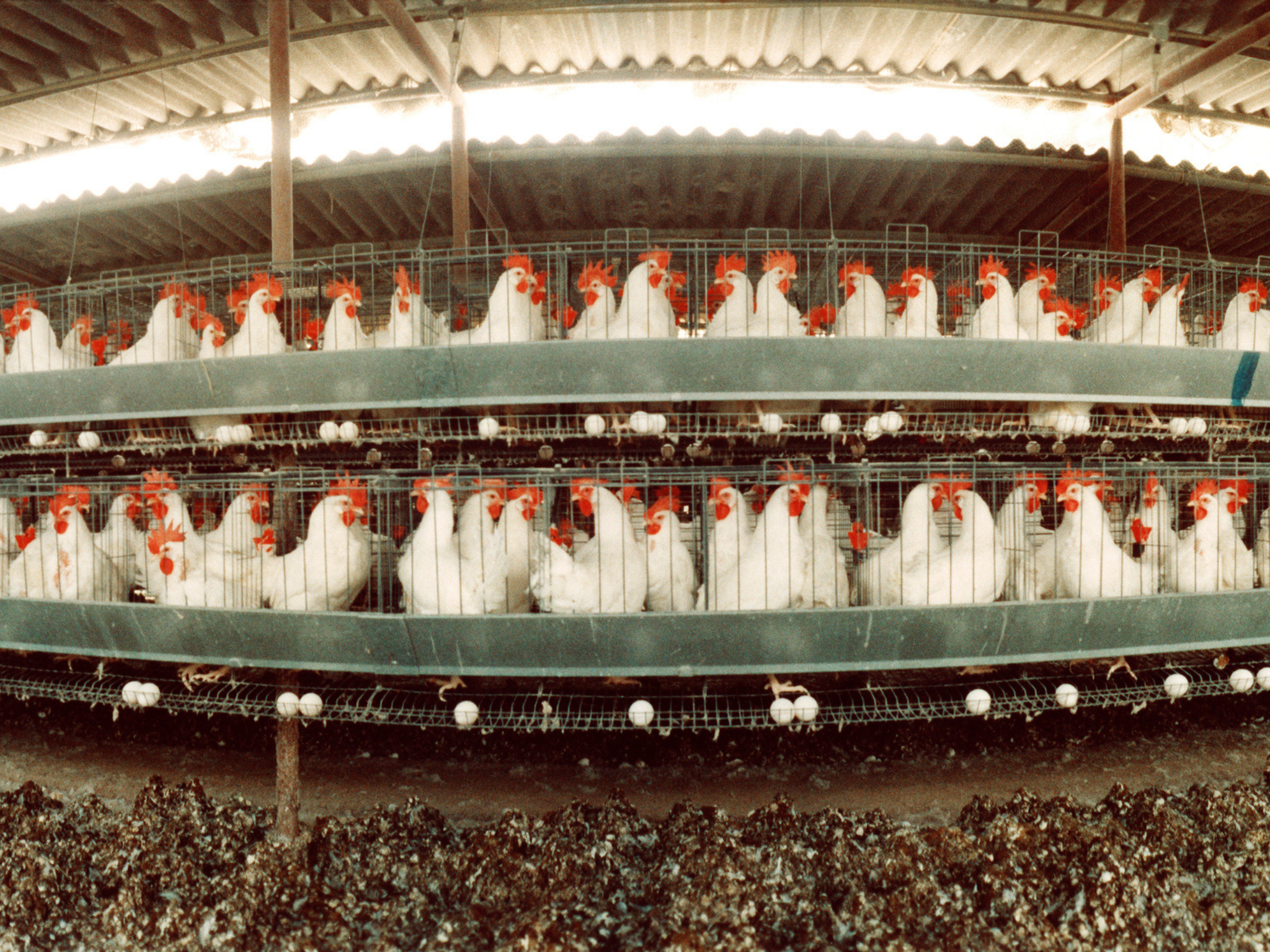
A new Factory Farming Index suggests that industrial animal agriculture leads to a loss of 1.8 years of healthy life per person, thanks to antibiotic resistance and excessive meat consumption.
Factory-farmed meat is threatening human and planetary health with its high share of antimicrobial use and greenhouse gas emissions, leading to calls for a shift towards plant-based diets.
Research by World Animal Protection shows that intensive animal agriculture is shortening people’s lifespans by 1.8 years. This is based on the concept of healthy life years lost, which denotes every year that humans don’t live in good physical and mental shape.
The figure is based on the World Health Organization’s 2020 lifespan figure of 86 and the estimated 2.1% loss of healthy human life caused by factory farming.
There are several factors driving this loss of healthy life, including high amounts of meat consumption and antibiotic resistance, according to World Animal Protection’s Factory Farming Index, which calculated the harm caused by the industrial livestock system across 151 countries.
“The Factory Farming Index is an urgent and clear warning to our world. It gives a detailed and global picture of the scale and nature of the factory farming system, clearly documenting the devastating cost to animal and human lives and our environment,” the report states.
“A whole package of measures would be necessary to tangibly improve the lives of factory-farmed animals, including improving welfare standards and animal life spans.”
Which countries top the factory farming charts?
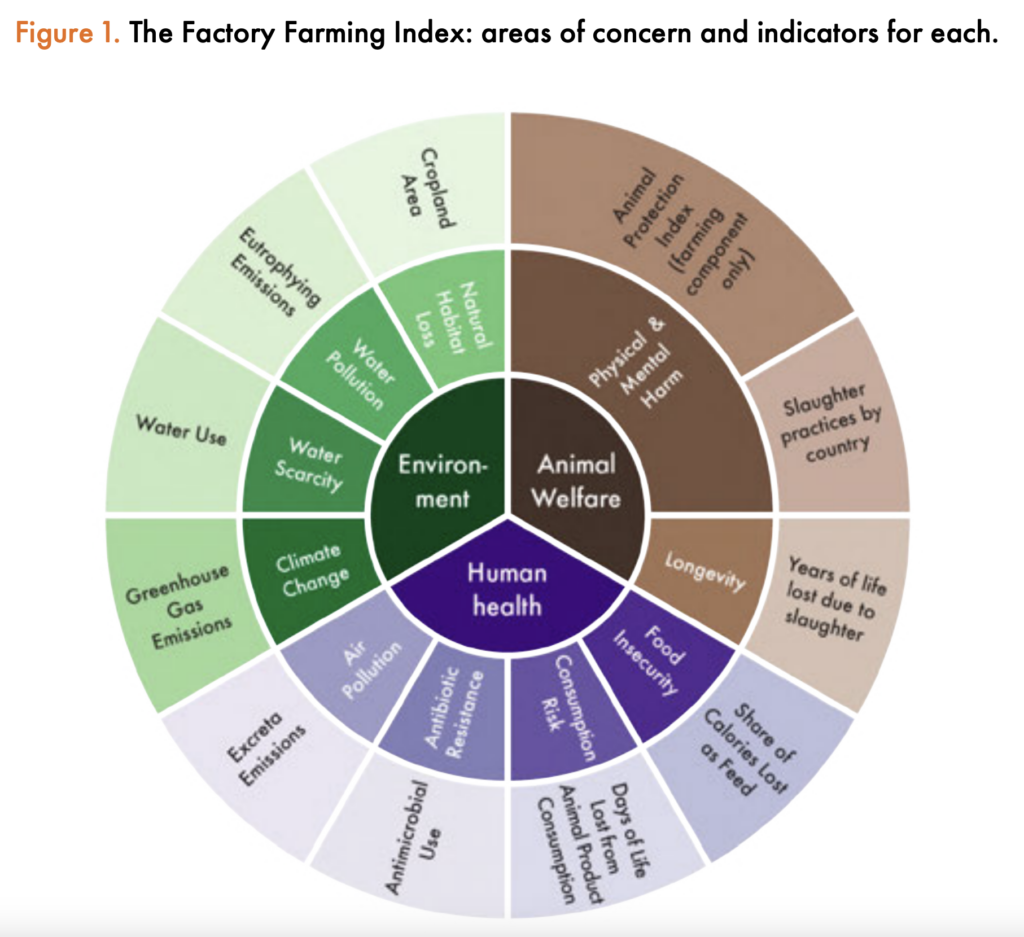
The Factory Farming Index focused on three areas of concern: animal welfare, human health and the environment. It identified sub-issues within these topics and built a measurable indicator for each. These indicators were expressed in two ways: total national production and national consumption per person.
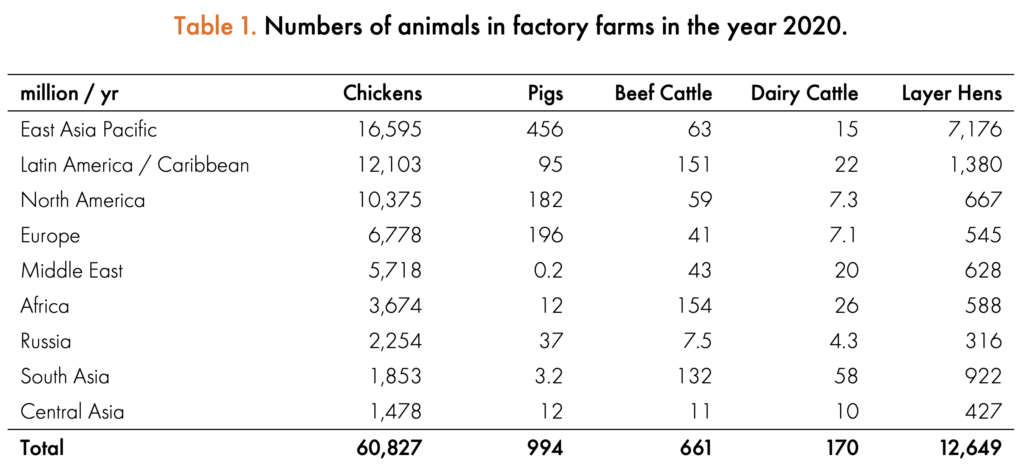
According to the research, the number of factory-farmed chickens, pigs and cattle crossed 76 billion globally in 2020, with 46% of this concentrated in the top four countries of China, Brazil, the US, and Indonesia.
They are joined by India, Russia, Mexico, Iran, Turkey and Thailand in the top 10. East Asia and the Pacific are home to the highest number of factory-farmed chickens, layer hens, and pigs. When it comes to cows, though, Africa is home to the biggest share of intensively farmed beef cattle, and South Asia to dairy cattle.
Meanwhile, consumption of factory-farmed animals (including imports) is highest in Israel (39 animals per person annually), Qatar (33), Belarus and Panama (both 32). On the other hand, this intake is lowest in sub-Saharan African countries, where the rate is well below the global average.
How factory farming affects human health
Data from the Institute for Health Metrics and Evaluation estimates that in 2020, 2.8 billion years of healthy human life were lost due to disease and premature death. Factory farming’s impact, however, is 37 times higher, according to this new analysis.
The Factory Farming Index shows that 56% of the threat comes from antibiotic overuse. In 2020, industrially farmed chickens, pigs and cattle were given 66,000 tonnes of antimicrobials, double the amount used by humans. These are used to prevent disease in crowded, unsanitary conditions but overuse can lead to the development of antibiotic-resistant superbugs.
Moreover, animal excreta emit large amounts of ammonia, nitrous oxide and fine particulate matter, which are linked to a range of pulmonary health conditions, particularly for those living or working near factory farms.
Factory farming also drives water scarcity and food insecurity, given the high consumption of freshwater and inefficient conversion of calories. Around a quarter of the world’s calories (enough to feed two billion of us) are fed to animals instead of people, but only 17-30% of them come back to humans, likely driving global caloric deficiencies.
And farming animals in such an intensive manner drives down the price of animal products, leading to a significant increase in meat consumption, which is “more damaging to human health than consuming a plant-based diet”, the report states. Indeed, eating high amounts of processed and red meat has been linked to a host of health conditions, including heart disease, colorectal cancer, and type 2 diabetes.
“While in some countries, the nutritional benefits that animal products provide may outweigh their health costs, at a global level, factory farming is almost certainly inflicting a net negative toll on human health,” the researchers write.
Countries must phase out factory farming in favour of plant-based diets
In addition to human health, factory farming also takes a major toll on the planet. It emits 21 million tonnes of nitrogen and phosphorus into the atmosphere annually. This causes eutrophication of water, which can result in dead zones in rivers and seas. Overall, intensive livestock farming accounts for around 25% of all eutrophication from human activity.
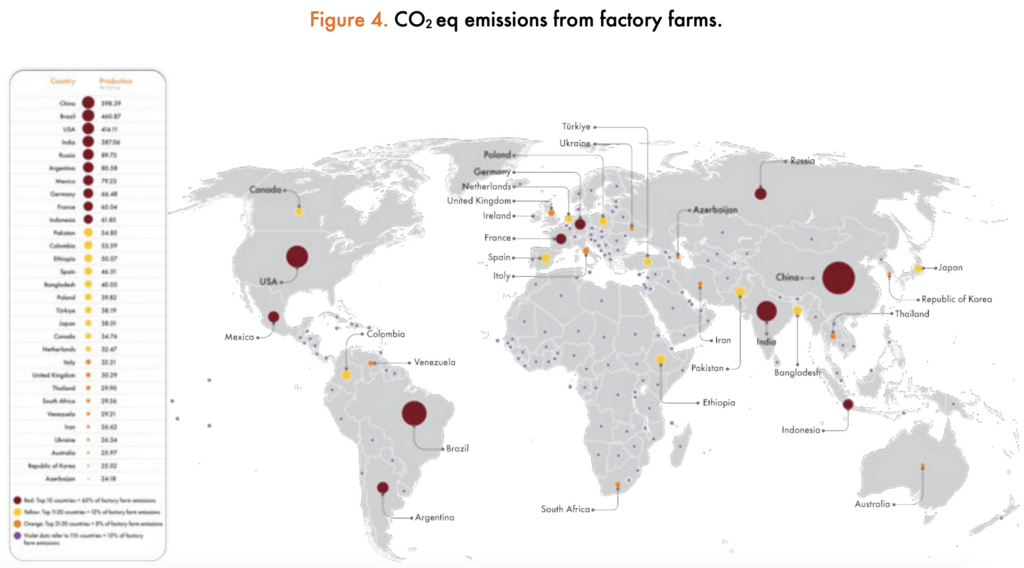
China’s factory farms have the highest greenhouse gas emissions, followed by Brazil, the US, and India. Plus, factory farming makes up 14% of all human freshwater withdrawals, and uses cropland the size of India, mostly to produce crops for animal feed.
World Animal Protection has found that no country grants animals sufficient legal protection, and 44% provide them with either no legal safeguards or very minimal protections.
In fact, 74% of factory-farmed animals are raised in countries where there is no legislation on slaughter or slaughter without stunning is permitted.
“We need to support countries in looking to the future of how they feed their populations without damaging human health, animals, and our planet,” said Tricia Croasdell, CEO of World Animal Protection
“This research is clear: in order to achieve a better quality of life for people, we need a better quality of life for animals. This ultimately means prioritising plant-based diets, ending factory farming, and reducing the environmental impact that we are all facing if we don’t act.”