

Exclusive: Upcycled Plant Power Rolls Out Broccoli-Waste Fibre Ingredient Ahead of £5M Raise

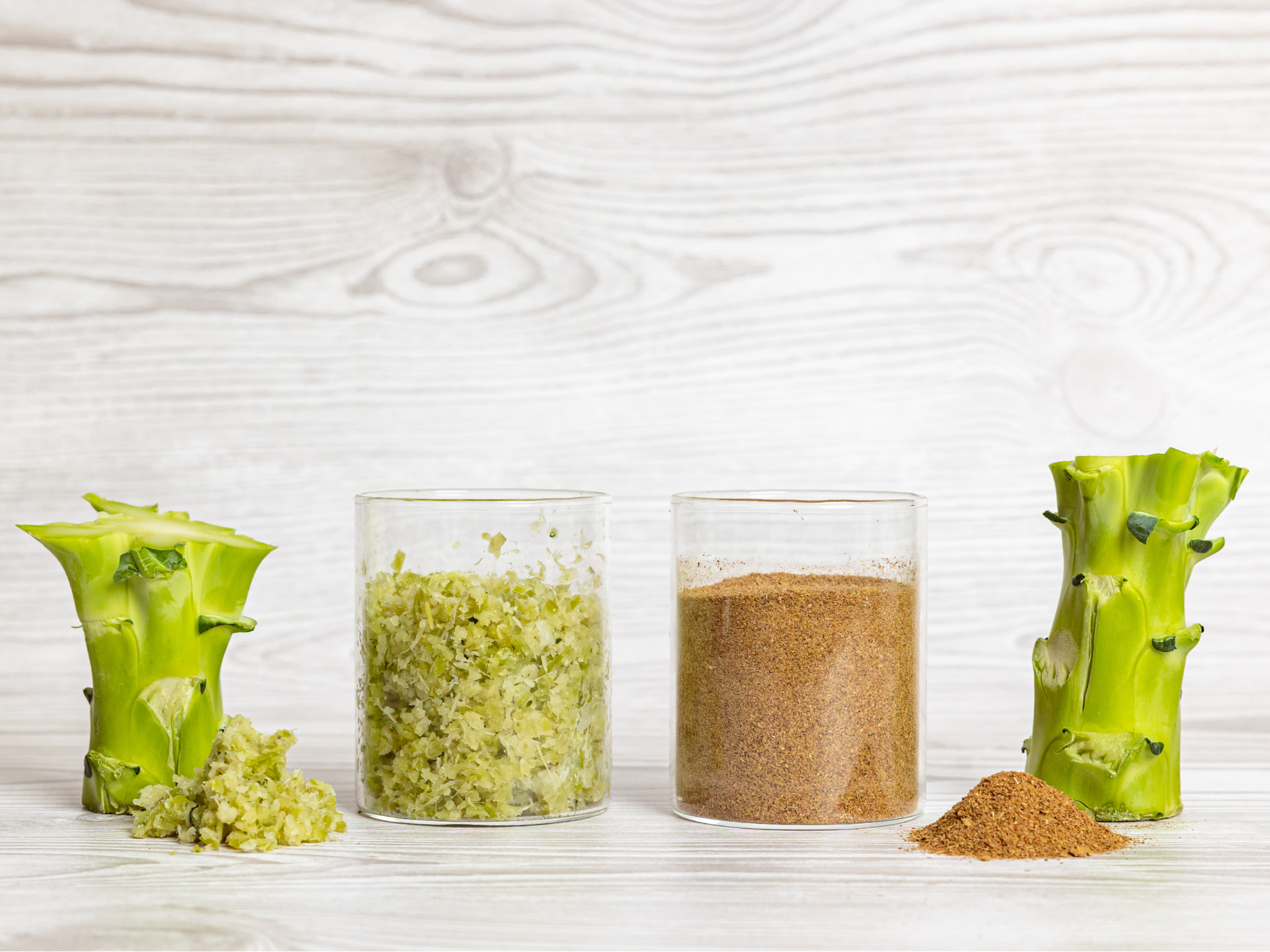
As it gears up for a £5M funding round, Upcycled Plant Power, a startup turning waste broccoli stems into high-value ingredients, has introduced its fibre product, Fiba, to the UK foodservice sector.
To meet the UK’s protein and fibre demands while sidestepping the regulatory complexities of novel foods and valorising agricultural waste, Upcycled Plant Power (UPP) is turning to broccoli.
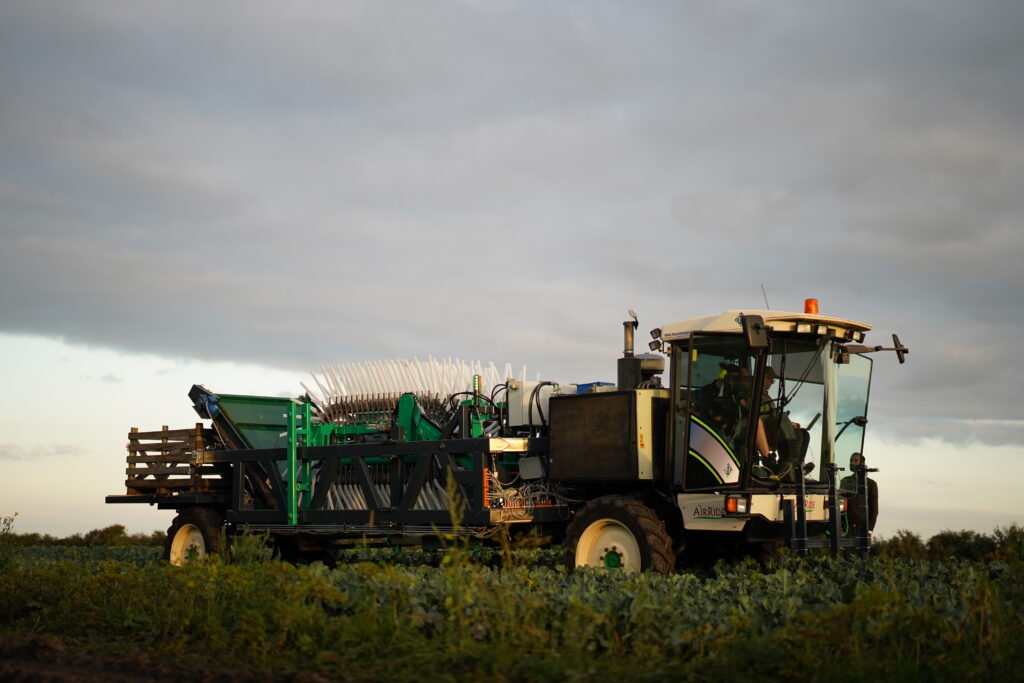
More than 350,000 tonnes of broccoli biomass is discarded or left unused annually in the country, accounting for about 70-80% of the plant. UPP deploys harvesting machines (called Harvesta) to farms and uses artificial intelligence (AI) to automate the harvest process of broccoli stems and stalks, and turns it into protein, fibre and other high-value ingredients.
“We supply food producers with ‘clean’, allergen-free, nutritionally dense, vegan food ingredients with low CO2 and low food-miles at multi-tonne daily capacity,” CEO Mark Evans tells Green Queen.
The company, which has so far raised £3.6M, has already launched its first product, Fiba. The fibre ingredient is derived from broccoli sidestreams and is being used by foodservice operators in the UK.
UPP plans to roll out its protein ingredient, Prota, in the second half of the year, and is preparing for a further £5M Series A financing round, which it expects to close in September.
It will use the funds for the expansion of its modular processing architecture, the “deployment of Harvestas on farms” and the commissioning of “a 10,000 tonne/annum output facility in Scotland”.
How Harvesta enables Upcycled Plant Power to automate broccoli harvests
Founded in 2021 as a spinout of agtech firm Earth Rover, UPP converts underutilised brassica stems to create hypoallergenic, clean-label, planet-friendly, and nutritionally dense ingredients at scale.
These can be incorporated seamlessly into existing production systems, promoting low-risk, low-friction reformulation and a new revenue stream for farmers. They also improve the taste and texture of a range of products, including plant-based meat, baked goods and pasta, all while mitigating food waste.
UPP estimates that there is up to five times more broccoli biomass available than currently makes it on supermarket shelves, owing to the fact that more than 75% of the above-ground parts of the plant are left (most of which is edible) in the field. In fact, farmers may cultivate 17 plants for every 10 that are actually harvested.
This is where Harvesta, the startup’s automated selective harvester, comes into play. The machinery allows UPP to economically access the majority of the stalk, which otherwise would be left untouched due to a lack of casual labour on farms.
Additionally, yield rates from manual harvest are not always within the target size range, and there’s room to improve to a level that could impact crop profitability. Harvesta can be operated in the dark, so the crop can be harvested at night or early morning, when it’s less metabolically active.
UPP’s commercial model for this tech is called Harvesta-as-a-Service (or HaaS), which requires farmers to grant it exclusive rights to the sidestream. The farmers will crew the Harvesta, and the pricing is set to share the economic benefit of the harvest automation between the two.
Following farm trials in the UK, the firm expects to commercially deploy Harvesta in the country this year and internationally in 2027, which would allow year-round access to feedstock at scale.
“Currently, we ship to Newport, Shropshire, but we intend to build a second plant in Fife, Scotland to further reduce food miles as this is where a large percentage of UK broccoli is grown,” says Evans.
Fibre ingredient already in use, and protein outshines others on sustainability
As part of its upcycling process, UPP squashes the broccoli sidestreams into protein, fibre and sugar fractions, which are fermented for preservation or clarified for further use.
Its first product, Fiba, is sold in both dry and wet formats. The former contains up to 55% fibre and 10-15% protein by weight, while tha latter produces lower levels due to the moisture content. Both versions can be incorporated into applications like sausages, burgers, cakes, pet food and more.
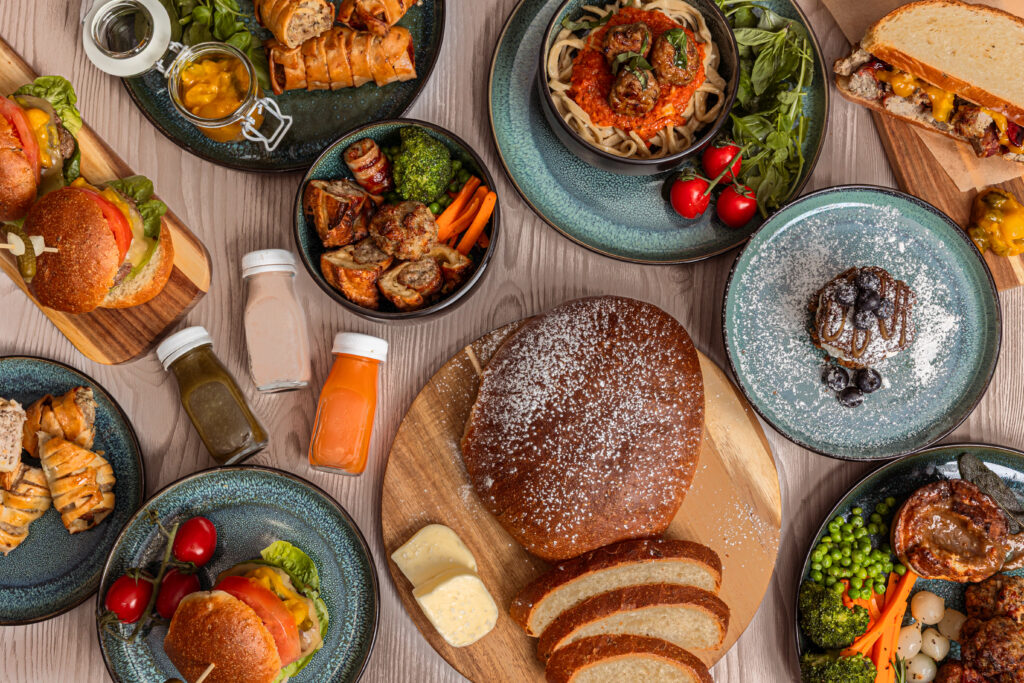
“The ‘wet’ form is [being] used in foodservice in sausages, curry, and shepherd’s pie,” says Evans. “Wet and dry forms are being trialled by potential customers in sauces, sausage rolls, soups, smoothies, chillis, and breads… [and] have been successfully demonstrated in pasta, lasagna, pet treats, and burgers.”
Prota, while still in the R&D phase, contains 30% protein, fibre and natural sugars each, and can be used to formulate burgers, smoothies, soups and sauces. It’s awaiting non-novel food status, and a higher-protein variant, Prota+, is in development.
This ingredient has a complete amino acid profile, similar to soy and pea protein. “The protein is naturally occurring in the stem, and offers better climate benefits than other proteins,” suggests Evans.
It offers better climate benefits than other proteins. An independent life-cycle assessment (LCA) of Prota’s wet form has shown that its carbon footprint, at under 0.25kg of CO2e per kg, is less than 1% than that of an equivalent amount of beef, and up to 10% of chicken.
The ingredient also outperforms plant proteins like soy and pea, mycoprotein products like Quorn’s, as well as cultivated meat, based on published LCAs and scenarios.
Some of the products being developed by UPP include Necta (for fermentation feedstock use), Nutra (sulforaphane and polyphenols for supplements), Ola (a natural protein for colour applications), and Ova (an egg substitute for baked goods and mayonnaise).
Asked how much food waste its process avoids, Evans says: “We displace kg for kg, and existing partners can supply sufficient sidestream for 40,000 tonnes of production. The UK has 350,000 tonnes of usable biomass from broccoli alone, which would equate to [around] 140,000 tonnes of product.”
UPP working with several food companies
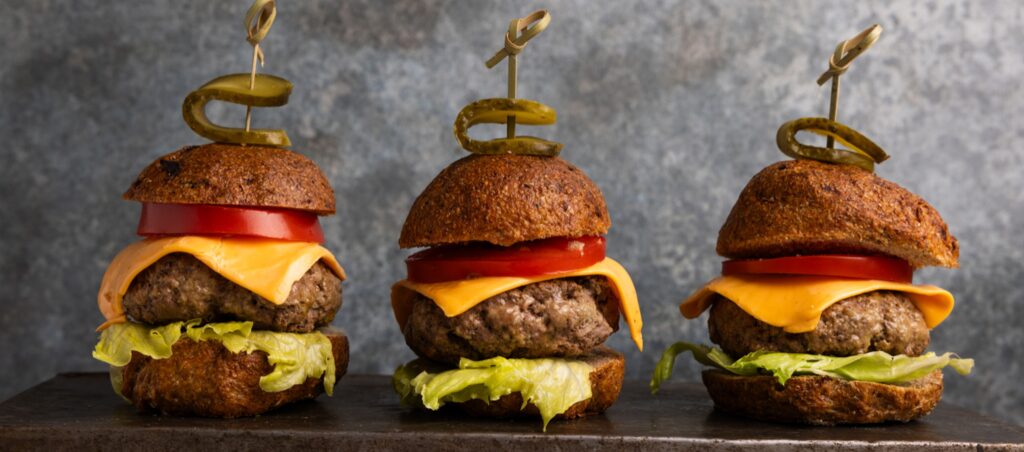
UPP’s broccoli waste ingredients offer more than just climate and waste mitigation benefits. For instance, it can help manufacturers lower the cost of their products without affecting flavour, whether it’s a plant-based burger or a tomato sauce.
“A veggie burger manufacturer worked with us to achieve a 10% reduction in total ingredient cost,” notes Evans. “We do not control how much is passed to the consumer. Inclusion rates can range from 4-20%, so the recipe reformulation dictates the cost improvement.”
Another advantage of these upcycled products is that food producers don’t need to wait years to integrate them into their offerings, unlike precision-fermented or cell-cultured ingredients, which face strict and lengthy regulatory processes before being allowed to enter the market.
Plus, by doing away with the need for emulsifiers and other additives, products can lay a claim to be non-ultra-processed, which would carry appeal in a country where roughly 40% of consumers have abandoned UPFs or are looking to do so.
UPP is already working with 25 food producers, and has secured a feedstock contract that will enable industrial-scale production.
The firm has delved into “ingredient-stacking” blended meat applications, combining The Bold Bean Co’s butter beans with Fiba and beef to make additive-free, fibre-rich burgers in a trial. Likewise, it is partnering with a mycelium producer to make a hybrid mycelium-broccoli burger with better mouthfeel and a lower price.
“Food producers can use our ingredients to deliver products with the taste and mouthfeel that consumers love, but with reduced Scope 3 CO2,” says Evans.
“By working with us, producers avoid the regulatory and consumer uncertainty associated with novel food technologies. And as an ‘invisible ingredient’ – but one that is familiar to consumers – our products have minimal consumer perception barriers.”