

Australian State Pours $8M Into Next-Gen, Sustainable Plant Proteins


In Australia, the state of Victoria has invested A$12M ($8M) to set up a new research hub and glasshouse to develop climate-resilient crops to meet the global demand for plant-based proteins.
Australia’s politicians are embracing the future of food with the opening of a multimillion-dollar hub to innovate with sustainable high-protein crops.
The SmartFarm in Horsham, Victoria, is backed by an A$12M ($8M) investment by the state government, which was first announced in its 2022-23 budget. Most of the funds ($9M) have gone into a Plant Protein Hub, and the rest has been used to build a glasshouse.
The project will fuel collaborations between farmers, researchers and businesses to develop climate-resilient, protein-rich crops to meet the growing global demand for plant-based food.
“Having fit-for-purpose facilities like the Plant Protein Hub at Horsham SmartFarm strengthens our research capabilities and opens the door to new opportunities across agriculture and food innovation,” said Jacinta Ermacora, a member of the Victorian Legislative Council.
How the Horsham SmartFarm will advance plant proteins

The Plant Protein Hub will provide collaborative spaces for growers, scientists and startups, alongside a fully equipped test kitchen, advanced analytical equipment and facilities to explore new plant-based products.
The facilities will help researchers and industry stakeholders discover and develop crop varieties with high protein content, such as lentils, chickpeas, and field peas.
According to the state government, this hub is already a leading centre for innovation, with PhD students working alongside researchers and industry. It has a capacity for up to 10 PhD students and three startups, and Victoria’s agriculture department has teamed up with the plant-based sector to shape future research opportunities.
Meanwhile, the glasshouse is designed to accelerate crop research, enhance pest and disease management, and boost climate resilience, helping farmers adapt to changing conditions and maintain productivity.
The construction of the Plant Protein Hub has helped create dozens of jobs across trades, suppliers, and professional and technical services. It will now keep generating opportunities for research, education and industry collaboration.
Moreover, students from primary school all the way through to post-graduate level will benefit from hands-on learning in a dedicated education space at the site, creating pathways for future careers in agriculture.
“This investment will help our communities reach new markets, drive local jobs, champion sustainable practices, and ensure a strong and resilient future for regional Victoria,” said Michaela Settle, parliamentary secretary for regional Victoria.
Government support crucial to meet Australia’s future food potential
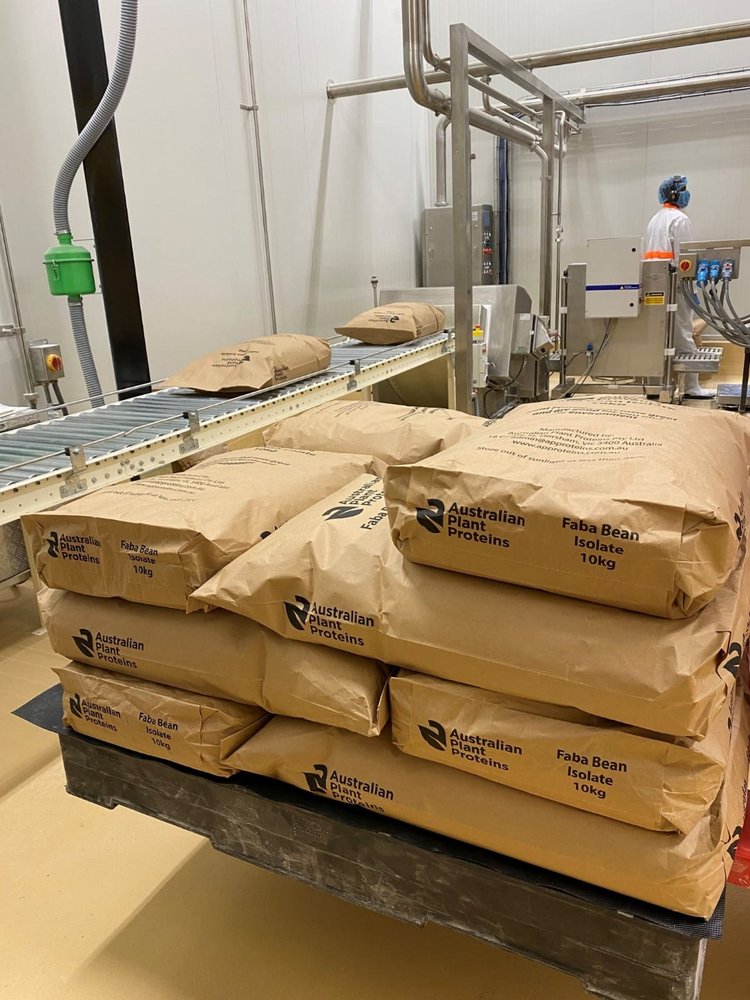
Victoria has emerged as a leading player in growing crops for plant-based protein products in Australia, with its pulse industry generating $638M in export income last year. “Victoria is leading the way in plant-based protein research, building world-class facilities and fostering collaboration that will transform agriculture and strengthen regional economies,” said Ros Spence, the state’s agriculture minister.
In fact, Australia produces around 59 million tonnes of protein-rich cereals, pulses and oilseeds every year, including a vast majority of the crops used for plant proteins. It’s the global leader in lupin production, and is a major producer of wheat, barley and canola.
Yet, it exports roughly 65% of its grain into global commodity markets. In 2023, Australia shipped out 41 million tonnes of protein-rich source crops, but imported 118,000 tonnes of plant protein ingredients.
That puts the country at risk of conceding its future market share in plant protein manufacturing to countries with better policies and an established national plan, according to Melbourne-based think tank Food Frontier, which recently published a report calling for a federal strategy to boost high-value manufacturing of protein-rich crops.
Uptake of plant proteins is hindered by limited awareness or understanding among food manufacturers and a lack of technical support, challenges compounded by high costs and supply chain gaps. Infrastructure and R&D are costly, and companies are financially constrained. However, financing is a challenge, as investors are cautious without catalytic public co-funding.
Among Food Frontier’s recommendations for the government were to build the workforce and regional supply chains, and scale up manufacturing by strategically investing in regional hubs, shared infrastructure and capital co-investment frameworks.
The Horsham SmartFarm is an example of such an effort. And to their credit, Australia’s politicians haven’t shied away from supporting future-friendly foods. For instance, Queensland is providing financial aid to help Cauldron Ferm build an industrial-scale hyper-fermentation facility, and New South Wales has unveiled a prospectus to attract plant protein manufacturers to the state. Likewise, the federal government granted A$100,000 ($62,800) to cultivated meat startup Magic Valley.
And Australia’s national research agency, CSIRO, works with a number of food tech startups, including Cauldron Ferm and precision fermentation player All G, as well as incubating firms like Eclipse Ingredients, which makes recombinant breast milk proteins.