

One of India’s Largest Ready-to-Eat Brands Just Gave Its Breakfast Range A Plant Protein Boost

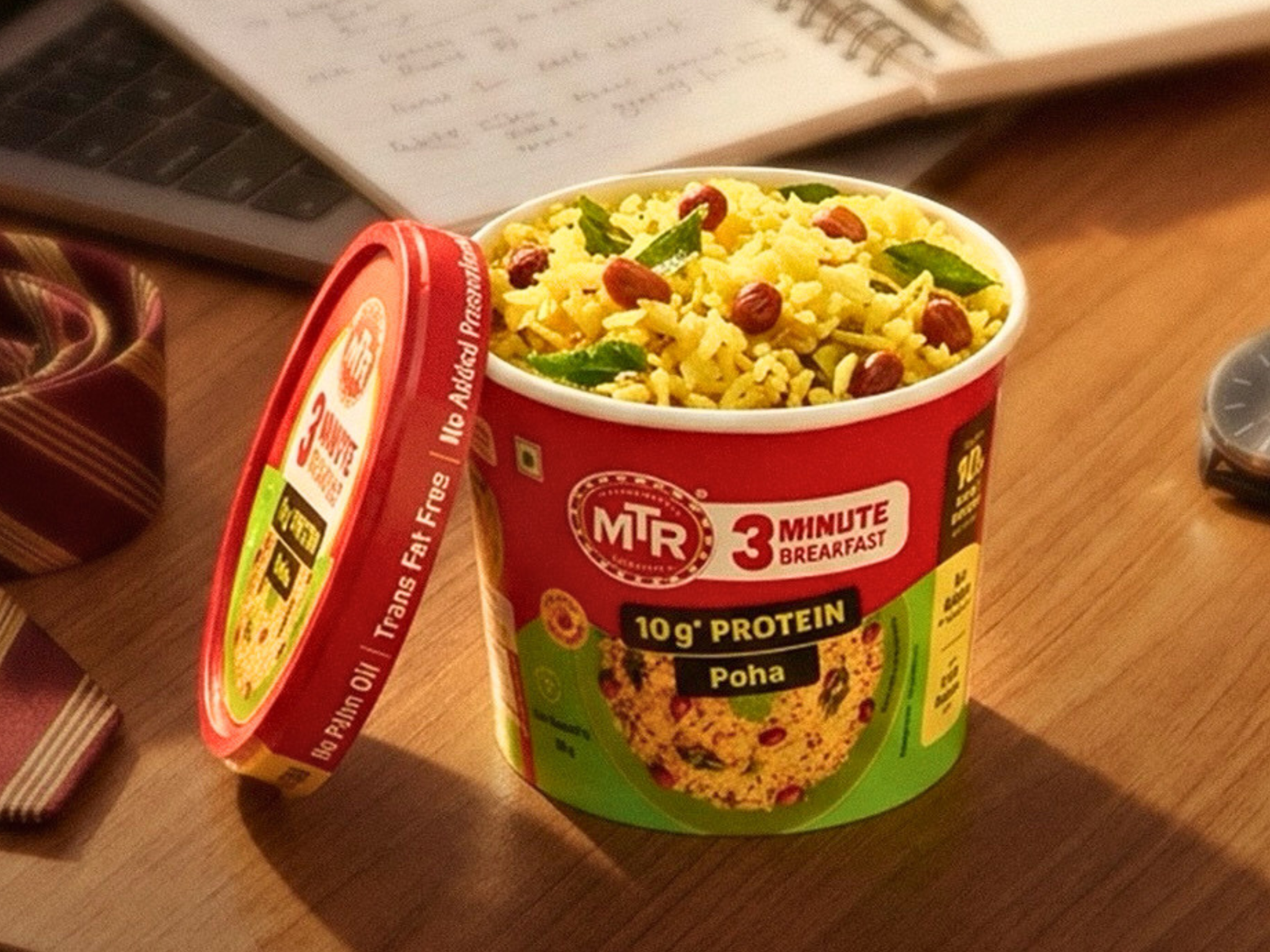
Orkla has given a facelift to six popular breakfast products under its MTR Foods brand in India, which now feature 10g of plant-based protein to align with consumer health trends.
Among the best ways to help people eat more protein is to incorporate it into dishes they’re already familiar with. That means pairing nutrition with convenience, and it’s just what food conglomerate Orkla is aiming to do in India.
The company has launched a Protein Breakfast range under its MTR Foods brand of powder mixes and ready-to-heat meals. The most notable aspect is that Orkla has chosen soy protein isolate as a source instead of whey, a reflection of both the strained dairy protein supply chain and evolving consumer preferences.
The new lineup includes staple breakfast foods like dosas, idlis, and poha, each boasting 10g of plant-based protein per serving. The products are initially available in four major metropolitan cities across India, with plans to expand to 28 of the country’s largest metros in phases.
“Consumers today are more informed than ever about the role of protein in supporting energy, wellness and balanced nutrition. As awareness grows, so does the demand for convenient, everyday foods that make protein intake easier, without sacrificing the flavours people know and love,” Orkla India said in a LinkedIn post.
Indian consumers ‘expect more from the foods they love’
MTR Foods is one of India’s best-known convenience food brands, and was born out of famed South Indian restaurant chain Mavalli Tiffin Rooms. In 2008, the latter sold the CPG business to Orkla India in a deal worth $80M. Today, convenience foods make up 35% of the company’s revenue, totalling ₹876 crore ($91.1M) in the 2026 financial year (an 11% year-on-year hike).
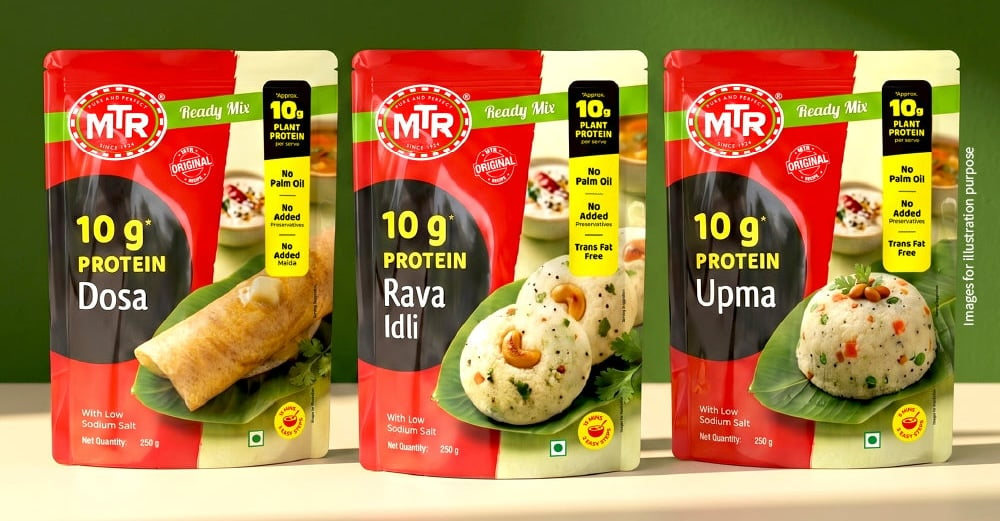
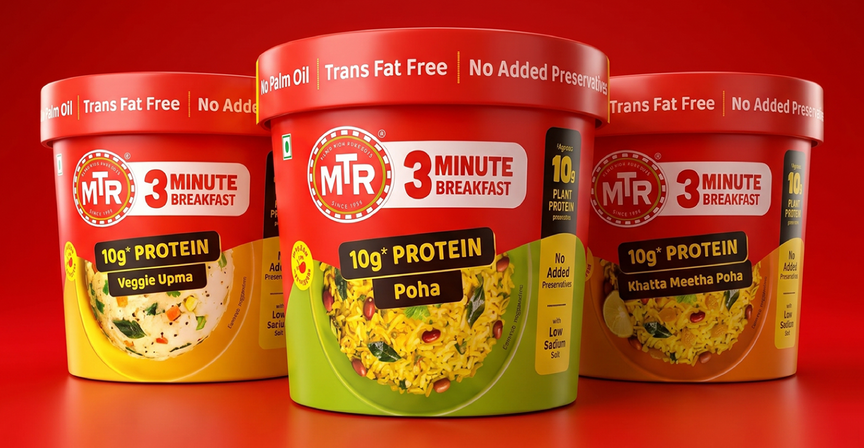
The six-strong Protein Breakfast lineup includes powdered dosa, rava idli and upma mixes, as well as ready-to-heat poha (in standard and sweet-and-sour flavours) and upma.
They were developed at Orkla India’s Cuisine Centre of Excellence in Bengaluru, and are positioned around convenience, familiarity, and growing interest in protein-rich foods in the world’s most populous nation.
To further boost the range’s health credentials, the company said the products contain no added preservatives, maida (a local refined flour) or palm oil (a big sticking point for Indian consumers), and use low-sodium salt.
“At MTR, innovation is not just about launching new products; it has always been about understanding changing consumer needs and translating them into relevant food solutions,” MTR Foods CEO Sunay Bhasin said, noting that its product development has been driven by how Indians choose to eat.
“Today, consumers are becoming more conscious about their food choices, with a growing emphasis on transparency and permissibility, while continuing to seek the comfort and authenticity of traditional Indian foods,” he explained.
“We believe consumers are not moving away from the foods they love, they are simply expecting more from them. Therefore, we are evolving the category once again in response to this shift, as we continue to stay true to our consumers and uphold the trust and authenticity that define MTR.”
However, closing the price gap will be critical for widespread adoption of these new products. While research shows that close to a third of Indians (32%) are willing to pay a premium on protein-boosted foods, a 2026 Ipsos poll found that when it comes to plant proteins, high prices are a barrier for 28% of Gen Z consumers.
MTR Foods’s protein range is costlier than its conventional breakfast lineup. For instance, the retail price for a 500g standard dosa mix is ₹138 ($1.43), but a 250g pack of the protein dosa mix costs ₹175 ($1.82) – that’s a 154% price premium. This shrinks to 21% for the ready-to-heat protein poha and upma cups, but they’re still considerably more expensive.
Plant-based foods drive India’s protein obsession
MTR Foods’s foray into the protein world comes at a time when Indians are consuming more protein than ever before. There are a number of reasons for this, chiefly the awareness that a majority of them are deficient in this key macronutrient. Research suggests that nearly 60% of the urban population doesn’t consume enough protein, although some argue there’s more than meets the eye.
This market is poised for explosive growth over the next decade, with plant-based foods set to be a major driver. Polling shows that 37% of Indians want to add more plant proteins to their diet, and a larger share of consumers want to increase their intake of protein from plant-based sources than from animals.
It’s a shift being led by Gen Z, which accounts for 27% of the population and controls 35% of consumption spending. In the Ipsos survey, 82% of this cohort said it’s important to consume protein, and 91% are open to adopting plant-based foods. The main driver for interest in the latter is to boost protein intake (cited by 40%).
The protein mania is also a response to the burgeoning GLP-1 market in India, which has already skyrocketed from $16M in 2021 to nearly $100M today. Weight-loss drugs are entering India at much lower prices than in the West, and analysts expect more than 50 branded semaglutide medications to enter the country this year.
Users of drugs like Ozempic and Mounjaro experience a 25-40% decrease in muscle mass over 8-16 months (several times greater than non-medicated weight-loss approaches and age-related muscle loss), making protein an important dietary tool.
Wellness, fitness, deficiency concerns, GLP-1 use, and an emphasis on nutrition have all led to a boom in alternative protein in India. Bollywood star Ranveer Singh’s SuperYou brand found instant success with its yeast protein powder, which can now be found in every Starbucks India store.
Cosmix Wellness agreed to sell a 60% stake to CPG giant Marico in a deal worth $25M, and fellow Shark Tank alum Earthful raised $2.9M to support the expansion of its women’s health products (which include plant protein powders). Meanwhile, supplements brand Immunosciences launched what it claims is India’s “lightest” plant-based protein powder, thanks to a digestibility-boosting enzyme.