

62% of Americans Willing to Reduce Meat Consumption, With Beans Emerging as Popular Replacement


Around three in five consumers in the US are open to the idea of eating less meat and replacing it with beans, citing concerns about inflation and personal health.
A similar number of Americans consume both meat and beans, but a large share are willing to replace the former with the latter, according to a new survey.
Humane World for Animals commissioned The Harris Poll to ask over 2,000 US respondents about their dietary habits and openness to reducing meat intake and swapping it with beans.
The results were encouraging for advocates of plant-rich diets: 62% of consumers say they’re willing to eat less meat, and 57% would be open to replacing animal protein with beans at least once a week.
People aged 18-34 represent the highest share of meat-eaters, but are also more likely to say making food choices kinder to animals would drive them to swap out meat with beans (27%) than those aged 55 and above (19%).
“What stands out in these findings is that consumers are taking a broader view when making decisions about what they eat. They understand the impact of meat consumption almost equally on their budgets, their health and animals,” said Karla Dumas, VP of farm animal protection at Humane World for Animals.
Financial and health impacts drive concerns around meat-eating
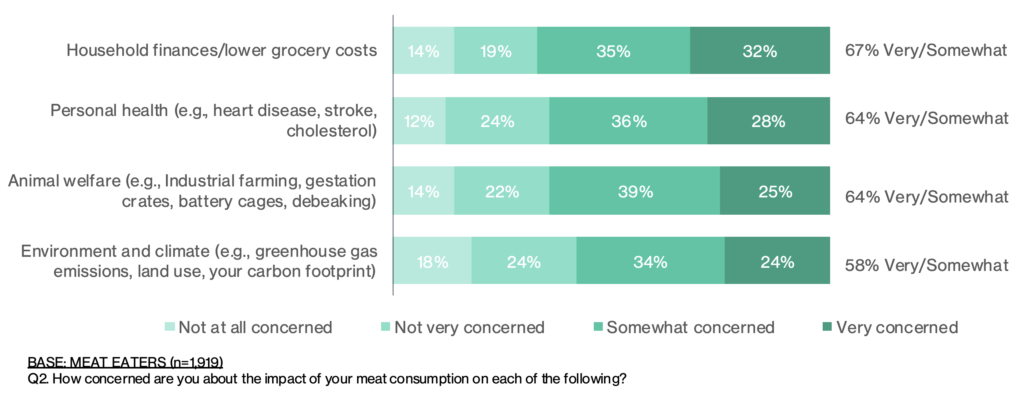
The poll found that 96% of Americans eat meats like beef, chicken and pork (consistent with previous research). More than half (55%) do so daily or nearly every day, while 31% consume it several times a week.
Despite the high consumption rates, a majority of Americans have reservations about meat-eating. The list of concerns is topped by its impact on household finances and grocery costs, cited by two-thirds (67%) of respondents.
A similar share (64%) are worried about the implications for personal health. Research shows that red and processed meats raise the risk of some of the leading causes of death in the US, such as obesity, type 2 diabetes, cancer, cardiovascular disease – as well as early death. Around a million Americans die every year from diet-related chronic diseases. In fact, poor diets cause more deaths than smoking.
Animal welfare is a concern for 64% of Americans, given that 70% of cows, 98% of pigs, and nearly all chickens in the US are factory-farmed. “It is encouraging that Americans are recognising that animals matter and are willing to make dietary changes that reflect that,” said Dumas.
And despite climate change no longer being a priority for most consumers, it still has a sizeable influence on their eating habits, with 58% of respondents concerned about the effects of meat consumption on the planet. Globally, livestock farming accounts for up to a fifth of all emissions, 70% of freshwater use, and 80% of farmland.
Beans shine on affordability and health metrics
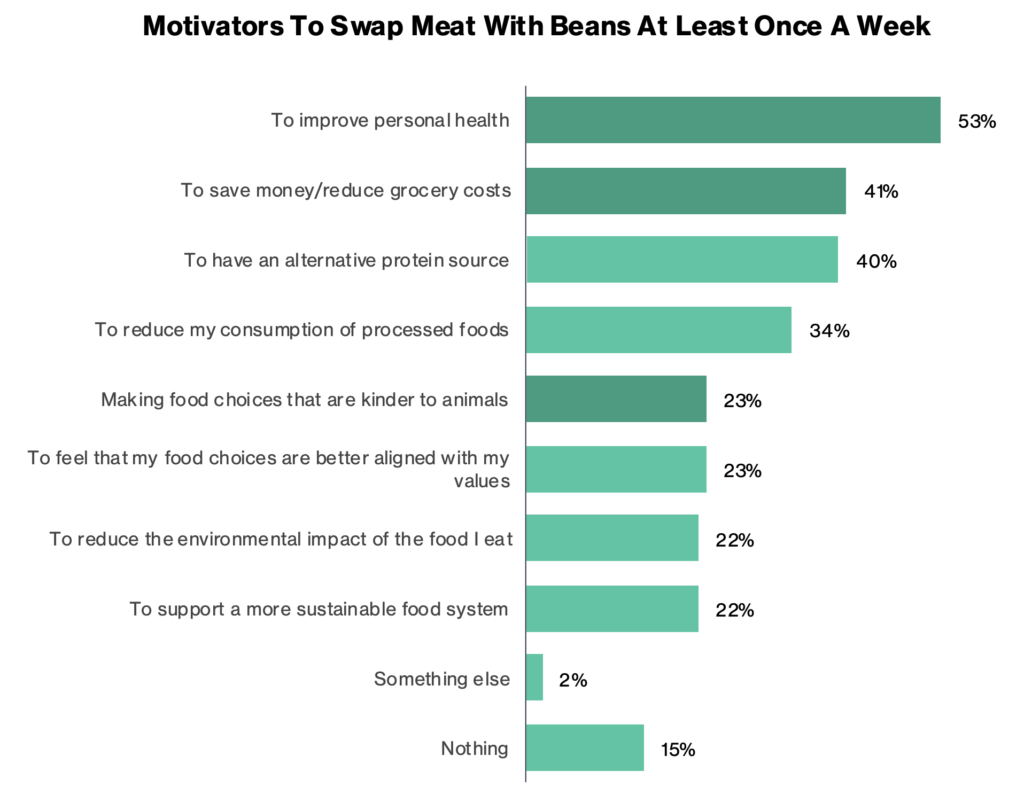
When asked what drives their openness to swapping meat with beans, 53% of Americans point to the latter’s health benefits, and 41% say they can help them save money. A third of respondents, meanwhile, also say they’re motivated to reduce their intake of processed foods.
Beans are high in protein and fibre, the two most popular macronutrients in the US. Nearly three in five (57%) Americans plan to prioritise protein this year. Most of them are fibre-deficient, too, a dietary gap that online trends like fibermaxxing are looking to fill.
The rise of GLP-1 users from 10% in 2024 to 18% in 2025 has contributed to this boom, with 40% of them eating more protein and 30% consuming more fibre. Swapping out meat for plant-based sources like legumes, nuts, and seeds is one of the key recommendations in the American Heart Association’s latest dietary guidelines.
Meanwhile, the government is at war with ultra-processed foods (UPFs), and has been pushing citizens to eat minimally processed proteins (albeit with an inexplicable emphasis on red meat). These foods now top consumers’ list of health concerns – 72% of them are trying to avoid UPFs in their diets, and 79% feel they’re a “significant threat” to public health.
And in terms of the financial impact, meat prices are skyrocketing due to supply shocks driven by the convergence of the climate crisis and geopolitical tensions. This has made legumes a much more affordable and attractive source of protein in many countries. In North America, the compound annual growth rate for beans and lentils is estimated at 1.71% through 2030, versus just 0.36% for meat.
The Humane World for Animals poll found that 95% of Americans already consume beans, with black beans topping the list of favourites. With health and financial concerns driving more of them towards these plant proteins, complementary policy measures can bring added benefits for food sustainability, too.
The Trump administration’s new mandate for hospitals does emphasise plant-based whole foods. At the same time, a coalition of over 100 food, farming and nutrition groups is calling on the USDA to expand access to pulse-based ingredients in schools.